
🔍 Read the full analysis: 10 Best Studio Monitor Headphones: A 2027 Guide To Mixing And Tracking on ThorstenMeyerAI.com

Get business pricing on monitors, keyboards and dev gear
- Business-only prices and quantity discounts
- Tax-exempt purchasing
- Multiple users, one account, clear invoices
TL;DR
A guide published by ThorstenMeyerAI.com compares 10 studio monitor headphones for mixing and tracking, naming the Audio-Technica ATH-M50x its best overall pick and the Sony MDR7506 a tracking option. The roundup weighs isolation, sound character, comfort and durability, but it does not provide test measurements or a complete, clearly ranked list of all 10 models in the supplied material.
ThorstenMeyerAI.com has published a 2027 guide to 10 studio monitor headphones for mixing and tracking, recommending the Audio-Technica ATH-M50x as its best overall pick and the Sony MDR7506 for recording in noisy settings. The roundup focuses on how isolation, sound character, comfort and cable design fit different studio tasks; its recommendations are editorial judgments, not the result of measurements described in the supplied material.
The guide puts the ATH-M50x at the top for what it describes as clarity and a familiar reference sound, a consideration also relevant to AI-driven studio monitoring headphones. It says the MDR7506 is a useful tracking tool, citing its build and emphasis in the high frequencies. That emphasis may help listeners hear vocal sibilance or recording artifacts, but the source does not provide frequency-response measurements to substantiate its comparisons.
The roundup also names the Sennheiser HD 280 Pro, Audio-Technica ATH-M20x, TASCAM TH-02 and OneOdio Pro-10. The source presents the TASCAM and OneOdio as budget choices for basic tracking, while cautioning that they may be less suitable for fine mixing decisions. It describes the HD 280 Pro as isolating but potentially tiring during long sessions because of its firm clamping pressure.
Its selection method, according to the guide, drew on user-feedback discussions and professional audio reviews. The stated priorities were tonal neutrality, build quality, isolation and value. The supplied source does not specify a sample size, testing protocol, measurement setup or the names and order of every model in the promised ten-product list.
The 10 picks
- 1
 Audio-Technica ATH-M50x Professional Studio Monitor HeadphonesView on Amazon →
- 2
 Sony MDR7506 Professional Large Diaphragm HeadphonesView on Amazon →
- 3
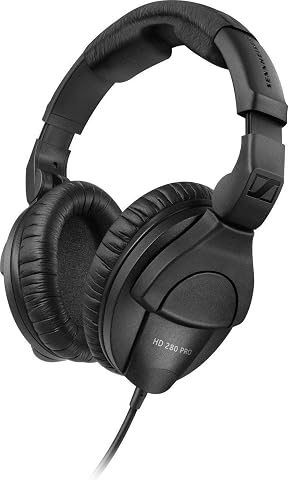 Sennheiser HD 280 Pro Headphones, BlackView on Amazon →
- 4
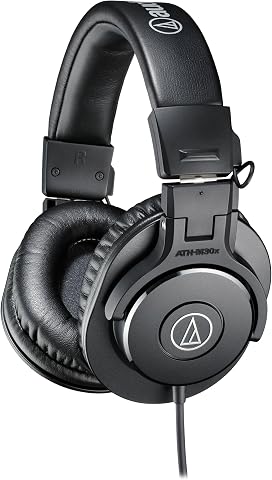 Audio-Technica ATH-M30x Professional Studio Monitor HeadphonesView on Amazon →
- 5
 Audio-Technica ATH-M20x Professional Studio Monitor HeadphonesView on Amazon →
- 6
 Audio-Technica ATH-M20x Professional Studio Monitor Headphones, WhiteView on Amazon →
- 7
 FIFINE H8 Wired Studio Monitor HeadphonesView on Amazon →
- 8
 OneOdio Pro-10 Wired Over-Ear Headphones with 50mm Drivers and Dual Jack – BlackView on Amazon →
- 9
 JOYO JMH-02 Over-Ear Studio Monitor HeadphonesView on Amazon →
- 10
 TASCAM TH-02 Professional Studio Monitor Headphones, Wired, Over EarView on Amazon →
Choosing Headphones for Each Studio Task
The practical choice is between keeping sound out and preventing headphone bleed, or hearing a more open presentation in a quiet room. Closed-back models are generally suited to recording vocals and drums because their sealed cups reduce leakage into microphones. Open-back designs can provide a wider-feeling soundstage, but their sound escapes more readily and they are a poor fit for many live tracking situations.
Neither design makes mixing decisions automatically reliable. Headphones color sound differently, and a result that seems balanced on one pair may not translate to speakers or other listening systems. The guide’s emphasis on learning each model’s tonal character is a useful qualification to its recommendation of particular products: buyers should treat “reference” sound as a practical description, not proof of a perfectly flat response.
Comfort and repairability also affect day-to-day use. Clamp force, ear-pad wear and cable failure can matter across long sessions, while detachable cables may be replaced without replacing the headphones. Those details can be as relevant to a home studio’s budget as initial price.
Popular right now

Bose QuietComfort Wireless Bluetooth Headphones with Active Noise Cancellation, Mic, USB‑C Charging, Deep Bass, 24‑Hour Battery – White Smok

Apple AirPods Pro 3 Wireless Earbuds with Active Noise Cancellation

Vitamix 5200 Professional-Grade Blender, 64 oz. Container, Black
As an affiliate, we earn on qualifying purchases.
The Tradeoffs Behind Monitor Headphones
The guide frames headphones as tools for different stages of recording rather than interchangeable accessories. Closed-back isolation is useful when a microphone is active or the room is noisy; open-back listening is more appropriate when leakage is not a problem. The source warns that sealed designs can sound boxy or accumulate bass, though it gives no model-by-model measurements or EQ recommendations.
It also argues that a perfectly flat headphone response is not a realistic expectation because driver placement and individual ear anatomy affect what listeners hear. Instead, users need a predictable sound and familiarity with its quirks. The roundup favors detachable cables as a durability advantage and notes that coiled and straight cables suit different movement and handling preferences.
What the Source Does Not Establish
The supplied material does not show the complete ten-model lineup, full ranking, prices or detailed model-by-model evaluations. It also does not identify the reviews or feedback threads consulted, explain how products were tested, or provide objective response and isolation data. The recommendation of the ATH-M50x as “best overall” is therefore the guide’s assessment, not an independently verified award.
It is also unclear when the guide was published and whether its product availability or prices were checked for 2027. Headphone fit and perceived sound vary among listeners, and the source does not describe a comparison that accounts for those differences. Readers should verify current specifications, replacement-pad availability and connectivity before buying.
Checks to Make Before Buying
The source does not announce a follow-up test or update schedule. For buyers, the next step is to compare the full product list and current prices, then check whether each model suits the intended task: tracking with a microphone, mixing in a quiet room, or general editing. Where possible, audition headphones with familiar material and test comfort over a longer session.
Readers should also confirm cable type, impedance, replacement-part availability and how the headphones perform with their audio interface or other source. Those checks can help determine whether a budget tracking pair is enough or whether a more durable, replaceable-cable model better fits frequent studio use.
Key Questions
Which headphones does the guide recommend most?
The guide names the Audio-Technica ATH-M50x as its best overall pick. That is the source’s editorial recommendation; the supplied material does not include independent testing data.
Which model does it suggest for tracking?
It highlights the Sony MDR7506 for tracking, citing its isolation-oriented use and high-frequency detail. The source does not provide measurements or a controlled comparison.
Are open-back headphones suitable for recording vocals?
They can leak sound into a nearby microphone, so the guide favors closed-back headphones for vocal or drum tracking. Open-back models are better suited to quiet rooms where leakage will not affect recording.
Are the budget options recommended for mixing?
The guide describes the TASCAM TH-02 and OneOdio Pro-10 as useful for basic tracking but less suited to precise mixing. It does not include measurements that would quantify that limitation.
What details should buyers check beyond sound?
Consider comfort, clamp force, cable design and replacement parts, along with whether the headphones provide enough isolation for the room. The guide also recommends learning a model’s tonal character rather than assuming any pair sounds perfectly flat.
Source: ThorstenMeyerAI.com