📊 Full opportunity report: Acoustic Dampening, Placement, and the “Rig in the Closet” Setup on ThorstenMeyerAI.com — validation score, market gap, and execution plan.

Get business pricing on monitors, keyboards and dev gear
- Business-only prices and quantity discounts
- Tax-exempt purchasing
- Multiple users, one account, clear invoices
TL;DR
Moving AI workstations out of the workspace into separate rooms or closets significantly reduces noise. Proper ventilation is essential for enclosed setups like closet rigs. This approach often offers the most effective noise reduction.
Placing high-power AI workstations in separate rooms or closets, combined with proper ventilation, is the most effective way to reduce noise at the workspace, according to recent expert guidance.
Recent advice from Thorsten Meyer emphasizes that the most impactful method to mitigate noise from AI rigs is to move the machine away from the user, ideally into another room or closet. This approach eliminates the need for extensive acoustic treatment and is especially suitable for headless setups, where the machine is accessed remotely over the network.
The ‘rig in the closet’ setup is popular but requires careful attention to ventilation. Sealing a high-power machine inside a closet without proper airflow can lead to heat buildup, causing thermal throttling and increased fan noise. Experts recommend incorporating active ventilation—passive vents or quiet exhaust fans—to prevent overheating while maintaining noise containment.
Additional measures include mechanical decoupling with rubber feet or anti-vibration pads to reduce structure-borne noise, and using purpose-built soundproof cabinets for optimal balance of noise reduction and heat dissipation. These strategies are increasingly accessible with commercial soundproof enclosures that combine acoustic treatment with temperature control.
Acoustic dampening
& the rig in the closet.
The most powerful noise fix isn’t a material — it’s a floor plan. A rig you can’t hear because it’s in another room beats any amount of foam. Tap the approaches in Part 1 to see what actually works.
(another room)
(levers 1–4)
(door / barrier)
(acoustic foam)
Contain the noise, not the heat
Why Moving the Rig Matters for Noise Reduction
Relocating the AI workstation to a separate room or closet can drastically lower noise levels at the user’s workspace, improving comfort and productivity. Learn more about rig placement strategies. This method is often more effective and cost-efficient than extensive acoustic foam treatments within the room itself. It also aligns with modern workflows where the machine is accessed remotely, making physical proximity less necessary.
However, the approach requires careful planning of ventilation to prevent heat buildup, which can damage hardware and cause noise from cooling fans to increase. Proper airflow management ensures the rig remains cool and quiet, making this setup a practical solution for high-power, continuous-load systems.
As an affiliate, we earn on qualifying purchases.
Placement Strategies for Noise and Heat Management
Traditional acoustic treatment involves adding foam and barriers within a workspace, but these are often less effective than physically distancing the noise source. The hierarchy of noise reduction prioritizes moving the rig away from the user, reducing source noise, and then blocking transmission with barriers, followed by acoustic absorption.
The concept of a 'rig in the closet' has gained popularity as an effective method for noise mitigation, especially for AI and machine learning setups that generate significant heat and noise. This approach leverages the fact that most AI workloads are accessed remotely, making physical separation feasible and practical.
Key to success is ensuring adequate ventilation. Sealed or semi-sealed enclosures must include active cooling solutions—such as ducted fans or heat exchangers—to prevent heat buildup, which can lead to hardware throttling and increased fan noise. For more details, see Acoustic Dampening, Placement, and the 'Rig in the Closet' Setup.
"The most effective noise reduction is moving the rig into another room or closet, where it can run headless and out of earshot."
— Thorsten Meyer
quiet exhaust fan for server closet
As an affiliate, we earn on qualifying purchases.
As an affiliate, we earn on qualifying purchases.
Remaining Uncertainties in Closet Rig Implementations
While the benefits of moving rigs into separate rooms or closets are clear, the optimal design for ventilation and heat management in such setups is still evolving. The effectiveness of commercially available soundproof cabinets with integrated cooling varies, and long-term reliability data is limited.
Additionally, the exact impact on hardware lifespan and performance under different ventilation configurations remains under study, with some experts cautioning that improper airflow can cause thermal issues even in well-sealed enclosures.
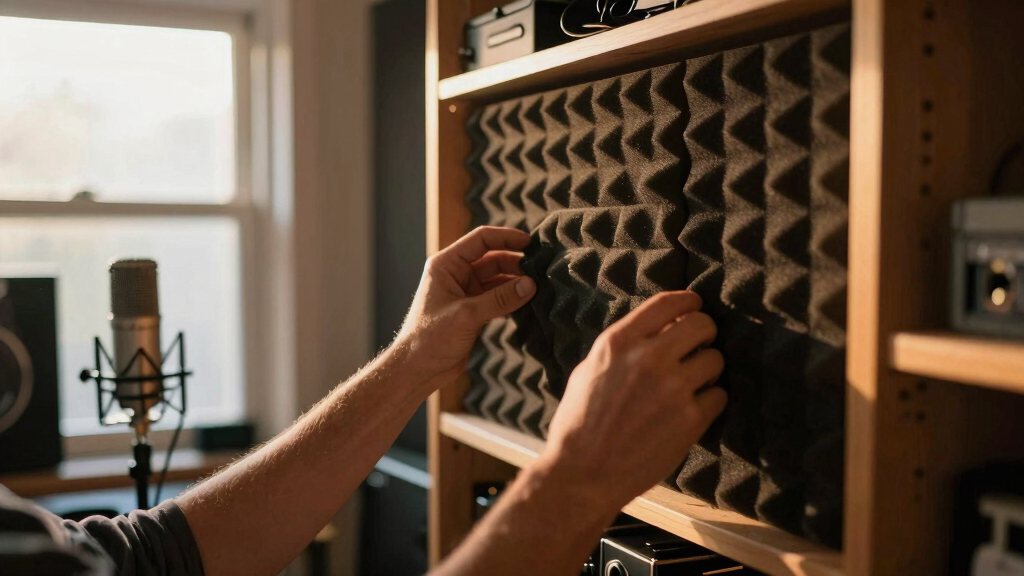
acoustic treatment foam panels for computer room
As an affiliate, we earn on qualifying purchases.
As an affiliate, we earn on qualifying purchases.
Future Developments in Noise and Heat Management for AI Rigs
Advances in integrated cooling solutions, such as smarter heat exchangers and quieter exhaust fans, are expected to improve the viability of closet setups. Manufacturers are also developing more advanced soundproof enclosures tailored for high-performance hardware, combining noise reduction with efficient heat dissipation.
Further research into optimal airflow patterns and materials will help refine these setups, making them more accessible and reliable for users seeking quiet, high-power AI workstations.
As an affiliate, we earn on qualifying purchases.
Key Questions
Is placing my AI rig in a closet safe?
Yes, if proper ventilation and airflow management are implemented. Sealing the enclosure without adequate cooling can lead to heat buildup, damaging hardware.
What ventilation options are recommended for closet rigs?
Active ventilation with quiet exhaust fans, passive vents, or ducted airflow systems are recommended to ensure effective heat dissipation while maintaining noise containment.
Does moving the rig away from my workspace affect performance?
No, if the rig is headless and connected via a reliable network, physical location does not impact performance. Remote access allows the machine to operate anywhere.
Are soundproof cabinets worth the investment?
They can be effective for balancing noise reduction and heat dissipation, especially in environments where moving the rig is impractical. However, they are more costly than simple placement strategies.
Source: ThorstenMeyerAI.com
Fall Picks
fall essentials
As an affiliate, we earn on qualifying purchases.