
Smart city analytics use real-time sensor data from infrastructure like traffic lights, transportation systems, and buildings to help you manage urban issues proactively. This data allows you to identify patterns, predict congestion, and optimize energy use, resulting in smoother transit, healthier air quality, and better resource management. By leveraging these insights, you can make smarter decisions that improve residents’ lives and promote sustainability. Keep exploring how these solutions can transform your city’s future.

Get business pricing on monitors, keyboards and dev gear
- Business-only prices and quantity discounts
- Tax-exempt purchasing
- Multiple users, one account, clear invoices
Key Takeaways
- Urban sensor networks enable real-time data collection for traffic, air quality, energy, and pedestrian monitoring.
- Predictive modeling forecasts future urban trends, aiding proactive city management and infrastructure maintenance.
- Data-driven insights improve transportation efficiency, reduce congestion, and enhance public health through pollution control.
- Continuous data analysis refines urban solutions, fostering smarter policies and resource optimization.
- Real-time analytics promote transparency and community engagement in sustainable city development.
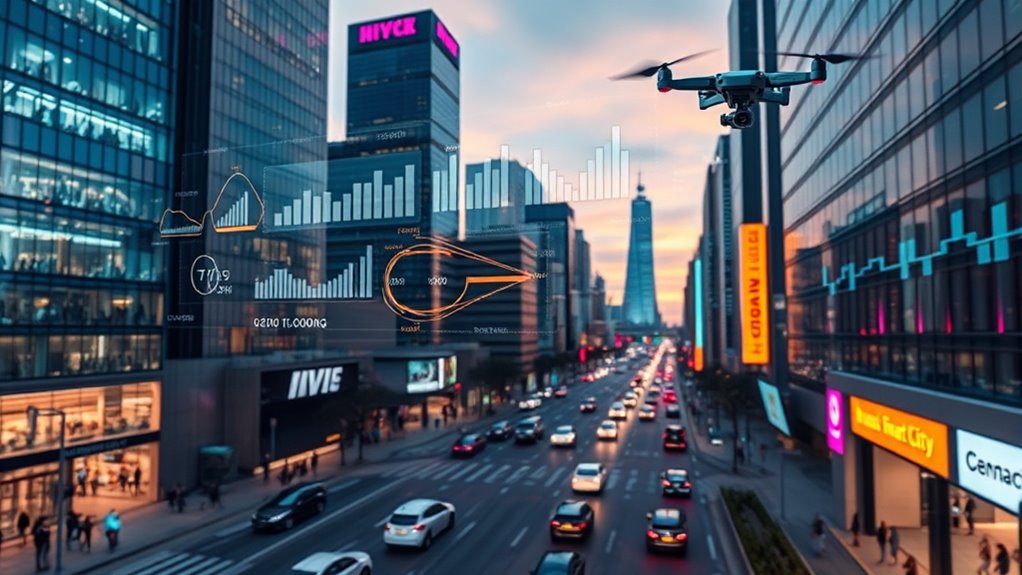
Have you ever wondered how cities are becoming smarter and more efficient? The answer lies in the innovative use of data and technology, particularly through urban sensor networks. These networks consist of a multitude of sensors embedded throughout city infrastructure—on streetlights, in public transportation, within buildings, and along roadways. They continuously collect real-time data on everything from traffic flow and air quality to energy consumption and pedestrian movement. This constant stream of information allows city officials and planners to gain a thorough understanding of urban dynamics, enabling smarter decision-making that can improve quality of life and reduce costs. By leveraging urban sensor networks, cities can identify patterns and anomalies that would be impossible to detect manually, providing a foundation for effective management and development. Additionally, the integration of high-resolution sensors enhances the precision of data collected, further improving urban analytics.
Predictive modeling plays a pivotal role in transforming this data into actionable insights. Once data from sensors is collected, advanced algorithms analyze it to forecast future trends and behaviors. For example, predictive models can determine traffic congestion hotspots before they occur, allowing traffic managers to adjust signals proactively and reduce gridlock. Similarly, they can anticipate air pollution levels during peak hours and implement measures to mitigate health impacts. This proactive approach not only enhances urban living conditions but also optimizes resource allocation, saving money and energy. Predictive modeling also supports maintenance schedules for infrastructure, predicting failures before they happen, which minimizes disruptions and extends the lifespan of city assets.
Integrating urban sensor networks with predictive modeling creates a feedback loop that continuously refines city operations. As more data is collected and analyzed, models become more accurate, enabling even more precise interventions. For instance, data on water usage patterns can help city officials identify leaks early, preventing wastage and reducing costs. This synergy empowers city leaders to implement targeted policies based on solid evidence rather than intuition alone. It also fosters community engagement, as residents can access real-time updates on transit delays, air quality, and other essential metrics, making urban life more transparent and participatory.
Frequently Asked Questions
How Do Smart City Analytics Improve Citizen Quality of Life?
Smart city analytics improve your quality of life by optimizing public transportation, reducing wait times, and making commutes smoother. They also enhance waste management systems, ensuring cleaner streets and healthier environments. With real-time data, city officials can address issues promptly, minimizing disruptions. These advancements make your city more efficient, sustainable, and livable, so you enjoy better mobility, cleaner surroundings, and an overall improved urban experience.
What Are the Privacy Concerns Associated With Urban Data Collection?
You might worry about privacy when urban data is collected, but data anonymization safeguards your personal info from being linked to you directly. Consent management ensures you’re aware of and agree to data collection practices, giving you control. While these measures help, it’s crucial to stay informed and advocate for transparent policies to prevent misuse and safeguard your privacy in smart city initiatives.
How Is Data Security Managed in Smart City Systems?
You probably think your data’s safe, right? Well, in smart city systems, they manage security with encryption protocols that scramble your info and access controls that keep only authorized folks in. It’s like locking your digital doors and installing security cameras—except in cyberspace. While no system’s perfect, these measures aim to thwart hackers and protect your data, even if you’re just a tiny cog in the urban machine.
What Funding Models Support Smart City Analytics Projects?
You can support smart city analytics projects through various funding models, such as public-private partnerships and grant funding. Public-private partnerships enable collaboration between government and private companies, sharing costs and resources for innovative solutions. Grant funding, often from government agencies or international organizations, provides financial support for specific projects or research initiatives. Combining these models guarantees sustainable development and accelerates the implementation of data-driven urban solutions.
How Do Cities Ensure Equitable Data Access for All Residents?
You should prioritize community engagement and improve data literacy to guarantee equitable data access. By involving residents in decision-making, you give them a voice and address their needs. Providing accessible, easy-to-understand data helps bridge gaps, especially for underserved communities. When you foster trust and transparency, more residents can benefit from smart city initiatives, creating a balanced, inclusive urban environment where everyone has the opportunity to access and use data effectively.
Conclusion
So, next time you marvel at a city’s glowing skyline or flawless traffic flow, remember it’s all thanks to your friendly neighborhood data crunchers. With smart city analytics, urban life becomes a well-oiled machine—no more chaotic chaos, just a digital symphony. Soon, your city might even predict your coffee cravings or remind you to breathe, all powered by data. Welcome to the future, where your city’s smarter than your average human—probably because it’s not distracted by cat videos.
Halloween Picks
halloween
As an affiliate, we earn on qualifying purchases.



![[Invitation] Galaxy Unpacked July 2026: A New Shape Unfolds](https://domystats.com/wp-content/uploads/2026/07/invitation-galaxy-unpacked-july-2026-a-new-shape-unfolds-featured-560x300.jpg)