For developers choosing among programming books, Code: The Hidden Language of Computer Hardware and Software is my best overall pick for understanding the ideas beneath everyday coding. Python Crash Course, 3rd Edition is a stronger starting point for hands-on beginners, while Fluent Python offers more depth for developers already working with the language. The main tradeoff is between learning core concepts that last and gaining practical skills for a specific language, framework, or current workflow. Newer topics such as AI-assisted and agentic coding also compete with books built around durable fundamentals. Read on for the full breakdown and help matching a book to your experience and goals.

Get business pricing on monitors, keyboards and dev gear
- Business-only prices and quantity discounts
- Tax-exempt purchasing
- Multiple users, one account, clear invoices
Key Takeaways
- The roundup spans different learning jobs: Code focuses on how computing works, while the Python, Rust, C++, and web titles teach specific languages or stacks.
- Python Crash Course stands out for learning by doing: its project-based approach suits beginners who want to apply concepts, while Code is a better fit for readers who want a broader conceptual foundation.
- Experience level changes the best choice: Python Programming for Beginners and C Programming For Dummies target newcomers, whereas Rust for Rustaceans and Fluent Python expect prior programming knowledge.
- Newer tools bring a different tradeoff: the AI and Claude Code books address current developer workflows, but language and computer-science fundamentals have broader staying power.
- Broad coverage can mean less depth: The Computer Programming Bible and The Complete Developer cover many technologies, while focused books can spend more time on one language or learning goal.
| Python Crash Course, 3rd Edition: A Hands-On, Project-Based Introduction to Programming |  | Best for Beginners | Edition: 3rd | Language: Python | Approach: Hands-on, project-based introduction | VIEW LATEST PRICE | See Our Full Breakdown |
| C Programming For Dummies |  | Best for a Plain-Language C Introduction | Subject: C programming | Book type: For Dummies guide | Language taught: C | VIEW LATEST PRICE | See Our Full Breakdown |
| The Developer’s Guide to AI: A Field Guide for the Working Developer |  | Best for Developers Exploring AI | Subject: Artificial intelligence | Audience: Working developers | Book framing: Field guide | VIEW LATEST PRICE | See Our Full Breakdown |
| Rust for Rustaceans: Idiomatic Programming for Experienced Developers |  | Best for Experienced Rust Developers | Subject: Rust programming | Focus: Idiomatic programming | Audience: Experienced developers | VIEW LATEST PRICE | See Our Full Breakdown |
| Agentic Coding with Claude Code: The Everyday Developer’s Guide |  | Best for Developers Exploring AI Coding Agents | Subject: Agentic coding | Named tool: Claude Code | Audience framing: Everyday developers | VIEW LATEST PRICE | See Our Full Breakdown |
| The Computer Programming Bible: A Step-by-Step Guide to Python, C, C++, C#, HTML, and Raspberry Pi 3 |  | Best for Broad Language Sampling | Format: Book | Programming languages: Python, C, C++, C# | Web topic: HTML | VIEW LATEST PRICE | See Our Full Breakdown |
| Python Programming for Beginners: Complete Coding Crash Course |  | Best for a Hands-On Python Start | Format: Book | Language: Python | Intended level: Beginner | VIEW LATEST PRICE | See Our Full Breakdown |
| Code: The Hidden Language of Computer Hardware and Software |  | Best for Understanding Computing Foundations | Format: Book | Subject: The hidden language underlying computer hardware and software | Primary focus: Connections between hardware and software | VIEW LATEST PRICE | See Our Full Breakdown |
| HTML, CSS & JavaScript Mastery: An All-in-One Frontend Developer’s Handbook | 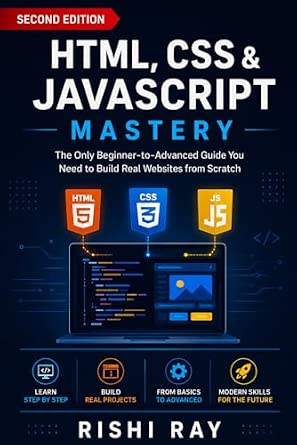 | Best for Frontend Project Learning | Format: Step-by-step project guide | Topics: HTML, CSS, JavaScript | Skill level: Beginner to advanced | VIEW LATEST PRICE | See Our Full Breakdown |
| Rust Programming for Intermediate Developers: Error Handling, Lifetimes, Traits, and Concurrency |  | Best for Intermediate Rust Practice | Format: Book | Series: Rust Programming for Practical Software Development | Book number: 2 | VIEW LATEST PRICE | See Our Full Breakdown |
| The Complete Developer: Master the Full Stack with TypeScript, React, Next.js, MongoDB, and Docker |  | Best for Full-Stack Breadth | Format: Book | Programming language: TypeScript | Frontend library: React | VIEW LATEST PRICE | See Our Full Breakdown |
| Fluent Python: Clear, Concise, and Effective Programming |  | Best for Deepening Python Fluency | Format: Not specified in supplied product data | Subject: Python programming | Stated focus: Clear, concise, and effective programming | VIEW LATEST PRICE | See Our Full Breakdown |
| Programming: Principles and Practice Using C++ |  | Best for C++ Principles and Practice | Subject: C++ programming | Stated focus: Programming principles and practice | Format: Not specified in supplied product data | VIEW LATEST PRICE | See Our Full Breakdown |
| programming books for developer | Format | Subject |
|---|---|---|
| Python Crash Course | — | — |
| C Programming For Dummies | Not specified in supplied product data | C programming |
| The Developer’s Guide to AI: A | Not specified in supplied product data | Artificial intelligence |
| Rust for Rustaceans: Idiomatic | Book | Rust programming |
| Agentic Coding with Claude Cod | Not specified in supplied product data | Agentic coding |
| The Computer Programming Bible | Book | — |
| Python Programming for Beginne | Book | — |
| Code: The Hidden Language of C | Book | The hidden language underlying computer hardware and software |
| HTML | Step-by-step project guide | — |
| Rust Programming for Intermedi | Book | — |
| The Complete Developer: Master | Book | — |
| Fluent Python: Clear | Not specified in supplied product data | Python programming |
| Programming: Principles and Pr | Not specified in supplied product data | C++ programming |
More Details on Our Top Picks
Python Crash Course, 3rd Edition: A Hands-On, Project-Based Introduction to Programming
Python Crash Course is the clearest fit for a developer starting from scratch: its project-based approach connects core Python ideas to practical work instead of leaving them as isolated syntax lessons. That makes it a more direct first step than Rust for Rustaceans, which assumes substantial programming experience and focuses on idiomatic Rust. The third edition’s beginner focus is also useful for readers who want structured practice before moving on to a broader reference.
The tradeoff is pace and depth. Experienced programmers may find the fundamentals slow, and readers seeking advanced Python techniques should look to a more specialized book, such as Fluent Python from the broader roundup. Its strongest appeal is the progression from basic concepts toward building applications; it is less suited to readers who already know how to program and want language internals or advanced patterns.
Pros:- Project-based learning connects syntax and fundamentals to practical application.
- Designed to support readers with no prior programming experience.
- Covers core Python concepts in a guided sequence.
- Python focus gives beginners a concrete language to practice with.
Cons:- Introductory pacing may feel slow to developers who already know another language.
- The description does not indicate advanced coverage comparable to a specialized Python reference.
Best for: First-time programmers who want guided Python fundamentals followed by practical project work.
Not ideal for: Experienced developers seeking advanced Python idioms, language internals, or a fast-moving reference.
- Edition:3rd
- Language:Python
- Approach:Hands-on, project-based introduction
- Audience:Beginners, including readers with no prior programming experience
- Coverage:Fundamental Python concepts and practical exercises
- Application focus:Building real-world applications
Our verdict“Choose this for a guided, hands-on start in Python; skip it if you already program and need advanced material.”
C Programming For Dummies
C Programming For Dummies has a straightforward role in this lineup: it is the C-specific entry point for readers who want a guide framed for learners rather than experienced language specialists. Compared with Python Crash Course, it points toward C instead of Python, making the choice a matter of which language a reader needs to learn—not which title promises a broader path. C can suit learners interested in lower-level programming, but the supplied details do not confirm this book’s exact topics, exercises, or assumed background.
That lack of detail limits how confidently I can recommend it against the more specifically described books here. It is a plausible starting point for a C learner, but readers seeking confirmed project work, advanced idioms, or a clear account of coverage should check the book’s contents before choosing. The title signals an accessible guide; it does not establish how deep or hands-on the instruction gets.
Pros:- Dedicated to C rather than splitting attention across several languages.
- The For Dummies framing suggests an accessible entry point for learners.
- Gives readers with a specific C-learning goal a focused title to investigate.
Cons:- Available product details do not confirm chapter coverage, exercises, or project work.
- The supplied information does not establish whether it suits experienced C programmers.
- Less clearly characterized than Python Crash Course’s stated beginner and project-based approach.
Best for: Learners who have chosen C and want a guide explicitly presented for the For Dummies audience.
Not ideal for: Readers who need verified project-based instruction, advanced C coverage, or detailed information about the book’s scope before buying.
- Subject:C programming
- Book type:For Dummies guide
- Language taught:C
- Audience framing:Learners seeking a guide to C
- Edition:Not specified in supplied product data
- Format:Not specified in supplied product data
Our verdict“Pick this if you want a C-focused beginner guide, but verify its contents if you need a defined curriculum or hands-on projects.”
The Developer’s Guide to AI: A Field Guide for the Working Developer
The Developer’s Guide to AI stands apart from the language-learning titles by focusing on artificial intelligence for working developers. That makes it a better match than C Programming For Dummies for a programmer who wants to explore AI rather than start learning a particular language. Its field-guide framing suggests a practical developer audience, but the supplied description does not identify specific techniques, tools, or prerequisites, so I would not treat it as a confirmed step-by-step implementation manual.
This is the most specialized choice in the group: its value depends on whether AI is the subject a reader wants to tackle now. Unlike Python Crash Course, it is not described as a fundamentals-first programming course, and it may be less useful to someone still learning basic coding. The main tradeoff is uncertainty about scope; buyers should check the contents if they need coverage of a specific AI workflow or technology.
Pros:- Targets artificial intelligence rather than general programming fundamentals.
- Explicitly addresses working developers as its intended audience.
- Provides a distinct subject choice alongside the C, Python, and Rust titles.
Cons:- The supplied description does not specify methods, tools, or topics covered.
- No prerequisite level or hands-on project format is confirmed.
- Less suitable than Python Crash Course for readers who first need programming fundamentals.
Best for: Working developers who already have a programming foundation and want a book focused on AI.
Not ideal for: New programmers seeking a structured introduction to coding or readers who need confirmed coverage of a particular AI tool or method.
- Subject:Artificial intelligence
- Audience:Working developers
- Book framing:Field guide
- Programming language:Not specified in supplied product data
- Topics and tools:Not specified in supplied product data
- Format:Not specified in supplied product data
Our verdict“Choose it if you are already a developer and want an AI-focused guide, after checking that its coverage matches your goals.”
Rust for Rustaceans: Idiomatic Programming for Experienced Developers
Rust for Rustaceans is the advanced-language pick here: it focuses on idiomatic Rust and explicitly targets experienced developers. That sharply separates it from Python Crash Course, which teaches fundamentals to beginners. If a reader already knows how to program and wants to write Rust in a more idiomatic way, this book has a clearer purpose than a general introduction. Its audience label also sets expectations: it is not positioned as a first programming book.
The tradeoff is a narrower audience. Developers who are new to programming—or who have not yet built a foundation in Rust—may find the focus premature. The supplied details confirm the subject and intended experience level, but not particular chapters, projects, or format beyond “Book.” Compared with The Developer’s Guide to AI, this is the stronger fit for someone pursuing a specific programming language rather than a broader technical area.
Pros:- Concentrates on idiomatic Rust programming.
- Clearly targets experienced developers rather than claiming to serve every level.
- Offers a language-specific progression beyond introductory programming books.
Cons:- The stated audience makes it a poor first programming book.
- Supplied details do not confirm specific examples, projects, or chapter coverage.
- Its Rust focus offers little value to readers working in other languages.
Best for: Experienced programmers who already have Rust exposure and want to improve their use of idiomatic Rust.
Not ideal for: First-time coders or developers looking for a beginner-friendly introduction to Rust syntax and fundamentals.
- Subject:Rust programming
- Focus:Idiomatic programming
- Audience:Experienced developers
- Format:Book
- Edition:Not specified in supplied product data
- Project details:Not specified in supplied product data
Our verdict“Choose this if you already program and want idiomatic Rust guidance; beginners should start with a fundamentals-focused book.”
Agentic Coding with Claude Code: The Everyday Developer’s Guide
Agentic Coding with Claude Code focuses on a specific way of working: agentic coding with Claude Code. That gives it a narrower, tool-centered role than The Developer’s Guide to AI, whose description covers AI for working developers more broadly. This may make the Claude Code title the more direct option for readers who want to learn about that named coding assistant, while the AI field guide is the broader match for those still choosing an AI topic.
The tradeoff is that the supplied description does not explain its lessons, prerequisites, or how much coding practice it includes. It is not presented as a general programming fundamentals book like Python Crash Course, so new coders should not assume it can replace one. Its usefulness also depends on a reader’s interest in Claude Code specifically; developers seeking language instruction or tool-agnostic material should compare other options and check the contents first.
Pros:- Centers on agentic coding, a distinct focus from conventional language instruction.
- Names Claude Code directly, giving interested readers a clear subject match.
- Is framed for everyday developers rather than only AI specialists.
Cons:- The supplied data does not confirm its examples, workflow coverage, or prerequisites.
- Its named-tool focus may be less useful to readers seeking tool-agnostic AI guidance.
- It is not described as a fundamentals course comparable to Python Crash Course.
Best for: Everyday developers specifically interested in agentic coding with Claude Code.
Not ideal for: Beginners who need core programming instruction or developers looking for an AI guide that is not tied to a named tool.
- Subject:Agentic coding
- Named tool:Claude Code
- Audience framing:Everyday developers
- Programming language:Not specified in supplied product data
- Edition:Not specified in supplied product data
- Format:Not specified in supplied product data
Our verdict“Choose this if Claude Code and agentic coding are your specific interests, not if you need a general programming or AI introduction.”
The Computer Programming Bible: A Step-by-Step Guide to Python, C, C++, C#, HTML, and Raspberry Pi 3
One book, several programming areas is the pitch here: the guide covers Python, C, C++, C#, HTML, and Raspberry Pi 3, with a stated path from basic to more advanced concepts. That breadth may suit readers who want to compare different kinds of programming before choosing a specialty. Compared with Python Programming for Beginners, it offers a wider language mix, but that range may leave less room for sustained practice in any one language. The product details do not identify the intended experience level or lay out the contents, so I would treat the claimed progression cautiously rather than assume a complete curriculum. Its tradeoff is clear: variety over depth and specificity. Readers focused on building frontend skills have a more targeted choice in HTML, CSS & JavaScript Mastery.
Pros:- Covers Python, C, C++, C#, HTML, and Raspberry Pi 3 in one volume
- Describes a progression from basics toward more advanced concepts
- May help undecided learners compare several programming areas
Cons:- The intended experience level and chapter contents are not specified
- Covering many languages may limit depth in each one
- The product details do not identify exercises or projects
Best for: Curious learners who want an initial survey of several languages and Raspberry Pi before selecting a programming focus
Not ideal for: Readers seeking a clearly mapped curriculum, detailed project descriptions, or deep coverage of one language
- Format:Book
- Programming languages:Python, C, C++, C#
- Web topic:HTML
- Hardware topic:Raspberry Pi 3
- Stated progression:Basics to more advanced concepts
- Approach:Step-by-step guide
Our verdict“Choose this for a broad first look across several programming topics, but pick a focused guide if you already know which language you want to learn.”
Python Programming for Beginners: Complete Coding Crash Course
Beginner-focused Python practice gives this crash course a clearer starting point than The Computer Programming Bible, whose language range spans several subjects without a specified experience level. This book is described as fast-paced and built around interactive exercises and projects, a useful combination for readers who want to try code rather than only read explanations. The tradeoff is that “crash course” and “fast-paced” may not suit learners who need a slower, carefully scaffolded introduction. The available details also do not spell out the exercise format, project types, or learning framework, so buyers cannot judge how much guidance each activity provides. Compared with Python Crash Course, 3rd Edition, the supplied information supports a hands-on angle, but not a detailed comparison of scope. Its appeal is focused practice; its uncertainty is the missing curriculum detail.
Pros:- Aimed specifically at beginners learning Python
- Includes hands-on interactive exercises
- Includes projects that give learners opportunities to apply concepts
Cons:- The topics and chapter sequence are not specified in the available details
- The fast-paced format may move too quickly for learners who need extensive explanation
- The exercise and project formats are not described
Best for: New programmers who want a focused Python introduction with exercises and projects rather than a survey of multiple languages
Not ideal for: Learners who need a slow-paced course outline, detailed project descriptions, or a verified progression of topics before choosing a book
- Format:Book
- Language:Python
- Intended level:Beginner
- Course style:Coding crash course
- Pace:Fast-paced
- Practice:Interactive exercises and projects
Our verdict“Pick this for a beginner-oriented, practice-led Python start, but look for a more fully documented course if you need to preview its syllabus.”
Code: The Hidden Language of Computer Hardware and Software
Hardware-and-software foundations set this book apart from the language-led guides in this roundup. Its subject is the hidden language underlying how computers work, making it a distinct choice for developers who want a conceptual view of computing rather than another step-by-step coding course. That focus contrasts with Rust Programming for Intermediate Developers, which targets specific language techniques such as lifetimes and concurrency. The product information provides no further details about level, examples, or exercises, so I cannot judge how directly it supports day-to-day programming practice. Readers looking for project-based website instruction will find HTML, CSS & JavaScript Mastery more directly aligned with building applications. This is the foundations-oriented pick, with the tradeoff that its fit as a practical coding manual is unclear from the supplied description.
Pros:- Focuses on concepts underlying both computer hardware and software
- Offers a different angle from language-specific programming manuals
- May complement practical study by addressing computing foundations
Cons:- The available details do not specify its intended reading level
- No exercises, projects, or programming language coverage are identified
- Its direct usefulness as a practical coding guide cannot be determined from the supplied information
Best for: Developers and self-directed learners who want to explore the ideas connecting computer hardware and software alongside language study
Not ideal for: Readers who need a specified programming language, hands-on coding projects, or a confirmed beginner-to-advanced learning path
- Format:Book
- Subject:The hidden language underlying computer hardware and software
- Primary focus:Connections between hardware and software
- Programming language coverage:Not specified
- Intended experience level:Not specified
- Exercise or project details:Not specified
Our verdict“Choose this for a foundations-focused companion to coding study, not as a substitute for a language-specific guide or project workbook.”
HTML, CSS & JavaScript Mastery: An All-in-One Frontend Developer’s Handbook
Three core frontend technologies in one project-led guide make this the most directly targeted option here for readers who want to build websites. Its stated range runs from beginner to advanced, and the step-by-step, real-world project approach offers a practical route from learning concepts to applying them. That focus distinguishes it from The Computer Programming Bible, which covers more languages but does not specify its project content, and from Python Programming for Beginners, which is centered on a single language outside the frontend trio. The broad skill range is a useful promise, but it may not mean equal depth in HTML, CSS, and JavaScript; the available details do not outline the projects or sequence. Choose it for integrated frontend practice, not for general-purpose programming or a deep treatment of one technology.
Pros:- Covers HTML, CSS, and JavaScript together
- Describes a beginner-to-advanced skill range
- Uses step-by-step, real-world projects to connect learning with website work
Cons:- The available description does not identify specific projects or their complexity
- Covering three technologies may offer less depth in each than a single-language guide
- The topic sequence and prerequisites are not specified
Best for: Aspiring frontend developers who want a project-based path through HTML, CSS, and JavaScript from beginner through advanced material
Not ideal for: Learners focused on Python, Rust, systems programming, or a detailed curriculum for just one frontend technology
- Format:Step-by-step project guide
- Topics:HTML, CSS, JavaScript
- Skill level:Beginner to advanced
- Learning approach:Real-world projects
- Primary focus:Frontend web development
- Project structure:Step-by-step
Our verdict“Choose this if your goal is to build frontend skills through projects, but use a language-specific book for deeper study of one technology.”
Rust Programming for Intermediate Developers: Error Handling, Lifetimes, Traits, and Concurrency
Focused coverage of Rust’s intermediate concepts gives this book a more specialized role than the beginner and multi-language guides in the roundup. Its named topics—error handling, lifetimes, traits, and concurrency—point toward readers already familiar with Rust who want to work through areas that shape practical software design. The book is number two in the Rust Programming for Practical Software Development series, so its place in a sequence may appeal to readers seeking related material. Unlike Python Programming for Beginners, it is explicitly not aimed at newcomers; and compared with Rust for Rustaceans, the product details identify an intermediate audience rather than experienced Rust programmers. The clear tradeoff is depth of focus over accessibility: beginners may lack the groundwork, while advanced readers may want more detail than the description confirms.
Pros:- Targets several central intermediate Rust topics
- Names its subject areas, making the intended focus clear
- Belongs to a practical software development series
Cons:- Not intended for beginners
- The available details do not specify exercises or project work
- The description does not clarify prerequisites or how it fits with other books in the series
Best for: Rust developers who know the basics and want focused study of error handling, lifetimes, traits, and concurrency
Not ideal for: First-time programmers or Rust newcomers who need foundational instruction before tackling intermediate concepts
- Format:Book
- Series:Rust Programming for Practical Software Development
- Book number:2
- Intended level:Intermediate developers
- Topics:Error handling, lifetimes, traits, and concurrency
- Programming language:Rust
Our verdict“Choose this if you already know Rust and want a targeted next step in its intermediate concepts; beginners should start with foundational instruction.”
The Complete Developer: Master the Full Stack with TypeScript, React, Next.js, MongoDB, and Docker
This is the broadest application-building pick among these three: its stated scope spans TypeScript, React, Next.js, MongoDB, and Docker, giving developers a route across several parts of a web stack rather than concentrating on one language. Compared with Fluent Python, it prioritizes connecting technologies over sharpening fluency in a single one; compared with Programming: Principles and Practice Using C++, it points more directly toward modern web development. That breadth may suit readers who want a map of the stack, but the supplied information does not establish how deeply each tool is taught. I also can’t verify its length or edition from the product details, so buyers seeking a clearly specified, focused curriculum may prefer a narrower title.
Pros:- Names a connected set of full-stack technologies: TypeScript, React, Next.js, MongoDB, and Docker.
- Offers broader web-stack scope than the Python-focused Fluent Python.
- May help readers orient their learning across frontend, backend, data storage, and container tooling.
Cons:- The available details do not show how deeply the book treats each technology.
- Length and edition are not specified in the supplied product data.
- Its multi-technology scope may be less useful than a focused language book for readers building foundational depth.
Best for: Developers who already know basic programming and want a book centered on a TypeScript-and-React web stack that also names a database and container tool.
Not ideal for: Readers seeking a single-language reference, a confirmed beginner curriculum, or clear details about the book’s length and edition.
- Format:Book
- Programming language:TypeScript
- Frontend library:React
- Web framework:Next.js
- Database:MongoDB
- Container tool:Docker
Our verdict“Choose this if you want a broad, modern web-stack subject mix; pick Fluent Python or the C++ book instead for focused language study.”
Fluent Python: Clear, Concise, and Effective Programming
Fluent Python is the focused choice here for developers who want to improve how they write Python, rather than survey a range of languages or web tools. Its stated emphasis on clear, concise, effective programs gives it a different job from The Complete Developer, whose listed scope spans several full-stack technologies. That narrower focus can help readers concentrate on Python practices, while Programming: Principles and Practice Using C++ serves readers working in another language and looking for a principles-and-practice angle. The supplied description does not identify the intended experience level, chapter coverage, or edition, so I would not treat it as a guaranteed first Python book or assume it addresses a particular specialization. It fits best when Python is already part of your work and code quality is the goal.
Pros:- Keeps its stated focus on Python rather than spreading attention across multiple languages.
- Centers on code clarity and concision, useful goals for improving maintainability.
- Offers a more language-specific path than The Complete Developer.
Cons:- The supplied product details do not describe chapter topics or specific techniques.
- The intended reader experience level is not specified.
- It does not match the multi-technology scope of The Complete Developer for readers seeking a broad web stack.
Best for: Developers who already write Python and want a focused resource on producing clearer, more concise, and more effective programs.
Not ideal for: Complete programming beginners who need a confirmed step-by-step introduction, or developers seeking full-stack coverage across several technologies.
- Format:Not specified in supplied product data
- Subject:Python programming
- Stated focus:Clear, concise, and effective programming
- Title:Fluent Python: Clear, Concise, and Effective Programming
- ASIN:1492056359
- Edition:Not specified in supplied product data
Our verdict“Choose this when Python is already your working language and you want to focus on writing clearer code, not learning a broad stack.”
Programming: Principles and Practice Using C++
This is the principles-led C++ option in this group, making it the clearest fit for readers who specifically want to study programming through C++. Its stated subject and title suggest a different emphasis from Fluent Python, which focuses on effective Python programming, and from The Complete Developer, which lists tools for building full-stack web applications. That distinction matters: choose this for a C++-centered learning path, not for broad web development coverage. The product details supplied here do not describe the book’s format, chapter contents, or intended level, so I can’t confirm how it structures practice or how much prior knowledge it expects. Those unknowns make it harder to recommend as a first programming book than a title with a clearly stated beginner scope.
Pros:- Makes C++ the explicit language focus.
- Pairs programming principles with practice in its stated subject.
- Provides a more language-centered alternative to The Complete Developer’s multi-tool scope.
Cons:- The supplied data does not specify format or chapter contents.
- The intended experience level and teaching structure are not provided.
- Its C++ focus is a poor match for readers seeking Python or full-stack web development.
Best for: Learners and developers who specifically want to study programming principles and practice using C++.
Not ideal for: Web developers seeking a TypeScript-and-React stack guide, or buyers who need verified details about format, contents, and expected experience level.
- Subject:C++ programming
- Stated focus:Programming principles and practice
- Format:Not specified in supplied product data
- Contents:Not specified in supplied product data
- Title:Programming: Principles and Practice Using C++
- ASIN:0138308683
Our verdict“Choose this for a C++-centered study of programming principles and practice, but verify its format and contents if those details affect your choice.”

How We Picked
I compared these books by the job a developer would hire them to do: teach programming from the beginning, strengthen fluency in a language, explain underlying computing concepts, or support work in a specific stack or emerging workflow. I weighed the clarity implied by each book’s stated audience, the practical value of its approach, the depth signaled by its scope, and how well its subject can serve a reader beyond a single immediate task. For developers, a useful book should make its intended level and learning path clear rather than simply list many topics.
The ranking favors books with a distinct, broadly useful role and a clear fit between subject and audience. That puts Code first for its foundational focus, with Python Crash Course close behind for applied beginner learning. Specialized and advanced titles rank well for the right readers, but their narrower audience limits their position in a general guide. Broad surveys, beginner alternatives, and books on fast-changing tools remain useful when their particular scope matches a buyer’s goal; they are not interchangeable with deeper language or concept-focused texts.
| programming books for developer | Format |
|---|---|
| Python Crash Course | — |
| C Programming For Dummies | Not specified in supplied product data |
| The Developer’s Guide to AI: A | Not specified in supplied product data |
| Rust for Rustaceans: Idiomatic | Book |
| Agentic Coding with Claude Cod | Not specified in supplied product data |
| The Computer Programming Bible | Book |
| Python Programming for Beginne | Book |
| Code: The Hidden Language of C | Book |
| HTML | Step-by-step project guide |
| Rust Programming for Intermedi | Book |
| The Complete Developer: Master | Book |
| Fluent Python: Clear | Not specified in supplied product data |
| Programming: Principles and Pr | Not specified in supplied product data |
Factors to Consider When Choosing Programming Books For Developers
Before choosing a programming book, match its teaching approach and scope to the problem you want to solve. A title that is excellent for a first project may frustrate an experienced developer, while a focused reference can be a poor substitute for a guided course. These factors help narrow the field before you commit.
Choose a learning outcome, not just a language
Start by naming what you want to do after reading: write a first program, understand how computers represent information, improve code in a familiar language, or build an application with a particular stack. This avoids buying a book because its language is popular when its teaching approach does not match your goal. Foundational concepts can transfer across languages, while framework instructions tend to be more immediately applicable and more tied to a particular toolset. If your aim is a job task, check that the book’s scope lines up with the work you expect to do. If you want skills that last across projects, give more weight to concepts and problem-solving practice.
Be honest about your starting level
Books labeled for beginners still vary in how much they assume about command lines, development tools, and technical vocabulary. A true first-timer may benefit from explicit steps and guided exercises, while an experienced programmer may find that same pacing slow. Advanced texts can be rewarding only when you already understand the basic syntax and programming habits they build on. Check the intended audience and sample pages, if available, rather than judging difficulty by a familiar language name. Choosing a book below your level can waste time; choosing one above it can turn every chapter into a separate research task.
Compare projects, exercises, and explanation
Hands-on projects help connect concepts to working code, but they do not automatically teach why a solution works. A concept-led book may explain systems and tradeoffs more clearly, even if it asks you to write less code along the way. Look for a balance suited to your learning habits: guided projects can keep a newcomer moving, while exercises that ask you to reason or modify examples can help build independence. A common mistake is to mistake finished projects for mastery without practicing variations on your own. When possible, inspect a sample chapter to see whether explanations and exercises have enough detail for you to work without constant outside help.
Weigh breadth against depth
A multi-language or full-stack book can provide a useful map of a large subject, but it may give each tool less room than a focused title. That breadth is helpful when you are exploring what to learn next or need a high-level tour. It is less useful when you need to debug real code, understand language-specific behavior, or build serious fluency. Before choosing a survey, decide whether you need orientation or mastery. If you already know your target language or framework, a narrower book often gives you a more coherent learning path.
Account for how quickly the topic changes
Programming books do not age at the same rate. Core ideas about computation and language design can remain useful for years, while framework instructions and AI coding workflows may shift as tools change. For a fast-moving subject, check publication details, the tools covered, and whether the book teaches reasoning that still applies when interfaces change. Avoid choosing a current-sounding title solely because the topic is new; ask whether it explains repeatable practices or just a particular tool’s present-day behavior. For long-term reference, pair timely guidance with stronger fundamentals rather than expecting one book to cover both.
Match the format to your study routine
A book is most useful when you can return to it and apply what it teaches. Consider whether you learn better by reading sequentially, using a reference to solve a problem, or following projects from start to finish. A carefully structured introduction works well for regular study, while a dense language book may suit readers who want to revisit particular topics over time. Also check whether examples depend on software versions or setup instructions that could require extra work. The best fit is not always the broadest or most advanced title; it is the one whose structure you can use consistently.
Frequently Asked Questions
Which book should I choose if I have never programmed before?
I would start by deciding whether you want a guided, practical introduction or a gentler overview. Python Crash Course is the clearest fit here for readers drawn to learning through projects, while Python Programming for Beginners is another entry-level option. The Computer Programming Bible covers a wider set of technologies, but that breadth may make it harder to build a strong first foundation in one language. If you are new to computers as well as coding, Code can help explain the ideas behind the machine, though it is not a substitute for a step-by-step programming course. Pick one primary learning path rather than trying to study several beginner books at once.
Should I buy a broad programming survey or a book focused on one language?
Choose a survey if you are still exploring languages or want a high-level view of several areas. Choose a focused book when you have a concrete goal, such as writing Python more effectively, learning Rust, or building a web application. Broad coverage can introduce useful vocabulary, but it often leaves less space for practice and language-specific detail. A survey is not a shortcut to proficiency across every technology it names. For most developers with a defined project or skill gap, a focused title is the more direct use of study time.
Are AI coding books a better choice than books on programming fundamentals?
They serve different purposes rather than replacing one another. The Developer’s Guide to AI and Agentic Coding with Claude Code address AI-related development practices, which may fit readers actively working with those tools. Fundamentals such as programming concepts, language fluency, and computer systems can help you judge generated code and transfer knowledge across tools. AI workflows can change faster than foundational material, so check how specific a book is to a particular product or setup. If your fundamentals are weak, build them alongside or before relying heavily on AI-focused instruction.
When does an advanced book make sense if I can already write basic code?
Move to an advanced title when you can read and write the language comfortably but keep encountering deeper problems the introductory material does not address. Rust for Rustaceans is aimed at experienced Rust developers, while Fluent Python is better suited to readers who already know Python and want more idiomatic, effective code. Rust Programming for Intermediate Developers offers a step beyond the basics without the same stated audience as Rust for Rustaceans. Check the book’s assumed knowledge before buying: familiarity with general programming does not always mean readiness for language-specific topics like lifetimes or advanced idioms. A sample chapter can reveal whether the explanation starts at a useful level.
How should I choose between a current developer-workflow book and a durable computer-science book?
Let your immediate need decide, then account for how long you expect the material to stay useful. A workflow book about AI or agentic coding may help with current tools and practices, while Code offers a foundation about hardware and software that is less tied to one development trend. If you need to apply a workflow at work now, current guidance may take priority, but verify the tools and versions it covers. If your goal is to strengthen general technical understanding, foundational material is a steadier choice. Developers who can manage both may pair one timely book with one fundamentals-focused title rather than asking either to do both jobs.
Conclusion
My best overall choice is Code: The Hidden Language of Computer Hardware and Software for developers who want a durable explanation of what sits beneath code. For best value in a practical learning path, I would look to Python Crash Course, 3rd Edition, especially if building projects is the goal; it also earns my best for beginners recommendation. There is no single premium pick for every reader here: for a more advanced, focused study, Fluent Python suits experienced Python developers, while Rust for Rustaceans is the specialized choice for seasoned Rust users. Choose The Complete Developer for a full-stack learning goal, The Developer’s Guide to AI or Agentic Coding with Claude Code for AI-centered workflows, and Programming: Principles and Practice Using C++ for a structured C++ path. Match the book to the work you want to do next, not to the number of technologies in its title.