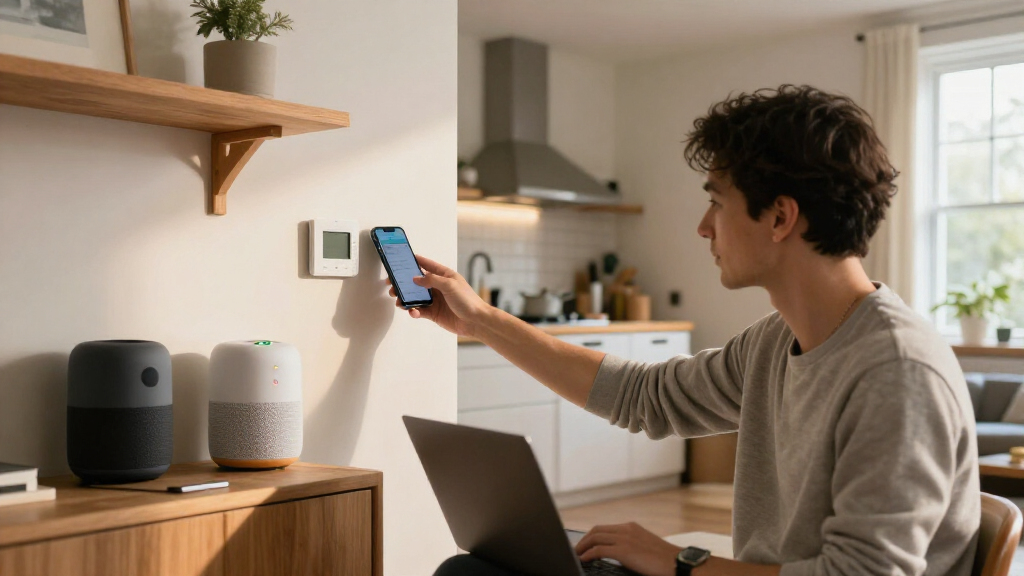
🔍 Read the full analysis: What Matters When Comparing AI Home Automation Devices on ThorstenMeyerAI.com

Get business pricing on monitors, keyboards and dev gear
- Business-only prices and quantity discounts
- Tax-exempt purchasing
- Multiple users, one account, clear invoices
TL;DR
A ThorstenMeyerAI.com guide advises beginners to compare AI home automation devices by platform and network compatibility, privacy settings, security, and the features available on each model. It recommends starting with a low-risk device and testing its connection and controls before building routines.
ThorstenMeyerAI.com has published a beginner’s guide to comparing and setting up AI-enabled home automation devices, urging readers to check platform and Wi-Fi compatibility, privacy controls and account security before connecting equipment. The guide focuses on small systems such as a smart speaker, lights, thermostat or plug and estimates setup will take 45 to 90 minutes, depending on the number of devices and required updates, with more AI home automation devices to look out for as systems expand.
The guide says compatibility should be checked at the model level, not assumed from a product’s general smart-home branding, and choosing among hubs for AI-powered home automation also depends on compatibility. Buyers are advised to confirm which assistant or platform a device supports, whether it needs a hub or a particular Wi-Fi band, and whether the desired routines and AI functions work on that specific model. Some devices may support voice control without supporting every platform automation feature.
Its setup recommendations include using the manufacturer’s official app, installing available app and firmware updates, and checking that the device appears online before creating automations. The guide also advises securing the associated account with a unique password and multifactor authentication when available, and keeping the home router’s security software up to date.
Privacy settings are another comparison point. The guide says AI functions can process commands locally or send voice, sensor or usage data to a cloud service. It recommends reviewing voice-recording and activity-history settings, data sharing, cloud processing and permissions. For cameras and microphones, users should check how recording or listening can be paused and whether the device has a physical control.
Compatibility Shapes the Setup
These checks matter because a device that cannot connect to a home’s network or preferred platform may not deliver the routines a buyer expects. A product’s advertised voice control does not, on its own, confirm support for every automation feature. Confirming hub requirements, Wi-Fi bands and model-specific functions before purchase can help avoid setup problems and mismatched expectations.
Privacy and account controls also affect how a device fits into a household. A speaker, camera or sensor may handle information differently depending on its settings and whether processing takes place locally or in the cloud. Reviewing those options before enabling AI features gives users a clearer basis for deciding what data to share and who can access the system.
The advice has practical safety implications as well. The guide recommends beginning with a low-risk device such as a lamp, rather than first connecting a lock, alarm or heater. That sequence lets a beginner check pairing, naming and voice control without immediately relying on an automation that could affect access or safety.
Popular right now

De'Longhi Rivelia Automatic Espresso Machine with Milk Frother

Ninja Prestige Smart XL Pro Cook System 10-in-1 Air Fryer and Countertop Oven, Stainless Steel, DT551

Vitamix 5200 Professional-Grade Blender, 64 oz. Container, Black
As an affiliate, we earn on qualifying purchases.
A Small System, Step by Step
The source presents the material as a beginner setup guide, not an independent laboratory comparison or a test of device performance. It lists Hubitat, SwitchBot and Green as options, with the site’s own verdicts favoring Hubitat for local, multi-protocol automation and subscription-free AI-assisted routine building; SwitchBot for camera-aware, chat-based control and bundled storage; and Green as a local automation base. These are the publisher’s recommendations, not independently verified findings in the supplied material. The site also discloses that it earns commissions on qualifying Amazon purchases.
The guide’s suggested sequence starts with choosing one task, such as switching on a lamp by voice, then checking platform requirements, securing the account, installing the app and updates, and connecting the device to Wi-Fi or a hub. It advises assigning a clear name and room, then reviewing privacy preferences before creating routines. It estimates 45 to 90 minutes for setup, but does not say that every device or household will fall within that range.
“We recommend Hubitat as the best overall choice when local, multi-protocol automation and subscription-free AI-assisted routine building matter more than beginner-friendly setup.”
— ThorstenMeyerAI.com, in its verdict on Hubitat
What the Guide Does Not Test
The supplied material does not identify the guide’s publication date, describe a testing method or provide independent measurements of reliability, privacy protections, AI accuracy or setup time. Its product rankings and feature descriptions should be read as the publisher’s claims and recommendations, not as confirmed comparative results. No detailed model numbers, subscription prices or device limits are provided.
It is also unclear which products or services are covered by the guide’s broad statements about local processing, cloud data handling and compatibility. Those details can vary by model, software version, region and account settings. Readers would need to consult current manufacturer documentation for the exact device they plan to buy.
Check Details Before Pairing
The guide’s next step for readers is to choose one low-risk task and verify the relevant device’s requirements on its packaging or product page. Before pairing, they should confirm platform support, hub needs, Wi-Fi band and any subscription, then use the official app and follow the manufacturer’s electrical and installation instructions. The source does not announce a follow-up review, test or product update.
After setup, users can check that the device stays online and responds to its intended control before expanding the system. They should review privacy settings again before enabling voice, camera or sensor features, and avoid modifying wiring or installing equipment where an electrician is required unless qualified to do so.
Key Questions
What should I check before buying an AI home automation device?
Confirm that the exact model supports your chosen platform and the features you want. Check whether it needs a hub, a particular Wi-Fi band or a subscription, and review its manufacturer’s information on privacy and data processing.
How long does the guide estimate setup will take?
ThorstenMeyerAI.com estimates 45 to 90 minutes, depending on how many devices are added and whether apps need updates. The source does not present this as a tested guarantee for every setup.
Which device should a beginner set up first?
The guide recommends starting with a low-risk device such as a lamp. It advises against beginning with equipment such as locks, alarms or heaters that can affect safety or access.
Do AI home devices send data to the cloud?
It depends on the device and feature. The guide says some devices process commands locally, while others may send voice, sensor or usage data to a cloud service. Check the specific model’s privacy settings and documentation.
Are the guide’s product recommendations independent test results?
The supplied material provides the publisher’s verdicts but no testing method or comparative measurements. Its rankings should be treated as editorial recommendations, and the guide discloses that the site earns commissions on qualifying Amazon purchases.
Source: ThorstenMeyerAI.com