
TL;DR

Get business pricing on monitors, keyboards and dev gear
- Business-only prices and quantity discounts
- Tax-exempt purchasing
- Multiple users, one account, clear invoices
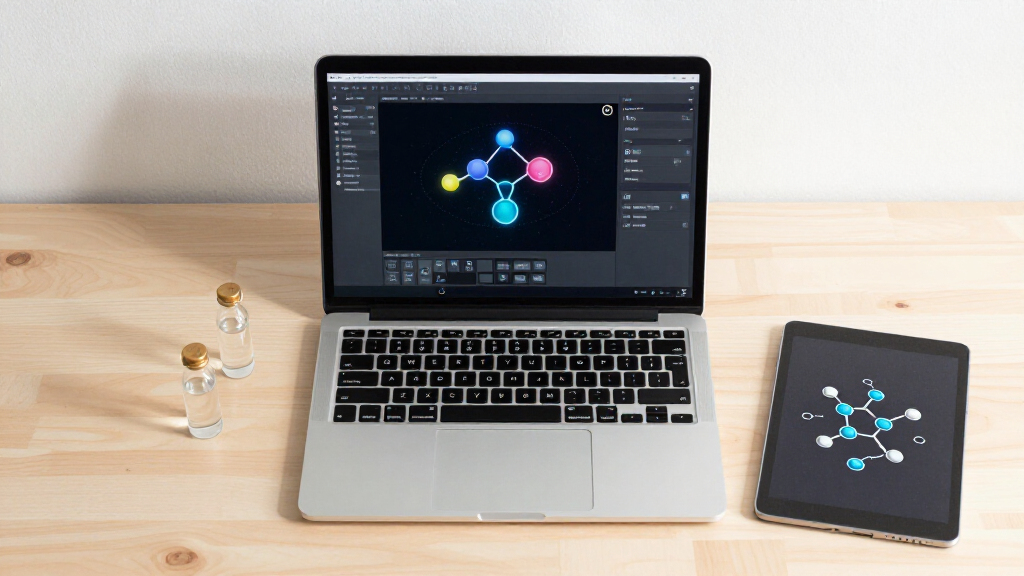
QC Ware has successfully demonstrated a hybrid quantum-classical workflow for chemical simulations on IBM quantum hardware. This development highlights progress in applying quantum computing to chemistry problems, with potential implications for drug discovery and materials science.
QC Ware, a leading quantum software company, has demonstrated a hybrid quantum-classical workflow for chemical simulations using IBM’s quantum hardware. This marks a significant milestone in applying quantum computing to real-world chemistry problems, potentially accelerating drug discovery and materials research.
The demonstration involved running a chemistry simulation that combined classical computational methods with quantum processing on IBM’s quantum computers. QC Ware’s approach integrates quantum algorithms with classical computing resources, aiming to solve complex molecular problems more efficiently than classical methods alone.
According to QC Ware, the workflow successfully executed on IBM’s quantum hardware, showcasing the feasibility of hybrid approaches in practical chemistry applications. The company stated that this is an important step toward integrating quantum computing into existing chemical research pipelines, although full commercial deployment remains in development.
Implications for Quantum-Enhanced Chemical Research
This development is significant because it demonstrates a practical application of quantum computing in chemistry, an area often cited as a promising use case for quantum technology. By successfully combining classical and quantum processes, QC Ware’s workflow could help overcome current limitations in simulating complex molecules, potentially leading to faster drug discovery and new materials development.
Experts suggest that such hybrid workflows could become a standard in quantum chemistry, bridging the gap between theoretical potential and operational utility. The demonstration also underscores IBM’s hardware capabilities and QC Ware’s software innovations, highlighting collaborative progress in the field.
As an affiliate, we earn on qualifying purchases.
Progress in Quantum Chemistry and Industry Collaboration
Quantum computing has long been viewed as a transformative technology for chemistry, but practical applications have been limited by hardware constraints and algorithm development. Over recent years, companies like QC Ware and IBM have collaborated to push these boundaries, focusing on hybrid approaches that leverage existing classical infrastructure alongside emerging quantum processors.
In 2023, several prototypes and small-scale experiments demonstrated quantum advantage in specific chemical calculations. The current demonstration builds on these efforts, showing that real-world workflows are becoming feasible, even if still in early stages of adoption.
“This demonstration proves that hybrid quantum-classical workflows are not just theoretical but can be practically implemented on existing hardware, opening new avenues for chemical research.”
— QC Ware CEO, David Kaiser
quantum computing hardware for chemistry
As an affiliate, we earn on qualifying purchases.
As an affiliate, we earn on qualifying purchases.
Uncertainties About Scalability and Commercial Use
It is still unclear how scalable this hybrid workflow is for larger, more complex molecules, or how soon it might be integrated into commercial research pipelines. The demonstration was a proof-of-concept, and further testing is needed to assess robustness, error rates, and cost-effectiveness for widespread adoption.
Additionally, the timeline for transitioning from experimental demonstrations to practical, industry-grade tools remains uncertain, with technical and operational challenges still to be addressed.
hybrid quantum classical computing kit
As an affiliate, we earn on qualifying purchases.
As an affiliate, we earn on qualifying purchases.
Next Steps Toward Broader Adoption and Development
Moving forward, QC Ware and IBM plan to optimize the workflow for larger molecules and more complex simulations. They also aim to test the approach on different quantum hardware platforms and collaborate with industry partners to evaluate practical applications.
Further research and development are expected over the next 12-24 months, with potential pilot projects in pharmaceuticals and materials science to demonstrate commercial viability.
quantum simulation software for molecules
As an affiliate, we earn on qualifying purchases.
As an affiliate, we earn on qualifying purchases.
Key Questions
What is a hybrid quantum-classical workflow?
A hybrid workflow combines classical computing techniques with quantum algorithms to solve complex problems more efficiently than traditional methods alone, especially in chemistry and materials science.
Why is this demonstration important?
It shows that practical, real-world applications of quantum computing in chemistry are becoming possible, moving beyond theoretical research toward usable tools that can accelerate discovery processes.
What are the limitations of this demonstration?
Current demonstrations are limited in scale and complexity, and it remains to be seen how well they can be scaled up for industrial use. Hardware error rates and cost are also ongoing challenges.
When might this technology be used commercially?
While promising, widespread commercial deployment could still be 2-5 years away, depending on further technical advancements and validation in real-world settings.
What role does IBM play in this development?
IBM provides the quantum hardware used in the demonstration and collaborates with QC Ware on developing and testing the hybrid workflow, showcasing their hardware capabilities and software integration.
Source: rss
Fall Picks
fall essentials
As an affiliate, we earn on qualifying purchases.