

Choosing the right resource for software testing automation tools comes down to matching the book to your tech stack, experience level, and how much architectural depth you need. The Ultimate Selenium WebDriver for Test Automation stands out as the best overall pick because it pairs Java-based framework building with Selenium Grid coverage across realistic industry domains. For teams on modern JavaScript stacks, Web Automation Testing Using Playwright offers the broadest coverage of a single tool, while the Complete Guide to Test Automation appeals to readers who care more about patterns and maintainability than any specific framework. The main tradeoff you will face: tool-specific books teach faster but date quicker, while concept-driven guides age well but leave you to fill in syntax gaps yourself. Keep reading for the full breakdown of all 11 picks, including who each one suits and who should skip it.

Get business pricing on monitors, keyboards and dev gear
- Business-only prices and quantity discounts
- Tax-exempt purchasing
- Multiple users, one account, clear invoices
Key Takeaways
- Selenium remains the most-covered tool in this roundup, but Playwright appears in three separate titles — a clear signal of where web automation investment is heading in 2026.
- Books that anchor automation in a specific language (Java, TypeScript, Python) produce more job-ready readers than language-agnostic guides, but they lock you into that ecosystem’s tooling.
- Only one title, AI Testing with Python, seriously addresses AI-powered testing — readers who skip it risk falling behind on the fastest-moving corner of the field.
- The strongest beginner-to-interview pipeline came from All You Need to Know About Software Testing, which trades framework depth for career-focused breadth.
- Architecture-focused books like Guide to Test Automation Architecture pay off most for readers who already know a tool and are struggling with flaky, unmaintainable test suites.
| Ultimate Selenium WebDriver for Test Automation | 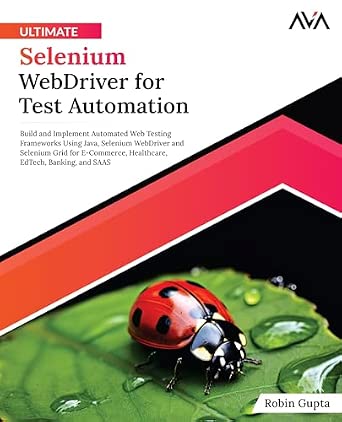 | Best Overall for Framework Builders | Primary Tool: Selenium WebDriver | Language: Java | Key Topics: Framework design, Selenium Grid, web testing | VIEW LATEST PRICE | See Our Full Breakdown |
| Continuous Delivery: Reliable Software Releases through Build, Test, and Deployment Automation |  | Best for the Bigger Pipeline Picture | Focus: Continuous delivery principles and pipeline automation | Coverage Areas: Build automation, test automation, deployment automation | Audience: Developers, DevOps engineers, release managers | VIEW LATEST PRICE | See Our Full Breakdown |
| Web Automation Testing Using Playwright: End-to-end, API, accessibility, and visual testing using Playwright |  | Best for Broad Modern Testing Coverage | Primary Tool: Playwright | Testing Types: End-to-end, API, accessibility, visual | Audience: Developers and testers | VIEW LATEST PRICE | See Our Full Breakdown |
| Complete Guide to Test Automation: Techniques, Practices, and Patterns for Building and Maintaining Effective Software Projects |  | Best for Strategy and Long-Term Maintenance | Focus: Test automation techniques, practices, and patterns | Approach: Tool-agnostic strategy and design patterns | Key Topics: Building and maintaining effective test automation | VIEW LATEST PRICE | See Our Full Breakdown |
| Hands-On Automated Testing with Playwright: Create fast, reliable, and scalable tests for modern web apps with Microsoft’s automation framework |  | Best Hands-On Pick for Modern Web Apps | Primary Tool: Playwright (Microsoft) | Focus: Fast, reliable, scalable web app tests | Approach: Hands-on, project-driven | VIEW LATEST PRICE | See Our Full Breakdown |
| Ultimate Web Automation Testing with Cypress |  | Best for Cypress Specialists | Format: eBook (Kindle) | Primary Tool: Cypress | Testing Type: End-to-end web application testing | VIEW LATEST PRICE | See Our Full Breakdown |
| Playwright Automation Testing: Complete Guide with TypeScript |  | Best for TypeScript Testers | Format: eBook (Kindle) | Primary Tool: Playwright | Language: TypeScript | VIEW LATEST PRICE | See Our Full Breakdown |
| Software Testing and Quality Assurance: Exploring Testing Levels, Test Tools, Automation, and Quality Metrics for Improved Software Quality |  | Best for QA Fundamentals | Format: eBook (Kindle) | Focus: Testing theory, tools, automation strategy, quality metrics | Coverage: Testing levels and QA process improvement | VIEW LATEST PRICE | See Our Full Breakdown |
| All You Need to Know About Software Testing: From Beginner to Job-Ready QA Engineer |  | Best for Career Starters | Format: eBook (Kindle) | Focus: Full QA career curriculum | Topics Covered: Manual testing, automation, APIs, Selenium, Playwright, CI/CD, AI-assisted QA | VIEW LATEST PRICE | See Our Full Breakdown |
| AI Testing with Python: Build Intelligent Test Automation Using Python, Selenium, APIs, PyTest, LLMs & AI-Powered Testing Tools |  | Best for AI-Driven Testing | Format: eBook (Kindle) | Primary Language: Python | Tools Covered: Selenium, APIs, PyTest, LLMs, AI testing tools | VIEW LATEST PRICE | See Our Full Breakdown |
| Guide to Test Automation Architecture: A Roadmap for Building Sustainable Test Automation Frameworks for Modern Software |  | Best for Framework Architecture | Format: Book (digital edition via ASIN B0FNQYGRLG) | Topic Focus: Test automation architecture and framework design | Approach: Tool-agnostic roadmap covering principles and best practices | VIEW LATEST PRICE | See Our Full Breakdown |
| software testing automation tool | Format | Focus | Audience |
|---|---|---|---|
| Ultimate Selenium WebDriver fo | Print/digital book | — | — |
| Continuous Delivery: Reliable | Print/digital book | Continuous delivery principles and pipeline automation | Developers, DevOps engineers, release managers |
| Web Automation Testing Using P | Print/digital book | — | Developers and testers |
| Complete Guide to Test Automat | Print/digital book | Test automation techniques, practices, and patterns | Software developers, testers, QA leads |
| Hands-On Automated Testing wit | Print/digital book | Fast, reliable, scalable web app tests | Developers and testers with some experience |
| Ultimate Web Automation Testin | eBook (Kindle) | QA process acceleration and test automation | QA professionals and developers |
| Playwright Automation Testing: | eBook (Kindle) | — | — |
| Software Testing and Quality A | eBook (Kindle) | Testing theory, tools, automation strategy, quality metrics | Software testing professionals |
| All You Need to Know About Sof | eBook (Kindle) | Full QA career curriculum | — |
| AI Testing with Python: Build | eBook (Kindle) | Intelligent test automation frameworks | — |
| Guide to Test Automation Archi | Book (digital edition via ASIN B0FNQYGRLG) | — | — |
More Details on Our Top Picks
Ultimate Selenium WebDriver for Test Automation
Selenium remains the backbone of web test automation, and this book earns the top spot because it goes beyond syntax into building and maintaining full frameworks with Java and Selenium Grid. Where Hands-On Automated Testing with Playwright teaches you a modern tool quickly, this one teaches you the architecture skills that transfer across employers and projects. The cross-industry examples — banking, healthcare, e-commerce, SaaS — translate into practical outcomes: readers learn patterns that map to regulated environments, not just demo sites. The tradeoff is steepness. Compared with All You Need to Know About Software Testing, this is firmly intermediate-to-advanced material, and Java fluency is effectively a prerequisite. If your team is standardized on Selenium and needs scalable, distributed testing through Grid, this pick makes the most sense.
Pros:- Covers full framework construction, not just individual test scripts
- Selenium Grid coverage enables distributed, parallel test execution at scale
- Industry-specific examples (banking, healthcare, SaaS) map to real workplace scenarios
- Java-based approach aligns with enterprise testing stacks
Cons:- Assumes working Java knowledge — true beginners will struggle
- No rating or review data available to gauge reader reception
- Selenium-focused content doesn’t transfer directly to modern frameworks like Playwright or Cypress
Best for: QA engineers and Java developers who need to build scalable, distributed Selenium WebDriver frameworks for enterprise or regulated-industry applications
Not ideal for: Beginners or teams on JavaScript stacks — the Java focus and framework-heavy approach will slow down anyone still learning test automation basics
- Primary Tool:Selenium WebDriver
- Language:Java
- Key Topics:Framework design, Selenium Grid, web testing
- Industry Coverage:E-commerce, healthcare, EdTech, banking, SaaS
- Skill Level:Intermediate to advanced
- Format:Print/digital book
Our verdict“This is the pick for teams building long-lived Selenium frameworks in Java-heavy enterprises, but skip it if you’re just starting out or working in JavaScript.”
Continuous Delivery: Reliable Software Releases through Build, Test, and Deployment Automation
Most books in this lineup teach you to automate a test; this one teaches you why automated tests exist inside a build-test-deploy pipeline. That systems-level perspective is what earns it a slot despite covering no specific tool. Compared with Ultimate Selenium WebDriver for Test Automation, which goes deep on one framework, this book goes wide — explaining how test automation fits into release reliability, deployment strategy, and feedback loops. It stands out as the choice for engineers who already write tests and now need their releases to be trustworthy and repeatable. The tradeoff is real: there’s no copy-paste code here, and readers expecting Playwright-style tutorials (as in Web Automation Testing Using Playwright) will find it abstract. Some content predates current cloud-native tooling, so pair it with a hands-on book for practical gaps.
Pros:- Explains how test automation connects to build and deployment pipelines
- Written by recognized authorities in the continuous delivery movement
- Principles remain applicable across any toolchain or stack
- Strong fit for DevOps and platform engineering career paths
Cons:- No tool-specific implementation guidance or code examples
- Concepts like deployment pipelines assume prior development experience
- Some examples predate modern container and cloud-native practices
Best for: DevOps engineers, release managers, and senior developers who understand testing tools and need to automate the entire delivery pipeline around them
Not ideal for: Hands-on learners seeking tool-specific test scripts — this is a principles book, not a coding tutorial
- Focus:Continuous delivery principles and pipeline automation
- Coverage Areas:Build automation, test automation, deployment automation
- Audience:Developers, DevOps engineers, release managers
- Skill Level:Intermediate to advanced
- Tool-Specific Content:None — tool-agnostic principles
- Format:Print/digital book
Our verdict“Buy this to understand the pipeline your tests live in — not to learn any particular testing tool.”
Web Automation Testing Using Playwright: End-to-end, API, accessibility, and visual testing using Playwright
This entry stands out for breadth within a single modern tool: end-to-end, API, accessibility, and visual testing all in one Playwright-focused volume. That combination is rare — Hands-On Automated Testing with Playwright covers similar ground but leans toward general web app testing, while this book explicitly folds in a11y and visual regression, which increasingly appear in real QA job requirements. Compared with Selenium-based titles like Ultimate Selenium WebDriver for Test Automation, Playwright’s auto-waiting and multi-browser support mean fewer flaky tests, and the book reflects that modern workflow. The tradeoff is that it’s a newer title with little community feedback to validate depth, and prerequisites go unstated — readers may need to shore up JavaScript fundamentals on their own. For testers wanting one tool to cover every testing layer, this is the strongest match here.
Pros:- Covers four testing layers — E2E, API, accessibility, and visual — in one volume
- Playwright’s modern architecture reduces flaky test maintenance
- Accessibility testing coverage aligns with growing compliance demands
- Directly applicable to current JavaScript-based QA workflows
Cons:- Few or no reader reviews available to gauge quality
- Prerequisites not clearly stated — JavaScript knowledge assumed
- Locks your skills into one vendor ecosystem’s tooling
Best for: QA engineers and developers who want a single modern tool covering UI, API, accessibility, and visual testing layers
Not ideal for: Teams committed to Selenium or Cypress stacks, or readers who want a proven, heavily reviewed title before investing time
- Primary Tool:Playwright
- Testing Types:End-to-end, API, accessibility, visual
- Audience:Developers and testers
- Skill Level:Intermediate
- Language Edition:English Edition
- Format:Print/digital book
Our verdict“The best choice if you want one book that teaches every testing layer in Playwright — just verify your JavaScript is solid first.”
Complete Guide to Test Automation: Techniques, Practices, and Patterns for Building and Maintaining Effective Software Projects
Where most entries here teach a tool, this book teaches the discipline of keeping automation alive years after launch. Its focus on patterns and maintenance practices addresses the problem that kills most automation initiatives: brittle suites nobody trusts. Compared with Continuous Delivery, which zooms out to the whole pipeline, this stays at the test-suite level — choosing what to automate, structuring tests, and avoiding common failure modes. It also serves as a useful counterweight to tool-specific picks like Hands-On Automated Testing with Playwright: read one for syntax, this one for judgment. The drawback is abstraction — there’s no single framework to follow along with, and unclear skill-level guidance means both novices and veterans may find parts mismatched to their needs. This pick makes the most sense for test leads and architects shaping team-wide strategy.
Pros:- Addresses test maintenance — the hardest long-term automation problem
- Tool-agnostic patterns apply to any framework you choose
- Strong guidance on what to automate and what to skip
- Useful for shaping team-wide testing standards
Cons:- No hands-on exercises tied to a specific tool
- Target skill level isn’t clearly defined, making self-placement difficult
- Strategy-heavy content may feel dry for practitioners wanting code
Best for: Test leads, QA architects, and senior engineers responsible for automation strategy and keeping large test suites maintainable
Not ideal for: Junior testers who need step-by-step tool tutorials before strategy content will land
- Focus:Test automation techniques, practices, and patterns
- Approach:Tool-agnostic strategy and design patterns
- Key Topics:Building and maintaining effective test automation
- Audience:Software developers, testers, QA leads
- Skill Level:Intermediate (not explicitly stated)
- Format:Print/digital book
Our verdict“Pick this up when your problem isn’t writing tests — it’s keeping them trustworthy over time.”
Hands-On Automated Testing with Playwright: Create fast, reliable, and scalable tests for modern web apps with Microsoft’s automation framework
Of the two Playwright books in this roundup, this is the practical, project-driven one. Its emphasis on building fast, reliable, and scalable tests suits developers who learn by doing rather than by surveying theory. Compared with Web Automation Testing Using Playwright, which spreads across four testing layers, this title drills deeper into core web app automation — a better fit if end-to-end coverage is your immediate goal rather than accessibility or visual testing breadth. Against Ultimate Selenium WebDriver for Test Automation, the Playwright approach trades Selenium’s massive ecosystem and Java enterprise fit for speed and lower flakiness out of the box. The main drawbacks: prerequisites aren’t spelled out, and the pace assumes some prior automation exposure, so complete newcomers should start with a beginner title like All You Need to Know About Software Testing first.
Pros:- Project-driven structure gets you writing real tests quickly
- Focuses on reliability and scalability, not just basic scripts
- Playwright’s speed and auto-waiting reduce test flakiness
- Directly relevant to modern JavaScript web app stacks
Cons:- Assumes prior automation or development experience without stating it
- Narrower testing coverage than multi-layer Playwright titles
- Smaller ecosystem and community than Selenium-based alternatives
Best for: Web developers and automation engineers with some coding background who want to build production-grade Playwright test suites quickly
Not ideal for: Complete beginners to test automation — the pace and unstated prerequisites make it a frustrating first book
- Primary Tool:Playwright (Microsoft)
- Focus:Fast, reliable, scalable web app tests
- Approach:Hands-on, project-driven
- Audience:Developers and testers with some experience
- Skill Level:Intermediate
- Format:Print/digital book
Our verdict“The right choice for hands-on learners who want dependable Playwright tests for a modern web app this quarter, not a survey of testing theory.”
Ultimate Web Automation Testing with Cypress
Among the tool-specific titles in this roundup, this one stands out for single-tool depth rather than breadth. While All You Need to Know About Software Testing spreads itself across Selenium, Playwright, and CI/CD, this book commits fully to Cypress end-to-end testing, which means readers get the framework’s quirks, patterns, and workflow shortcuts covered properly rather than skimmed. The tradeoff is obvious: pick this only if your team has already standardized on Cypress, because nothing here transfers directly to Playwright-based stacks. Compared with the Web Automation Testing Using Playwright title, the scope is narrower but the treatment is deeper for that one framework. The book serves developers and QA engineers in mid-automation-maturity teams who need to move beyond basic test scripts toward maintainable suites.
Pros:- Deep, dedicated coverage of Cypress rather than a surface-level survey
- Focuses on accelerating real QA workflows, not just syntax tutorials
- Written for both developers and QA professionals working together
- End-to-end testing focus matches how modern web teams actually validate releases
Cons:- Zero transferability to other automation frameworks
- Light on supporting topics like CI/CD integration and quality metrics
Best for: QA engineers and developers on teams already committed to Cypress who need deep, framework-specific guidance
Not ideal for: Teams evaluating multiple frameworks or standardizing on Playwright or Selenium — the single-tool focus locks you in
- Format:eBook (Kindle)
- Primary Tool:Cypress
- Testing Type:End-to-end web application testing
- Audience:QA professionals and developers
- Focus:QA process acceleration and test automation
- Tool Scope:Single framework (Cypress)
Our verdict“Buy this only if Cypress is your team’s chosen framework and you want the deepest available treatment of it.”
Playwright Automation Testing: Complete Guide with TypeScript
Where the other Playwright titles in this roundup — Web Automation Testing Using Playwright and Hands-On Automated Testing with Playwright — keep things language-agnostic or beginner-leaning, this book pairs Playwright with TypeScript from the ground up, which matters because type-safe test code is what keeps large suites maintainable. The practical examples and best-practice patterns translate directly into fewer flaky tests and faster onboarding for frontend developers who already live in TypeScript. Compared with the Cypress title, this option makes more sense for teams building on Microsoft’s ecosystem or needing cross-browser coverage Cypress handles less gracefully. The tradeoff is the learning curve: pairing a framework and a typed language at once can overwhelm someone who has never written a line of test code, so true novices should start elsewhere in this lineup.
Pros:- TypeScript integration produces maintainable, type-safe test suites
- Practical, example-driven structure rather than pure theory
- Scales from beginner-friendly setup to advanced techniques
- Playwright covers all major browsers from one API
Cons:- Assumes some programming comfort that absolute beginners won’t have
- Overlaps heavily with other Playwright books already in this roundup
Best for: Frontend developers and testers comfortable with (or wanting to learn) TypeScript who need scalable cross-browser automation
Not ideal for: Complete beginners with no coding background — the TypeScript layer adds friction on top of learning automation itself
- Format:eBook (Kindle)
- Primary Tool:Playwright
- Language:TypeScript
- Coverage:Setup, best practices, advanced techniques
- Audience Level:Beginner to experienced
- Testing Type:Web UI automation
Our verdict“The strongest pick for developers who want Playwright taught the way professional teams actually write it — in TypeScript.”
Software Testing and Quality Assurance: Exploring Testing Levels, Test Tools, Automation, and Quality Metrics for Improved Software Quality
This is the theory-first entry in a lineup dominated by tool tutorials. Instead of teaching one framework, it maps the whole QA landscape — testing levels, tool categories, automation strategy, and quality metrics — which is exactly the knowledge that separates a script-writer from someone who can design a test strategy. Compared with Ultimate Web Automation Testing with Cypress, you sacrifice hands-on code for decision-making context: when to automate, what to measure, and why. That makes this a better fit for QA leads and process owners than for hands-on automators, though the Guide to Test Automation Architecture title covers the architectural slice of that ground in more depth. The drawback is genuine — without a specific edition, clear audience-level guidance, or tool-version currency, the practical shelf life depends on how current the print run is.
Pros:- Covers the full QA landscape instead of a single tool
- Strong treatment of quality metrics, which most tool books ignore
- Frames automation as a strategic decision, not just a skill
- Useful for structuring team-wide testing processes
Cons:- No specific edition or publication details to judge currency
- Unclear target audience level — risks being too basic for some, too abstract for others
- Lacks hands-on exercises found in the framework-specific titles
Best for: QA leads, test managers, and process-focused engineers who need strategic grounding before choosing tools
Not ideal for: Hands-on automators hunting for framework tutorials — there is little copy-paste code here
- Format:eBook (Kindle)
- Focus:Testing theory, tools, automation strategy, quality metrics
- Coverage:Testing levels and QA process improvement
- Audience:Software testing professionals
- Tool Scope:Multi-tool survey
- Approach:Conceptual and process-oriented
Our verdict“Choose this when you need to understand what and why to test before deciding which tool to test with.”
All You Need to Know About Software Testing: From Beginner to Job-Ready QA Engineer
This book makes the list for one reason: it is the only entry here structured as a career pathway rather than a technical manual. Moving from manual testing basics through automation, APIs, Selenium, Playwright, CI/CD, and AI-assisted QA, it mirrors the actual skill checklist hiring managers use for junior QA roles. Compared with Software Testing and Quality Assurance, which assumes professional context, this starts from zero and builds toward employability — a genuinely different job. The tradeoff is depth: every topic the Cypress and Playwright titles dedicate entire books to gets a chapter here, so readers will outgrow it quickly and should treat it as a launchpad, not a reference. With no reviews or ratings available, buyers are taking something of a chance on execution quality.
Pros:- Maps directly to the modern junior QA job description, including CI/CD
- Includes AI-assisted QA content most beginner books skip
- One-volume coverage removes the need to buy five separate starter books
- Builds progressively from manual testing into automation
Cons:- Jack-of-all-trades coverage means shallow treatment of each tool
- No reviews or ratings available to verify quality
- No edition details, so tool-version currency is uncertain
Best for: Career-changers and new graduates who want a single roadmap from zero testing knowledge to a junior QA role
Not ideal for: Working testers who need depth in one framework — the broad survey will feel thin
- Format:eBook (Kindle)
- Focus:Full QA career curriculum
- Topics Covered:Manual testing, automation, APIs, Selenium, Playwright, CI/CD, AI-assisted QA
- Audience Level:Beginner
- Outcome:Job-ready junior QA engineer
- Tool Scope:Multi-tool survey
Our verdict“The right first book for someone entering QA; the wrong only book for someone already in it.”
AI Testing with Python: Build Intelligent Test Automation Using Python, Selenium, APIs, PyTest, LLMs & AI-Powered Testing Tools
This is the most forward-looking entry in the roundup, and the only one that treats AI as a working component of a test framework rather than a buzzword. Pairing Python, Selenium, PyTest, and large language models, it teaches testers to build automation that generates, maintains, or augments test coverage — territory none of the Playwright or Cypress titles touch. Compared with Playwright Automation Testing: Complete Guide with TypeScript, this suits backend-leaning engineers more than frontend specialists, since the Python/PyTest stack dominates API and service-level testing. The tradeoff is steepness: it assumes prior testing experience, so it sits at the opposite end of the spectrum from All You Need to Know About Software Testing. Readers without a Python foundation will struggle before the AI content even begins.
Pros:- Only title in this lineup covering LLMs and AI-powered testing practically
- Python and PyTest form a widely-used, transferable automation stack
- Practical Selenium and API examples ground the AI concepts
- Positions readers for where test automation is heading, not where it has been
Cons:- Assumes existing testing and Python experience
- AI tooling evolves fast, so specifics may date quickly
- Spreads across many tools, limiting depth on any one
Best for: Experienced Python testers and SDETs who want to integrate LLMs and AI tooling into their automation frameworks
Not ideal for: Beginners without prior testing or Python experience — the AI material stacks on top of two prerequisites
- Format:eBook (Kindle)
- Primary Language:Python
- Tools Covered:Selenium, APIs, PyTest, LLMs, AI testing tools
- Focus:Intelligent test automation frameworks
- Audience Level:Intermediate to advanced testers
- Testing Type:Web, API, and AI-augmented automation
Our verdict“The pick for established testers who want a head start on AI-augmented automation before it becomes table stakes.”
Guide to Test Automation Architecture: A Roadmap for Building Sustainable Test Automation Frameworks for Modern Software
Most titles in this roundup teach you how to drive a specific tool — Selenium, Playwright, or Cypress — but this book takes a step back and answers the harder question: how do you design an automation framework that survives multiple projects and years of change? Compared with Ultimate Selenium WebDriver for Test Automation, which goes deep on one technology stack, this pick is tool-agnostic, focusing on architecture principles, maintainability, and long-term reliability. That makes it the right companion read for anyone who already knows the syntax of a tool and keeps hitting walls with flaky, unmaintainable test suites. The tradeoff is real, though: if you want copy-paste code, this won’t deliver it the way the Playwright or Cypress titles do, and the conceptual depth may frustrate absolute beginners who still need a first tool-based book.
Pros:- Tool-agnostic approach that stays relevant as frameworks and technologies change
- Focuses on sustainability and maintainability — the root cause of most failed automation efforts
- Covers architecture principles and best practices that tool-specific books skip
- Well suited as a companion to hands-on titles like the Selenium or Playwright guides
- Addresses framework design at team and organization scale, not just individual scripts
Cons:- No hands-on code exercises compared with tool-focused books in this roundup
- Conceptual depth can overwhelm readers new to automation
- Lacks clear edition and publication details, making it harder to judge how current the content is
Best for: QA leads and senior automation engineers designing or refactoring framework architecture rather than learning a specific tool
Not ideal for: Beginners seeking hands-on, tool-specific tutorials — the abstract, principles-first approach assumes you already know a testing tool
- Format:Book (digital edition via ASIN B0FNQYGRLG)
- Topic Focus:Test automation architecture and framework design
- Approach:Tool-agnostic roadmap covering principles and best practices
- Core Coverage:Sustainable framework design, architecture principles, efficiency and reliability strategies
- Target Audience:Intermediate to advanced QA engineers and automation architects
- Experience Level Required:Prior familiarity with at least one automation tool recommended
- Best Use:Framework planning, redesign, or scaling across modern software projects
Our verdict“Buy this if you already know a testing tool and want the architectural playbook for building automation frameworks that last — skip it if you’re still learning your first framework.”

How We Picked
I evaluated each title against the criteria that actually determine whether a testing automation book helps or collects dust: tool relevance in 2026, depth versus breadth balance, language and ecosystem fit, hands-on project content, and how well the material survives tool updates. Books that teach transferable patterns alongside a specific tool ranked higher than pure API references, because automation tools change far faster than the underlying practices. I also weighted whether each book addresses real maintenance pain — flaky tests, CI integration, and scaling — since those are the problems that sink automation efforts in practice.
The ranking logic is straightforward: comprehensive, current, and stack-relevant titles sit at the top; specialist picks fill specific niches like AI testing or QA career preparation; and broader conceptual guides round out the list for readers who need foundations before committing to a framework. No title earned a spot without offering something its competitors do not, which is why you will see clear ‘skip this if’ guidance throughout.
| software testing automation tool | Format | Audience |
|---|---|---|
| Ultimate Selenium WebDriver fo | Print/digital book | — |
| Continuous Delivery: Reliable | Print/digital book | Developers, DevOps engineers, release managers |
| Web Automation Testing Using P | Print/digital book | Developers and testers |
| Complete Guide to Test Automat | Print/digital book | Software developers, testers, QA leads |
| Hands-On Automated Testing wit | Print/digital book | Developers and testers with some experience |
| Ultimate Web Automation Testin | eBook (Kindle) | QA professionals and developers |
| Playwright Automation Testing: | eBook (Kindle) | — |
| Software Testing and Quality A | eBook (Kindle) | Software testing professionals |
| All You Need to Know About Sof | eBook (Kindle) | — |
| AI Testing with Python: Build | eBook (Kindle) | — |
| Guide to Test Automation Archi | Book (digital edition via ASIN B0FNQYGRLG) | — |
Factors to Consider When Choosing Software Testing Automation Tools
Before committing to any one of these titles, it helps to understand the forces that shape automation learning in general. The books above differ enormously in assumptions, and picking wrong usually means buying two books instead of one.Match the Tool to Your Actual Tech Stack
The single most common mistake is buying a book for a tool your team does not use. A Selenium-and-Java title will not serve a TypeScript shop running Playwright, no matter how well written it is. Audit your product first: what language does your application use, what browsers must you support, and does your team already have CI infrastructure? Selenium still dominates enterprise Java environments, while Playwright and Cypress lead in modern JavaScript teams. If you are job hunting rather than serving a current team, look at job postings in your target market and learn the tool they list most — that research is worth more than any book purchase.
Breadth-First or Depth-First Learning
There are two viable learning strategies, and mixing them produces the worst outcomes. Breadth-first readers should start with a general testing or test automation guide to understand levels, metrics, and where automation fits, then add a tool-specific book later. Depth-first readers who already understand testing fundamentals get more from a single-tool deep dive that builds a working framework chapter by chapter. The failure mode I see most often is beginners buying a 500-page framework-building book and abandoning it at chapter three because they lack the vocabulary. Be honest about which learner you are before spending.
The Shelf-Life Problem
Automation tools iterate fast, and books age at different rates depending on how they are written. Titles organized around a tool’s specific UI or API syntax can become partially obsolete within a couple of major releases. Books that emphasize architecture, selector strategy, CI/CD integration, and test design patterns stay useful even when the tool underneath changes. A reasonable hedge: pair one deep, current tool-specific book with one architecture or practice-focused title, so half your library survives the next tool migration. Also check the publication date against the tool’s release history before buying anything more than two years old.
Hands-On Projects Versus Reference Material
Books with realistic end-to-end projects — building a framework for an e-commerce or banking scenario — produce measurably better retention than reference-style guides, because automation is a skill learned by typing, not reading. That said, reference material has its place once you are productive and need to look up patterns. The tradeoff is time: project-driven books demand ten or more hours of committed practice, while references can be consumed selectively. If you cannot commit to building along with the book, a project-heavy title will feel frustrating rather than empowering.
Where AI Testing Fits in 2026
AI-assisted testing has moved from novelty to practical reality, but most automation books still treat it as a footnote. If your organization is investing in LLM-powered test generation, visual validation, or self-healing selectors, seek out the few titles that cover this seriously rather than assuming your traditional automation skills will carry you forward. That said, AI testing builds on conventional foundations — you still need to understand locators, assertions, and CI pipelines before AI tooling makes sense. Beginners should not start with AI-focused books; mid-career automators should not ignore them.
Budget and Format Tradeoffs
Most of these titles sit in a similar price band, so the real currency is your time rather than your money. A 600-page comprehensive guide costs weeks of evenings; a focused specialist title might pay off in a weekend. Digital editions frequently update faster than print, which matters for fast-moving tools, and some publishers offer free updates when a tool releases a major version — worth checking before purchase. If you are torn between two titles, the shorter one you will actually finish usually beats the definitive one you will not.
Frequently Asked Questions
Should I learn Selenium or Playwright in 2026?
Both remain excellent choices, but they suit different situations. Selenium still powers the majority of enterprise test suites, dominates Java-based job listings, and offers unmatched browser and language coverage through Selenium Grid. Playwright is the faster-moving option with superior auto-waiting, multi-browser context handling, and tighter developer experience, which is why three separate books in this roundup cover it. If you already work in a Java enterprise environment, Selenium is the safer investment; if you build modern JavaScript or TypeScript applications, Playwright will feel more natural. The transferable skills — locators, assertions, test design — carry across both, so the choice matters less than people fear.
Can one book cover both manual testing concepts and automation?
A few try, and the results vary considerably. The All You Need to Know About Software Testing title and the Software Testing and Quality Assurance book both blend testing levels, metrics, and automation into one package, which works well for readers preparing for QA roles that require both skill sets. The tradeoff is depth: a book splitting attention between manual concepts and automation frameworks will teach you less Selenium or Playwright than a dedicated title. My suggestion is to start with a combined book only if you are new to testing entirely. If you already understand test cases, boundaries, and regression testing, go straight to a framework-specific pick and save yourself the repetition.
Do I need to know how to code before buying an automation book?
For most titles in this roundup, yes — and this is the most common source of buyer disappointment. Books like Ultimate Selenium WebDriver assume working Java knowledge, while the TypeScript Playwright guides expect JavaScript fluency. Attempting them without programming fundamentals typically leads to copying code without understanding it, which collapses the moment you hit a real debugging problem. If your coding is shaky, budget time for a language primer first, or choose a book that teaches the language alongside the tool. The Python-based AI testing title is comparatively forgiving for newer programmers because Python syntax stays readable.
Is AI-powered testing worth learning now or should I wait?
Learning the fundamentals now, and layering AI tooling on top, is the pragmatic path. AI in testing is already productive in specific areas — visual regression detection, test generation assistance, and self-healing selectors — but it has not replaced the need to understand test architecture, and no serious team has automated away their automation engineers. The AI Testing with Python book in this lineup is built exactly for this transition, combining Selenium and PyTest foundations with LLM-based tooling. Waiting entirely risks falling behind peers; going all-in on AI tooling without foundations risks building fragile suites. Treat AI as an accelerant for skills you already have, not a shortcut around them.
What makes a test automation book go out of date, and how do I pick one that lasts?
The fastest-aging content is anything tied to a tool’s specific UI, IDE plugins, or cloud service dashboards, since those change every few releases. The most durable content covers selector strategy, test pyramid reasoning, CI/CD integration concepts, parallel execution architecture, and maintainable framework design — these principles survive tool migrations intact. When evaluating a book, skim its table of contents: if most chapters describe a tool’s menus and APIs, expect a shorter useful life; if chapters discuss design patterns and tradeoffs, expect longevity. Pairing one current tool-specific title with one architecture-focused book, as this roundup’s top picks do, is the most reliable hedge against obsolescence.
Conclusion
The right pick here depends entirely on where you are starting from. For best overall, the Ultimate Selenium WebDriver for Test Automation delivers the most complete journey from framework construction to Grid-based scaling, with domain scenarios that mirror real work. The Web Automation Testing Using Playwright title earns best value for modern stacks by covering end-to-end, API, accessibility, and visual testing in one place. Readers who want the most future-proof investment should look at AI Testing with Python, the only premium-leaning pick that addresses where the field is actively heading. For beginners, All You Need to Know About Software Testing builds the foundations that make every other book here easier to absorb. Finally, for a specific need — rescuing a failing test suite — the Guide to Test Automation Architecture targets exactly the maintainability problems that tool tutorials never solve. Whichever direction you take, commit to building along with the book rather than just reading it; that is what separates automators who ship from those who shelve.