
Software testing automation platforms and learning resources vary in how quickly they help teams build maintainable tests, so the right choice depends on your framework, experience, and workflow. My best overall pick is Playwright Automation Testing: A Practical Guide to Web Automation, API Testing, Page Objects, CI/CD, Framework Design, and SDET Interviews, thanks to its broad coverage of a production testing workflow. Complete Guide to Test Automation stands out for readers who want transferable practices, while Software Testing Unlocked is the friendliest starting point for beginners. The main tradeoff is between a focused, hands-on framework guide and broader instruction that can apply across projects. Read on for the full breakdown of all nine options and how to match one to your needs.

Get business pricing on monitors, keyboards and dev gear
- Business-only prices and quantity discounts
- Tax-exempt purchasing
- Multiple users, one account, clear invoices
Key Takeaways
- The most useful all-around coverage spans the full workflow: the practical Playwright guide connects browser and API tests with page objects, framework design, and CI/CD.
- Playwright is the clearest specialization in this group: several titles cover it, but their emphasis ranges from Python and AI to accessibility and visual testing.
- AI is a topic focus, not a substitute for fundamentals: the specification-driven and AI-assisted Playwright guides suit readers exploring AI-supported test design, while core testing knowledge still matters.
- Beginner needs differ from certification needs: Software Testing Unlocked introduces QA and automation, whereas the certification study guide is aimed at structured exam preparation.
- Broad guides trade depth for range: Complete Guide to Test Automation offers patterns and practices beyond one framework, while Jest- and Cypress-focused material targets a narrower toolset.
| Spec-Driven Software Testing with AI: Build Reliable Test Suites from Specifications |  | Best for Specification-Led Test Design | Primary focus: Building test suites from specifications | AI coverage: AI-assisted testing | Testing approach: Test automation | VIEW LATEST PRICE | See Our Full Breakdown |
| Web Automation with Playwright and Python Using AI and MCP | 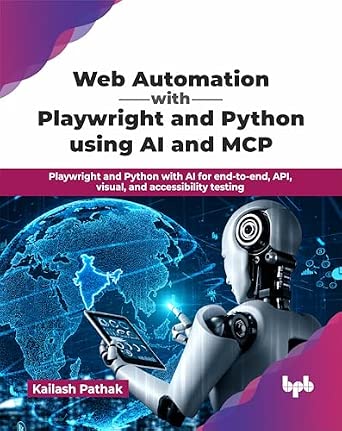 | Best for AI-Assisted Playwright Web Testing | Language: English | Automation framework: Playwright | Programming language: Python | VIEW LATEST PRICE | See Our Full Breakdown |
| Playwright Automation Testing: A Practical Guide to Web Automation, API Testing, Page Objects, CI/CD, Framework Design, and SDET Interviews |  | Best for Playwright Framework Building | Format: Book | Automation framework: Playwright | Web testing: Web automation | VIEW LATEST PRICE | See Our Full Breakdown |
| Automated Software Testing: A Practical Guide to Jest, Cypress, TDD, and CI/CD |  | Best for Jest and Cypress Fundamentals | Jest coverage: Jest | Browser automation coverage: Cypress | Development practice: Test-driven development (TDD) | VIEW LATEST PRICE | See Our Full Breakdown |
| Software Testing Unlocked: A Beginner’s Guide to QA and Automation |  | Best for First-Time QA Learners | Format: Guide | Audience: Beginners | Program structure: 20-step learning path | VIEW LATEST PRICE | See Our Full Breakdown |
| Test Automation Fundamentals: Study Guide for the Certified Test Automation Engineer Exam |  | Best for Certification-Focused Learners | Exam: Certified Test Automation Engineer | Level: Advanced Level Specialist | Compliance: ISTQB® | VIEW LATEST PRICE | See Our Full Breakdown |
| Playwright Test Automation with AI: Build a Production-Grade Test Automation Framework Using AI |  | Best for AI-Assisted Playwright Framework Building | Format: Book | Primary tool: Playwright | Focus: Test automation | VIEW LATEST PRICE | See Our Full Breakdown |
| Complete Guide to Test Automation: Techniques, Practices, and Patterns for Building and Maintaining Effective Software Projects |  | Best for Broad Automation Practices | Subject: Test automation | Coverage: Techniques, practices, and patterns | Project focus: Building and maintaining software projects | VIEW LATEST PRICE | See Our Full Breakdown |
| Web Automation Testing Using Playwright: End-to-End, API, Accessibility, and Visual Testing |  | Best for Multi-Discipline Playwright Web Testing | Format: English Edition | Tool: Playwright | Subject: Web automation testing | VIEW LATEST PRICE | See Our Full Breakdown |
More Details on Our Top Picks
Spec-Driven Software Testing with AI: Build Reliable Test Suites from Specifications
Specification-led test design is the defining strength here: this guide centers on turning requirements into test suites, rather than starting with a particular browser framework. Its coverage of AI-assisted testing, TDD, API testing, and CI/CD makes it a useful fit for teams that want to connect test planning with implementation and delivery. Compared with Playwright Automation Testing: A Practical Guide to Web Automation, API Testing, Page Objects, CI/CD, Framework Design, and SDET Interviews, it appears broader in its approach to deriving tests from specifications, while offering less detail in the supplied description about a specific framework or page-object design. That breadth is also the tradeoff: readers seeking step-by-step Playwright instruction may prefer the Playwright-focused guide. I’d choose this for a requirements-first view of automation, not as a substitute for platform-specific documentation.
Pros:- Centers test creation on specifications, helping connect requirements with coverage.
- Brings AI-assisted testing, TDD, API testing, and CI/CD into one guide.
- Offers a broader workflow perspective than a guide focused only on Playwright.
Cons:- The supplied description does not name a specific automation platform or programming language.
- No experience level, format, or depth of practical examples is specified.
- Its broad topic mix may be less useful to readers who need focused, hands-on instruction for one tool.
Best for: QA leads, developers, and test engineers who want to turn written specifications into automated test coverage across APIs and CI/CD workflows.
Not ideal for: Readers seeking a detailed, framework-specific tutorial or a beginner-first introduction; the supplied details do not identify a particular platform or experience level.
- Primary focus:Building test suites from specifications
- AI coverage:AI-assisted testing
- Testing approach:Test automation
- Development practice:Test-driven development (TDD)
- API coverage:API testing
- Delivery coverage:CI/CD
Our verdict“Choose this guide if your priority is building automation from specifications across testing and delivery practices, rather than mastering one named framework.”
Web Automation with Playwright and Python Using AI and MCP
This guide has a distinct angle among the Playwright choices: it pairs Python and Playwright with AI and MCP, then extends beyond end-to-end checks into API, visual, and accessibility testing. That combination suits readers who want a web-testing workflow that spans several quality checks, rather than only browser interactions. Compared with Playwright Automation Testing: A Practical Guide to Web Automation, API Testing, Page Objects, CI/CD, Framework Design, and SDET Interviews, this title foregrounds AI and MCP and explicitly includes visual and accessibility testing; the other guide calls out page objects, framework design, CI/CD, and interview preparation. The tradeoff is a narrower toolchain: Python and Playwright may not fit teams standardized on another language or platform, and the supplied details do not specify how deeply each test type is taught.
Pros:- Combines Playwright with Python for a clearly defined web automation stack.
- Covers end-to-end, API, visual, and accessibility testing.
- Includes AI and MCP as part of the automation focus.
- Spans more test types than a browser-only guide.
Cons:- The Python and Playwright focus may not match teams using other frameworks or languages.
- The supplied product details do not mention CI/CD or framework design.
- No experience level or depth of coverage is specified.
Best for: Python developers and QA engineers adopting Playwright who want to explore AI- and MCP-assisted web, API, visual, and accessibility testing.
Not ideal for: Teams standardized on another browser-testing framework or language, and readers who need stated coverage of CI/CD or framework architecture.
- Language:English
- Automation framework:Playwright
- Programming language:Python
- AI coverage:AI-assisted web automation
- Additional technology:MCP
- Testing coverage:End-to-end, API, visual, and accessibility testing
Our verdict“Pick this for a Python-and-Playwright learning path that includes AI, visual, and accessibility testing; skip it if your priority is CI/CD or framework architecture.”
Playwright Automation Testing: A Practical Guide to Web Automation, API Testing, Page Objects, CI/CD, Framework Design, and SDET Interviews
For readers who want to build a maintainable Playwright setup, this is the most architecture-oriented choice in the group. Its combination of page objects, framework design, API testing, and CI/CD links test writing to the larger system needed to run and maintain checks. It also includes SDET interview topics, giving it extra relevance to people preparing for automation roles. Compared with Web Automation with Playwright and Python Using AI and MCP, this guide emphasizes framework structure and delivery practices rather than AI, MCP, and visual or accessibility testing. That makes it a better match for a conventional Playwright engineering path, but less compelling for readers seeking AI-assisted workflows or broad coverage of specialized web checks. Its listed topics are wide-ranging, so readers should confirm the depth they need before choosing it.
Pros:- Covers web automation and API testing in one Playwright-focused guide.
- Includes page objects and framework design for organizing test suites.
- Addresses CI/CD, connecting automation with delivery workflows.
- Adds SDET interview topics for readers preparing for automation roles.
Cons:- The supplied description does not state a target experience level.
- AI, MCP, visual testing, and accessibility testing are not listed as topics.
- The broad subject list may leave the depth of each area unclear.
Best for: Automation engineers and aspiring SDETs who want to structure Playwright web and API tests and connect them to CI/CD.
Not ideal for: Beginners looking for a clearly stated introductory course, or Python developers specifically seeking AI, MCP, visual, and accessibility testing coverage.
- Format:Book
- Automation framework:Playwright
- Web testing:Web automation
- API coverage:API testing
- Test design:Page objects
- Delivery coverage:CI/CD
- Architecture coverage:Framework design
- Career topic:SDET interviews
Our verdict“Choose this when framework structure, API checks, and CI/CD matter more than AI-assisted testing or a beginner-oriented learning path.”
Automated Software Testing: A Practical Guide to Jest, Cypress, TDD, and CI/CD
Jest and Cypress give this guide a different center of gravity from the Playwright-focused titles: it brings together testing tools with TDD and CI/CD, aiming to build practical automation skills and reduce production bugs. That pairing can suit learners working across application tests and browser automation who want development and delivery practices alongside tool coverage. Compared with Playwright Automation Testing: A Practical Guide to Web Automation, API Testing, Page Objects, CI/CD, Framework Design, and SDET Interviews, this guide trades Playwright-specific architecture and API coverage for a Jest-and-Cypress mix and an explicit TDD focus. The product details do not state the intended experience level, format, or how the tools are divided across examples, so I’d choose it for the named topics rather than assume a particular course structure.
Pros:- Names both Jest and Cypress, offering coverage across different testing tools.
- Connects automated testing with TDD practices.
- Includes CI/CD, linking test automation to delivery workflows.
- Focuses on building skills intended to help reduce production bugs.
Cons:- The supplied information does not identify the intended experience level.
- No details are provided about book format, length, or teaching structure.
- API testing and framework design are not listed among the covered topics.
Best for: Developers and QA learners who want an introduction to automation practices spanning Jest, Cypress, TDD, and CI/CD.
Not ideal for: Teams committed to Playwright or readers seeking a clearly described API-testing, framework-design, or SDET-interview curriculum.
- Jest coverage:Jest
- Browser automation coverage:Cypress
- Development practice:Test-driven development (TDD)
- Delivery coverage:CI/CD
- Primary subject:Automated software testing
- Stated goal:Build testing skills and reduce production bugs
Our verdict“Choose this if Jest, Cypress, TDD, and CI/CD match your learning goals; pick a Playwright guide if you need Playwright-specific framework instruction.”
Software Testing Unlocked: A Beginner’s Guide to QA and Automation
This is the clearest entry point for readers new to software quality: it combines QA fundamentals and automation in a stated 20-step learning path aimed at people preparing for a first QA job. That beginner focus sets it apart from the Playwright and Jest/Cypress guides, which name specific tools and technical practices but do not specify an entry-level audience. The tradeoff is that readers looking to build an advanced framework or select a platform for an established team may find the scope too foundational; no particular automation framework, programming language, API-testing method, or CI/CD coverage is listed. I’d treat it as a learning guide for getting oriented to QA and automation, not as a technical reference for implementing a production test platform.
Pros:- Pairs software quality assurance fundamentals with test automation.
- Uses a 20-step learning path to give beginners a defined progression.
- Is explicitly aimed at readers preparing for an entry-level QA role.
Cons:- The beginner focus may not provide enough depth for experienced practitioners.
- No specific automation framework or programming language is named.
- The supplied details do not list API testing, framework design, or CI/CD coverage.
Best for: People new to software testing who want a structured introduction to QA and automation while preparing for an entry-level QA role.
Not ideal for: Experienced automation engineers and teams choosing a platform or building framework-specific CI/CD and API test suites.
- Format:Guide
- Audience:Beginners
- Program structure:20-step learning path
- Primary subject:Software testing
- QA coverage:Quality assurance
- Automation coverage:Test automation
- Stated career goal:Preparation for a first QA job
Our verdict“Choose this for a structured first step into QA and automation, but select a framework-specific guide when you are ready to build technical test suites.”
Test Automation Fundamentals: Study Guide for the Certified Test Automation Engineer Exam
This is the most certification-specific choice in the group: its focus is the Certified Test Automation Engineer exam at the ISTQB® advanced specialist level. That makes it a better fit for readers with a defined credential goal than Complete Guide to Test Automation, whose stated focus is broader techniques, practices, and patterns. The tradeoff is that an exam guide may be less useful as a hands-on manual for building a particular framework; the available details do not identify coding exercises, tools, or sample projects. I’d choose it when exam alignment and specialist-level study matter more than learning a specific stack. Readers seeking practical web automation with Playwright should look instead at Web Automation Testing Using Playwright.
Pros:- Targets a clearly identified test automation certification exam
- Specifies an advanced-level specialist scope
- States ISTQB® compliance
Cons:- The supplied details do not specify hands-on exercises or example projects
- Exam-oriented coverage may be less useful for readers choosing a practical automation stack
Best for: Test automation professionals preparing for the Certified Test Automation Engineer advanced-level specialist exam
Not ideal for: Developers seeking step-by-step framework code, Playwright instruction, or a general introduction to software testing
- Exam:Certified Test Automation Engineer
- Level:Advanced Level Specialist
- Compliance:ISTQB®
- Resource type:Study guide
- Subject:Test automation
- ASIN:B0BG28NWRV
Our verdict“Choose this guide when your priority is structured preparation for the ISTQB® Certified Test Automation Engineer exam, not learning a specific tool.”
Playwright Test Automation with AI: Build a Production-Grade Test Automation Framework Using AI
This book takes a stack-specific route, pairing Playwright with an AI-assisted framework-building angle and a stated goal of production-grade automation. That gives it a more focused use case than Complete Guide to Test Automation, which promises broader techniques and patterns rather than a named tool. It may suit developers who want to explore how AI fits into Playwright framework work, but the available product details don’t explain which AI methods, project examples, or framework components are covered. Compared with Web Automation Testing Using Playwright, its differentiator is AI and framework construction; that other title explicitly names end-to-end, API, accessibility, and visual testing. I’d pick this for its stated approach, while treating depth as unverified from the supplied information.
Pros:- Focuses specifically on Playwright test automation
- Aims at building a production-grade framework
- Explicitly brings AI into its test automation approach
Cons:- The supplied details do not identify specific AI tools or techniques
- The scope, examples, and coverage depth are not described beyond the title
Best for: Developers already interested in Playwright who want a book focused on building a production-oriented framework with an AI component
Not ideal for: Readers who need confirmed coverage of particular AI tools, detailed examples, or a broad overview of web testing types
- Format:Book
- Primary tool:Playwright
- Focus:Test automation
- Framework goal:Production-grade test automation framework
- Approach:AI in test automation
- ASIN:B0HJLR1W6Y
Our verdict“Pick this if you want a Playwright framework guide with an AI focus, but seek more detail before relying on it for a specific implementation.”
Complete Guide to Test Automation: Techniques, Practices, and Patterns for Building and Maintaining Effective Software Projects
This is the broadest-sounding option in this batch: its stated subject spans techniques, practices, and patterns for building and maintaining software projects. That makes it a plausible starting point for readers who want a general automation perspective rather than a single tool or certification path. The contrast is clear: Test Automation Fundamentals targets a named ISTQB® exam, while Web Automation Testing Using Playwright specifies web testing areas and a concrete tool. Here, the title does not name a language, platform, or particular testing domain, so buyers cannot tell from the supplied information how hands-on or current its examples are. I’d favor it for breadth, but not when a team needs guidance tied to a specific automation stack.
Pros:- Covers test automation techniques, practices, and patterns
- Frames automation around both building and maintaining software projects
- Has a broader stated scope than the Playwright- and exam-specific titles in this batch
Cons:- The supplied details do not identify tools, languages, or supported platforms
- No specific exercises, examples, or testing disciplines are described
Best for: QA leads and software teams seeking a general guide to automation practices and patterns across project work
Not ideal for: Readers who need confirmed Playwright instruction, a named programming language, or a certification-aligned study plan
- Subject:Test automation
- Coverage:Techniques, practices, and patterns
- Project focus:Building and maintaining software projects
- Tool:Not specified in supplied product data
- Programming language:Not specified in supplied product data
- ASIN:B07FKGVQP6
Our verdict“Choose this for a broad view of automation practices, but select a tool-specific guide if you need implementation instructions for a defined stack.”
Web Automation Testing Using Playwright: End-to-End, API, Accessibility, and Visual Testing
This is the clearest match for readers who want Playwright-based web testing across several named disciplines: end-to-end, API, accessibility, and visual testing. That explicit spread gives it a more defined web-testing scope than Playwright Test Automation with AI, whose title instead emphasizes AI and production-grade framework construction. It also offers a more concrete tool choice than Complete Guide to Test Automation, which does not specify a platform in the supplied data. The tradeoff is specialization: readers preparing for the ISTQB® advanced specialist exam may be better served by Test Automation Fundamentals, and this title’s details do not say how much setup, code, or framework design it teaches. I’d choose it when breadth within Playwright web testing is the main need.
Pros:- Names Playwright as its web automation tool
- Covers end-to-end and API testing
- Includes accessibility and visual testing alongside functional testing
Cons:- The supplied details do not specify programming language or example depth
- Its web and Playwright focus may not suit readers seeking broader, tool-agnostic automation guidance
Best for: Web developers and QA engineers who want Playwright guidance spanning end-to-end, API, accessibility, and visual testing
Not ideal for: Learners seeking certification preparation, broad tool-agnostic automation theory, or a confirmed AI-focused framework curriculum
- Format:English Edition
- Tool:Playwright
- Subject:Web automation testing
- Testing topics:End-to-end, API, accessibility, and visual testing
- Language:English
- ASIN:9365898005
Our verdict“Choose this when you want a Playwright-focused guide that explicitly spans functional, API, accessibility, and visual web testing.”

How We Picked
I compared the nine listed titles as software testing automation learning options, focusing on the problems their stated scope can help readers address: getting started, selecting a framework, building maintainable suites, integrating tests into CI/CD, and preparing for an exam. I gave more weight to practical coverage that connects test design to ongoing maintenance than to a narrow topic alone. I also considered audience fit, framework specificity, and whether a title’s scope appears suited to hands-on implementation or broad conceptual learning.
The ranking favors resources with a clear, useful path through real automation work. The Playwright guide covering browser tests, APIs, page objects, CI/CD, and framework design ranks first for its range; broader practice guides and targeted Playwright titles follow according to their distinct use cases. Introductory and certification-focused books rank lower for general platform-building needs, not because those audiences matter less, but because their purpose is narrower. These titles are books and guides rather than software products, so I treat them as learning resources for choosing and applying automation platforms, not as deployable platforms themselves.
Factors to Consider When Choosing Software Testing Automation Platforms
Before choosing among these resources, match the learning material to the system you need to build and maintain. A book focused on one framework can help you move quickly, while a broader guide can help when your tools or project requirements are still changing.
Match the material to your current framework
Start with the language and test runner already used by your team, or the one you have a realistic plan to adopt. Framework-specific material can shorten the path from reading to a working test, but it may leave gaps if your organization relies on a different stack. Avoid choosing a guide just because its tool is popular; check whether its examples align with your application type and development workflow. If you are comparing frameworks, begin with transferable test-design principles before committing to a single tool. A focused guide is most useful after the platform decision is made. A broader resource can help when that decision is still open.
Look for the whole test lifecycle, not just test creation
Writing a passing test is only the first step; teams also need to run it reliably, diagnose failures, and keep it useful as the product changes. Check whether the material addresses test data, waits and timing, failure reporting, CI execution, and maintenance. A guide that covers only scripts may encourage a suite that works locally but becomes a burden in shared pipelines. Think about where your team loses the most time: authoring, flaky runs, debugging, or keeping coverage relevant. Prioritize instruction that addresses that weak point instead of choosing the longest feature list. This is especially valuable when automation must support frequent releases.
Choose a level that fits your team’s experience
New testers often need an explanation of QA concepts and why automation belongs in a testing strategy before they need advanced framework patterns. Experienced developers may find introductory material too slow and benefit more from architecture, APIs, and CI/CD examples. A common mistake is buying for the most experienced person on the team, leaving everyone else unable to maintain the suite. Another is choosing beginner content when the actual problem is framework design or test reliability. Match the resource to the person who will build and support the tests day to day. If several skill levels are involved, pair foundational instruction with a focused implementation reference.
Treat AI coverage as a workflow choice
AI-supported testing can assist with turning specifications into tests or helping build a framework, but the team still needs to review generated logic and validate meaningful coverage. Look for clarity on where AI fits into the process rather than treating its presence as proof of better automation. Consider whether your organization permits the use of AI tools with application details, test data, or source code. If those constraints are strict, conventional test design and framework guidance may be a safer starting point. Teams exploring AI should plan how they will check accuracy, maintainability, and sensitive-data handling. The best fit depends on governance and workflow, not simply interest in new tooling.
Account for the cost of maintaining a narrow tool choice
A specialized framework guide can produce faster progress when your stack is settled, yet it may age out of usefulness if your team changes tools or adds another application type. Broader resources offer practices that can carry across projects, though they may provide less step-by-step detail for a specific runner. Consider how long the material will serve your team and whether it supports onboarding beyond the immediate project. If the team works across browser, API, accessibility, or visual checks, look for coverage that reflects those needs rather than assuming one end-to-end suite covers everything. Avoid building automation around a single guide’s examples without adapting them to your architecture. The best balance is enough specificity to act now and enough transferable thinking to maintain the work later.
Separate learning resources from platform procurement
These nine options are books and guides, not hosted testing services or software licenses. Use them to learn methods, compare framework approaches, and improve team practice; evaluate actual platforms separately for integrations, execution environments, reporting, security, and support. Confusing a guide with a platform can lead to a mismatch between what a team learns and what its infrastructure can run. Before adopting a tool, confirm how it fits your repository, CI system, browser or device needs, and data policies. A learning resource can inform that decision, but it cannot answer every operational question. Treat platform selection and skills development as related but distinct purchases.
Frequently Asked Questions
Are these software testing automation platforms or books about them?
They are books and practical guides, not deployable software platforms. Their value is in learning testing concepts, framework practices, and ways to approach automation with tools such as Playwright, Jest, and Cypress. If you need a service to run tests, manage environments, or report results, you will need to compare software products separately. These guides can help your team make better use of a platform once selected. Check the actual product documentation for current integrations, supported environments, and operational requirements.
Which guide should I choose if my team has not settled on a framework?
Favor a broad practice-oriented resource before committing to a framework-specific title. A general guide can help you compare test design and maintenance needs without making one tool’s examples the default for every project. If you already know your application and team are centered on Playwright, a focused Playwright resource can offer more direct implementation detail. Make the decision based on language skills, CI setup, application types, and the team’s ability to support the choice over time. Avoid selecting a framework solely because a learning resource spends the most pages on it.
Can a beginner start with a framework-specific Playwright guide?
Yes, if the reader already has basic programming skills and wants to automate browser workflows directly. A framework-specific guide can make learning concrete, but it may assume familiarity with testing concepts, debugging, and code structure. Someone new to both QA and programming may benefit from foundational material first, then return to detailed Playwright instruction. Consider the reader’s goal: learning what automation is differs from building a production-ready suite. Pairing a beginner introduction with a focused technical reference can avoid both overload and gaps.
Should I choose an AI-focused testing guide for my team?
Choose one when your team has a defined use for AI, such as exploring specification-driven test creation or assistance with framework development. First confirm that your data policies permit the tools and workflows involved, and decide who will review generated tests. AI does not remove the need for sound assertions, representative test data, or ongoing maintenance. Teams still forming their testing foundations may gain more from core automation practices before adding AI to the workflow. Treat AI coverage as a specific capability to evaluate, not a replacement for a testing strategy.
Is a certification study guide a good choice for building a test suite?
A certification study guide is primarily suited to structured exam preparation and learning terminology or established concepts. It may support a tester’s broader knowledge, but an exam-oriented format is not automatically the best resource for implementing a particular framework. If your immediate goal is a working suite, choose material that addresses the languages, tools, architecture, and CI process your project uses. The certification resource makes more sense when a credential or organized review is part of the objective. You can combine it with practical framework material when both outcomes matter.
Conclusion
For the best overall balance of practical coverage, I recommend Playwright Automation Testing: A Practical Guide to Web Automation, API Testing, Page Objects, CI/CD, Framework Design, and SDET Interviews. For the best value in transferable learning, choose Complete Guide to Test Automation when you want practices that extend beyond one framework. Beginners should start with Software Testing Unlocked, while readers preparing for an exam should choose Test Automation Fundamentals. For specific needs, the AI-focused Playwright or specification-driven guides suit teams exploring AI-supported workflows, and the accessibility-and-visual-testing title is a better match for broader web quality checks. Since all nine are learning resources rather than software platforms, use your chosen guide to inform a separate evaluation of the tools your team will run.