

USB logic analyzers for developers range from basic 8-channel tools for checking slow digital buses to advanced 32-channel models for denser, faster captures. I rank the DreamSourceLab DSLogic U3Pro32 as the best overall for developers who need broad channel coverage, while the Saleae Logic Pro 16 stands out for a polished workflow and the HiLetgo 8-Channel 24 MHz is a straightforward fit for basic protocol debugging. The main tradeoffs are channel count and capture capability versus software usability, portability, and the needs of your signals. A larger headline specification alone does not guarantee a better fit for your projects. Continue reading for the full breakdown, selection criteria, and advice on matching an analyzer to your debugging work.

Get business pricing on monitors, keyboards and dev gear
- Business-only prices and quantity discounts
- Tax-exempt purchasing
- Multiple users, one account, clear invoices
Key Takeaways
Channel count separates the main use cases: the 32-channel DSLogic U3Pro32 and InnoMaker LA5032 suit wider interfaces, while the many 8-channel options are better matched to focused, lower-complexity captures.
Software workflow is a real buying difference: the Saleae Logic Pro models are the standout choices for developers who prioritize a refined, cross-platform workflow; several more budget-oriented options pair with PulseView instead.
There is a middle ground between basic and high-channel tools: the InnoMaker LA5016 adds a PWM generator, and 16-channel models such as the DSLogic U3Pro16 and DSLogic Plus offer broader coverage without moving to 32 channels.
Many 8-channel models share a similar stated speed: several options list 24 MHz, so buyers should compare software, kit contents, interface, and channel count rather than treating the headline rate as the only deciding factor.
Special features matter only when they fit the job: USB-C on one 16-channel analyzer, the LA5016’s PWM generator, and the two-unit 8-channel pack address different needs and are not interchangeable upgrades.
| InnoMaker LA5032 USB Logic Analyzer, 32 Channels, 500 MHz |  | Best Overall for High-Channel-Count Development | Channels: 32 synchronous channels | Maximum sampling rate: 500 MHz | Sample depth: Up to 10G samples per channel | VIEW LATEST PRICE | See Our Full Breakdown |
| HiLetgo 8-Channel USB Logic Analyzer, 24 MHz |  | Best Value for Basic Bus Debugging | Channels: 8 | Maximum sampling rate: 24 MHz | Selectable sampling rates: 24 MHz to 25 kHz | VIEW LATEST PRICE | See Our Full Breakdown |
| Innomaker LA5016 16-Channel USB Logic Analyzer with PWM Generator |  | Best Midrange Pick for Fast 16-Line Captures | Channels: 16 | Maximum sampling rate: 500 MS/s | Memory depth: 10 GB | VIEW LATEST PRICE | See Our Full Breakdown |
| Lonely Binary 8-Channel 24 MHz USB Logic Analyzer Kit |  | Best for Breadboard Prototyping | Channels: 8 | Maximum sampling rate: 24 MHz | Supported protocols: I²C, SPI, UART | VIEW LATEST PRICE | See Our Full Breakdown |
| USB Logic Analyzer, 8-Channel, 24 MHz |  | Best for Saleae-Software Compatibility | Channels: 8 | Maximum sampling rate: 24 MHz | Selectable sampling rates: 24 MHz to 25 kHz | VIEW LATEST PRICE | See Our Full Breakdown |
| 16-Channel USB Logic Analyzer with USB-C Interface |  | Best Flexible Capture Modes | Channels: 16 | USB interface: USB 2.0 High-Speed, Type-C | Buffer-mode sampling rate: 400 MHz at 4 channels; 200 MHz at 8 channels; 100 MHz at 16 channels | VIEW LATEST PRICE | See Our Full Breakdown |
| DreamSourceLab DSLogic U3Pro32 32-Channel USB Logic Analyzer | 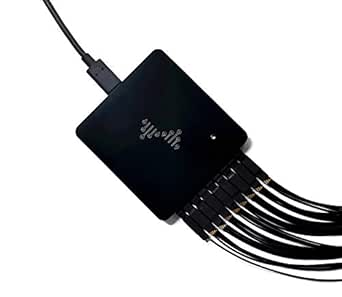 | Best for High-Channel-Count Work | Channels: 32 digital channels | Maximum sampling rate: Up to 1 GHz, depending on channel count and capture mode | Onboard memory: 2 Gbits DDR3 | VIEW LATEST PRICE | See Our Full Breakdown |
| Saleae Logic Pro 16-Channel Logic Analyzer, Red |  | Best for Mixed Analog and Digital Debugging | Channels: 16 configurable digital and analog inputs | Digital sample rate: Up to 500 MS/s | Analog sample rate: Up to 50 MS/s | VIEW LATEST PRICE | See Our Full Breakdown |
| Logic Pro 16 (Black) – Saleae 16-Channel Logic Analyzer |  | Best Cross-Platform Saleae Alternative | Channels: 16 digital/analog inputs | Digital sample rate: Up to 500 MS/s | Analog sample rate: Up to 50 MS/s | VIEW LATEST PRICE | See Our Full Breakdown |
| 8-Channel USB Logic Analyzer with PulseView, 24 MHz |  | Best Open-Source Starter | Channels: 8 | Maximum sampling rate: 24 MHz | Protocol support: 100+ protocols via PulseView | VIEW LATEST PRICE | See Our Full Breakdown |
| Saleae Logic Pro 8-Channel Logic Analyzer, Red |  | Best for Mixed-Signal Debugging | Channels: 8 digital/analog inputs | Digital sample rate: Up to 500 MS/s | Analog sample rate: Up to 50 MS/s | VIEW LATEST PRICE | See Our Full Breakdown |
| hiBCTR 8-Channel 24 MHz USB Logic Analyzer |  | Best for PulseView Beginners | Channels: 8 | Maximum sampling rate: 24 MHz | Selectable sampling rates: 24, 16, 12, 8, 4, 2, and 1 MHz; down to 25 kHz | VIEW LATEST PRICE | See Our Full Breakdown |
| DreamSourceLab DSLogic U3Pro16 16-Channel USB Logic Analyzer |  | Best for High-Speed, High-Channel Captures | Channels: 16 | Maximum sampling rate: Up to 1 GHz | Stream-mode rates: 1 GHz at 3 channels; 500 MHz at 6; 250 MHz at 12; 125 MHz at 16 | VIEW LATEST PRICE | See Our Full Breakdown |
| USB Logic Analyzer, 24 MHz, 8 Channels, 2-Pack |  | Best for Shared Benches | Quantity and channels: 2 analyzers; 8 channels each | Maximum sampling rate: 24 MHz | Sampling rate options: 24, 16, 12, 8, 4, 2, and 1 MHz; 500, 250, 200, 100, 50, and 25 kHz | VIEW LATEST PRICE | See Our Full Breakdown |
| DSLogic Plus 16-Channel USB Logic Analyzer |  | Best Value for 16-Channel Work | Channels: 16 | Interface: USB 2.0 Type-C | Buffer-mode sampling rates: 400 MHz at 4 channels; 200 MHz at 8; 100 MHz at 16 | VIEW LATEST PRICE | See Our Full Breakdown |
| USB logic analyzers for developer | Channels | Maximum sampling rate |
|---|---|---|
| InnoMaker LA5032 USB Logic Ana | 32 synchronous channels | 500 MHz |
| HiLetgo 8-Channel USB Logic An | 8 | 24 MHz |
| Innomaker LA5016 16-Channel US | 16 | 500 MS/s |
| Lonely Binary 8-Channel 24 MHz | 8 | 24 MHz |
| USB Logic Analyzer | 8 | 24 MHz |
| 16-Channel USB Logic Analyzer | 16 | — |
| DreamSourceLab DSLogic U3Pro32 | 32 digital channels | Up to 1 GHz, depending on channel count and capture mode |
| Saleae Logic Pro 16-Channel Lo | 16 configurable digital and analog inputs | — |
| Logic Pro 16 | 16 digital/analog inputs | — |
| 8-Channel USB Logic Analyzer w | 8 | 24 MHz |
| Saleae Logic Pro 8-Channel Log | 8 digital/analog inputs | — |
| hiBCTR 8-Channel 24 MHz USB Lo | 8 | 24 MHz |
| DreamSourceLab DSLogic U3Pro16 | 16 | Up to 1 GHz |
| USB Logic Analyzer | — | 24 MHz |
| DSLogic Plus 16-Channel USB Lo | 16 | — |
More Details on Our Top Picks
InnoMaker LA5032 USB Logic Analyzer, 32 Channels, 500 MHz
The InnoMaker LA5032 is the strongest fit here for developers who need to watch many signals at once, rather than only decode a few common buses. Its 32 synchronous channels, up to 500 MHz sampling, and up to 10G samples per channel suit dense MCU, ARM, and FPGA debugging where timing relationships matter. Compared with the 16-channel LA5016, it doubles the channel count and lists broader protocol decoding, including MIPI DSI LP; the LA5016 may be the more manageable choice when 16 inputs are enough. The LA5032 also adds a 0.1–20 MHz PWM generator for signal work alongside capture. Its tradeoffs are a corded power requirement and limited detail about the included probes and lead lengths, so developers planning a fixed bench setup will get more from it than those seeking a clearly documented portable kit.
Pros:- 32 synchronous channels help correlate activity across complex designs.
- Up to 500 MHz sampling and 6.25 ns glitch detection target fast timing faults.
- Decodes more than 20 protocols, including MIPI DSI LP, CAN, and JTAG.
- Includes a PWM generator and works with Windows, macOS, and Linux.
Cons:- Requires a corded power source rather than offering a self-contained portable setup.
- Included probe count and cable lengths are not specified.
- Its channel count and feature set may be unnecessary for basic three-protocol debugging.
Best for: Developers debugging FPGA or multi-bus embedded systems who need to correlate many digital signals and use Windows, macOS, or Linux.
Not ideal for: Beginners monitoring only UART, I²C, or SPI, or developers who need a portable setup with clearly specified probe and cable contents.
- Channels:32 synchronous channels
- Maximum sampling rate:500 MHz
- Sample depth:Up to 10G samples per channel
- Hardware memory:5 Gbit
- Glitch detection:6.25 ns
- Protocol decoding:More than 20 protocols, including MIPI DSI LP, I²C, SPI, UART, CAN, and JTAG
- PWM generator:0.1–20 MHz
- Compatible operating systems:Windows, macOS, Linux
Our verdict“Choose the LA5032 for demanding, high-channel-count development; choose the LA5016 if 16 channels cover your work.”
HiLetgo 8-Channel USB Logic Analyzer, 24 MHz
The HiLetgo 8-channel analyzer covers the core tasks many developers need from a compact USB tool: monitor several digital lines and decode UART, I²C, and SPI. Its selectable rates from 25 kHz to 24 MHz give more flexibility than a single fixed setting, while listed support for 2.0 V, 2.5 V, 3.3 V, and 5 V logic fits a range of common development boards. Compared with the LA5016, it offers far fewer channels and a lower ceiling, so it is not the pick for dense captures or fast interfaces; its appeal is keeping routine embedded debugging straightforward. The package includes USB and Dupont cables, but the stated compatibility does not recommend 1.8 V systems. I would choose it for basic bench work, not for designs that demand faster sampling or broader protocol coverage.
Pros:- Eight channels capture multiple digital lines at once.
- Selectable sampling rates span 25 kHz to 24 MHz.
- Supports UART, I²C, and SPI debugging.
- USB and Dupont cables are included.
Cons:- 1.8 V operation is not recommended.
- The 24 MHz maximum is a poor fit for faster signal analysis.
- Protocol support is limited to three listed bus types.
Best for: Hobbyists and embedded developers troubleshooting UART, I²C, or SPI on boards using 2.0–5 V logic.
Not ideal for: Developers working with 1.8 V interfaces, high-speed buses, or more than eight simultaneous signals.
- Channels:8
- Maximum sampling rate:24 MHz
- Selectable sampling rates:24 MHz to 25 kHz
- Input voltage range:-0.5 V to 5.25 V
- Input impedance:1 MΩ || 10 pF (typical, approximate)
- Compatible logic levels:5 V, 3.3 V, 2.5 V, and 2.0 V; 1.8 V not recommended
- Protocol debugging:UART, I²C, SPI
- Included items:Analyzer, USB cable, Dupont cable
Our verdict“Pick the HiLetgo for straightforward 2.0–5 V serial-bus debugging, but skip it for fast or 1.8 V designs.”
Innomaker LA5016 16-Channel USB Logic Analyzer with PWM Generator
The Innomaker LA5016 sits between basic eight-channel analyzers and the 32-channel LA5032: it gives developers 16 inputs and up to 500 MS/s without requiring a 32-channel workflow. Its listed 10 GB memory depth can support longer captures than a shallow buffer, while automatic decoding covers useful targets such as UART, I²C, SPI, CAN, USB 1.1, and HDMI CEC. Windows, macOS, and Linux support makes it easier to fit into mixed development environments. Compared with the LA5032, it has half the channels and a narrower stated protocol list, but can be a better match when the design fits within 16 lines. The included PWM generator adds signal-generation capability, though the product data gives limited detail about its operation. It also requires PC software, so it is not a standalone instrument.
Pros:- Captures 16 digital signals simultaneously.
- Up to 500 MS/s sampling and 10 GB memory depth support demanding captures.
- Automatic decoding includes CAN, USB 1.1, and HDMI CEC alongside common serial buses.
- Compatible with Windows, macOS, and Linux.
Cons:- Has fewer channels and a narrower listed protocol set than the LA5032.
- Requires PC software for operation.
- PWM generator details are limited in the supplied product data.
Best for: Embedded and FPGA developers who need fast captures across up to 16 signals, protocol decoding, and cross-platform PC software.
Not ideal for: Teams that need more than 16 simultaneous channels or a standalone analyzer that works without a computer.
- Channels:16
- Maximum sampling rate:500 MS/s
- Memory depth:10 GB
- Supported protocols:UART, RS-232/485, I²C, SPI, CAN, USB 1.1, HDMI CEC
- PWM generator:Yes
- Compatible operating systems:Windows (32/64-bit), macOS, Linux
- Connector types:HDMI, USB 2.0
- Maximum voltage:50 V DC
Our verdict“Choose the LA5016 when 16 fast channels are enough and the LA5032’s extra channel capacity is unnecessary.”
Lonely Binary 8-Channel 24 MHz USB Logic Analyzer Kit
The Lonely Binary 8-channel kit is distinguished less by capture speed than by its connection accessories. Its breakout and breadboard adapter boards give developers a direct route from analyzer pins to microcontroller prototypes, while both USB-A and USB-C cables help it fit different computer setups. At 24 MHz across eight channels, it matches the basic capture class of the HiLetgo and the UMLIFE analyzer, with listed decoding for I²C, SPI, and UART. The adapters make it the more convenient choice for bench prototyping than those bare-bones alternatives, but do not add channel capacity or faster sampling. The supplied data also does not specify input voltage thresholds or selectable rates, details that are provided for the HiLetgo. It needs a computer and compatible software, so this is a practical starter kit rather than a self-contained instrument.
Pros:- Breakout and breadboard adapters simplify connections to prototype circuits.
- Includes both USB-A and USB-C cables.
- Eight channels and 24 MHz sampling cover common embedded debugging tasks.
- Lists Windows, Mac, and Linux compatibility.
Cons:- The 24 MHz maximum is limiting for faster interfaces.
- Input voltage thresholds and selectable sample rates are not specified.
- Requires a computer and compatible analysis software.
Best for: Developers building or debugging breadboard-based microcontroller prototypes who value ready-made connection adapters.
Not ideal for: Engineers analyzing fast buses, needing more than eight channels, or requiring specified logic thresholds and sampling options.
- Channels:8
- Maximum sampling rate:24 MHz
- Supported protocols:I²C, SPI, UART
- Connection:USB
- Operating systems:Windows, Mac, Linux
- Included adapters:Breakout board and breadboard adapter
- Included cables:USB-A and USB-C
- Pin spacing:2.54 mm
Our verdict“Choose this kit for convenient breadboard hookups; choose the HiLetgo if specified voltage levels and rate steps matter more.”
USB Logic Analyzer, 8-Channel, 24 MHz
The UMLIFE 8-channel analyzer stands out for developers who want a low-complexity capture device specifically listed as compatible with Saleae Logic Analyzer software. It supports UART, I²C, and SPI decoding, with selectable rates from 25 kHz to 24 MHz and stated input characteristics for common 2.0–5 V systems. Those details make its limits clearer than the Lonely Binary kit, which supplies useful adapters but does not list voltage thresholds or rate steps. Against the HiLetgo, the UMLIFE offers a similar channel and speed class, so the software match is its main differentiator rather than additional capture capacity. It is not recommended for 1.8 V systems, and the 24 MHz ceiling rules it out for faster signal work. Developers needing more channels or speed should look to the LA5016 instead.
Pros:- Specifically lists compatibility with Saleae Logic Analyzer software.
- Decodes UART, I²C, and SPI.
- Selectable sampling rates run from 25 kHz to 24 MHz.
- Provides stated input voltage and impedance characteristics.
Cons:- The 24 MHz maximum does not suit high-speed signal analysis.
- 1.8 V operation is not recommended.
- Offers only eight channels, well below the LA5016 and LA5032.
Best for: Developers who already use Saleae Logic Analyzer software and need an eight-channel tool for common serial protocols.
Not ideal for: Users working with 1.8 V logic, high-speed interfaces, or designs requiring more than eight channels.
- Channels:8
- Maximum sampling rate:24 MHz
- Selectable sampling rates:24 MHz to 25 kHz
- Input voltage range:-0.5 V to 5.25 V
- Input thresholds:Low: -0.5 V to 0.8 V; high: 2.0 V to 5.25 V
- Input impedance:1 MΩ || 10 pF (typical)
- Protocol decoding:UART, I²C, SPI
- Software compatibility:Saleae Logic Analyzer software
Our verdict“Choose the UMLIFE if Saleae software compatibility is your priority for routine UART, I²C, and SPI work.”
16-Channel USB Logic Analyzer with USB-C Interface
This model is a practical middle ground for developers who need more than a basic eight-channel analyzer but do not need the DSLogic U3Pro32’s 32 inputs. Its 16 channels can capture buses and related control signals together, while selectable buffer and streaming modes let you trade capture depth against speed. The headline rates depend on channel count: buffer mode reaches 400 MHz on four channels, but falls to 100 MHz across all 16; streaming reaches 20 MHz at 16 channels. That makes it useful for varied debugging jobs, not a promise of maximum speed on every input. USB-C and Windows, macOS, and Linux support add flexibility, though the 100 MHz maximum signal frequency is a firm limit for faster digital work.
Pros:- Sixteen inputs can capture multiple buses and control signals in one session.
- Buffer and streaming modes provide different speed and capture-depth tradeoffs.
- USB-C connection and Windows, macOS, and Linux compatibility suit mixed development setups.
- Includes four groups of shielded wires and 16 test hooks.
Cons:- Maximum sampling rate drops as more channels are active, particularly in streaming mode.
- The 100 MHz maximum signal frequency rules it out for faster digital signals.
Best for: Embedded developers who need 16 channels, multiple capture modes, and cross-platform support for everyday bus and control-signal debugging.
Not ideal for: Engineers tracing signals above 100 MHz or needing the highest sample rate across all channels; the DSLogic U3Pro32 offers a higher stated maximum rate and twice the channel count.
- Channels:16
- USB interface:USB 2.0 High-Speed, Type-C
- Buffer-mode sampling rate:400 MHz at 4 channels; 200 MHz at 8 channels; 100 MHz at 16 channels
- Stream-mode sampling rate:100 MHz at 3 channels; 50 MHz at 6 channels; 25 MHz at 12 channels; 20 MHz at 16 channels
- Maximum sampling depth:16G in stream mode; 256 Mbits in buffer mode
- Adjustable threshold:0–5 V in 0.1 V steps
- Input voltage:-30 V to +30 V
- Supported operating systems:Windows, macOS, Linux
Our verdict“Choose it for flexible 16-channel debugging across common embedded signals, but pick the DSLogic U3Pro32 when higher speed or more inputs matter more.”
DreamSourceLab DSLogic U3Pro32 32-Channel USB Logic Analyzer
When a debug session needs many signals captured together, the 32-channel DSLogic U3Pro32 has a clear advantage over the 16-channel Saleae Logic Pro 16 and the 16-Channel USB Logic Analyzer with USB-C Interface. Its 2 Gbits of onboard DDR3 memory and stream depth of up to 16 G samples support longer or broader captures, while USB 3.0 Type-C connects it to a computer. The stated maximum of 1 GHz is conditional on channel count and capture mode, so I would not treat it as an all-channel rate. DSView adds broad protocol-decoding support across Windows, macOS, and Linux, but this is a software-dependent setup; developers who want analog inputs should look instead at the Saleae models, which combine digital and analog channels.
Pros:- Thirty-two digital channels capture wide interfaces and multiple signal groups at once.
- Onboard 2 Gbits DDR3 memory supports buffer captures without relying only on host memory.
- Stream captures can reach 16 G samples.
- DSView supports Windows, macOS, Linux, and a broad set of protocol decoders.
Cons:- The 1 GHz maximum sampling rate varies with channel count and capture mode.
- Requires DSView software on a compatible computer.
- Digital-only inputs do not provide the mixed analog and digital capture available on Saleae Logic Pro models.
Best for: Developers debugging wide parallel interfaces or several related buses who need up to 32 digital inputs and long capture depth.
Not ideal for: Buyers who need analog measurements, want a simpler software workflow, or rarely use more than 16 channels.
- Channels:32 digital channels
- Maximum sampling rate:Up to 1 GHz, depending on channel count and capture mode
- Onboard memory:2 Gbits DDR3
- Maximum stream depth:16 G samples
- Interface:USB 3.0 Type-C
- Capture modes:Stream and buffer
- Software:DSView
- Compatible operating systems:Windows, macOS, Linux
- Case:Unibody aluminum
Our verdict“Pick the U3Pro32 when simultaneous digital channel count and capture depth outweigh analog measurement or software simplicity.”
Saleae Logic Pro 16-Channel Logic Analyzer, Red
The Logic Pro 16 stands apart from the digital-only analyzers here by making its 16 inputs configurable for digital or analog capture. That lets developers inspect protocol activity and related voltage behavior with one instrument, rather than pairing a logic analyzer with a separate capture tool. It supports digital sampling up to 500 MS/s and analog sampling up to 50 MS/s, plus decoders for SPI, I2C, and more than 23 other protocols. Compared with the DSLogic U3Pro32, it gives up half the digital channel count and its onboard memory; compared with the black Logic Pro 16, the supplied specifications are effectively the same, so color is the main stated distinction. Captures use PC memory, and the analyzer requires USB 3.0.
Pros:- Configurable digital and analog inputs support mixed-signal debugging.
- Digital sampling reaches 500 MS/s and analog sampling reaches 50 MS/s.
- Supports SPI, I2C, and more than 23 additional protocol decoders.
- Works with Mac, Windows, and Linux.
Cons:- Capture capacity depends on available PC memory.
- Requires a USB 3.0 connection.
- Sixteen inputs provide fewer digital channels than the DSLogic U3Pro32.
Best for: Embedded developers who need to correlate digital protocol traffic with analog voltage behavior on the same set of inputs.
Not ideal for: Teams tracing wide digital interfaces or working on computers without USB 3.0; the DSLogic U3Pro32 provides 32 digital channels.
- Channels:16 configurable digital and analog inputs
- Digital sample rate:Up to 500 MS/s
- Analog sample rate:Up to 50 MS/s
- Digital capture capacity:10 billion+ samples
- Analog capture capacity:500 million+ samples
- Connectivity:USB 3.0
- Protocol decoders:SPI, I2C, and 23+ additional protocols
- Supported operating systems:Mac, Windows, Linux
- Warranty:3 years
Our verdict“Choose this Saleae when mixed analog and digital visibility matters more than the U3Pro32’s higher digital channel count.”
Logic Pro 16 (Black) – Saleae 16-Channel Logic Analyzer
The black Logic Pro 16 has the same core capture figures listed for the red Saleae Logic Pro 16: 16 configurable digital and analog inputs, digital sampling up to 500 MS/s, analog sampling up to 50 MS/s, and PC-memory-based capture. That makes the two Saleae listings far closer to each other than either is to the digital-only DSLogic U3Pro32. The practical choice between these color variants is not a performance upgrade: both suit developers who want protocol decoding and mixed-signal inspection in a compact, USB-powered setup. This listing specifies compatibility with Windows, Mac, and Linux, along with USB 3.0 connectivity. Its main compromise remains the same as the red model: capture length depends on the host computer, and the 16-input count is less suited to wide digital systems than 32-channel alternatives.
Pros:- Sixteen multi-use inputs can be assigned to digital or analog capture.
- Supports digital sampling up to 500 MS/s and analog sampling up to 50 MS/s.
- Decodes SPI, I2C, and 23+ additional protocols.
- USB-powered and compatible with Windows, Mac, and Linux.
Cons:- Capture capacity uses PC memory, making usable capture length dependent on the host.
- Requires USB 3.0.
- Offers no stated channel-count advantage over the red Saleae Logic Pro 16 or the 16-channel USB-C model.
Best for: Developers who want Saleae’s 16-input digital-and-analog workflow across Windows, Mac, or Linux and prefer the black model.
Not ideal for: Buyers seeking more than 16 digital channels, onboard capture memory, or operation from a computer lacking USB 3.0.
- Channels:16 digital/analog inputs
- Digital sample rate:Up to 500 MS/s
- Analog sample rate:Up to 50 MS/s
- Digital capture capacity:10 billion+ samples, using PC memory
- Analog capture capacity:500 million+ samples
- Connectivity:USB 3.0
- Protocol support:SPI, I2C, and 23+ additional protocols
- Compatible operating systems:Windows, Mac, Linux
- Power source:USB-powered
Our verdict“Choose the black Logic Pro 16 for Saleae’s mixed-signal workflow and cross-platform support, not for a performance difference from the red variant.”
8-Channel USB Logic Analyzer with PulseView, 24 MHz
This compact analyzer is the simplest fit here for developers who want basic digital bus debugging through PulseView rather than a proprietary software workflow. It captures eight channels at up to 24 MHz and supports decoding more than 100 protocols through the software, making it suitable for many low-speed embedded interfaces. Compared with the 16-Channel USB Logic Analyzer with USB-C Interface, it gives up channel count and speed, but its stated input range and protection circuits make the use case clear: signals from 0 to 5.5 V, with TVS protection and self-recoverable fuses. Those protections do not turn it into a high-voltage instrument. The 24 MHz ceiling also makes it a poor match for fast buses or timing work that calls for higher-rate capture.
Pros:- PulseView supports decoding more than 100 protocols.
- Eight channels can capture several related low-speed signals together.
- Works with Windows, Linux, and Mac through USB Type-C.
- TVS protection and self-recoverable fuses add input protection.
Cons:- The 24 MHz maximum sampling rate limits fast-signal and timing analysis.
- The 0–5.5 V input range excludes signals outside that range.
- Eight channels are fewer than the 16-channel and 32-channel options in this roundup.
Best for: Hobbyist and embedded developers debugging low-speed digital buses who prefer PulseView and need eight channels with basic input protection.
Not ideal for: Engineers capturing fast edges, more than eight signals, or inputs outside the 0–5.5 V range; the 16-channel USB-C model offers broader channel capacity and higher listed rates.
- Channels:8
- Maximum sampling rate:24 MHz
- Protocol support:100+ protocols via PulseView
- Connectivity:USB Type-C
- Compatible operating systems:Windows, Linux, Mac
- Input voltage range:0–5.5 V
- Protection:TVS protection and self-recoverable fuses
- Dimensions:50 × 20.32 mm
Our verdict“Choose this model for affordable-feeling simplicity in low-speed PulseView work, but move to a faster, higher-channel analyzer for demanding captures.”
Saleae Logic Pro 8-Channel Logic Analyzer, Red
The Logic Pro 8 is the clearest fit here when a developer needs to inspect analog behavior alongside digital buses. Its eight digital/analog inputs and analog sampling up to 50 MS/s can help distinguish a protocol problem from a noisy or poorly shaped signal; the hiBCTR, by comparison, captures digital signals only and tops out at 24 MHz. Saleae’s software decodes SPI, I2C, and 23+ other protocols, and support for Windows, Mac, and Linux makes it easier to share a workflow across teams. The tradeoff is that this is still an eight-input instrument, while the DSLogic U3Pro16 gives developers twice as many digital channels and far higher peak digital sampling. Capture capacity also depends on the connected PC’s memory, and the listed battery-powered design may require a separate power source.
Pros:- Combines eight digital/analog inputs for mixed-signal troubleshooting.
- Decodes SPI, I2C, and more than 23 additional protocols.
- Runs on Windows, Mac, and Linux.
- Supports digital sampling up to 500 MS/s and analog sampling up to 50 MS/s.
Cons:- Eight inputs provide less channel coverage than the DSLogic U3Pro16 and DSLogic Plus.
- Maximum sample capacity depends on the connected PC’s memory.
- Listed as battery powered, but a separate power source may be needed.
Best for: Embedded developers who need to correlate analog signal quality with digital protocol activity across common buses.
Not ideal for: Teams that need 16 or more digital channels at once, or buyers who need a clearly specified power arrangement and self-contained capture memory.
- Channels:8 digital/analog inputs
- Digital sample rate:Up to 500 MS/s
- Analog sample rate:Up to 50 MS/s
- Protocol decoding:SPI, I2C, and 23+ additional protocols
- Maximum samples:10 billion+ digital; 500 million+ analog
- Compatible operating systems:Windows, Mac, Linux
- Power source:Battery powered
- Dimensions and weight:8.9 × 4.9 × 2 inches; 0.5 kg
Our verdict“Choose the Logic Pro 8 when analog-and-digital visibility and broad protocol decoding matter more than channel count or a self-contained capture buffer.”
hiBCTR 8-Channel 24 MHz USB Logic Analyzer
The hiBCTR is a straightforward entry point for developers who want eight digital channels and a PulseView workflow without moving to a more capable, more complex instrument. Selectable rates from 25 kHz to 24 MHz cover routine UART, I2C, and SPI debugging on 2.0–5 V logic. That range makes it more flexible across common boards than a tool limited to one logic level, but it does not make the analyzer suitable for 1.8 V systems. Compared with the two-pack 24 MHz analyzer, the hiBCTR is a single USB-powered unit rather than a pair, and its stated software support centers on Sigrok PulseView. Its 24 MHz ceiling also puts it well below the DSLogic Plus for faster digital captures. This is a sensible fit for everyday bus checks, not high-speed interface work.
Pros:- Captures eight digital signals at once.
- Supports UART, I2C, and SPI decoding in Sigrok PulseView.
- Accepts common 2.0 V, 2.5 V, 3.3 V, and 5 V logic levels.
- Selectable sampling rates extend from 25 kHz to 24 MHz.
Cons:- Not recommended for 1.8 V systems.
- The 24 MHz maximum is far below the DSLogic Plus and DSLogic U3Pro16.
- Listed software compatibility is limited to Sigrok PulseView.
Best for: Developers learning PulseView or debugging UART, I2C, and SPI on microcontrollers with 2.0–5 V logic.
Not ideal for: Engineers working with 1.8 V boards or signals that require sampling beyond 24 MHz.
- Channels:8
- Maximum sampling rate:24 MHz
- Selectable sampling rates:24, 16, 12, 8, 4, 2, and 1 MHz; down to 25 kHz
- Supported protocols:UART, I2C, SPI
- Compatible software:Sigrok PulseView
- Input voltage range:-0.5 V to 5.25 V
- Supported logic levels:2.0 V, 2.5 V, 3.3 V, 5 V; not recommended for 1.8 V
- Input impedance:1 MΩ || 10 pF (typical)
Our verdict“Pick the hiBCTR for basic PulseView-based bus debugging on 2.0–5 V devices, but skip it for 1.8 V or high-speed designs.”
DreamSourceLab DSLogic U3Pro16 16-Channel USB Logic Analyzer
The DSLogic U3Pro16 earns this role by combining 16 channels with capture options that suit demanding digital debugging. In stream mode, it can send long captures to PC memory, reaching a stated depth of 16 G samples; when a PC-linked stream is not the right fit, its 2 Gbits of onboard DDR3 supports buffered captures. Rates scale with active channels, from 1 GHz on three channels to 125 MHz across all 16 in stream mode. That flexibility is a step beyond the DSLogic Plus, whose peak buffer rate is 400 MHz on four channels and whose onboard memory is smaller. The tradeoff is that the headline 1 GHz rate is not available across all channels, and buffered capture remains constrained by onboard memory. Developers should match the capture mode and channel count to the signal problem rather than treat the peak rate as universal.
Pros:- Provides 16 channels for examining wider buses and parallel activity.
- Supports stream captures up to 16 G samples to PC memory.
- Offers up to 1 GHz sampling, with rates specified by active channel count.
- USB-C 3.0 interface, DSView software, and shielded fly wires support a capable cross-platform setup.
Cons:- Maximum sampling rate falls as more channels are active.
- Buffered capture is limited by the 2 Gbits of onboard DDR3.
- Its high-speed capture options are more than many routine UART, I2C, or SPI tasks require.
Best for: Embedded and digital-design engineers who need many channels, fast edges, and the option of long PC-streamed captures.
Not ideal for: Beginners seeking a simple low-speed bus analyzer, or buyers who expect the maximum 1 GHz rate on all 16 channels.
- Channels:16
- Maximum sampling rate:Up to 1 GHz
- Stream-mode rates:1 GHz at 3 channels; 500 MHz at 6; 250 MHz at 12; 125 MHz at 16
- Buffer-mode rates:1 GHz at 8 channels; 500 MHz at 16
- Onboard memory:2 Gbits DDR3
- Maximum stream-mode sample depth:16 G samples
- Interface:USB 3.0 Type-C
- Software and operating systems:DSView; Windows, macOS, and Linux
- Dimensions and weight:3.11 × 2.91 × 0.35 inches; 1 pound
Our verdict“Choose the U3Pro16 when you need 16-channel coverage and fast captures, provided you can work within its channel-dependent rates and capture modes.”
USB Logic Analyzer, 24 MHz, 8 Channels, 2-Pack
This two-pack is the practical pick when a development bench needs two analyzers available at once—for example, one kept with a prototype and another at a workstation. Each unit offers eight channels and sampling up to 24 MHz, with common 5 V, 3.3 V, 2.5 V, and 2.0 V systems supported. Compatibility with both Saleae Logic Analyzer software and PulseView gives developers more workflow choice than the hiBCTR, whose listing specifies PulseView. Both options share the same basic 24 MHz ceiling, though, so neither competes with the DSLogic Plus or U3Pro16 for fast captures. The listed 1.8 V operation is not recommended, and the input range is limited to -0.5 V to 5.25 V. Its appeal is deployment flexibility, not extra speed or mixed-signal analysis.
Pros:- Includes two eight-channel analyzers for separate workstations or concurrent projects.
- Supports UART, I2C, SPI, and other standard protocol analysis.
- Works with Saleae Logic Analyzer software and PulseView.
- Offers multiple sampling settings from 25 kHz to 24 MHz.
Cons:- Maximum sampling rate is 24 MHz, well below the DSLogic Plus and U3Pro16.
- 1.8 V operation is not recommended.
- Input voltage is limited to -0.5 V to 5.25 V.
Best for: Small firmware teams or developers maintaining two work areas who want a compatible 24 MHz analyzer at each bench.
Not ideal for: Users debugging 1.8 V logic, high-speed signals, or analog waveforms; this is a digital analyzer with a 24 MHz limit.
- Quantity and channels:2 analyzers; 8 channels each
- Maximum sampling rate:24 MHz
- Sampling rate options:24, 16, 12, 8, 4, 2, and 1 MHz; 500, 250, 200, 100, 50, and 25 kHz
- Supported protocols:UART, I2C, SPI, and other standard protocols
- Compatible software:Saleae Logic Analyzer software, PulseView
- Input voltage range:-0.5 V to 5.25 V
- Supported system voltages:5 V, 3.3 V, 2.5 V, 2.0 V; 1.8 V not recommended
- Input impedance:1 MΩ || 10 pF (typical, approximate)
Our verdict“Choose this pair when bench coverage and software flexibility matter more than high-speed sampling or support for 1.8 V signals.”
DSLogic Plus 16-Channel USB Logic Analyzer
The DSLogic Plus is a strong middle ground for developers who need 16 digital channels but do not need the U3Pro16’s higher sampling ceiling. Its buffer mode reaches 400 MHz on four channels and 100 MHz on all 16, while stream mode supports long captures to PC memory at rates that vary with channel count. The 256 Mbits of onboard memory gives it a local capture option, and nearly 100 protocol decoders across Windows, macOS, and Linux suit varied firmware work. Compared with the U3Pro16, the Plus has less onboard memory and lower peak rates; compared with the 24 MHz hiBCTR, it offers far more channel and speed headroom. Its listed ±30 V input tolerance and 0–5 V adjustable thresholds add flexibility, but the 16 G stream depth should not be confused with buffer capacity.
Pros:- Captures up to 16 digital channels with both stream and buffer modes.
- Offers up to 400 MHz buffer sampling on four channels.
- Includes adjustable thresholds and shielded wires for flexible signal connections.
- Supports Windows, macOS, and Linux with nearly 100 protocol decoders.
Cons:- Sampling rate decreases as more channels are active.
- Buffer mode is limited to 256 Mbits; the 16 G sample depth applies to stream mode.
- Peak 400 MHz buffer sampling is available on only four channels.
Best for: Developers debugging multi-signal digital designs who want 16 channels, broad protocol decoding, and both stream and buffer capture.
Not ideal for: Users who need the U3Pro16’s higher sampling rates or long onboard buffered captures, or those expecting peak rates across all channels.
- Channels:16
- Interface:USB 2.0 Type-C
- Buffer-mode sampling rates:400 MHz at 4 channels; 200 MHz at 8; 100 MHz at 16
- Stream-mode sampling rates:100 MHz at 3 channels; 50 MHz at 6; 25 MHz at 12; 20 MHz at 16
- Maximum sampling depth:16 G in stream mode; 256 M in buffer mode
- Onboard memory:256 Mbits SDRAM
- Threshold range:0–5 V in 0.1 V steps
- Input voltage and impedance:-30 V to +30 V; 250 kΩ || approximately 13 pF
- Operating systems and weight:Windows, macOS, Linux; 8.3 oz
Our verdict“Pick the DSLogic Plus for broad 16-channel debugging and flexible capture modes, but choose the U3Pro16 if higher sampling rates or more onboard memory are priorities.”
How We Picked
I compared these analyzers around the tasks developers use them for: inspecting digital buses, capturing several signals at once, and getting from a capture to a useful debugging conclusion. The main criteria were stated channel count and speed, software and operating-system fit, connection and portability details, and features that extend the analyzer’s usefulness. I also separated products with distinct roles rather than treating similar 8-channel, 24 MHz listings as equivalent without checking what else each brings.
The ranking favors a balance of capability and practical workflow. The DSLogic U3Pro32 leads for developers whose work benefits from 32-channel coverage; Saleae Logic Pro models rank strongly for software experience, with the 16-channel version offering a broader capture range than the 8-channel version. More specialized or basic options rank lower for general use, but can make better sense for a narrow job, a simpler setup, or a particular interface. Product descriptions do not settle every compatibility or performance question, so I avoid assuming unlisted accessories or capabilities.
Factors to Consider When Choosing USB Logic Analyzers For Developers
Before choosing a model, I would start with the signals and debugging workflow your projects actually require. The product list spans simple 8-channel captures, 16-channel work, and 32-channel analyzers, but those numbers only help when matched to the job.
Match Channel Count to the Capture, Not the Board
Count the signals you need to view at the same time, including clock, data, chip-select, reset, and any handshake lines that explain the fault. An 8-channel analyzer can be enough for a focused SPI or I²C investigation, but it may force repeated captures when several buses or control signals interact. A 16-channel model gives more room for parallel activity, while 32 channels can help with wide interfaces or complex bring-up. Buying more channels than your usual work requires can add cost and setup complexity without improving a small capture. I would leave headroom if your projects are likely to grow, but base that choice on real signal groups rather than channel count as a status marker.
Read Speed Claims Alongside Signal Conditions
A stated maximum sample rate is not a guarantee that every channel can capture at that rate for every recording length. The practical result depends on how many channels are active, the signal timing, capture duration, and the analyzer’s memory and software behavior. For a slow control bus, a 24 MHz model may be entirely adequate; faster or tightly timed signals call for closer scrutiny of the complete specification. Do not confuse sample rate with the maximum frequency of a signal the analyzer can interpret reliably. Before buying, compare the stated capture limits with the shortest pulse or timing interval you need to observe, and check whether the vendor documents performance under multi-channel use.
Choose Software Before You Choose a Connector
The software determines how quickly raw captures become useful evidence, so check supported operating systems and protocol-decoding options before focusing on USB-A or USB-C. Saleae Logic Pro models are the clearest picks in this group for buyers who put a polished application workflow first, while several other listings name PulseView compatibility. A familiar application can shorten setup time, but decoder availability, export formats, and how the tool handles long captures also affect daily work. Verify that the software works on the operating system and computer architecture you actually use. Do not assume that two analyzers with similar hardware descriptions share the same drivers, decoder support, or capture experience.
Check Electrical Compatibility and Probe Setup
A logic analyzer observes digital voltage levels; it is not a substitute for an oscilloscope when you need to inspect analog shape, ringing, or noise. Confirm the supported input voltage range, threshold settings, grounding approach, and probe arrangement for the circuits you plan to debug. A signal can fall outside the analyzer’s safe or readable range even when its protocol is familiar. Long ground leads and poor connections can also create misleading captures, especially on faster edges. Check what leads or accessories are included rather than assuming a kit contains everything needed to connect to your board.
Pay for Features That Change Your Workflow
A PWM generator, a USB-C connection, or a second analyzer can be useful, but only if it solves a recurring task. The LA5016’s PWM generator may suit a developer who needs signal generation alongside capture, while USB-C can simplify a modern laptop setup without changing the analyzer’s logic capabilities by itself. A two-unit pack may help a lab or team that needs separate stations, but it is not automatically a better personal tool. Spend more for higher channel capacity or software advantages when those features reduce repeated captures or setup friction. For occasional checks of a small digital bus, a simpler analyzer may leave more of your budget for probes and board fixtures.
Treat Compatibility and Long-Term Support as Part of the Tool
For a development tool, reliable setup across operating-system updates can matter as much as a headline specification. Look for clear documentation, maintained software, driver availability, and a straightforward path to update or troubleshoot the application. This matters especially when an analyzer becomes part of a shared lab workflow or a repeatable debugging process. If you work across Windows, macOS, and Linux, verify support for your exact environment rather than relying on a broad compatibility claim alone. A familiar toolchain can reduce onboarding time, while an unsupported or poorly documented setup may turn a quick measurement into a maintenance task.
Frequently Asked Questions
Is an 8-channel analyzer enough for debugging SPI, I²C, or UART?
It often is for a single bus and a small number of related control lines. SPI commonly benefits from viewing clock, data, chip-select, and sometimes a second data line together; I²C and UART usually need fewer channels for a basic capture. If you must watch several devices, resets, interrupts, or multiple buses at once, an 8-channel model may require separate captures that hide interactions between signals. For that kind of work, compare the 16-channel DSLogic and Saleae options or the 32-channel models. The right threshold is the number of signals that must be correlated in the same capture, not the number of pins on the board.
Should I choose the Saleae Logic Pro 8 or Logic Pro 16?
Choose based on simultaneous signal coverage and your software priorities. The Logic Pro 8 is the more focused option when your typical debugging task fits within eight channels; the Logic Pro 16 is a better match when you need to observe more control lines, buses, or interactions together. Both are Saleae Logic Pro models, so the main distinction in this pair is capture breadth rather than choosing between unrelated product families. If your work is mostly a single serial bus, extra channels may sit unused. If firmware bugs involve coordination across several peripherals, the 16-channel model can reduce the need to repeat captures.
Do I need a 32-channel analyzer for embedded development?
Most embedded debugging tasks do not automatically call for 32 channels. An 8-channel analyzer can cover many routine serial-bus checks, and a 16-channel tool is a useful step up when more control signals need to be correlated. A 32-channel model such as the DSLogic U3Pro32 or InnoMaker LA5032 makes more sense when your work involves wide interfaces, dense boards, or multiple simultaneous signal groups. Consider whether you will use those channels in a single capture, since unused capacity does not improve decoding. If your projects are likely to expand, extra channels may be worthwhile; otherwise, prioritize software fit and electrical compatibility.
Is PulseView compatibility enough reason to choose one analyzer over another?
It can be a meaningful advantage if PulseView already fits your workflow, but the name alone does not answer every compatibility question. Check the specific device support, operating system, available protocol decoders, and how the software handles the capture sizes you need. Two listings that mention PulseView may still differ in hardware behavior, accessories, and documentation. Developers who want a more guided application experience may prefer to compare the Saleae Logic Pro models instead. I would treat software support as one part of the decision, alongside channel count, signal limits, and setup requirements.
What should I verify before connecting a logic analyzer to my board?
Check the analyzer’s input voltage limits and logic thresholds against the board’s signal levels, then confirm the correct ground connection. Do not connect it to a signal that exceeds the device’s stated limits, and do not expect a logic analyzer to show analog signal quality. Review the pinout and included leads so you can connect the channels correctly without shorting adjacent pins. For faster signals, keep wiring short and use a sound grounding arrangement to reduce capture artifacts. If the product listing does not clearly state electrical limits or connection details, seek reliable documentation before using it on valuable hardware.
Conclusion
For most developers who need room to capture complex digital activity, I would start with the DreamSourceLab DSLogic U3Pro32 as the best overall pick in this lineup. The HiLetgo 8-Channel 24 MHz is the best value-style choice for basic, focused bus debugging, while the Saleae Logic Pro 16 is my best premium recommendation for buyers who prioritize a refined software workflow and 16-channel coverage. Beginners can start with an 8-channel option when their signals are simple, but should confirm software and electrical documentation before connecting it to a board. For specific needs, choose the InnoMaker LA5016 if its PWM generator fits your work, the USB-C 16-channel model if that interface suits your setup, or a 32-channel analyzer for broad captures. Match the channels and workflow to the signals you need to see together, and avoid paying for capacity your projects will not use.