

Developers looking for software testing resources have no shortage of books claiming to teach the craft, but the eight titles compared here take very different routes to that goal. My top pick overall is How Google Tests Software, because it explains testing philosophy and process at a scale most developers will actually encounter in their careers. Two other standouts: Test Driven for Java developers who want rigorous, hands-on TDD instruction, and Full Stack Testing for practitioners who need modern coverage across UI, API, and pipeline layers. The main tradeoff in this category is between timeless methodology (TDD and design-by-test books) and tool-specific practice (IDE and AI-assisted titles that age faster but deliver immediate productivity). Price differences are minor here — the real cost is your reading time — so matching a book to your stack and experience level matters more than any discount. Read on for the full breakdown of where each title fits, who should skip it, and how the ranking was decided.

Get business pricing on monitors, keyboards and dev gear
- Business-only prices and quantity discounts
- Tax-exempt purchasing
- Multiple users, one account, clear invoices
Key Takeaways
- Process-and-philosophy titles (How Google Tests Software, Full Stack Testing) ranked highest because they stay relevant across stacks and roles, while tool-centric titles tied to VS Code or specific AI features will date fastest.
- Test Driven and Growing Object-Oriented Software overlap heavily on TDD; the former suits Java practitioners wanting exercises, while the latter rewards experienced developers willing to work through a single extended case study.
- Two of the eight titles (VS Code for Python Developers, Visual Studio Code AI Mastery) are primarily IDE books that treat testing as one chapter — they only make sense if editor productivity is your actual gap.
- MuleSoft for Salesforce Developers is the narrowest pick in the lineup: valuable only for integration developers on that stack, and skippable for everyone else despite its depth.
- The Developer’s Field Guide works best as a survey or gift for early-career developers — broad by design, which also means it covers testing less deeply than dedicated titles.
| The Developer’s Field Guide to Modern Software Engineering: Methods, Tools and Best Practices |  | Best for Building a Testing Foundation | Format: Book (print/eBook) | Topic Focus: Modern software engineering methods, tools, best practices | Coverage of Testing: Integrated within broader engineering practices | VIEW LATEST PRICE | See Our Full Breakdown |
| VS Code for Python Developers: Build, Debug, Test, and Scale Applications with Confidence | 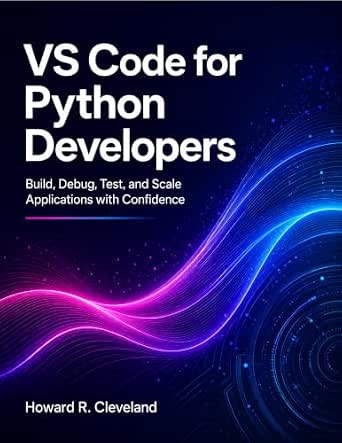 | Best for Toolchain-First Testers | Format: Book (print/eBook) | Topic Focus: VS Code for Python development | Testing Coverage: Testing and debugging within VS Code workflows | VIEW LATEST PRICE | See Our Full Breakdown |
| MuleSoft for Salesforce Developers: A Complete Guide for Achieving Mulesoft Certification Readiness and Building AI-Driven API Solutions |  | Best for Integration and API Testing Careers | Format: Print book | Topic Focus: MuleSoft, Salesforce integration, certification prep | Testing Coverage: API and integration testing within MuleSoft workflows | VIEW LATEST PRICE | See Our Full Breakdown |
| How Google Tests Software |  | Best for Testing Culture at Scale | Format: Print book | Topic Focus: Software testing methodology and culture at Google | Testing Coverage: Test automation, quality processes, engineering roles | VIEW LATEST PRICE | See Our Full Breakdown |
| Test Driven: TDD and Acceptance TDD for Java Developers |  | Best for Hands-On TDD Practice | Format: Print book | Topic Focus: Test-Driven Development and Acceptance TDD | Testing Coverage: Unit testing, acceptance testing, test-first workflows | VIEW LATEST PRICE | See Our Full Breakdown |
| Growing Object-Oriented Software, Guided by Tests (Addison-Wesley Signature Series) |  | Best for Mastering TDD Fundamentals | Format: Paperback / eBook | Publisher: Addison-Wesley Professional (Signature Series) | Primary topic: Test-driven development and object-oriented design | VIEW LATEST PRICE | See Our Full Breakdown |
| Visual Studio Code AI Mastery: Build Full-Stack Applications with GitHub Copilot, AI Agents, Prompt Engineering, Automated Workflows, and AI-Powered Software Development |  | Best for AI-Assisted Development Workflows | Format: Kindle / digital edition | Primary topic: AI-powered software development with VS Code | Tools covered: GitHub Copilot, AI agents, VS Code | VIEW LATEST PRICE | See Our Full Breakdown |
| Full Stack Testing: A Practical Guide for Delivering High-Quality Software |  | Best Breadth for Modern Test Strategies | Format: Paperback / eBook | Publisher: O’Reilly Media | Primary topic: End-to-end software testing strategy | VIEW LATEST PRICE | See Our Full Breakdown |
| software testing tools for developer | Format | Topic Focus | Experience Level | Primary Audience |
|---|---|---|---|---|
| The Developer’s Field Guide to | Book (print/eBook) | Modern software engineering methods, tools, best practices | Beginner to experienced developers | Practicing software developers |
| VS Code for Python Developers: | Book (print/eBook) | VS Code for Python development | Intermediate Python developers | Developers working daily in VS Code |
| MuleSoft for Salesforce Develo | Print book | MuleSoft, Salesforce integration, certification prep | Developers with Salesforce background | Certification candidates and integration developers |
| How Google Tests Software | Print book | Software testing methodology and culture at Google | Intermediate to senior engineers and QA professionals | Software engineers, testers, QA leads |
| Test Driven: TDD and Acceptanc | Print book | Test-Driven Development and Acceptance TDD | Intermediate Java developers | Java developers adopting TDD practices |
| Growing Object-Oriented Softwa | Paperback / eBook | — | — | — |
| Visual Studio Code AI Mastery: | Kindle / digital edition | — | — | — |
| Full Stack Testing: A Practica | Paperback / eBook | — | — | — |
More Details on Our Top Picks
The Developer’s Field Guide to Modern Software Engineering: Methods, Tools and Best Practices
For developers who want testing placed inside the bigger picture of software engineering, this field guide makes the most sense as a starting point. Where How Google Tests Software zooms in on one company’s quality culture, this book spreads across methods, tooling, and practices so readers understand where testing fits in the delivery pipeline. That breadth is a genuine strength and a genuine limitation: compared with Test Driven, the depth on any single technique is thinner, and some sections move past examples just when a developer would want concrete code. This pick makes the most sense for engineers who need a modern, practical overview before committing to a specialty like TDD or acceptance testing.
Pros:- Covers testing as part of a full modern engineering workflow rather than in isolation
- Practical tools and methods that translate directly into day-to-day development work
- Broad enough to serve both newcomers and experienced programmers filling knowledge gaps
Cons:- Some sections lack detailed worked examples, which weakens it as a hands-on manual
- Too technical for complete beginners despite its survey-style structure
Best for: Early-to-mid career developers who want a broad grounding in modern engineering practices including testing, CI, and tooling before specializing
Not ideal for: Developers who already know the fundamentals and want deep, code-heavy testing instruction — specialized books like Test Driven will serve better
- Format:Book (print/eBook)
- Topic Focus:Modern software engineering methods, tools, best practices
- Coverage of Testing:Integrated within broader engineering practices
- Experience Level:Beginner to experienced developers
- Examples:Included, but uneven depth across sections
- Primary Audience:Practicing software developers
Our verdict“Choose this if you want a wide-angle view of modern engineering practices with testing woven in, not a dedicated testing manual.”
VS Code for Python Developers: Build, Debug, Test, and Scale Applications with Confidence
This option stands out for developers who think about testing through the editor they actually live in every day. Instead of teaching testing philosophy the way Test Driven does for Java, this book anchors everything in VS Code: debugging workflows, test runners, and scaling Python applications from a single environment. Compared with Full Stack Testing, which surveys quality across the whole delivery lifecycle, this is narrower and more tactile — you’ll finish it knowing your toolchain cold, but with less on test strategy itself. The tradeoff is real: Python developers get an unusually practical productivity boost, while anyone working in another language gets nothing directly usable. Debugging and testing integration is where this book earns its spot.
Pros:- Deep, editor-specific guidance that immediately improves daily debugging and testing speed
- Practical testing and quality tips grounded in a toolchain rather than abstract theory
- Strong productivity focus — shortcuts and workflows that compound over time
Cons:- Narrow scope: no value outside the VS Code plus Python combination
- Light on broader test strategy compared with dedicated testing books
Best for: Python developers who want to master VS Code’s debugging, testing, and scaling features to raise code quality inside their existing editor
Not ideal for: Non-Python developers or readers seeking language-agnostic testing strategy — the entire value is tied to one language and one editor
- Format:Book (print/eBook)
- Topic Focus:VS Code for Python development
- Testing Coverage:Testing and debugging within VS Code workflows
- Language:Python
- Experience Level:Intermediate Python developers
- Primary Audience:Developers working daily in VS Code
Our verdict“A toolchain-focused pick for Python developers who want testing baked into their editor workflow rather than taught as theory.”
MuleSoft for Salesforce Developers: A Complete Guide for Achieving Mulesoft Certification Readiness and Building AI-Driven API Solutions
Among these picks, this is the most career-directed one. It pairs MuleSoft certification prep with AI-driven API solution design, which puts testing in the context of integration layers — validating that connected systems behave correctly. Compared with How Google Tests Software, which is about engineering culture at scale, this book is transactional: read it, pass the cert, build API integrations. The practical examples are what separate it from dry certification guides. The tradeoff is obvious when set beside the others — it is tightly scoped to the Salesforce/MuleSoft ecosystem, so its testing lessons don’t transfer cleanly to general application testing. For developers on that platform, though, few resources connect testing, integration, and certification this directly.
Pros:- Certification-oriented structure that maps directly to exam readiness
- Practical examples covering real integration and API scenarios
- Timely coverage of AI-driven API solution development
Cons:- Heavily platform-locked; little value for developers outside Salesforce and MuleSoft
- Certification focus means less depth on general testing principles
Best for: Salesforce developers preparing for MuleSoft certification who also need to test and deliver AI-driven API integrations
Not ideal for: General-purpose developers outside the Salesforce ecosystem — the certification framing and platform specificity make it a poor fit
- Format:Print book
- Topic Focus:MuleSoft, Salesforce integration, certification prep
- Testing Coverage:API and integration testing within MuleSoft workflows
- Ecosystem:Salesforce / MuleSoft
- Experience Level:Developers with Salesforce background
- Primary Audience:Certification candidates and integration developers
Our verdict“A specialized pick that pays off only for Salesforce developers chasing MuleSoft certification and API integration work.”
How Google Tests Software
This is the pick for developers who want to understand how testing shapes an engineering organization, not just how to write a unit test. Where Test Driven teaches hands-on technique for one language, this book explains Google’s approach to test automation, risk, and quality at massive scale — the roles, processes, and philosophies that keep millions of lines of code healthy. That organizational lens is its strength and its weakness: a solo developer on a small team will find some material abstract, while an engineer trying to level up a company’s QA practices will find it directly applicable. Compared with Growing Object-Oriented Software, Guided by Tests, it trades code-level depth for strategic breadth that few other testing books attempt.
Pros:- Rare insider view of testing practices at one of the largest software organizations
- Strong on test strategy, automation, and risk rather than just mechanics
- Applicable to engineers, testers, and QA managers alike
Cons:- Organizational focus makes it less actionable for individual coding practice
- Some practices reflect Google’s scale and resources, which smaller teams can’t replicate
Best for: Engineers and QA leads who want to adopt large-scale testing strategies and culture inside a growing organization
Not ideal for: Solo developers or small teams wanting hands-on coding exercises — the organizational focus will feel distant from daily work
- Format:Print book
- Topic Focus:Software testing methodology and culture at Google
- Testing Coverage:Test automation, quality processes, engineering roles
- Language:Language-agnostic
- Experience Level:Intermediate to senior engineers and QA professionals
- Primary Audience:Software engineers, testers, QA leads
Our verdict“The clear choice for understanding testing as a scaled engineering discipline rather than a personal coding habit.”
Test Driven: TDD and Acceptance TDD for Java Developers
If the goal is actually writing tests first, this is the most directly instructive book in the lineup. It walks Java developers through TDD and Acceptance TDD with worked examples, in contrast to How Google Tests Software, which explains testing strategy without teaching the red-green-refactor rhythm at the keyboard. The acceptance TDD coverage is the standout — few books connect customer-facing tests to developer unit tests this clearly. The tradeoff is Java specificity and vintage: where The Developer’s Field Guide to Modern Software Engineering reflects current tooling, this one’s examples age with the frameworks they reference, so developers on other languages or modern stacks will need to translate. For Java teams committed to changing how they write code, it remains a rigorous, practical teacher.
Pros:- Step-by-step TDD instruction with real Java code rather than theory
- Unusually clear treatment of acceptance TDD alongside standard TDD
- Practical best practices that hold up for disciplined test-first development
Cons:- Tied to Java; examples don’t transfer directly to other ecosystems
- Some content predates modern tooling and frameworks, requiring adaptation
Best for: Java developers who want to adopt test-driven development and acceptance TDD through concrete, code-first instruction
Not ideal for: Polyglot developers wanting language-agnostic testing guidance, or teams using modern non-Java stacks where examples need constant translation
- Format:Print book
- Topic Focus:Test-Driven Development and Acceptance TDD
- Testing Coverage:Unit testing, acceptance testing, test-first workflows
- Language:Java
- Experience Level:Intermediate Java developers
- Primary Audience:Java developers adopting TDD practices
Our verdict“Still the go-to for Java developers who want to learn TDD by doing it, provided they accept its Java-only framing.”
Growing Object-Oriented Software, Guided by Tests (Addison-Wesley Signature Series)
Among the testing books in this lineup, Growing Object-Oriented Software, Guided by Tests is the one that teaches a philosophy rather than a checklist. Where How Google Tests Software shows how testing works at industrial scale, this book walks through test-driven development from first principles, building an actual working application chapter by chapter so the reasoning behind every test becomes concrete. The walk-through format is what separates it from Test Driven, which leans more heavily on Java-specific mechanics. The tradeoff is patience: the narrative style moves slowly, and developers who want quick reference material or tool-specific recipes will find it demanding. There are no frameworks, no tooling tutorials, and no shortcuts — just disciplined thinking about design and tests growing together. This pick makes the most sense for developers who want their testing skills to change how they architect software, not just how they verify it.
Pros:- Teaches TDD through a complete end-to-end project, making abstract principles concrete
- Connects testing directly to object-oriented design decisions, not just verification
- Language-agnostic concepts that outlast any specific framework or tool
- Written by practitioners whose approach has shaped modern testing culture
Cons:- The extended single-project narrative feels slow for readers who want targeted reference material
- Assumes solid grounding in object-oriented design, which can lose less experienced developers
Best for: Intermediate developers who want to internalize TDD as a design discipline and understand why tests should shape architecture
Not ideal for: Beginners or QA engineers seeking a quick practical manual — the sustained walk-through assumes comfort with OO design and moves deliberately
- Format:Paperback / eBook
- Publisher:Addison-Wesley Professional (Signature Series)
- Primary topic:Test-driven development and object-oriented design
- Approach:Extended narrative walk-through building one application
- Language examples:Java-based, concepts transferable
- Audience level:Intermediate to advanced developers
- Best paired with:A hands-on TDD practice codebase
Our verdict“Buy this if you want TDD to change how you design software, not just how you test it — skip it if you need tool-specific recipes fast.”
Visual Studio Code AI Mastery: Build Full-Stack Applications with GitHub Copilot, AI Agents, Prompt Engineering, Automated Workflows, and AI-Powered Software Development
This is the odd one out in this roundup, and that is exactly its value. Every other pick here is about testing in the traditional sense; Visual Studio Code AI Mastery is about how AI copilots and agents change the development loop, including the automated workflows that increasingly absorb regression and boilerplate work. Compared with VS Code for Python Developers, which covers build, debug, and test within one language, this book goes broader — prompt engineering, agent orchestration, and full-stack delivery with AI in the loop. The tradeoff is depth: testing is one chapter of a much larger story, so it cannot replace Full Stack Testing on testing strategy itself. There is also a shelf-life risk inherent to any AI tooling book, since Copilot features evolve faster than print can keep up. This pick makes sense for developers who see AI as part of their quality workflow, not a replacement for learning testing fundamentals.
Pros:- One of the few books connecting AI tooling to automated development and testing workflows
- Practical, tutorial-style instruction for GitHub Copilot and agent-based development
- Covers prompt engineering, a skill that directly affects code and test generation quality
- Broad full-stack scope suits developers wearing multiple hats
Cons:- AI tool features change quickly, so specific instructions can age fast
- Testing depth is limited compared with dedicated titles in this lineup
- Little established track record or community validation compared with classics like Growing Object-Oriented Software
Best for: Working developers who want to integrate GitHub Copilot and AI agents into their everyday build, test, and deployment workflow
Not ideal for: Readers focused purely on testing methodology — AI tooling is the main subject here, and coverage of test strategy is secondary
- Format:Kindle / digital edition
- Primary topic:AI-powered software development with VS Code
- Tools covered:GitHub Copilot, AI agents, VS Code
- Key skills:Prompt engineering, automated workflows, full-stack development
- Audience level:Intermediate developers familiar with VS Code
- Currency:Recent release covering current-generation AI tooling
Our verdict“Choose this if AI-assisted development is your priority and testing is one part of that workflow; pass if testing mastery alone is the goal.”
Full Stack Testing: A Practical Guide for Delivering High-Quality Software
If Growing Object-Oriented Software is the deep single-track study, Full Stack Testing is the wide practical survey — unit, integration, UI, API, performance, and non-functional testing all mapped onto modern delivery pipelines. That breadth is its clearest differentiator: compared with How Google Tests Software, which describes one company’s engineering culture, this book gives individual developers and testers strategies they can apply on their own projects tomorrow. The tradeoff is that no single testing layer gets the exhaustive treatment a specialist would want, and the book leans conceptual in places where more real-world case studies would have grounded the advice. Compared with Test Driven, it trades Java depth for coverage across the whole stack, which suits teams where one person touches everything from UI to backend. This option stands out as the best starting point for developers moving from “I write unit tests” to owning quality end to end.
Pros:- Covers the entire testing spectrum: unit, integration, UI, API, and performance testing
- Practical, strategy-first guidance that applies beyond any single tool or language
- Strong fit for modern CI/CD and DevOps delivery contexts
- Accessible to both developers and dedicated testers on the same team
Cons:- Fewer real-world case studies than the topic deserves, leaving some advice abstract
- Breadth-over-depth structure means advanced practitioners will want supplementary material
Best for: Full-stack developers and generalist testers who need working knowledge across every testing layer, from unit tests to production monitoring
Not ideal for: Specialists seeking exhaustive depth in one area like performance or security testing — the breadth here comes at the cost of depth
- Format:Paperback / eBook
- Publisher:O’Reilly Media
- Primary topic:End-to-end software testing strategy
- Coverage areas:Unit, integration, UI, API, performance, and non-functional testing
- Approach:Practical guide tied to modern delivery pipelines
- Audience level:Developers and testers, intermediate level
- Best paired with:A deeper TDD title like Growing Object-Oriented Software
Our verdict“The most balanced pick for developers who own quality across the whole stack — specialists in a single testing discipline should look elsewhere.”

How We Picked
Since these are books rather than installable tools, I judged them on how effectively they change what a developer does on Monday morning. That meant weighing four factors: depth of testing coverage (a dedicated testing book beats one chapter inside an IDE guide), stack relevance (a Java TDD book is worthless to a Python shop), durability of the ideas (process and design principles outlast any tool release cadence), and accessibility for the intended reader level. A technically brilliant book that only serves senior engineers ranks lower for a general audience, even if it earns a specialist mention.
The ranking logic follows directly from those weights. Titles that teach transferable testing thinking — how teams organize tests, when TDD pays off, how to test across the full stack — sit at the top. Middle-tier picks serve clearly defined niches: a specific language, platform, or workflow. The bottom tier isn’t bad; those books simply treat testing as a supporting topic rather than the main event, which matters when a buyer’s stated goal is learning to test software well.
| software testing tools for developer | Format | Topic Focus | Experience Level | Primary Audience |
|---|---|---|---|---|
| The Developer’s Field Guide to | Book (print/eBook) | Modern software engineering methods, tools, best practices | Beginner to experienced developers | Practicing software developers |
| VS Code for Python Developers: | Book (print/eBook) | VS Code for Python development | Intermediate Python developers | Developers working daily in VS Code |
| MuleSoft for Salesforce Develo | Print book | MuleSoft, Salesforce integration, certification prep | Developers with Salesforce background | Certification candidates and integration developers |
| How Google Tests Software | Print book | Software testing methodology and culture at Google | Intermediate to senior engineers and QA professionals | Software engineers, testers, QA leads |
| Test Driven: TDD and Acceptanc | Print book | Test-Driven Development and Acceptance TDD | Intermediate Java developers | Java developers adopting TDD practices |
| Growing Object-Oriented Softwa | Paperback / eBook | — | — | — |
| Visual Studio Code AI Mastery: | Kindle / digital edition | — | — | — |
| Full Stack Testing: A Practica | Paperback / eBook | — | — | — |
Factors to Consider When Choosing Software Testing Tools For Developers
Before picking any title from this roundup, it helps to understand what actually separates a useful testing education from an expensive book that sits unread. These are the factors I would weigh first, based on the patterns that emerged across all eight titles.
Match the Book to Your Stack Before Anything Else
The most common mistake buyers make is choosing a testing book for its reputation rather than its language or platform. Test Driven assumes Java and JUnit; Growing Object-Oriented Software walks through JVM-based code; and MuleSoft for Salesforce Developers is meaningless outside that ecosystem. A developer in a Python or JavaScript shop will extract the concepts but lose half the hands-on value, since transposing every example into another language doubles the effort. The safest cross-stack choices are How Google Tests Software and Full Stack Testing, which discuss process and layers rather than one framework. My rule: if a book’s code samples won’t run in your environment without translation, expect roughly half the intended learning value.
Process Books Age Better Than Tool Books
Several titles in this comparison lean on specific tools — a particular IDE, an AI assistant, a vendor platform — and that shelf life should factor into the purchase. AI-assisted development features change every few months, which means a 2025-era book on GitHub Copilot workflows may describe interfaces that no longer exist by the time you read chapter five. Process-focused books inverting that — how to structure test suites, what belongs in unit versus integration tests, how teams split testing responsibilities — remain useful for a decade or more. This isn’t an argument against tool books; they deliver immediate productivity that process books can’t. It’s an argument for buying tool books for now, and process books for your career, and budgeting accordingly.
Know Your Level, and Be Honest About It
Growing Object-Oriented Software, Guided by Tests is widely considered one of the finest books on test-driven design ever written — and it is genuinely punishing for developers who haven’t yet written unit tests regularly. It builds one extended example over hundreds of pages, and readers without prior TDD exposure routinely abandon it halfway. Beginners get far more from The Developer’s Field Guide or the testing chapters of VS Code for Python Developers, which hold your hand through setting up a first test run. The costly mistake isn’t buying the wrong level — it’s buying the advanced book, bouncing off it, and concluding you’re bad at testing rather than that the book skipped the on-ramp. Read the table of contents honestly before committing.
Decide Whether You Need Philosophy or Recipes
Testing books split into two temperaments: those that teach why (what to test, when to stop, how much coverage is enough) and those that teach how (run this command, configure this runner, wire this into CI). Developers frustrated by flaky suites or untestable code usually need the philosophy side, which is where How Google Tests Software earns its top ranking — its real subject is organizing testing across teams, not any framework. Developers who simply need a working test pipeline this week will get faster results from recipe-style material like Full Stack Testing or an IDE-focused title. Neither temperament is superior; buying the wrong one is what wastes money and motivation.
Watch for Certification-Driven Content
The MuleSoft title bundles certification prep with practical API testing, and that combination cuts both ways. Certification-oriented chapters are structured for exam passing — checklists, terminology, practice formats — which can feel shallow if you just want to test integrations well. Conversely, if your employer funds certification or your role requires it, that same structure makes the book dramatically more efficient than piecing together documentation. Before buying any certification-adjacent title, check whether the exam it targets is still current, because vendors retire certifications and revise blueprints frequently. A mismatch between book edition and exam version is the most common complaint in this segment.
Price Differences Are Trivial — Time Isn’t
Across this entire category, most titles sit within a few dollars of each other, so optimizing for price saves almost nothing. What actually differs is the time commitment demanded: the survey-style field guide can be skimmed in a weekend, while Growing Object-Oriented Software asks for weeks of careful work through its case study. If you buy two books at the same level covering the same ground — as Test Driven and Growing Object-Oriented Software do — you’ll likely finish neither. A better pattern is pairing one process book with one stack-specific book, so each fills the other’s gap. Spending decisions should revolve around which single book you will genuinely finish, not which three are on sale.
Frequently Asked Questions
Which book should I buy if I can only read one?
For most developers, How Google Tests Software is the single best purchase because its lessons about test ownership, team structure, and prioritization apply regardless of language or framework. If you work in Java and specifically want to change how you write code day to day, Test Driven delivers more immediate, hands-on impact than a process book will. Developers who already test regularly but struggle with end-to-end quality should pick Full Stack Testing instead, since it covers the layers between unit tests and production that most books ignore. The one-sentence version: buy the book that addresses your current bottleneck, not the most famous title.
Is Growing Object-Oriented Software, Guided by Tests still relevant today?
Yes, and arguably more than when it was written, because its core subject is designing code so it can be tested — a problem no framework has solved. The worked example uses JVM-era tools that have been superseded, but the rhythm of the book (start with a failing test, grow the design outward, listen for friction) translates directly to modern stacks. What hasn’t aged well is the expectation of reader patience: the single long case study demands sustained attention that many developers can’t give. Pair it with a quicker book like Full Stack Testing if the pace proves difficult, and treat the mockist testing style it advocates as one legitimate approach rather than gospel.
Are the AI and VS Code titles worth it just for the testing chapters?
Not if testing is your only goal. Both VS Code for Python Developers and Visual Studio Code AI Mastery treat testing as one component of a broader editor workflow, so you’re buying mostly non-testing content to reach it. They become worthwhile when your actual problem is toolchain friction — you don’t know how to run tests in the debugger, configure a test explorer, or use AI to generate test cases quickly. In that scenario the testing chapters deliver immediate, practical wins that a methodology book never will. Free documentation covers much of this ground, though, so weigh whether the curated walkthrough justifies the price for your learning style.
Do I need a Java background for Test Driven?
You need working Java and JUnit familiarity, not mastery — the book holds your hand through the TDD cycle but assumes you can read Java without translation. Developers coming from C# will manage comfortably given the syntactic similarity, and the acceptance-TDD half of the book introduces FIT-style fixtures gently. The real risk is for Python, JavaScript, or Go developers: the concepts transfer perfectly, but you’ll spend as much time mentally porting examples as learning from them. If that describes you, skim the book for concepts and do your exercises in your own language, or choose Full Stack Testing for stack-neutral coverage instead.
Which pick is best for a junior developer or a gift for one?
The Developer’s Field Guide to Modern Software Engineering is the safest gift because it surveys the whole discipline — testing, version control, CI, code review — without assuming knowledge a junior won’t have yet. It sacrifices depth for accessibility, which is exactly the right trade for someone still figuring out where testing fits in their daily work. If the recipient has already decided testing is their growth area, Full Stack Testing is the better-targeted gift thanks to its practical, modern examples. Avoid giving Growing Object-Oriented Software to a beginner; it’s the book most likely to be abandoned, and I’d rather see a junior finish an easier book than bounce off a great one.
Conclusion
Mapping these eight titles to buyer types: best overall goes to How Google Tests Software, which teaches the testing thinking that outlasts every framework. Best value is Full Stack Testing, covering modern layers from UI to pipeline at a modest price with immediately usable guidance. Best for beginners is The Developer’s Field Guide to Modern Software Engineering, the gentlest on-ramp in the lineup. Best premium/deep-dive is Growing Object-Oriented Software, Guided by Tests — demanding, but the richest education on test-driven design here, with Test Driven as the better choice for Java developers wanting structured exercises. For specific needs: VS Code for Python Developers and Visual Studio Code AI Mastery suit developers whose bottleneck is toolchain and AI workflow, while MuleSoft for Salesforce Developers is the clear pick only for integration work on that platform. Whatever your situation, pick one book aligned to your stack and bottleneck — finishing the right book beats owning three.
Halloween Picks
halloween
As an affiliate, we earn on qualifying purchases.