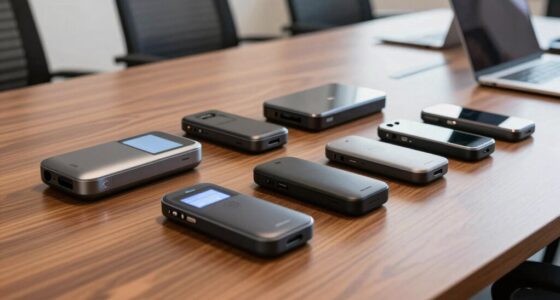
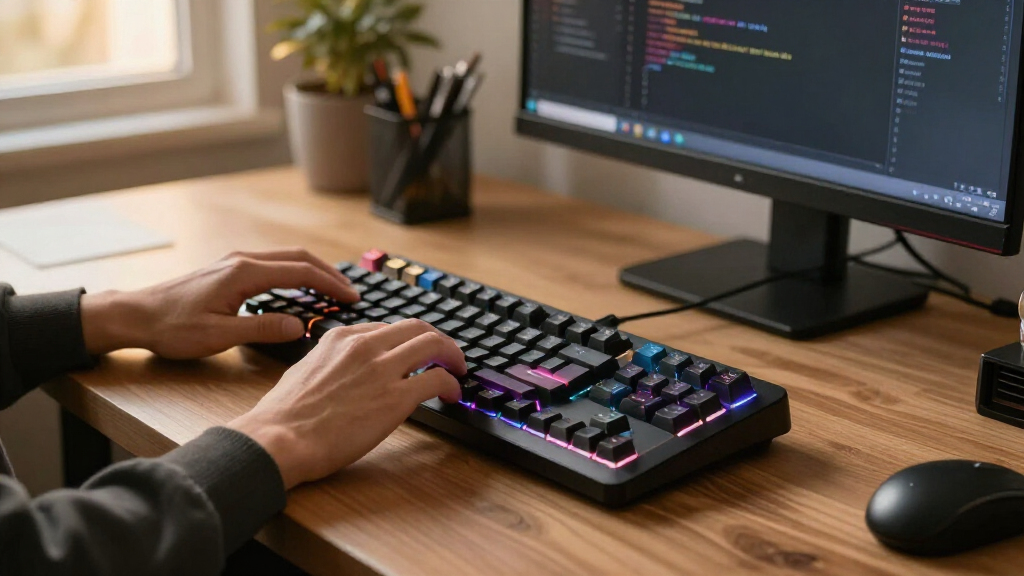

The best overall programmable macro pad for developers is the VSD N4 Pro Stream Controller, whose LCD keys and knobs can put scripts, shortcuts, and frequently used controls within reach. The VSD K1 Pro is a more compact choice with LCD keys and knobs, while the MOSHOU 12-Key offers a simpler physical-key layout with a rotary control. The main tradeoff is between tactile keys that are quick to operate and displays or knobs that make complex, changing commands easier to identify. Size, software compatibility, and how much setup you want to do also separate these options. Read on for the full comparison, buying advice, and picks for different developer workflows.

Get business pricing on monitors, keyboards and dev gear
- Business-only prices and quantity discounts
- Tax-exempt purchasing
- Multiple users, one account, clear invoices
Key Takeaways
- LCD keys and knobs set the VSD N4 Pro models apart for workflows that benefit from labeled commands and adjustable controls; check the exact listing because two N4 Pro entries appear here.
- The VSD K1 Pro trades key count for a more compact control surface, making it a better fit when a few labeled actions and knobs matter more than a broad grid.
- Mechanical keypads favor simple, tactile shortcuts: the SayoDevice Mini, MOSHOU 12-Key, and compact QINIZX or LICAEVEY models suit fixed commands better than frequently changing profiles.
- The 18-key VSD M18 and M18 Streaming Deck prioritize capacity, while the 2-key LICAEVEY and 3-key QINIZX prioritize a small footprint; more keys are not automatically better if the layout is hard to memorize.
- The EPOMAKER TH26 is the unusual portability pick in this group, combining wireless numpad use with macro keys and a knob, while display-led VSD controllers put more emphasis on visual labels and dedicated controls.
| MOSHOU 12-Key Programmable Macro Pad with Knob, RGB Shortcut Keyboard, Black |  | Best for Wireless Flexibility | Programmable keys: 12 | Controls: Rotary knob that rotates left or right and can be pressed | Connectivity: USB-C wired, Bluetooth, and 2.4 GHz receiver | VIEW LATEST PRICE | See Our Full Breakdown |
| SayoDevice Mini 8-Key Programmable Mechanical Keyboard |  | Best for a Simple Starter Setup | Programmable keys: 8 | Switches: Hot-swappable mechanical | Connectivity: USB-C | VIEW LATEST PRICE | See Our Full Breakdown |
| Logitech MX Keypad Programmable Macro Pad, Pale Grey |  | Best for App-Aware Developer Workflows | Display keys: 9 customizable full-color LCD keys | Customization: Macros, hotkeys, app-aware profiles, and multiple key pages | Connectivity: USB-C | VIEW LATEST PRICE | See Our Full Breakdown |
| LICAEVEY 2-Key Mini Macro Keypad with RGB Lighting |  | Best for Two High-Value Commands | Programmable keys: 2 | Switches: Blue mechanical | Connectivity: Bluetooth and USB-C | VIEW LATEST PRICE | See Our Full Breakdown |
| VSD M18 Streaming Deck with 18 Programmable Keys |  | Best for a Large, Labeled Command Grid | Programmable controls: 18 total: 15 LCD keys and 3 buttons | LCD image formats: JPG, PNG, and GIF | Connectivity: USB-C | VIEW LATEST PRICE | See Our Full Breakdown |
| QINIZX Mini 3-Key Programmable Mechanical Macro Keyboard with RGB Backlighting, USB-C |  | Best for a Minimal Three-Action Setup | Keys: 3 programmable keys | Connectivity: USB-C listed; included 1.5 m micro-USB cable | Switches: Hot-swappable linear red switches | VIEW LATEST PRICE | See Our Full Breakdown |
| VSD N4 Pro Stream Controller with 10 LCD Keys, 4 RGB Knobs and Touch Bar |  | Best for Hands-On Control and Custom Displays | Keys: 10 programmable LCD keys | Additional controls: 4 RGB knobs and interactive touch bar | Connectivity: USB-C | VIEW LATEST PRICE | See Our Full Breakdown |
| VSD M18 Programmable Macro Pad with 18 Keys and RGB Light Ring |  | Best for Large Visual Command Banks | Programmable controls: 18 total: 15 LCD keys and 3 physical buttons | Connectivity: USB-C | Key image formats: JPG, PNG, and GIF | VIEW LATEST PRICE | See Our Full Breakdown |
| VSD K1 Pro Programmable Macro Keyboard with 6 LCD Keys and 3 Knobs |  | Best for Developers Who Also Want a Full Keyboard | Layout and key count: QWERTY, 87 keys | Programmable controls: 6 LCD keys and 3 knobs | Connectivity: Wired USB-C | VIEW LATEST PRICE | See Our Full Breakdown |
| VSD N4 Pro Stream Controller with Customizable LCD Keys, RGB Knobs, Touch Bar, and USB-C |  | Best for a Stand-Mounted Multicontrol Desk Setup | Keys: 10 customizable LCD keys | Additional controls: 4 RGB knobs and interactive touch bar | Total listed keys: 14 | VIEW LATEST PRICE | See Our Full Breakdown |
| TreasLin N3 Stream Controller Deck with 12 Customizable Macro Keys, Black |  | Best for Mixed Button-and-Knob Control | Controls: 12 total: 6 LCD buttons, 3 tap buttons, and 3 rotary buttons | Connectivity: USB-C | Compatible operating systems: Windows 10 or later; macOS Catalina 10.15 or later | VIEW LATEST PRICE | See Our Full Breakdown |
| EEZBotFun 8-Key Programmable Mechanical Macropad with 3.5-Inch TFT Display |  | Best for Developer Customization | Keys: 8 hot-swappable mechanical keys | Display: 3.5-inch full-color TFT LCD | Processor: ESP32-S2 | VIEW LATEST PRICE | See Our Full Breakdown |
| Logitech MX Keypad Programmable Macro Pad, Graphite |  | Best for IDE-Aware Shortcuts | Number of keys: 9 | Display: Customizable full-color LCD keys | Connectivity: USB-C | VIEW LATEST PRICE | See Our Full Breakdown |
| EPOMAKER TH26 Wireless Mechanical Numpad with 5 Macro Keys and Rotary Knob |  | Best for Wireless Mechanical Setups | Number of keys: 26 | Dedicated macro keys: 5 | Rotary knob: Yes | VIEW LATEST PRICE | See Our Full Breakdown |
| programmable macro pads for developer | Connectivity |
|---|---|
| MOSHOU 12-Key Programmable Mac | USB-C wired, Bluetooth, and 2.4 GHz receiver |
| SayoDevice Mini 8-Key Programm | USB-C |
| Logitech MX Keypad Programmabl | USB-C |
| LICAEVEY 2-Key Mini Macro Keyp | Bluetooth and USB-C |
| VSD M18 Streaming Deck with 18 | USB-C |
| QINIZX Mini 3-Key Programmable | USB-C listed; included 1.5 m micro-USB cable |
| VSD N4 Pro Stream Controller w | USB-C |
| VSD M18 Programmable Macro Pad | USB-C |
| VSD K1 Pro Programmable Macro | Wired USB-C |
| VSD N4 Pro Stream Controller w | Wired USB-C |
| TreasLin N3 Stream Controller | USB-C |
| EEZBotFun 8-Key Programmable M | USB Type-C; cable included |
| Logitech MX Keypad Programmabl | USB-C |
| EPOMAKER TH26 Wireless Mechani | Bluetooth, 2.4GHz, and USB-C |
More Details on Our Top Picks
MOSHOU 12-Key Programmable Macro Pad with Knob, RGB Shortcut Keyboard, Black
The MOSHOU is a strong fit for developers who want more than a small bank of shortcuts without committing to a cable at the desk. Its 12 programmable keys and pressable rotary knob can cover commands, media controls, and repeated text, while Bluetooth, 2.4 GHz, and USB-C offer more connection choices than the USB-only SayoDevice Mini. Hot-swappable switches add room to change the feel of the keys, and saved profiles can make it easier to carry a setup between tasks. The tradeoff is that profiles must be saved while wired, and the six lighting modes work only in wired mode. Developers who want app-aware LCD labels like those on the Logitech MX Keypad should choose that instead; the MOSHOU favors physical keys and wireless convenience over visual guidance.
Pros:- Twelve programmable keys plus a knob provide more direct controls than an eight-key pad.
- USB-C, Bluetooth, and 2.4 GHz connectivity support wired or wireless desk setups.
- Hot-swappable mechanical switches let owners customize the key feel.
- Saved profiles support switching among configured workflows.
Cons:- Custom settings must be saved in wired mode before wireless use.
- RGB lighting modes are available only while connected by wire.
- The acrylic enclosure may be less substantial than a more solidly built desktop controller.
Best for: Developers who want a wireless macro pad with a knob, physical mechanical keys, and enough buttons for several recurring commands.
Not ideal for: Developers who need lighting and profile setup to work consistently over wireless, or who want LCD labels that change with their apps.
- Programmable keys:12
- Controls:Rotary knob that rotates left or right and can be pressed
- Connectivity:USB-C wired, Bluetooth, and 2.4 GHz receiver
- Switches:Hot-swappable mechanical
- Lighting:RGB with six modes; available in wired mode
- Compatible operating systems:Windows 10, macOS 10.12 Sierra, and Ubuntu 20.04
- Enclosure:Acrylic, black
Our verdict“Choose the MOSHOU if wireless flexibility, a knob, and physical keys matter more than wireless lighting or on-key LCD labels.”
SayoDevice Mini 8-Key Programmable Mechanical Keyboard
For a developer building a small, focused shortcut layer, the SayoDevice Mini keeps the hardware simple: eight programmable mechanical keys, USB-C, and hot-swappable switches. It can handle frequently used commands, key combinations, and media controls without the larger footprint or extra knob found on the MOSHOU 12-Key. That smaller layout also sets its limit: developers with separate macros for editors, terminals, communication apps, and system controls may run out of keys sooner. Configuration and RGB customization rely on the SayoDevice website, which is less self-contained than saving settings to onboard storage on the LICAEVEY two-key pad. The SayoDevice makes more sense when eight direct buttons matter more than wireless use or an unusually tiny footprint. It suits a compact wired setup, but it offers no listed Linux support.
Pros:- Eight programmable keys support macros, custom combinations, and media controls.
- Hot-swappable mechanical switches allow changes to the key feel.
- USB-C connection keeps the setup straightforward.
- Includes a five-foot USB data cable and eight replacement keycaps.
Cons:- Eight keys may be limiting for developers with several distinct command groups.
- Key and RGB customization requires the SayoDevice website.
- Connectivity is USB-C only, with Windows and Mac OS listed as supported systems.
Best for: Developers who want an eight-button wired pad for a short list of editor, terminal, and media shortcuts, with the option to change switches.
Not ideal for: Linux users, wireless-workspace builders, and developers who want many app-specific commands or prefer configuring without a website.
- Programmable keys:8
- Switches:Hot-swappable mechanical
- Connectivity:USB-C
- Compatible operating systems:Windows and Mac OS
- Lighting:Customizable RGB
- Included cable:5-foot USB data cable
- Included keycaps:8 replacement keycaps
Our verdict“Pick the SayoDevice Mini for a compact, wired set of developer shortcuts, but choose a larger pad if you need more commands at hand.”
Logitech MX Keypad Programmable Macro Pad, Pale Grey
The Logitech MX Keypad stands apart from the mechanical pads here by putting customizable LCD labels on all nine keys. For developers moving among VS Code, IntelliJ, Slack, and Chrome, app-aware profiles can change the available shortcuts with the active tool, making commands easier to identify than on the MOSHOU’s unlabeled physical keys. Multiple pages also stretch a nine-key layout across more actions. It connects by USB-C and supports Windows and macOS, but it is not a wireless option like the MOSHOU. The software layer is part of the deal: some functions require Logi Options+, and integrations such as Copilot may depend on third-party accounts and internet access. Developers who prefer a mechanical switch feel or a simpler, website-free setup may prefer the SayoDevice Mini.
Pros:- Nine full-color LCD keys can show labels for assigned shortcuts and macros.
- App-aware profiles can adapt key layouts to different applications.
- Supports macros, hotkeys, and multiple key pages.
- Listed integrations include VS Code, IntelliJ, and GitHub Copilot.
Cons:- USB-C cable connection limits flexible wireless placement.
- Some features require Logi Options+ software.
- AI integrations may require an internet connection and an account with the provider.
Best for: Windows and macOS developers who switch among supported apps and value visible, app-specific command labels over mechanical keys or wireless connectivity.
Not ideal for: Developers seeking a wireless pad, mechanical switches, Linux support, or a setup that does not depend on companion software and third-party services.
- Display keys:9 customizable full-color LCD keys
- Customization:Macros, hotkeys, app-aware profiles, and multiple key pages
- Connectivity:USB-C
- Compatible operating systems:Windows 10 or later and macOS
- Listed app integrations:VS Code, IntelliJ, Slack, Chrome, and GitHub Copilot
- Enclosure:Plastic
- Color:Pale Grey
Our verdict“Choose the Logitech MX Keypad if app-aware LCD labels will help you manage changing developer workflows more than wireless freedom or mechanical switches.”
LICAEVEY 2-Key Mini Macro Keypad with RGB Lighting
The LICAEVEY is for developers who need only a couple of dependable triggers—for example, one key for a build command and another for a frequently used text snippet. Its two programmable keys and onboard storage make it a very small, portable alternative to the eight-key SayoDevice Mini; saved settings can stay with the pad when moving between devices. Bluetooth and USB-C provide a choice between cordless use and a wired connection, while its rechargeable battery removes the need to keep it plugged in. The small key count is the defining compromise, not a minor limitation: this is not a general shortcut board for several apps. The blue mechanical switches may also be loud or tiring for quiet shared work. The product lists Spanish language and a 90-day warranty, details buyers should weigh against the broader everyday utility of larger pads.
Pros:- Onboard storage retains programmed settings when changing devices.
- Bluetooth and USB-C support cordless or wired use.
- Rechargeable 400 mAh battery supports portable operation.
- Custom key functions and macros can combine commands into a single press.
Cons:- Only two keys are available, limiting the number of direct commands.
- Blue mechanical switches may be too loud for shared or quiet workspaces.
- Battery runtime is not specified, and the listed warranty is 90 days.
Best for: Developers who want a portable pad for one or two frequent macros and value onboard profile storage and Bluetooth.
Not ideal for: Developers building a broad command set, needing quiet switches, or expecting a stated battery runtime or a longer listed warranty.
- Programmable keys:2
- Switches:Blue mechanical
- Connectivity:Bluetooth and USB-C
- Battery:Rechargeable, 400 mAh
- Onboard storage:Yes
- Lighting:RGB LED
- Language:Spanish
- Enclosure:Acrylic
Our verdict“Choose the LICAEVEY for a portable pair of high-frequency macros, not as a replacement for a full developer shortcut pad.”
VSD M18 Streaming Deck with 18 Programmable Keys
Among these five, the VSD M18 offers the largest control surface: 15 customizable LCD keys plus three buttons. That makes it a better match than the Logitech MX Keypad for developers who want many commands visible at once, such as build and test actions alongside media or communication controls. Custom images and animations can make the LCD keys easier to scan, while macros and multi-hotkey actions turn complex sequences into a press. Its strengths lean toward stream and app control—OBS scene switching is specifically listed—so developers focused only on coding shortcuts may not need the extra controls. Unlike the wireless MOSHOU, this deck requires a USB-C connection. The operating-system details also conflict: the listing gives different minimum versions for Windows and macOS in separate sections, so compatibility should be checked before purchase.
Pros:- Fifteen customizable LCD keys and three additional buttons provide a broad control layout.
- LCD keys support JPG, PNG, and GIF images.
- Macros and multi-hotkey actions can assign complex sequences to one press.
- Customizable RGB light ring adds visual feedback.
Cons:- USB-C connection is required; wireless use is not listed.
- The product details give conflicting minimum Windows and macOS versions.
- Its streaming-oriented controls may be more than a developer needs for coding shortcuts alone.
Best for: Developers and technical streamers who want a large, visibly labeled command grid for app shortcuts, macros, and OBS controls.
Not ideal for: People seeking a wireless or compact pad, or developers who need clear, consistent operating-system requirements before choosing a device.
- Programmable controls:18 total: 15 LCD keys and 3 buttons
- LCD image formats:JPG, PNG, and GIF
- Connectivity:USB-C
- Listed operating systems:Windows 11 and above; macOS 11.0 and above (other listing sections give different minimums)
- Backlighting:Customizable RGB light ring
- Compatible software:OBS, Streamlabs, YouTube, Twitter, Discord, Excel, Word, and Photoshop
- Water resistance:Water repellent
Our verdict“Choose the VSD M18 if you want many labeled commands and stream controls at hand, but verify OS compatibility and expect a wired setup.”
QINIZX Mini 3-Key Programmable Mechanical Macro Keyboard with RGB Backlighting, USB-C
The QINIZX Mini is a compact way to put a few frequently used developer actions on dedicated keys: think launching a terminal, triggering a build command, or inserting a short text snippet. Its onboard storage keeps settings with the pad when you move between computers, and the three keys can handle keyboard, mouse, media, or multi-key functions. Compared with the VSD M18, it takes up far less desk space but cannot organize a broad set of commands across a larger key bank. Hot-swappable red switches add some customization, though the Windows configuration requirement is a notable obstacle for Mac-first developers. The included cable is micro-USB despite the listed USB-C connectivity, so check the connector before planning a cable swap.
Pros:- Three keys support keyboard, mouse, multimedia, and multi-key functions.
- Onboard storage retains configured settings when moving between devices.
- Hot-swappable linear red switches allow switch changes without replacing the whole pad.
- Small footprint suits a crowded desk or a compact travel setup.
Cons:- Configuration software must be run on Windows before use with a Mac.
- The included cable is micro-USB, which conflicts with the listed USB-C connectivity.
- Three keys limit how many commands can be directly assigned.
Best for: Developers who want three portable, frequently used shortcuts and can configure the pad on a Windows computer before using it with a Mac.
Not ideal for: Mac-only developers who cannot access Windows for setup, or anyone needing many labeled actions, Linux setup software, or a water-resistant keypad.
- Keys:3 programmable keys
- Connectivity:USB-C listed; included 1.5 m micro-USB cable
- Switches:Hot-swappable linear red switches
- Function modes:Keyboard, mouse, multimedia, and multi-key
- Onboard storage:Yes
- Backlighting:RGB
- Compatible systems:Windows, Linux, macOS, Android; configure on Windows before Mac use
- Dimensions:2.69 × 1.18 × 1.18 in
Our verdict“Choose the QINIZX if you need only a few portable shortcuts and can accommodate its Windows-first setup.”
VSD N4 Pro Stream Controller with 10 LCD Keys, 4 RGB Knobs and Touch Bar
The VSD N4 Pro suits developers who want a visual command center rather than a bare keypad. Its 10 customizable LCD keys can show image or animated icons, while four knobs and a touch bar give editing, audio, or streaming actions separate physical controls. Multi-step macros and downloadable plugins make it more adaptable than the three-key QINIZX, but the extra controls take up more desk space and make this a better fit for a varied workflow than a short list of hotkeys. The foldable stand fixes the unit at a 60-degree angle, and its passive dock adds connectivity without supplying power on its own. Audio controls send commands to the connected computer; this is not a speaker or independent audio device.
Pros:- Ten customizable LCD keys can display image or animated icons for quick visual identification.
- Supports single actions and multi-step macros.
- Four RGB knobs and a touch bar add hands-on controls beyond keys.
- Foldable stand and passive USB dock provide a ready workstation layout.
Cons:- Compatible systems are Windows 10 or later and macOS 11 or later; Linux is not listed.
- Audio controls send commands to a connected computer, with no built-in speakers.
- The 10-key, four-knob layout occupies more space than the QINIZX three-key pad.
Best for: Developers and creators who use a Windows or Mac workstation for editing, streaming, or frequent multi-step actions and want labeled keys plus knobs.
Not ideal for: Linux users, buyers seeking a compact keypad for a handful of shortcuts, or anyone expecting built-in speakers or a self-powered USB hub.
- Keys:10 programmable LCD keys
- Additional controls:4 RGB knobs and interactive touch bar
- Connectivity:USB-C
- Macros:Single actions and multi-step macros
- Key icons:PNG, JPG, and GIF
- Compatible systems:Windows 10 or later; macOS 11.0 or later
- Stand:Foldable, 60-degree
- USB dock:Built-in passive dock
- Audio:No built-in speakers; sends audio commands to the connected computer
Our verdict“Pick the N4 Pro if visual labels, knobs, and touch controls matter more to your workflow than a minimal footprint.”
VSD M18 Programmable Macro Pad with 18 Keys and RGB Light Ring
For developers who want a broad set of commands visible at once, the VSD M18 offers 15 LCD keys plus three physical buttons. Custom JPG, PNG, or GIF icons can make actions easier to identify, while multi-step macros cover workflows that take more than one keystroke. That makes it a more direct fit for a large, labeled command bank than the QINIZX Mini, whose three keys suit only a few recurring actions. The M18 also includes plugins such as a clock, calendar, weather, and stopwatch, with an adjustable RGB light ring for visual customization. Its main limitation for a developer audience is platform coverage: native plug-and-play Linux support is unavailable, and custom RGB tones require a firmware upgrade. Windows support starts at version 11.
Pros:- Fifteen LCD keys and three physical buttons provide room for a broad shortcut set.
- Keys support custom JPG, PNG, and GIF icons, including animations.
- Can trigger single commands or multi-step macros.
- Includes utility plugins and an adjustable RGB light ring.
Cons:- Native plug-and-play Linux support is unavailable.
- Custom RGB tones require a device firmware upgrade.
- Windows compatibility begins at Windows 11, limiting use with older systems.
Best for: Windows 11 or newer and macOS 11 or newer users who want many icon-labeled shortcuts, macros, and app controls in one place.
Not ideal for: Linux-first developers, users on older Windows versions, or buyers who want full RGB color customization without a firmware upgrade.
- Programmable controls:18 total: 15 LCD keys and 3 physical buttons
- Connectivity:USB-C
- Key image formats:JPG, PNG, and GIF
- Macro support:Single commands and multi-step macros
- Backlighting:Adjustable RGB light ring
- Compatible systems:Windows 11 and newer; macOS 11.0 and newer
- Linux support:Native plug-and-play support unavailable
- Water resistance:Water repellent
Our verdict“Choose the M18 if you need a large, visually labeled command surface and use a supported Windows or Mac system.”
VSD K1 Pro Programmable Macro Keyboard with 6 LCD Keys and 3 Knobs
The VSD K1 Pro is the outlier here: rather than adding a small pad beside your keyboard, it combines six programmable LCD keys and three knobs with a full 87-key layout. Switchable pages let developers separate shortcuts, media actions, and macros without dedicating a separate device to each group. Compared with the VSD N4 Pro, it trades four knobs and a touch bar for a conventional keyboard that can take over everyday typing. Hot-swappable 3-pin and 5-pin support, a gasket mount, and five-layer dampening also make the typing hardware a bigger part of the appeal. The tradeoff is footprint, plus software dependence: screen images and some customization require a wired connection. It is not water resistant, and a USB-C-to-USB-C cable is not included.
Pros:- Six LCD keys, three knobs, and switchable pages provide configurable workflow controls.
- Full 87-key layout can replace a separate everyday keyboard.
- Hot-swappable PCB accepts 3-pin and 5-pin switches without soldering.
- Gasket mount and five-layer dampening are designed for a softer, quieter typing feel.
Cons:- The full-size 87-key layout takes substantially more desk space than dedicated pads such as the VSD M18.
- Screen images and some customization require software and a wired connection.
- Not water resistant, and a USB-C-to-USB-C cable is not included.
Best for: Developers who want a single wired desk keyboard with a few programmable visual shortcuts, knobs, and switchable control pages.
Not ideal for: Anyone looking for a small add-on macro pad, a wireless setup, or a water-resistant keyboard; Mac users should also check compatibility against their exact version.
- Layout and key count:QWERTY, 87 keys
- Programmable controls:6 LCD keys and 3 knobs
- Connectivity:Wired USB-C
- Switches:Linear red mechanical switches; hot-swappable 3-pin and 5-pin
- Backlighting:RGB
- Compatible systems:Windows 10 or later; macOS 11 Big Sur or later
- Stand angles:3°, 6°, and 13°
- Water resistance:Not water resistant
Our verdict“Choose the K1 Pro if you want your programmable controls built into a full typing keyboard rather than a separate pad.”
VSD N4 Pro Stream Controller with Customizable LCD Keys, RGB Knobs, Touch Bar, and USB-C
This VSD N4 Pro listing targets developers who want several kinds of controls in one stand-mounted unit: 10 customizable LCD keys, four RGB knobs, and an interactive touch bar. Those controls can handle shortcuts, macros, and audio commands, while customizable lighting and key feedback help distinguish actions. Against the VSD M18, the N4 Pro gives up eight programmable key positions for four knobs and a touch bar, a useful exchange if continuous adjustment matters more than a large bank of labeled commands. Its foldable 60-degree stand and passive USB dock suit a fixed workstation, but the controller requires a wired USB-C connection. The audio controls operate through the connected computer; there are no speakers in the unit, so it does not replace an audio output device.
Pros:- LCD keys, RGB knobs, and a touch bar cover several control styles in one device.
- Supports macros and multi-step commands.
- Foldable 60-degree stand is suited to a desktop setup and folds for storage.
- Customizable lighting and key feedback make assigned actions easier to distinguish.
Cons:- Requires a wired USB-C connection.
- Has no built-in speakers; audio functions send commands to the computer.
- Ten LCD keys provide fewer programmable positions than the VSD M18’s 18 controls.
Best for: Windows or Mac developers who want LCD shortcut keys alongside physical knobs and touch controls at a stationary workstation.
Not ideal for: Linux users, anyone needing wireless control, or buyers who want a larger bank of programmable keys or built-in audio output.
- Keys:10 customizable LCD keys
- Additional controls:4 RGB knobs and interactive touch bar
- Total listed keys:14
- Connectivity:Wired USB-C
- Compatible systems:Windows 10 or later; macOS 11 or later
- Stand:Foldable, 60-degree ergonomic stand
- USB dock:Built-in passive dock
- Audio:No built-in speakers; sends audio commands to the computer
Our verdict“Pick this N4 Pro if a stand-mounted mix of knobs, touch controls, and labeled macro keys fits your workflow better than extra key capacity.”
TreasLin N3 Stream Controller Deck with 12 Customizable Macro Keys, Black
The TreasLin N3 suits developers who want more than a row of shortcut keys: its six LCD buttons, three tap buttons, and three rotary controls can split tasks between launching commands and adjusting audio or other settings. That mix makes it more hands-on for streaming and media workflows than the Logitech MX Keypad, which has nine LCD keys but no rotary controls. Dynamic icons can make assigned actions easier to identify at a glance, while compatibility with productivity and communication apps gives it uses beyond OBS. The tradeoff is that its controls are divided across three types, so it may take more setup to build a consistent layout. Spotify integration also requires Premium, and the stated operating-system minimums exclude older installations.
Pros:- Combines six LCD buttons with three tap buttons and three rotary controls.
- Dynamic icons help distinguish assigned actions.
- Supports macros and a range of streaming, communication, media, and productivity apps.
- USB-C connection works with supported Windows PCs and Macs.
Cons:- The mix of control types may take more setup than a uniform key layout.
- Spotify integration requires an active Premium account.
- Requires Windows 10 or later or macOS Catalina 10.15 or later.
Best for: Developers who stream, record tutorials, or switch between coding shortcuts and audio or media controls.
Not ideal for: Developers who want a key-only layout, use older operating systems, or need Spotify integration without a Premium account.
- Controls:12 total: 6 LCD buttons, 3 tap buttons, and 3 rotary buttons
- Connectivity:USB-C
- Compatible operating systems:Windows 10 or later; macOS Catalina 10.15 or later
- Compatible devices:PC and Mac
- Dynamic icons:Supported
- Model:N3
- Color:Black
- Warranty:1 year
Our verdict“Choose the N3 if your developer setup benefits from both programmable buttons and rotary media controls; choose the Logitech MX Keypad for a simpler LCD-key-focused layout.”
EEZBotFun 8-Key Programmable Mechanical Macropad with 3.5-Inch TFT Display
The EEZBotFun 8-Key is the most tinkerer-oriented option here: hot-swappable switches, script support, a modifiable 3D-printed enclosure, and a web configuration tool that can be self-hosted give developers room to shape both the controls and the setup process. Its 3.5-inch TFT display can show key functions and custom icons, making eight keys easier to map to project or editor-specific actions. Compared with the Logitech MX Keypad, it offers more hardware and configuration freedom, but less certainty around software compatibility. The product information lists Windows, macOS, and Linux support while also stating Windows-only compatibility. HID mode avoids background software, though non-HID features require the companion app to stay open.
Pros:- Eight hot-swappable mechanical keys allow switch changes without soldering.
- The full-color display shows key functions and custom icons.
- HID mode works without third-party software or background drivers.
- Script support, a self-hostable web configurator, and modifiable enclosure support extensive customization.
Cons:- Compatibility information conflicts: Windows-only language appears alongside Windows, macOS, and Linux support.
- Non-HID mode requires the companion application to run in the background.
- The 3D-printed enclosure may appeal less to buyers seeking a finished, conventional commercial design.
Best for: Developers who enjoy customizing hardware, writing scripts, and testing a programmable pad with a self-hosted configuration tool.
Not ideal for: Buyers who need clearly confirmed cross-platform support or want all features to work without a companion app running.
- Keys:8 hot-swappable mechanical keys
- Display:3.5-inch full-color TFT LCD
- Processor:ESP32-S2
- Connectivity:USB Type-C; cable included
- Configuration:Script support; web-based configuration tool can be self-hosted
- HID mode:Works without third-party software or background drivers
- Enclosure:3D-printed; STL files available for modification
- Compatibility:Windows, macOS, and Linux are listed; product text also states Windows only
Our verdict“Pick the EEZBotFun if hardware and software customization matter more than polished, clearly documented plug-and-play support.”
Logitech MX Keypad Programmable Macro Pad, Graphite
For a developer who wants shortcuts to follow the active app, the Logitech MX Keypad has the clearest software story in this group. Its nine full-color LCD keys support app-aware profiles and integrations for VS Code, IntelliJ, and GitHub Copilot, so a layout can be tailored to coding tools rather than treated as a generic stream deck. The Logi Actions SDK also gives developers a path to custom plugins. Compared with the TreasLin N3, it gives up rotary controls and has fewer total controls, but its app-focused integrations are a stronger match for an IDE-centered workflow. The main compromise is dependence on Logi Options+ for customization; it is not the pick for buyers who want a software-independent pad.
Pros:- Nine customizable full-color LCD keys support shortcuts, macros, scripts, and app controls.
- App-aware profiles can change layouts as the active application changes.
- Integrations include VS Code, IntelliJ, and GitHub Copilot.
- Logi Actions SDK supports custom plugins.
Cons:- Customization requires the Logi Options+ app.
- Nine keys offer fewer controls than larger decks such as the TreasLin N3.
- The listed USB-C connection may not suit buyers seeking a wireless setup.
Best for: Developers who spend most of their day in VS Code or IntelliJ and want app-specific shortcuts, scripts, and profiles.
Not ideal for: Developers who prefer driver-free configuration, need rotary controls, or want a larger number of physical controls.
- Number of keys:9
- Display:Customizable full-color LCD keys
- Connectivity:USB-C
- Compatible operating systems:Windows 10 or later; macOS 10.13 High Sierra or later
- Developer integrations:VS Code, IntelliJ, and GitHub Copilot
- Customization software:Logi Options+
- Enclosure material:Plastic
- Color:Graphite
Our verdict“Choose this keypad for IDE-specific profiles and developer integrations; skip it if you want an open, app-independent setup or physical knobs.”
EPOMAKER TH26 Wireless Mechanical Numpad with 5 Macro Keys and Rotary Knob
The EPOMAKER TH26 is a compact mechanical numpad first, with five dedicated macro keys and a rotary knob adding programmable controls to its 26-key layout. Its standout distinction is tri-mode connectivity: Bluetooth, 2.4GHz wireless, and USB-C let it fit a desk that is not built around a permanently tethered macro deck. VIA programmability, a hot-swappable PCB, and a dampened gasket-mounted build also offer more mechanical customization than the LCD-focused Logitech MX Keypad. That makes the TH26 a better fit for buyers who want typing keys alongside macros, but a weaker choice for dense shortcut banks: five dedicated macro keys are modest, and there is no display to label them. Its listed dimensions also omit height.
Pros:- Bluetooth, 2.4GHz wireless, and USB-C wired connectivity support varied desk setups.
- VIA programmability, five macro keys, and a rotary knob add remapping and control options.
- Hot-swappable PCB supports switch changes without replacing the whole keypad.
- Gasket mounting and four-layer sound dampening are designed to reduce vibration and case resonance.
Cons:- The 26-key layout provides fewer dedicated macro controls than the TreasLin N3 or Logitech MX Keypad.
- No display is listed for identifying macro assignments.
- Published dimensions omit the device height.
Best for: Developers who want a wireless mechanical numpad for occasional coding shortcuts, numeric entry, and a small set of macros.
Not ideal for: Developers who need many labeled, screen-based shortcut keys or a dedicated macro deck with a larger control count.
- Number of keys:26
- Dedicated macro keys:5
- Rotary knob:Yes
- Connectivity:Bluetooth, 2.4GHz, and USB-C
- Programmability:VIA software
- Switch type:Linear; EPOMAKER Creamy Jade
- PCB:Hot-swappable
- Battery capacity:2000mAh
- Compatible operating systems:macOS, Windows, and iPadOS
Our verdict“Choose the TH26 if you want a wireless mechanical numpad with a few programmable controls; choose an LCD macro deck for a larger, more visible shortcut bank.”
How We Picked
I ranked these programmable macro pads for developer workflows by how well their controls can support repeatable actions such as editor shortcuts, terminal commands, build tasks, and app switching. I gave weight to usable control layouts, the practical value of displays and knobs, connection and form-factor details disclosed in the product names, and the likely effort involved in mapping commands. A feature only counted as an advantage when it could help a buyer identify or trigger actions more effectively; a large key count alone did not guarantee a higher place.
The order favors versatility and workflow clarity first, then more specialized choices for compact setups, tactile shortcut use, streaming-style control, and numpad tasks. Models with similar or repeated names are treated as separate listed products, not assumed to be identical; buyers should confirm the exact hardware and software details on the specific listing. Since the product set spans simple keypads and screen-equipped controllers, the rankings reflect distinct use cases rather than a claim that one control style suits every developer.
Factors to Consider When Choosing Programmable Macro Pads For Developers
Choosing a macro pad is less about maximizing buttons and more about deciding which actions deserve a dedicated control. I would start with the commands you repeat, then match the pad’s layout and software workflow to how often those commands change.
Map Repeated Actions Before Counting Keys
Write down the actions you use often enough to justify a dedicated button, such as launching a test command, inserting a code snippet, or switching workspaces. Group related actions by project or application before choosing a key count. A small pad can work well if profiles or layers let one physical key serve different contexts, but profile switching adds steps that may interrupt a fast workflow. A larger grid can reduce layer dependence, yet too many adjacent commands can be difficult to distinguish by touch. Avoid buying extra capacity for hypothetical shortcuts you may never assign. A clear, repeatable layout usually matters more than the highest key count.
Choose Tactile Keys, LCD Labels, or Both
Physical keycaps give a consistent place to press and suit commands that stay in the same position. LCD keys can display changing labels or icons, which helps when controls vary by application or project, but that advantage depends on software support and setup. Knobs are useful when an action has a range, such as adjusting volume, scrolling, or changing a value, rather than simply triggering a command. Do not assume a screen automatically makes a device easier: tiny labels and a busy layout may be harder to scan than familiar key positions. Pick a display-led pad when visible context reduces mistakes; choose tactile keys when muscle memory is the priority. A mixed layout can bridge both needs, but it may take longer to configure.
Check the Software Workflow Before Committing
Programmability depends on more than a device having customizable keys. Check which operating systems, companion apps, and command types the exact model supports, especially if your workflow depends on shell commands, text expansion, application-specific profiles, or custom scripts. A pad that requires a vendor utility may be less convenient on a managed work machine or across multiple computers. For developer use, also check whether shortcuts can be scoped to individual apps and whether configurations can be backed up or transferred. Avoid assuming that two devices from the same brand share software or features. If reliable portability matters, test the setup process and export options before building a large library of mappings.
Match the Footprint to Your Desk and Travel Routine
A macro pad competes with your keyboard, mouse, and other desk controls for a stable, reachable spot. A compact two- or three-key unit can fit beside a laptop, but it may force you to rely on layers for a larger command set. Larger controllers offer room for more direct controls and displays, yet can crowd a small desk or sit outside your comfortable reach. Wireless capability can help when moving between setups, though it makes battery and connection details part of the decision. If you plan to travel with the pad, check its dimensions and whether its software configuration follows you. Choose a layout that stays reachable without making your main typing position awkward.
Decide Whether You Need a Numpad or a Macro Controller
Some devices in this roundup combine macro keys with a numeric keypad, while others focus on programmable controls. If you regularly enter numbers, a numpad-oriented model can serve two jobs and preserve space elsewhere on the desk. If your main goal is launching commands or navigating development tools, a dedicated macro layout may make those actions easier to separate from numeric entry. Check how many keys are actually programmable rather than treating every key on a numpad as an equivalent shortcut button. Knobs and extra displays can add useful control, but they do not replace a familiar number layout when data entry is frequent. Choose for the task you perform daily, not the broadest feature list.
Plan for Setup, Maintenance, and Shared Use
A macro pad becomes more useful as its mappings reflect your real projects, so consider the ongoing work of naming, organizing, and revising commands. Keep a written backup of important mappings or profiles, particularly if they launch scripts or depend on local file paths. If several developers share a machine, application-specific profiles and clear labels can prevent one person’s shortcuts from disrupting another’s workflow. Mechanical switches may appeal to buyers who care about key feel, while display-based devices place more emphasis on software configuration and screen layout. Do not create a shortcut that runs a destructive command without a confirmation step or a deliberate placement. A little organization at setup can prevent accidental input and make the pad easier to maintain.
Frequently Asked Questions
Can a programmable macro pad run terminal commands and scripts?
That depends on the device’s configuration software and the command types it supports, not just on the number of keys. Some pads may trigger keyboard shortcuts or text, while launching a script can require a compatible utility, application profile, or operating-system permission. Check whether the exact model supports your operating system and whether commands can be assigned per application. For scripts that modify files or systems, add a confirmation step rather than assigning an irreversible action to an easy-to-hit key. If you work across computers, verify whether profiles can be exported and restored.
Should I choose an LCD-key controller or a mechanical macro pad for coding?
Choose LCD keys if your commands change by application or project and visible labels would help you remember them. A mechanical pad may suit you better when the same shortcuts stay in the same positions and tactile input matters more than on-device labels. Knobs can add value for adjustable controls, but they are not a substitute for shortcut keys. Software support and the time needed to create profiles can outweigh the hardware difference, so check those details before choosing. If you are unsure, list your most-used commands and decide whether fixed positions or changing labels would make them easier to use.
How many programmable keys do developers actually need?
There is no useful universal number because command frequency and profile support vary by workflow. Start with a short list of repeated actions rather than assigning every possible shortcut. A compact pad can handle a focused set of build, navigation, or text-expansion commands, while a larger grid can keep more actions directly accessible. Layers can expand a small pad’s capacity, but they introduce a mode that you must remember. If you are new to macro pads, begin with a few reliable mappings and expand only when you notice repeated actions that still require too many steps.
What should I check before buying a pad for more than one computer?
Check whether the device works with each computer’s operating system and whether its configuration software can run on all of them. Find out if mappings are stored on the device or depend on a companion app and local profiles. If profiles are software-based, confirm that they can be exported or recreated without relying on one machine. Also check connection type and whether switching between computers requires unplugging, re-pairing, or changing settings. These details matter more than a large key count when you want the same shortcuts available at home and at work.
Is a wireless macro pad a good choice for a developer desk?
Wireless can make a cleaner desk or a movable workstation easier to manage, but it is only an advantage if the connection and power routine fit your day. Check which wireless connection the exact model uses, how it charges or takes power, and whether it can also operate over a cable. A wired pad avoids charging and pairing tasks, which can be preferable for a stationary setup. For a shared or travel setup, wireless flexibility may matter more than a dedicated cable. Do not assume that a wireless model’s macros or profiles will behave identically across different computers; check software compatibility as well.
Conclusion
For the best overall fit, choose the VSD N4 Pro if you want LCD keys, knobs, and a touch bar in a control-focused layout; confirm the exact version because two N4 Pro listings appear in this roundup. For best value in a straightforward physical-key setup, compare the MOSHOU 12-Key and SayoDevice Mini 8-Key against your preferred layout and required software support. The best premium-style choice is the feature-rich N4 Pro, while the best option for beginners is a simpler mechanical pad such as the QINIZX Mini or SayoDevice Mini, provided its configuration software matches your system. Choose the VSD M18 models when a larger grid is your priority, the K1 Pro when you want a smaller display-led controller, or the EPOMAKER TH26 when numeric entry and wireless use matter. For a minimal shortcut set, the LICAEVEY two-key pad keeps the footprint small; the right pick is the one whose controls and setup suit the commands you repeat every day.