🔍 Read the full analysis: What Does It Take To Make An AI Horror-Comedy Overnight? Hollow House on ThorstenMeyerAI.com

Get business pricing on monitors, keyboards and dev gear
- Business-only prices and quantity discounts
- Tax-exempt purchasing
- Multiple users, one account, clear invoices
TL;DR
Thorsten Meyer says Hollow House, a 97-second AI-generated horror-comedy, was made overnight on October 27–28, 2026, after three versions. The creator’s account says the final cut used three 30-second segments, cost 2,220 Higgsfield credits—about $95 at his plan price—and depended on human decisions about pacing, casting references and colour grading.
Thorsten Meyer says he made Hollow House, a 97-second AI-generated horror-comedy, between the evening of October 27 and about 1:30 a.m. the next day, revising it three times before settling on the final cut. In a behind-the-scenes account published October 28, Meyer says the project used 2,220 Higgsfield credits, worth roughly $95 at his plan price, and that the main difficulty was not generating attractive images but getting the film’s timing to work.
The short follows a ghost who joins the scare crew at an extreme haunted attraction. When a guest says the safe word, the haunting continues, leaving the employees to respond as if they are handling a workplace problem. Meyer describes the result as a horror-comedy built around an HR-minded shift lead; all characters, voices and sets were generated with AI, according to the film’s description.
Meyer’s first version used 20 shots and ran 2 minutes 15 seconds. He says it looked good but felt boring and amateurish. His count puts its average shot length at 5.6 seconds, compared with about 1.8 seconds per cut in the short that inspired the project. The second attempt used 66 fast cuts and ran 2 minutes 21 seconds. The final version instead used three roughly 30-second segments generated with one model supplied with references for the full cast; it runs 1:37.
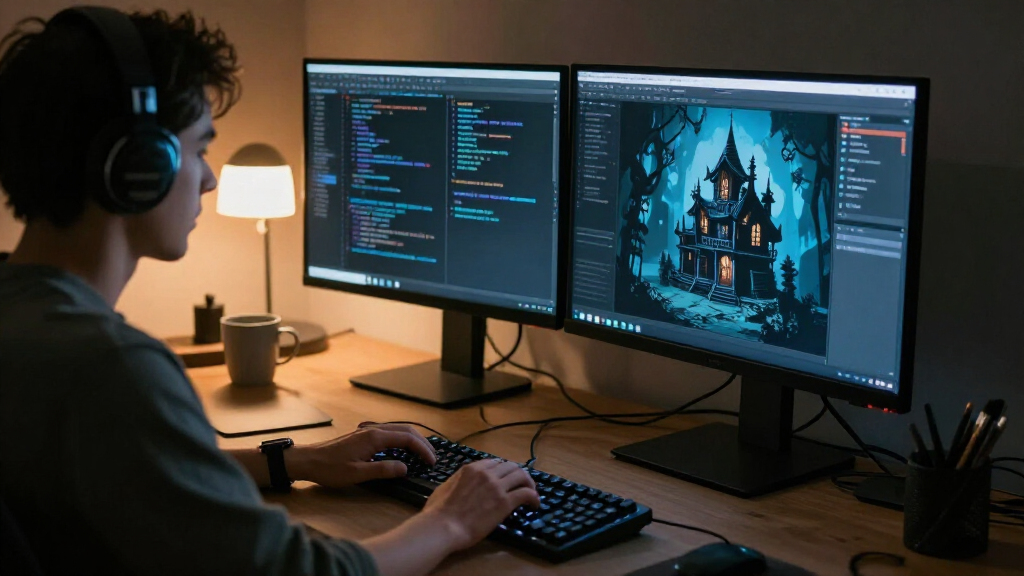
For character consistency, Meyer first made one reference image for each of the eight characters using Google’s Nano Banana 2 image model through Higgsfield. He then generated still frames and animated them with Veo 3.1 for the first version. Meyer reports that the total across the three versions was 2,220 Higgsfield credits, about $95 at his subscription price, plus roughly 2,100 ElevenLabs characters for music and sound effects. Those figures are the creator’s accounting, not an independent cost audit.
Why the First Cut Fell Flat
The account offers a small production case study in the gap between AI-generated imagery and a finished short. Meyer says the first cut had consistent faces, costumes and a suitable haunted-house palette, but its longer shots and lack of a musical score weakened the comedy. In his telling, the decisive revision was structural: he changed the pace and generation approach rather than simply asking for prettier pictures.
That distinction matters to viewers and creators evaluating claims that generative tools can make a film quickly. Hollow House was produced in a night, but the account still describes planning, reference-image creation, repeated generation, speech checking and editorial judgment. The reported cost also covers specified credits and sound-generation use; it does not establish the full value of the creator’s time or prove that the same workflow would deliver similar results for a different project.
Popular right now

Bose QuietComfort Wireless Bluetooth Headphones with Active Noise Cancellation, Mic, USB‑C Charging, Deep Bass, 24‑Hour Battery – White Smok

Bose QuietComfort Wireless Noise-Cancelling Over-Ear Headphones, Black

Philips 3300 Series Fully Automatic Espresso Machine with LatteGo Milk System
As an affiliate, we earn on qualifying purchases.
From Character Sheets to Three Cuts
Meyer says the premise came from extreme haunted attractions, where guests may sign waivers and use a safe word to stop the scares. The film turns that setup into a supernatural workplace comedy: when a guest named Derek says “cotton candy,” the ghost does not stop, and shift lead Ray asks whether the newcomer signed a waiver. Meyer says the structure was inspired by an AI horror-comedy short shared on X, while the script, characters and jokes were his own.
The production began with eight character reference sheets, which Meyer says took less than two minutes to generate and cost two credits each at 2K resolution. He used them as visual references because, in his account, video models can change details such as hair colour or clothing between scenes. The first version was made from 20 planned shots, with stills animated individually. Meyer says the final approach used one model with the entire cast available as references, rather than assembling the film from many separate clips.
The creator also describes practical limits encountered during generation. Veo rendered a scripted shout of “HEY!” as the letters being spoken one by one, and a requested full head turn instead moved the character’s body. A scene intended to lift a guest off the floor was initially blocked; a rewritten “floating” description passed but produced only a slight lift. Meyer says he checked dialogue with OpenAI’s Whisper speech-recognition model, which helped identify an incorrectly rendered line and a garbled final line that needed a retake.
““Terribly boring and amateurish.””
— Thorsten Meyer, describing his reaction to the first version
What the Cost Figures Leave Out
The production details and costs come from Meyer’s own account; no independent breakdown or verification is provided in the supplied material. The roughly $95 figure is tied to his plan price and the reported Higgsfield credit use, but it does not specify whether that amount represents the marginal cost of this film, a subscription allocation or all production expenses. The account also gives no complete estimate of labour, editing time or other software costs.
The source describes the first and second versions and identifies the third as the final, successful approach, but it does not provide a full comparative evaluation of the models or a detailed account of every edit made to the finished short. Meyer’s statement that the script and jokes were original, alongside the acknowledged inspiration from a short shared on X, is his account; the source does not identify that earlier video or detail the similarities.
The Short and Its Production Record
Meyer’s October 28 post links to the finished Hollow House short and says it includes the available behind-the-scenes material: character sheets, initial frames, failed attempts and a contact sheet of the final cut. No further release, sequel or production milestone is announced in the supplied source. Readers can compare the published 1:37 film with Meyer’s account, but additional details about the workflow or cost would need to come from the creator.
Key Questions
What is Hollow House?
Hollow House is a 1:37 horror-comedy short about a ghost joining the scare crew at an extreme haunted attraction. Its creator says the film’s characters, voices and sets were AI-generated.
How long did it take to make?
Thorsten Meyer says production ran from the evening of October 27 to about 1:30 a.m. on October 28, 2026. He describes making three versions during that period.
How much did the production cost?
Meyer reports spending 2,220 Higgsfield credits, which he values at roughly $95 at his plan price, plus about 2,100 ElevenLabs characters for music and sound effects. The supplied account does not give an independently verified total production cost.
Why did the first version not work?
Meyer says its 20 shots averaged 5.6 seconds each, making the short feel slow beside the faster-cut inspiration. He also cites the lack of a score and says comedy depended on timing that the first edit did not have.
What remains unknown about the production?
The source does not provide an independent cost audit, a complete accounting of labour and software expenses, or a detailed comparison of all edits across the three versions. It also does not announce a sequel or other next production.
Source: ThorstenMeyerAI.com