

Nursing statistics help you analyze healthcare data to improve patient outcomes and guarantee effective care. They allow you to identify patterns, evaluate interventions, and develop evidence-based policies. Using measures like mortality or infection rates, you can make informed decisions and communicate findings clearly. This knowledge builds your confidence in evaluating research and applying data-driven practices. Want to understand how these skills directly influence nursing work? Keep exploring to see how this knowledge can shape your future healthcare practice.
Key Takeaways
- Nursing statistics analyze healthcare data to improve patient outcomes and inform evidence-based practices.
- They include measures like infection rates, mortality, and patient satisfaction to evaluate care quality.
- Proper data interpretation helps identify care gaps and guides clinical decision-making.
- Applying statistical skills supports research evaluation and the development of reliable healthcare protocols.
- Using nursing statistics promotes data-driven decisions, enhances care quality, and supports healthcare improvements.
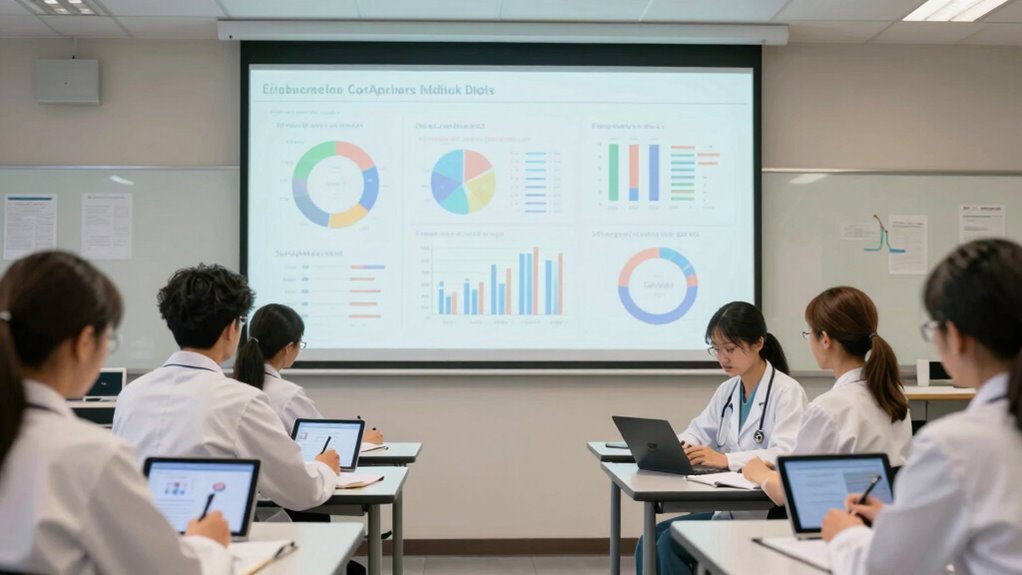
Have you ever wondered how the nursing profession is evolving? As a health science student, understanding the role of nursing statistics is essential in grasping how care quality improves and patient outcomes are enhanced. Nursing statistics provide a foundation for analyzing data, which ultimately helps nurses make informed decisions that directly impact patient health. When you look at patient outcomes, you’ll see that they reflect the effectiveness of the care delivered. By studying these statistics, you can identify patterns and trends that highlight what practices lead to better recovery rates, fewer complications, and higher patient satisfaction.
Data interpretation plays a key role in this process. It involves analyzing numerical information collected from various healthcare settings, such as hospital records or clinical studies. As a future nurse, your ability to interpret this data allows you to evaluate the success of different interventions objectively. For example, if a particular treatment shows a consistent reduction in readmission rates across multiple studies, data interpretation helps you understand its significance and potential application in your practice. It also enables you to recognize gaps in care or areas needing improvement, which are essential for continuous quality improvement initiatives. Additionally, understanding the importance of contrast ratio and its impact on image quality can help in selecting appropriate visual aids or presentations for patient education.
Nursing statistics don’t just serve academic purposes; they have real-world implications. They help in developing evidence-based protocols, shaping policies, and guiding clinical decisions. When you analyze data correctly, you contribute to a broader understanding of what works and what doesn’t, ensuring that patient care is rooted in solid evidence. Moreover, understanding statistical measures such as mortality rates, infection rates, or patient satisfaction scores allows you to communicate findings effectively to your team and patients. This transparency promotes trust and shared decision-making. Developing a solid understanding of data analysis techniques is also crucial for accurately interpreting complex datasets and making meaningful conclusions. Gaining proficiency in statistical literacy can further enhance your ability to critically appraise research and data quality. Recognizing the importance of evidence-based practice ensures that the care you provide is supported by the most current and reliable data.
In addition, nursing statistics support the evaluation of new technologies and practices before they are widely adopted. By interpreting data from pilot studies or clinical trials, you can determine whether a new intervention will genuinely benefit patients or if further research is necessary. As you develop your skills in data interpretation, you’ll become more confident in evaluating the validity and reliability of research findings, which is essential for advancing your career and improving healthcare delivery.
Ultimately, mastering nursing statistics and data interpretation empowers you to make data-driven decisions that positively influence patient outcomes. It bridges the gap between raw numbers and meaningful healthcare improvements, allowing you to provide safer, more effective care. As the healthcare landscape continues to evolve, your ability to analyze and interpret data will remain an indispensable skill in ensuring that nursing practices are both current and impactful.
nursing statistics textbook
As an affiliate, we earn on qualifying purchases.
As an affiliate, we earn on qualifying purchases.
Frequently Asked Questions
How Are Nursing Statistics Useful in Clinical Decision-Making?
Nursing statistics help you make informed clinical decisions by showing how interventions impact patient outcomes. They provide evidence-based practices that guide your choices, ensuring treatments are effective and tailored to individual needs. By analyzing data, you can identify trends, measure success, and refine care plans. This ultimately improves patient safety and quality of care, empowering you to deliver the best possible outcomes based on solid statistical evidence.
What Are Common Sources for Nursing Statistical Data?
Like Sherlock Holmes piecing together clues, you find nursing statistical data from sources like hospital records, government health agencies, and research publications. Data collection involves gathering this information, then you analyze it to identify trends and improve care. Clinical databases and surveys are essential sources, offering insights that help shape effective nursing practices. By understanding where data originates, you enhance your ability to make informed, evidence-based clinical decisions.
How Do Nursing Statistics Impact Healthcare Policy?
Nursing statistics influence healthcare policy by providing evidence-based insights that shape decisions, improve patient outcomes, and allocate resources effectively. You need to ensure data privacy to protect patient information while analyzing trends. Be aware of statistical biases that can skew results, leading to misguided policies. By understanding these factors, you can consider policies are grounded in accurate, ethical data, ultimately enhancing healthcare quality and equity.
What Challenges Exist in Collecting Accurate Nursing Data?
Ironically, collecting accurate nursing data sounds simple—until data privacy concerns and reporting accuracy issues get in the way. You often struggle with protecting sensitive information, which can limit data sharing, and inconsistent reporting practices can skew results. These challenges hamper efforts to gather reliable data, making it tough to improve patient care. You must navigate privacy laws and standardize reporting to guarantee your data truly reflects the realities in healthcare settings.
How Can Students Improve Their Understanding of Nursing Statistics?
To improve your understanding of nursing statistics, focus on developing your data interpretation skills and boosting your statistical literacy. Engage actively with course materials, practice analyzing real-world data sets, and seek clarification when concepts are unclear. You can also join study groups or online forums to discuss statistical methods. This hands-on approach helps you grasp complex concepts more effectively, making you more confident in applying statistics to nursing practice.
clinical data analysis software for nurses
As an affiliate, we earn on qualifying purchases.
As an affiliate, we earn on qualifying purchases.
Conclusion
You now know the nuances of nursing statistics, steering numbers with confidence and clarity. By mastering metrics and methods, you can make meaningful, measurable impacts in healthcare. Remember, precise data propels progress, and your understanding underscores your unique role. So, seize this statistical skill set, strengthen your scientific stance, and stride confidently into your career, committed to compassionate care fueled by factual, factual, and fabulous figures.
healthcare data visualization tools
As an affiliate, we earn on qualifying purchases.
As an affiliate, we earn on qualifying purchases.
patient satisfaction survey forms
As an affiliate, we earn on qualifying purchases.
As an affiliate, we earn on qualifying purchases.