📊 Full opportunity report: Small Office, Less Paper: A Guide To Scanner-Based Filing on IdeaNavigator AI — validation score, market gap, and execution plan.
TL;DR
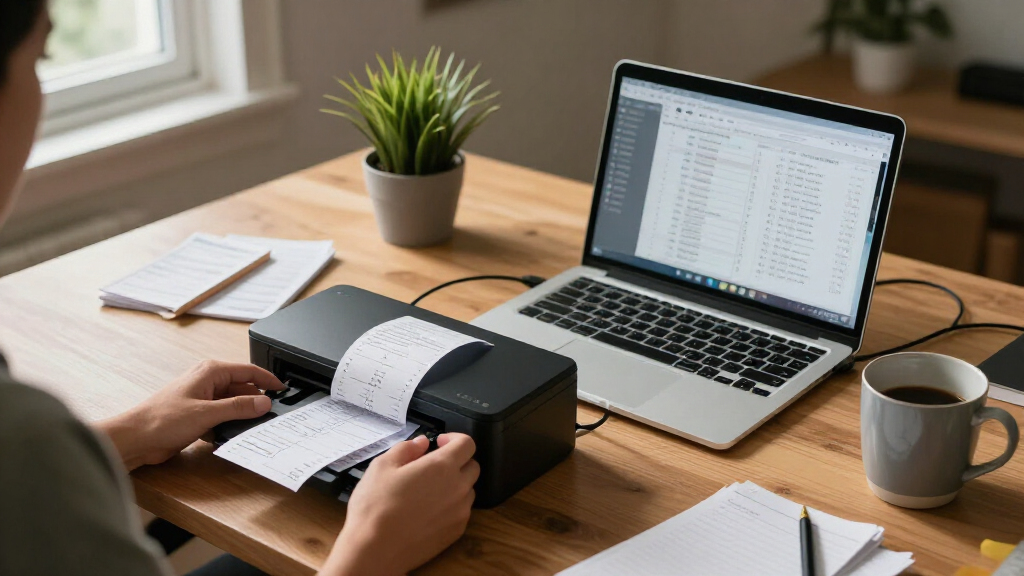
IdeaNavigator AI’s proposal for paper-heavy small offices outlines a phone-based scanner that would classify documents, suggest filenames and save searchable PDFs in a shared folder. It recommends a one-week pilot at five offices, but reports no pilot results, product launch or pricing figures.
IdeaNavigator AI has proposed testing a scanner-based filing app for paper-heavy small offices, with a pilot that would ask five organizations to digitize 200 documents each over one week. The concept is aimed at offices such as small nonprofits, clinics and law firms. The proposal reports no completed test, product launch or measured results.
According to IdeaNavigator AI’s proposal, the app would let a user photograph a stack of documents with a phone. Optical character recognition (OCR) would read the text, while document recognition tools would suggest a category and filename. An invoice, for example, could be labeled using its document type, date and vendor. The app would then save a searchable PDF to a shared folder.
IdeaNavigator AI identifies a common office problem: paper forms, invoices and records can accumulate in filing cabinets, while basic scanning tools may save images without useful names or searchable fields. The proposed product is meant to combine scanning with classification, naming and searchable storage, rather than simply create image files.
For validation, IdeaNavigator AI proposes giving the app to five small offices for one week, with each office scanning a real backlog of 200 documents. The suggested measures are correct auto-classification rates and whether participating offices would pay per seat. The proposal also suggests a monthly subscription with a page limit and extra charges for higher scanning volumes; it supplies no prices or adoption figures.
Filing Accuracy Could Decide Adoption
If the proposed workflow works reliably, it could reduce the time staff spend naming, sorting and searching paper records. That may matter particularly in small offices where employees handle administrative work alongside their primary duties and where a dedicated information-technology team may not be available. A shared collection of searchable PDFs could also make records easier for authorized staff to find than documents kept only in physical folders.
Those benefits remain potential outcomes, not demonstrated results. Misclassified forms or incorrectly extracted dates and names could create extra review work or lead staff to overlook a record. For clinics and law firms, document access and confidentiality are also material considerations. IdeaNavigator AI’s proposal does not specify how the app would manage permissions, retention, security or sensitive information, so the practical value depends on more than recognition accuracy alone.
The proposed pilot’s focus on real backlogs is relevant because scanning routine examples may not reflect the mix of paper found in an operating office. Measuring both correct classification and willingness to pay could help distinguish a technically workable tool from one that saves enough staff time to justify a recurring subscription.
document scanner app for small office
As an affiliate, we earn on qualifying purchases.
As an affiliate, we earn on qualifying purchases.
From Paper Stacks to Searchable PDFs
The idea sits within the broader market for digitizing records at small organizations. IdeaNavigator AI’s proposal says OCR and layout-aware models are now inexpensive and accurate enough to support automatic naming, classification and field extraction without a dedicated IT team. That is the rationale the proposal offers for testing the product now; it provides no benchmark, cost estimate or independent performance data to support the claim.
The proposed product is deliberately narrow: photograph documents, identify their likely type, suggest a filename and place searchable PDFs in a shared folder. IdeaNavigator AI does not describe it as a full records-management system, and the proposal states no plan for integrations, document retention schedules or workflows for approving records. It suggests a subscription charging by user, with a page-volume cap and overage pricing, but gives no rates or explanation of how usage would be counted.
As an affiliate, we earn on qualifying purchases.
Accuracy, Privacy and Pricing Unreported
IdeaNavigator AI reports no completed pilot, so classification accuracy, extraction quality and time saved remain unknown. The proposed test also does not define what counts as a correct classification, how errors would be reviewed, or whether results would be compared with each office’s existing process. Willingness to pay is listed as a measure, but the proposal identifies no participating organizations or responses.
Further product details are also absent from the proposal. It does not say whether documents would be processed on a phone or through an external service, how sensitive files would be protected, who could access shared folders, or how long records would be retained. It also gives no subscription price, page cap or overage rate. These are open questions, not evidence that the app has failed or that the proposed approach is unsafe.
As an affiliate, we earn on qualifying purchases.
A Five-Office Pilot Is Proposed
IdeaNavigator AI’s proposal describes a one-week pilot in five small offices, with 200 backlog documents scanned at each site. It calls for tracking correct auto-classification and willingness to pay per seat. No start date, participating offices or completed results are reported in the proposal.
If such a test proceeds, useful reporting would include how accuracy is defined, how often staff must correct suggested labels, and whether performance differs across document types. Details on security, access controls, pricing and page limits would also help offices judge whether the workflow is suitable for their records. Until those details and pilot findings are available, the app remains a concept with a proposed validation plan.
Source: IdeaNavigator AI
office document classification app
As an affiliate, we earn on qualifying purchases.
As an affiliate, we earn on qualifying purchases.
Key Questions
Has the scanner app launched?
No launch is reported. IdeaNavigator AI describes a product concept and proposed pilot, not an available app.
How would the proposed filing workflow work?
Under IdeaNavigator AI’s proposal, a user would photograph documents with a phone. The app would use OCR and document recognition to suggest a category and filename, then save a searchable PDF in a shared folder.
What would the proposed pilot test?
IdeaNavigator AI proposes that five small offices each scan 200 documents over one week. The proposed measures are classification accuracy and whether offices would pay per seat.
How would the service charge customers?
IdeaNavigator AI suggests a monthly, per-seat subscription with a page-volume cap and charges for use above the cap. No prices or page limits have been provided.
What information is still missing?
IdeaNavigator AI reports no test results, launch plans, security details, participating offices or pricing figures. The proposal also does not define how classification errors would be measured.
Source: IdeaNavigator AI