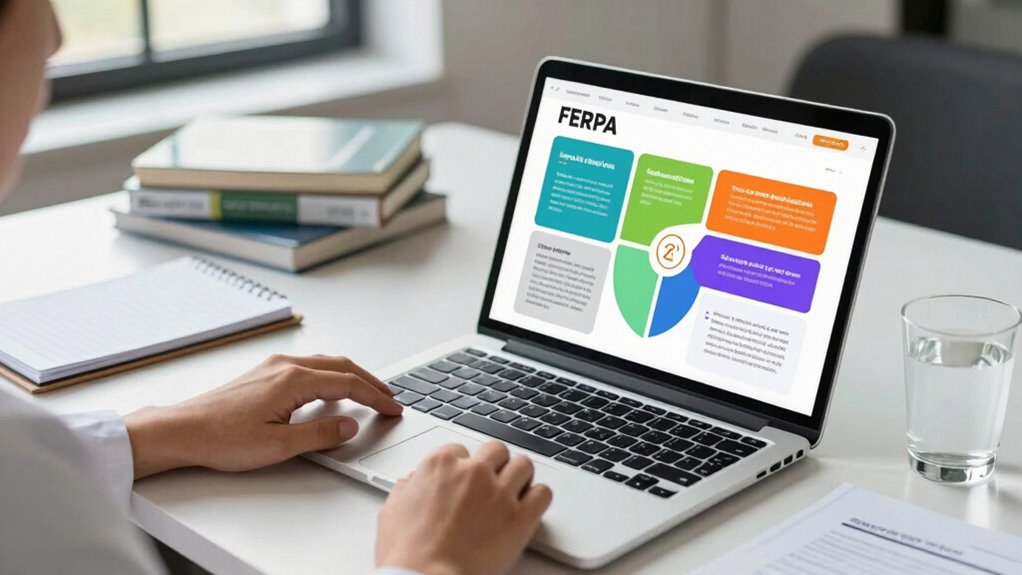

As a student researcher, understanding FERPA helps you protect student privacy by controlling access, use, and sharing of educational records like transcripts and grades. You must obtain written consent before sharing identifiable data, unless your research qualifies for certain exceptions. Keep data secure through anonymization and encryption, and only access necessary information. Following FERPA guarantees ethical handling of records. To learn more about practical steps and legal responsibilities, keep exploring these important guidelines.

Get business pricing on monitors, keyboards and dev gear
- Business-only prices and quantity discounts
- Tax-exempt purchasing
- Multiple users, one account, clear invoices
Key Takeaways
- Understand that FERPA mandates strict confidentiality and limits access to student education records for researchers.
- Obtain written consent or adhere to legal exemptions before using identifiable student data in research.
- Anonymize or de-identify data to protect student privacy and reduce risk of unauthorized disclosure.
- Use data sharing agreements specifying handling, storage, and access protocols to ensure compliance.
- Implement security measures like encryption and access controls to safeguard digital educational records.

If you’re a student researcher handling sensitive educational records, understanding FERPA is vital to protect student privacy. The Family Educational Rights and Privacy Act (FERPA) sets strict rules about how you can access, use, and share student information. As you work with educational data, you must prioritize data privacy to prevent unauthorized disclosures that could harm students. FERPA’s core aim is to control who sees student records and under what circumstances, guaranteeing sensitive information remains confidential. This means you need to handle all records with care, only accessing what’s necessary for your research and avoiding unnecessary exposure of personal details.
Handling educational records responsibly is essential to protect student privacy and comply with FERPA regulations.
In addition to legal compliance, ethical considerations play an essential role in your responsibilities as a student researcher. You must respect students’ rights to privacy, understanding that their educational records are personal and often sensitive. Ethical research involves safeguarding this information from misuse or accidental release. This might mean anonymizing data to strip away personally identifiable details or securing digital files with encryption. You should also be transparent about your research practices, informing students or data providers about how their information will be used and stored. Respecting privacy not only aligns with FERPA but also fosters trust between you and the individuals whose data you’re analyzing. It’s also important to familiarize yourself with the specific types of educational records that FERPA covers to ensure comprehensive compliance. Recognizing educational record definitions helps prevent unintentional violations by clarifying what information is protected under the law. Being aware of the resale value of certain data can help you make informed decisions about data sharing and security. Additionally, understanding the scope of the law’s restrictions will help you navigate complex situations involving data access and sharing.
FERPA also guides you on when and how you can share data. Generally, you need written consent from the student or their parent before releasing identifiable information, unless an exception applies—such as data shared for research purposes under specific conditions. When working with institutions, you’ll often need to sign data use agreements that specify how the data can be handled, stored, and shared. These agreements help guarantee ethical standards are maintained and that research doesn’t compromise student privacy.
Furthermore, you should familiarize yourself with the concept of “educational records,” which FERPA defines broadly. The records include transcripts, grades, disciplinary records, or even electronic communications. Knowing what constitutes an educational record helps you determine the scope of data privacy protections and avoid unintentional violations. It is also beneficial to understand how FERPA compliance affects your access to and use of data during your research process. Always remember that your primary goal is to balance the pursuit of knowledge with the responsibility to protect students’ rights and privacy. By adhering to FERPA’s regulations and ethical principles, you contribute to a research environment that respects individual privacy while advancing educational understanding.
data encryption software for research
As an affiliate, we earn on qualifying purchases.
As an affiliate, we earn on qualifying purchases.
Frequently Asked Questions
Can I Share Ferpa-Protected Data With Colleagues Outside My Institution?
You generally can’t share FERPA-protected data with colleagues outside your institution unless you follow strict confidentiality protocols. Data sharing requires obtaining explicit written consent from students or ensuring your institution has approved an exception. Always adhere to confidentiality protocols, secure data properly, and consult your institution’s policies before sharing any FERPA-protected information externally. Doing so helps protect student privacy and keeps your research compliant with FERPA regulations.
What Are the Penalties for Violating FERPA as a Student Researcher?
If you violate FERPA, you face serious legal consequences and risk a data breach of sensitive student information. Penalties can include federal investigations, loss of research privileges, and potential fines or sanctions. You might also face damage to your reputation and career. To avoid this, always protect student data carefully, follow institutional protocols, and understand FERPA regulations thoroughly, ensuring you handle all data responsibly and legally.
How Do I Obtain Consent to Access Student Data for My Project?
To access student data, you need to obtain clear, documented consent from the students or their guardians. Guarantee your consent process includes explaining how data will be used and protected. To further safeguard privacy, apply data anonymization techniques, removing identifiable information. Keep thorough consent documentation for your records, demonstrating that you followed proper procedures and complied with FERPA requirements, which helps protect both your research and students’ privacy.
Are There Specific FERPA Considerations for Online or Digital Research?
When conducting online or digital research, you must prioritize digital security and online confidentiality. Guarantee data is encrypted and access is restricted to authorized personnel. Be transparent with students about how their data will be stored and used, and obtain proper consent. Also, regularly review your digital security measures to protect student information from breaches, aligning your practices with FERPA requirements.
What Training Is Required to Handle Ferpa-Protected Information?
You need to complete specific training requirements to handle FERPA-protected information responsibly. This training emphasizes data confidentiality and teaches you how to protect student privacy effectively. It often includes understanding legal obligations, secure data handling practices, and the importance of confidentiality agreements. By fulfilling these training requirements, you guarantee you’re knowledgeable about FERPA regulations, reducing the risk of data breaches and maintaining the trust placed in you as a researcher.
student data anonymization tools
As an affiliate, we earn on qualifying purchases.
As an affiliate, we earn on qualifying purchases.
Conclusion
Understanding FERPA is essential for your research success and protecting student privacy. Remember, nearly 70% of students feel uneasy sharing sensitive information online, highlighting the importance of confidentiality. By adhering to FERPA guidelines, you not only comply with legal requirements but also build trust with your participants. Keep these principles in mind, and you’ll conduct your research ethically and responsibly, ensuring your work benefits both your academic goals and the students you serve.
secure digital file storage for educational records
As an affiliate, we earn on qualifying purchases.
As an affiliate, we earn on qualifying purchases.
privacy-compliant data sharing agreements
As an affiliate, we earn on qualifying purchases.
As an affiliate, we earn on qualifying purchases.
Fall Picks
fall essentials
As an affiliate, we earn on qualifying purchases.