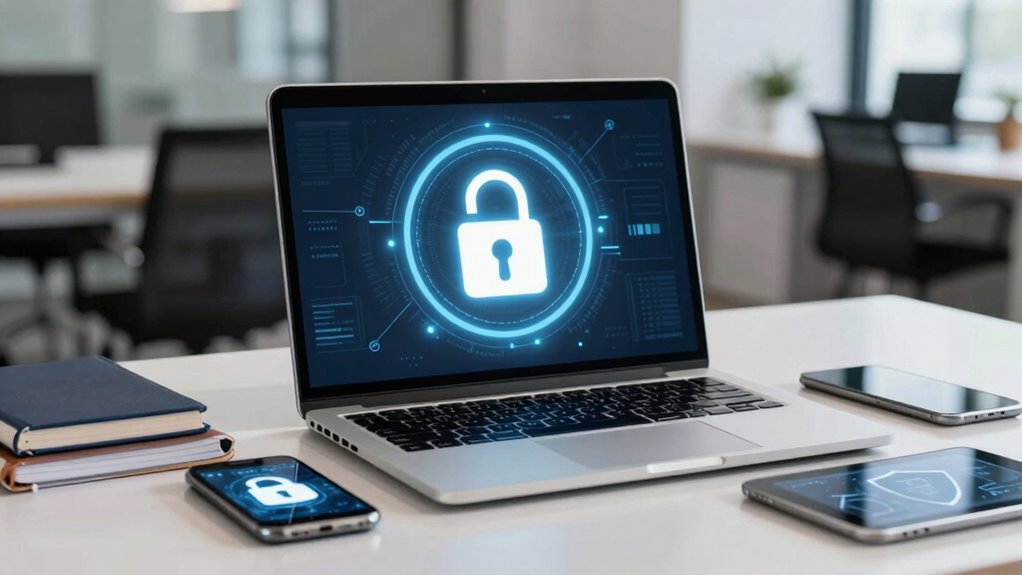

To secure your student project data, you should use strong protection methods like encryption and strict access controls. Keep your devices and platforms updated, use secure file-sharing options, and avoid unsecured Wi-Fi networks. Educate yourself and your team on best practices, such as verifying identities and being cautious with emails. Combining these strategies helps prevent unauthorized access and data breaches. If you want to learn more, you’ll find how to implement these essential steps effectively.
Key Takeaways
- Use strong encryption protocols like AES to protect project data during storage and transmission.
- Implement access controls such as passwords and role-based permissions to restrict data access.
- Keep devices and platforms updated with the latest security features and use secure file-sharing methods.
- Educate students and team members on recognizing security threats and practicing safe data handling.
- Regularly back up data to prevent loss from security breaches or technical failures.

As student projects increasingly involve sensitive data, guaranteeing data security has become more important than ever. When handling personal information, research data, or confidential records, you need to implement effective security measures to protect against unauthorized access and potential breaches. One of the foundational steps is understanding and applying encryption protocols. Encryption transforms data into a coded format that only authorized parties can decode, making it unreadable to anyone without the proper decryption key. By encrypting your data, whether it’s stored locally or transmitted across networks, you add a critical layer of protection that safeguards against interception or theft. Choosing strong encryption protocols, like AES (Advanced Encryption Standard), ensures your data remains secure even if someone manages to access it.
Encrypt your data with protocols like AES to protect sensitive information from unauthorized access and theft.
Alongside encryption, access controls are essential to maintaining data security. Access controls determine who can view, modify, or delete your project data, restricting sensitive information to only those with proper authorization. You can implement access controls through password protections, user authentication, and role-based permissions. For example, you might restrict editing rights to team leaders or supervisors while allowing team members only to view certain files. Regularly updating passwords and using multi-factor authentication adds further layers of security, making it more difficult for intruders to gain unauthorized access. By carefully managing access, you reduce the risk of accidental leaks or malicious attacks. Incorporating encryption protocols can further enhance security by ensuring data remains protected during transfer. Additionally, understanding and applying data transmission protocols helps ensure secure communication channels for your project data. Familiarity with secure communication methods is also vital to prevent data interception during sharing. Staying informed about the latest security threats and vulnerabilities enables you to proactively adjust your security measures.
It’s also important to evaluate the security of the devices and platforms you use for your project. Make certain your computers, cloud storage accounts, and collaboration tools have up-to-date security features, including firewalls and antivirus software. When sharing data with teammates, use secure file-sharing methods that encrypt data in transit. Avoid using unsecured Wi-Fi networks for sensitive work, as they can be vulnerable to eavesdropping. Additionally, backing up your data regularly helps you recover information if a security incident occurs. Incorporating protocols for data transmission can further enhance security by ensuring data remains protected during transfer. Staying informed about the latest security trends and threats can also help you adapt your practices to new vulnerabilities. Educating yourself and your team on best practices for data security makes a significant difference. Be cautious when opening email attachments or clicking on links from unknown sources, as these are common vectors for malware. Always verify the identity of collaborators before granting access to sensitive information. By combining encryption protocols, access controls, device security measures, and user awareness, you create a well-rounded security strategy that helps protect your student project data from threats. Staying vigilant and proactive is key to maintaining the integrity and confidentiality of your work, giving you peace of mind as you focus on your project’s success.
As an affiliate, we earn on qualifying purchases.
Frequently Asked Questions
How Do I Securely Share Project Data With Team Members?
You should use encrypted sharing methods like secure file transfer tools or encrypted cloud services to keep your project data safe. Implement access control by setting permissions so only team members with the right credentials can view or modify the data. Always verify the security features of your sharing platform and encourage team members to use strong passwords. This way, you guarantee your data remains protected from unauthorized access.
What Are Common Signs of a Data Breach in Student Projects?
You’ll notice signs of a data breach if you see phishing attacks targeting your team, strange login activity, or unauthorized access to your project files. Unexpected password changes or mysterious emails may also indicate someone’s trying to access your data. Stay alert for unusual system behavior or data discrepancies, and make sure your team reports any suspicious activity promptly to prevent further security issues.
How Often Should I Update My Project’s Security Measures?
You should update your project’s security measures regularly, balancing constant vigilance with practicality. While encryption protocols and access controls protect sensitive data, cyber threats evolve rapidly, making periodic updates indispensable. Aim to review and refresh your security practices at least quarterly, or whenever new vulnerabilities emerge. This ongoing effort ensures your data stays protected, and your project remains resilient against breaches, demonstrating your commitment to data integrity and student privacy.
Are There Free Tools for Securing Student Project Data?
Yes, there are free tools to help secure your student project data. You can use encryption techniques like VeraCrypt or 7-Zip to protect sensitive files. Additionally, password management tools like Bitwarden or LastPass help you generate and store strong passwords securely. These tools make it easier to implement security measures without extra cost, ensuring your project data stays safe while you focus on your work.
Can I Recover Lost or Deleted Project Data Securely?
Yes, you can recover lost or deleted project data securely by using secure backups and data encryption. Regularly backing up your data guarantees you have copies in case of accidental deletion or loss. Make certain to encrypt your backups to protect sensitive information from unauthorized access. Use trusted backup tools that offer encryption features, and store backups in secure locations, such as encrypted cloud storage or external drives.
multi-factor authentication security device
As an affiliate, we earn on qualifying purchases.
As an affiliate, we earn on qualifying purchases.
Conclusion
Now that you understand the essentials of data security, imagine the future of your student projects—protected, private, and resilient against threats. But the real challenge is maintaining that security as technology evolves and new risks emerge. Will you stay one step ahead? The key lies in your vigilance and ongoing efforts. Your next move could define the safety of your data—and the trust you build. The choice is yours. Are you ready to secure your project’s future?
As an affiliate, we earn on qualifying purchases.
As an affiliate, we earn on qualifying purchases.