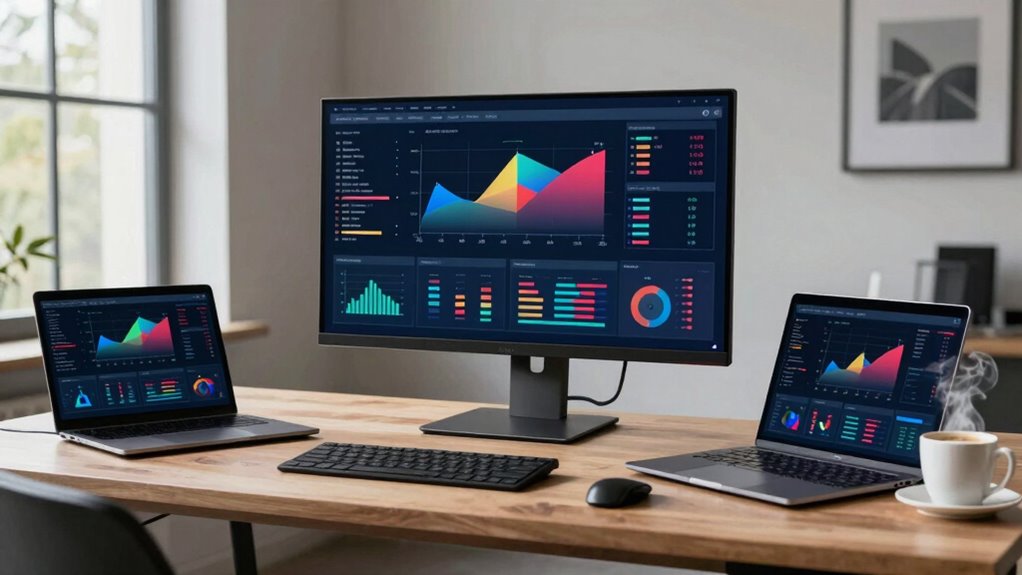
You don’t necessarily need 4K for data analysis. While higher resolution can offer finer detail and clarity, Full HD often suffices for many tasks. Advanced techniques and effective visualization can compensate for lower resolution, and larger screens or dual monitors may boost your productivity. It’s essential to focus on your analytical skills and specific needs rather than just the monitor’s resolution. Stick around to explore tips on optimizing your setup and sharpening your analysis techniques.
Key Takeaways
- 4K resolution enhances visual clarity, but Full HD (1080p) is often sufficient for most data analysis tasks.
- Advanced data visualization techniques, like heat maps, can improve analysis without requiring 4K.
- Workflow efficiency can be more important than resolution; larger screens or dual monitors may enhance productivity.
- Budget considerations often favor Full HD monitors, which can still deliver reliable performance for data analysis.
- Focus on developing analytical skills and effective visualization techniques rather than solely on monitor resolution.
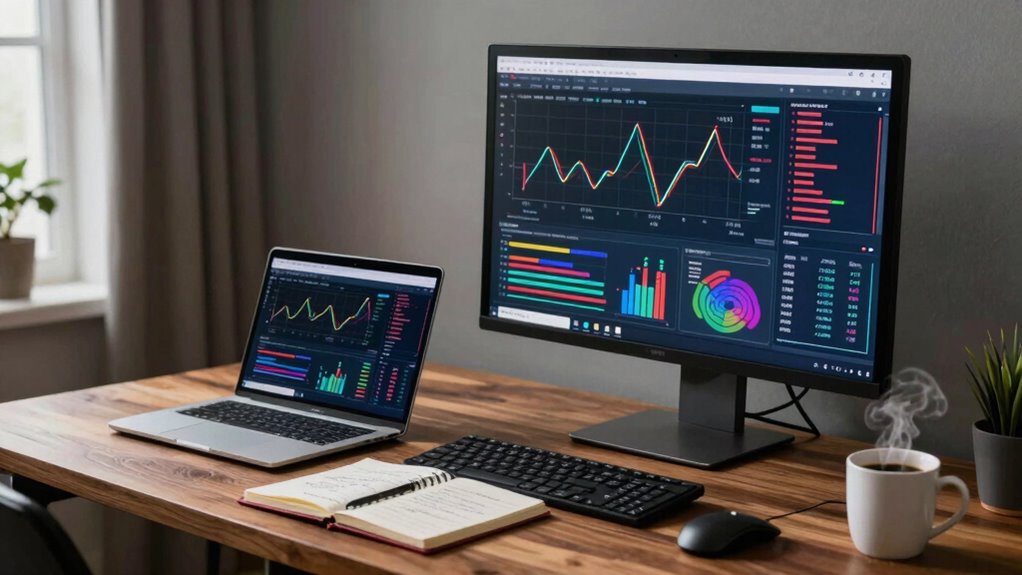
Do you really need 4K for data analysis, or is it just a marketing gimmick? As you explore the world of data, you might wonder whether upgrading to a 4K monitor will greatly enhance your analytical skills. While high screen resolution offers certain benefits, it’s essential to evaluate how much it truly affects your data visualization techniques and overall productivity.
First off, let’s talk about screen resolution impact. A higher resolution, like 4K, provides more pixels, which means you can display finer details on your screen. If you’re working with complex datasets, having that clarity can make a difference. You might find it easier to spot trends, patterns, or anomalies in your data visualizations. However, keep in mind that the effectiveness of your analysis relies heavily on the quality of your data and the techniques you employ, not just the screen’s resolution.
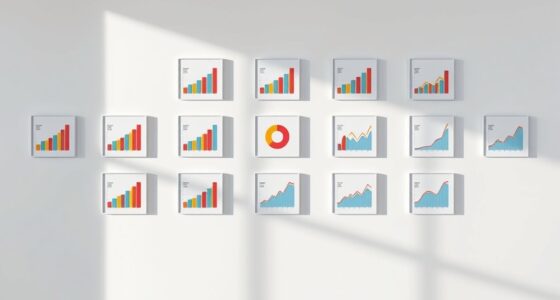
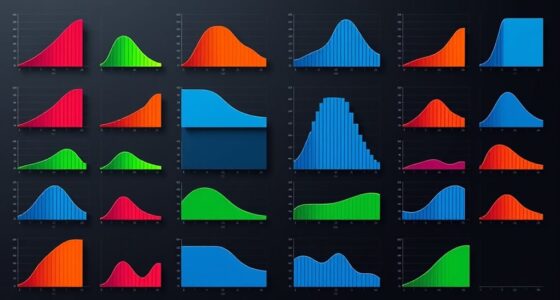
When you use advanced data visualization techniques, such as heat maps or scatter plots, the ability to view multiple data dimensions simultaneously can be a game changer. But does that mean you need a 4K display? Not necessarily. Many professionals find that a standard Full HD (1080p) monitor meets their needs just fine. With proper scaling and layout, you can still visualize data effectively without the extra pixels.
Another factor to reflect on is your workflow. If you often work with multiple applications side by side, a larger screen—or a dual monitor setup—might be more beneficial than a bump to 4K. You can easily compare datasets, run analyses, and visualize results without constantly switching windows. This can enhance your productivity more than simply having a high-resolution monitor.
Budget plays an important role too. 4K monitors can be pricey, and if you’re just starting out or working with tight budgets, investing in a reliable Full HD monitor might be a more practical choice. You can always upgrade later when you’re ready to take on more sophisticated data projects.
In the end, while 4K has its advantages, it’s not a necessity for data analysis. Focus on honing your skills and using effective data visualization techniques. A good monitor is essential, but the real value lies in your ability to interpret and communicate your data effectively. So, assess your needs carefully before making that leap to 4K.
Additionally, understanding the display technology behind monitors can help you choose the right device to suit your specific data analysis needs.
Full HD computer monitor for data analysis
As an affiliate, we earn on qualifying purchases.
As an affiliate, we earn on qualifying purchases.
Frequently Asked Questions
How Does Screen Resolution Impact Data Visualization Clarity?
Screen resolution greatly impacts data visualization clarity. Higher resolutions provide better pixel density, making details sharper and easier to interpret. When you work with complex charts or dense datasets, a higher resolution helps you spot patterns and anomalies without straining your eyes. You’ll notice that elements like labels and legends become clearer, enhancing your overall understanding. Investing in a good screen resolution can elevate your data analysis experience and improve your decision-making.
Are There Specific Software Requirements for 4K Displays?
Yes, there are specific software requirements for 4K displays. While stunning visuals can wow you, display scaling issues can frustrate your workflow. Many applications struggle with software compatibility at higher resolutions, leading to blurry text or misaligned interfaces. To make the most of your 4K screen, guarantee your software supports high DPI settings. Choosing the right tools not only enhances clarity but also makes your data analysis experience more seamless and enjoyable.
Can 4K Improve Collaboration in Data Analysis?
Yes, 4K can enhance collaboration in data analysis. With higher resolution, you’ll see more detail in your visuals, making it easier to share insights. When using collaborative tools, clear visual communication becomes essential. Everyone can spot trends and anomalies quickly, leading to more informed discussions. Plus, larger screens allow multiple team members to view the same data simultaneously, facilitating real-time collaboration and improving overall productivity in your analysis efforts.
What Hardware Upgrades Are Necessary for 4K Use?
You’ll need a graphics card that thinks it’s the superhero of the tech world to handle 4K. Your current setup? It’s probably more like a sidekick. Check your display settings, too; they should support 4K resolution. Otherwise, you might as well be staring at a potato. Upgrading your RAM wouldn’t hurt either, ensuring your system can keep up with all that extra pixel power. Welcome to the future—or at least a clearer screen!
Is 4K Beneficial for Mobile Data Analysis?
4K can be beneficial for mobile data analysis, especially if you value mobile usability. With a higher resolution, you get sharper visuals, making it easier to interpret complex data. This clarity enhances screen scaling, allowing you to view multiple data sets simultaneously without sacrificing detail. However, consider your device’s capabilities; not all mobile devices can effectively leverage 4K. If your device can, you’ll likely enjoy a more efficient data analysis experience.
dual monitor setup for productivity
As an affiliate, we earn on qualifying purchases.
As an affiliate, we earn on qualifying purchases.
Conclusion
In the end, whether you need 4K for data analysis depends on your unique situation. If you’re diving deep into intricate details, that extra clarity can be a game changer. However, many find that standard resolutions are more than enough for their needs. Remember, it’s not about the pixels; it’s about the insights you uncover. So, ask yourself: are you chasing the shimmer of 4K, or are you focused on the gold buried within your data?
budget 4K monitor for data visualization
As an affiliate, we earn on qualifying purchases.
As an affiliate, we earn on qualifying purchases.
large screen monitor for data analysis
As an affiliate, we earn on qualifying purchases.
As an affiliate, we earn on qualifying purchases.