📊 Full opportunity report: Youth Pitcher Arm Load: A Year-Round Monitoring Plan on IdeaNavigator AI — validation score, market gap, and execution plan.

Get business pricing on monitors, keyboards and dev gear
- Business-only prices and quantity discounts
- Tax-exempt purchasing
- Multiple users, one account, clear invoices
TL;DR
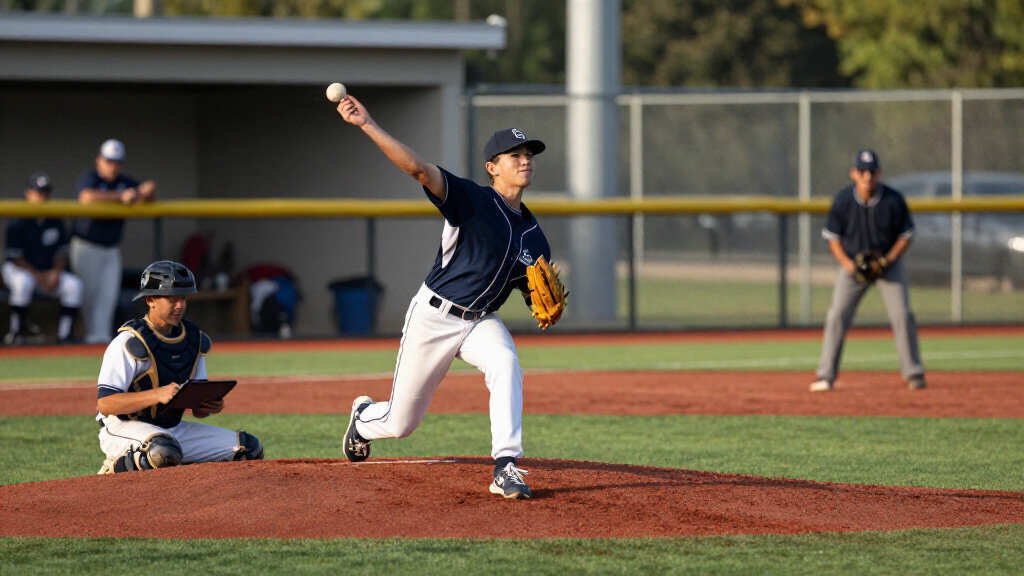
A proposed monitoring app would let parents record youth pitchers’ outings across school, travel and showcase teams, then compare rolling workloads with age-based guidance. The concept is still at the proposal stage; a 200-family, season-long test is suggested, but no results or injury-reduction evidence are reported.
IdeaNavigator AI has proposed a year-round arm-load tracking app for families whose young pitchers play on multiple teams, addressing the gap between separate schedules that may not share workload records. The concept remains untested: its next suggested step is to recruit 200 travel-ball families and measure logging consistency and whether alerts change rest decisions.
The proposed app would let parents record pitching outings quickly or import information from GameChanger, then combine activity across school, travel and showcase teams. It would track rolling workload against age-based guidelines, flag thresholds, schedule rest and create a report that parents could share with coaches. These are proposed features, not capabilities of a product shown to be available.
The concept is aimed at a specific buyer: parents of pitchers playing across seasons and teams. The suggested business model is an annual family subscription, with possible expansion to team licenses. No pricing, development timeline, existing user base or commercial launch is provided.
For validation, the proposal calls for recruiting 200 travel-ball families and observing their use over a season. The stated measures are whether families log outings consistently and whether workload flags affect decisions about rest. No pilot has been reported, and there are no findings showing that the proposed app improves health outcomes or prevents injuries.
The idea responds to a practical coordination problem: a young pitcher may participate in several programs whose records are not combined in one place. Parents and coaches could have an incomplete picture of total throwing activity if each team tracks only its own games. A shared record could make workload easier to discuss, especially when a player moves between school, travel and showcase schedules.
That potential should not be confused with proof of medical benefit. The proposal does not report evidence that an app’s flags can predict injury, establish an individual athlete’s safe workload or replace clinical judgment. Its initial test is narrower: whether families can maintain usable records and whether those records influence rest decisions. Those results would indicate whether the workflow is practical, not by themselves whether it reduces injuries.
youth baseball pitch count tracker app
As an affiliate, we earn on qualifying purchases.
As an affiliate, we earn on qualifying purchases.
Fragmented Schedules, Existing Guidance
The proposal says youth pitchers increasingly play across school, travel and showcase seasons, while teams may not share pitch-count information. It argues that this fragmentation makes cumulative workload difficult to track. It also cites Pitch Smart as an existing source of guidance, while saying that guidance does not automatically coordinate a player’s schedule across separate teams.
The proposal further points to rising youth elbow-surgery rates and the expansion of travel baseball as reasons to examine the issue. It gives no statistics, study citations or time period for that claim, so the scale and trend cannot be independently assessed from the information provided. The proposal also says UCL injuries once associated mainly with professional players are appearing among high school athletes; it does not provide data establishing the frequency or trend.
That distinction matters: the case for testing a shared log is based on a plausible recordkeeping gap, while broader claims about injury rates and the causes of injuries require supporting evidence. The app is described as a preventive monitoring concept, not a demonstrated medical intervention.
youth pitcher workload monitoring device
As an affiliate, we earn on qualifying purchases.
As an affiliate, we earn on qualifying purchases.
Pilot Results Are Not Yet Available
The proposal does not say whether development has started, whether a product is available, or whether families, coaches or teams have agreed to take part. It gives no pilot results, pricing or launch schedule. The suggested 200-family test is a plan for validation, not evidence that the study is underway.
Key details of the tracking method also remain unspecified. The proposal does not explain which workload measures would be used beyond outings and rolling load, how age-based thresholds would be selected, how missing or conflicting team records would be handled, or what would count as a flag changing a rest decision. It also does not report clinical review or evidence linking the alerts to reduced injury risk.
As an affiliate, we earn on qualifying purchases.
Testing Logging and Rest Decisions
The next step outlined is a season-long test with 200 travel-ball families. Organizers would need to determine whether parents enter outings reliably across teams and whether alerts lead to changes in rest. Reporting those measures, along with the tracking rules and any limitations, would help establish whether the proposed workflow is usable.
Further development would also need to clarify how coaches receive and interpret shared reports, how records from different teams are reconciled, and how the app presents guidance without implying that a threshold guarantees safety. Until testing and supporting evidence are available, families should not treat the proposed service as a substitute for existing guidance or advice from qualified health professionals.
Source: IdeaNavigator AI
youth sports injury prevention app
As an affiliate, we earn on qualifying purchases.
As an affiliate, we earn on qualifying purchases.
Key Questions
Is a youth pitcher arm-load tracking app available?
The information describes a proposed app, not a confirmed product launch. Availability and development status are not reported.
What would the proposed app track?
Parents would log outings or import records, and the app would combine workload across teams, compare rolling activity with age-based guidelines, flag thresholds and create shareable reports. These functions have not been shown to be tested.
Has the app been shown to prevent injuries?
No injury-prevention results are reported. The suggested pilot would first measure logging consistency and whether alerts affect rest decisions.
What is the proposed pilot?
The proposal recommends recruiting 200 travel-ball families and following their logging and rest decisions over a season. It does not state that recruitment or testing has begun.
Source: IdeaNavigator AI
Fall Picks
fall essentials
As an affiliate, we earn on qualifying purchases.