
📊 Full opportunity report: How Small Business Owners Can Rehearse Camera-Ready Communication on IdeaNavigator AI — validation score, market gap, and execution plan.

Get business pricing on monitors, keyboards and dev gear
- Business-only prices and quantity discounts
- Tax-exempt purchasing
- Multiple users, one account, clear invoices
TL;DR
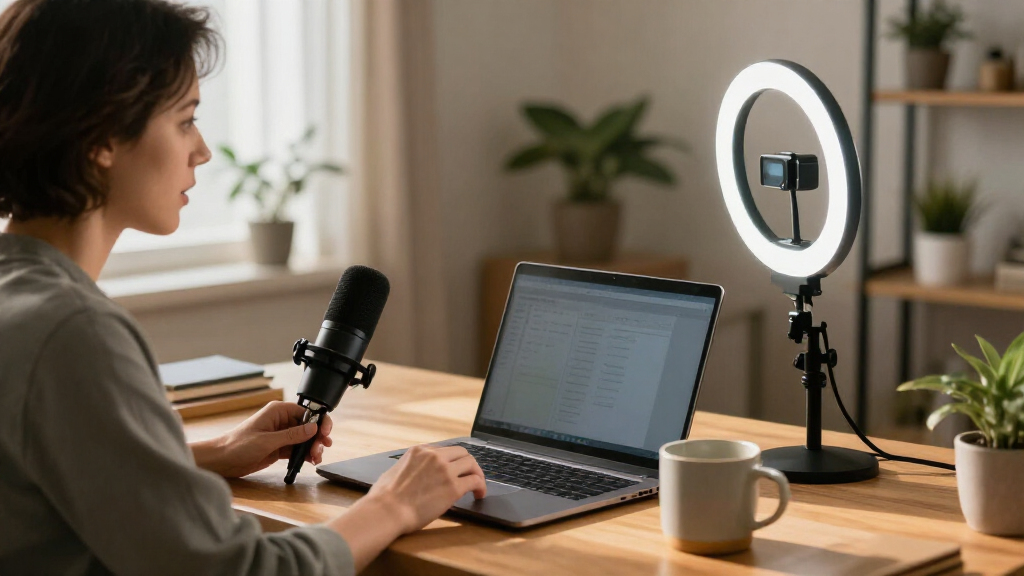
IdeaNavigator AI has outlined a potential practice app for small business owners who know video matters but struggle to record themselves. The proposal is an early-stage concept, not a launched product or a reported study; it calls for a 30-day test measuring whether participants publish a real video by day 45.
IdeaNavigator AI has proposed a practice app for small business owners who freeze when recording video, with a 30-day test involving 100 owners suggested to assess whether the approach helps participants publish. The concept targets a specific hurdle in video marketing: owners may understand the value of video but struggle with stumbling, self-criticism and repeated takes when filming alone, one of the challenges explored in where AI fits into a small business.
The proposed app would begin with daily, two-minute exercises that move from reading prepared text to speaking more freely, reflecting the need for guidance highlighted in research on small business owners using AI. It would give users private feedback on pacing, filler words, eye line and energy, then show progress over time. The suggested goal is to help users build comfort gradually and move from practice recordings to publishing real business content.
IdeaNavigator AI frames the product as a narrow first-use workflow for one group: owners who already know video could help their business but avoid recording because they feel uncomfortable on camera, a potential application of AI for small businesses. The proposal does not describe a finished app, existing users or demonstrated results. Its 30-day cohort is a validation plan, not evidence that the app improves confidence or publishing rates.
For the proposed test, the team would recruit 100 business owners into a cohort and compare their results with a waitlist control group. The stated outcome is whether participants publish their first real video by day 45. No recruitment process, measurement definition, control-group size or test findings are provided.
Concept brief · Small business video
How Small Business Owners Can Rehearse Camera-Ready Communication
A practice app concept from IdeaNavigator AI aims to help owners move from freezing on camera to publishing a real business video. It is an early-stage proposal, not a launched product or proven program.
01 / The problem and the premise
From knowing video matters to pressing record
The concept focuses on owners who see video as useful marketing but struggle when recording alone. Stumbles, self-criticism, and repeated takes can turn a short clip into a reason not to post.
Audience
Owners who avoid filming
Designed for small business owners who already understand video’s potential but feel uncomfortable speaking to a camera by themselves.
Practice path
Read, then speak freely
Daily two-minute exercises would progress from prepared text toward more spontaneous business communication.
Private feedback
Notice delivery patterns
Proposed feedback covers pacing, filler words, eye line, and energy, with progress shown over time. Its accuracy is untested.
02 / Intended user journey
A gradual route from rehearsal to publishing
The workflow is deliberately narrow: practice the act of recording a useful business message, build familiarity, then try publishing outside the app.
Two-minute prompt
Begin with a short, guided exercise that makes recording feel manageable.
Speak more freely
Move from reading prepared words to explaining an idea in your own voice.
Get delivery cues
See proposed feedback on pacing, filler words, eye line, and energy.
Publish a real video
Try a business post beyond practice; the pilot would check by day 45.
Measure behavior, not just confidence
The proposed primary outcome is whether a participant publishes a first real video by day 45. That is observable, but the proposal does not define what counts as published or how completion would be tracked.
03 / Proposed validation
A pilot plan, with key details still open
IdeaNavigator AI suggests a 30-day cohort of 100 business owners and a waitlist comparison. The proposal supplies a direction for testing, not findings.
Suggested design
Practice cohort + waitlist
Compare participants who receive the practice program with a waitlist group. Recruitment, group size, assignment, and other support are not specified.
Outcome to report
First video by day 45
Report the share in each group that publishes. Define “published,” explain how it is verified, and describe how participants entered each group.
04 / Open questions
What a pilot would need to clarify
The idea could be worth examining if a well-described pilot produces a useful early signal. Many product, measurement, and privacy questions remain unanswered.
Measurement
What counts as success?
Define a published video, the success threshold, group assignment, recruitment, and how other marketing support is handled.
AI feedback
How reliable is scoring?
No provider, evaluation method, standards, or performance data are identified for assessing eye line, energy, or speaking style.
Product & privacy
Will owners keep using it?
Prototype status, price, demand, retention, agency adoption, and video storage, deletion, and retention policies are unknown.
These bars distinguish the proposal’s described workflow from evidence of effectiveness; they are qualitative labels, not measured scores.
05 / Quick answers
What is—and is not—known
Has the app launched?
No launch is reported. The concept outlines a possible minimum viable product and pilot.
Who is it for?
Owners who think video could help their business but freeze, stumble, or repeat takes while recording.
Does AI feedback work?
That is unknown. The proposal gives no system details, evaluation data, or evidence of improved outcomes.
What business model is proposed?
A consumer subscription, with a possible team tier for agencies. Willingness to pay and agency demand are untested.
Testing a Path From Practice to Publishing
The proposal focuses on a gap between recognizing a marketing tactic and using it. A business owner can believe video is worthwhile yet remain unable to record a usable clip because every stumble prompts another take or a decision not to post. The proposed exercises would address that behavior directly, rather than offering only general public-speaking instruction.
The proposed publishing measure also gives the idea a more practical test than asking users whether they feel more confident. Publishing a first video by day 45 is an observable outcome tied to the problem the app is meant to solve. If a controlled test found more participants publishing than people on the waitlist, that would offer an initial signal worth examining; the proposal itself supplies no such result and does not establish that any difference would be caused by the app.
The concept also suggests a possible business model: a consumer subscription, with a team tier for agencies that coach clients. Whether owners would pay, whether agencies would adopt it and whether automated feedback would be useful enough to retain users remain open questions.
Popular right now

Apple AirPods Pro 3 Wireless Earbuds with Active Noise Cancellation

Shark HydroVac MessMaster Cordless Wet Dry Vacuum and Mop Combo, AW261

Ninja Crispi Glass Air Fryer (Stone) – 4‑in‑1
As an affiliate, we earn on qualifying purchases.
Why Solo Recording Is the Focus
The idea is set against pressure on businesses of all sizes to use video in marketing. Its premise is that advice to post regularly does not address the moment many owners find difficult: speaking to a camera without another person in the room. A class designed around public speaking may not closely match that solo-recording experience, according to the problem framing presented by IdeaNavigator AI.
The proposal points to multimodal AI as a way to assess aspects of delivery and provide private feedback. That is a product rationale, not evidence that a particular system can accurately evaluate eye line, energy or communication quality. No technology provider, evaluation method or performance data is identified.
The suggested test would use a waitlist comparison to examine whether the practice program is associated with participants publishing sooner or more often. Details needed to interpret such a comparison—including how owners are assigned, what counts as a published video and how other marketing support is handled—are not specified.
Key Questions Before a Pilot
No app launch or completed trial is reported, and no business owner, founder or researcher is quoted. The proposal does not state whether a prototype exists, who would build or operate it, how much it would cost, or when a pilot might begin. It also provides no evidence that camera anxiety is the main reason the target owners do not publish video; time, equipment, strategy or privacy concerns could also play a role.
The proposed scoring raises further questions. It is unclear how the app would assess eye line, energy and filler words, what standards would guide its feedback, or how it would handle differences in speaking styles and recording setups. The concept does not explain what video or personal data would be stored, how long it would be retained or whether users could delete it.
The validation plan also leaves its comparison method open. Without details on recruitment, assignment and the waitlist group, any difference in publishing by day 45 could be difficult to interpret. The proposal gives no target threshold for success, subscription price, retention goal or evidence of demand from agencies.
A Proposed 30-Day Validation Test
The next step described is a 30-day cohort of 100 owners, with a waitlist group used for comparison. The planned follow-up measure is the share of participants who publish their first real video by day 45. No start date, recruitment details or results have been announced in the information available.
For the test to answer the stated question, organizers would need to define what counts as a published video and how they will track completion. They would also need to report the comparison group’s outcome and explain how participants entered each group. Those details would help readers distinguish a useful early signal from a result shaped by selection or differences in support.
Until a pilot is run and its findings are reported, the app remains a product concept with a proposed validation plan. Its impact on publishing, user confidence and willingness to pay is still unknown.
Source: IdeaNavigator AI
Key Questions
Has the camera-practice app launched?
No launch is reported. IdeaNavigator AI presents it as a product concept and outlines a possible minimum viable product and pilot.
Who is the proposed app for?
It is aimed at business owners who know video could help their marketing but freeze when recording, including those who struggle with stumbling, self-criticism or repeated takes.
What would users practice?
The proposal describes two-minute daily exercises that progress from reading prepared material to speaking more freely, with feedback on pacing, filler words, eye line and energy.
How would the idea be tested?
The proposed test is a 30-day cohort of 100 owners compared with a waitlist group. The outcome would be whether participants publish a first real video by day 45; no results are available.
Does the proposal show that AI feedback works?
No. It describes AI analysis as part of the product idea but provides no system details, evaluation data or evidence that such feedback improves confidence or publishing rates.
Source: IdeaNavigator AI