
Energy consumption analytics simplify complex data, helping you understand how and when you use energy. They monitor real-time usage, identify patterns, and reveal waste or inefficient habits. With these insights, you can make smarter decisions to reduce costs and support renewable energy. Analytics tools also forecast future needs, so you stay prepared and save money. Keep exploring to discover how these insights can empower you to take control of your energy use more effectively.

Get business pricing on monitors, keyboards and dev gear
- Business-only prices and quantity discounts
- Tax-exempt purchasing
- Multiple users, one account, clear invoices
Key Takeaways
- Simplifies complex energy data into clear insights for better understanding and decision-making.
- Uses visual tools like charts and dashboards to illustrate consumption patterns easily.
- Explains how smart grids and renewable integration optimize energy use in everyday terms.
- Highlights actionable steps to reduce energy costs and improve efficiency.
- Demonstrates the environmental benefits of smarter energy consumption through analytics.
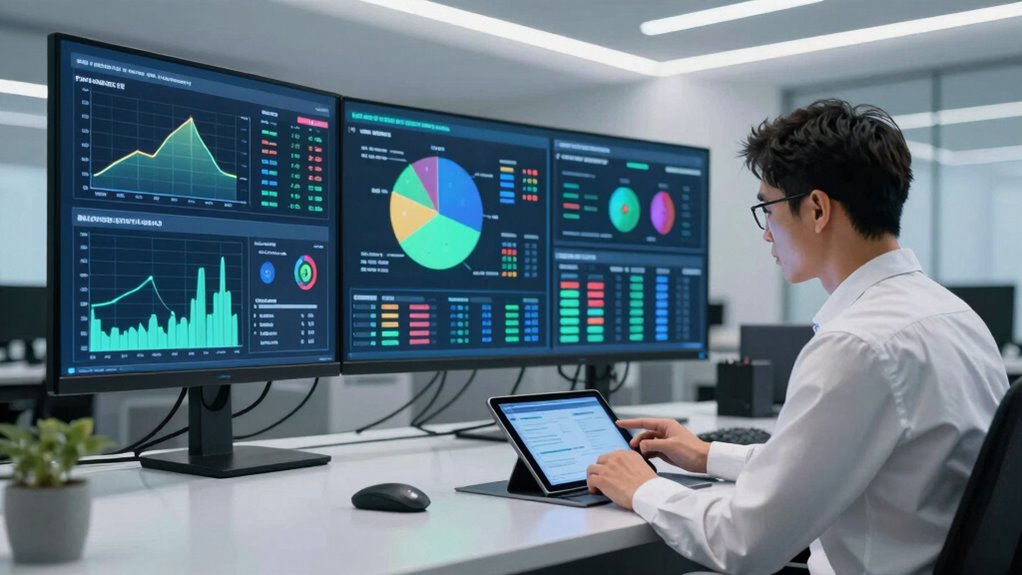
Have you ever wondered how businesses and households can reduce their energy costs while boosting efficiency? The key lies in understanding and harnessing energy consumption data through analytics. With the rise of renewable integration and the development of smart grids, managing energy use has become smarter and more sustainable. These advancements allow you to monitor, analyze, and optimize your energy consumption in real-time, making it easier to identify opportunities for savings.
Harness energy data and smart grids to reduce costs and boost efficiency sustainably.
A smart grid acts as the backbone of modern energy management. It connects energy producers, consumers, and storage systems, enabling two-way communication that was previously impossible. This technology helps you see when energy demand peaks and adjusts usage accordingly. For example, during times of excess renewable energy, such as midday when solar panels produce the most power, your system can prioritize using that clean energy. Conversely, during high-demand periods, the smart grid can balance loads efficiently, reducing reliance on costly or fossil-fuel-based power sources. Incorporating smart grid technology can further enhance your ability to manage energy effectively.
Renewable integration plays a crucial role here. As more homes and businesses adopt renewable energy sources like solar or wind, energy consumption analytics help you track how much clean energy you’re generating and using. This insight allows you to make smarter decisions, such as shifting certain appliances or processes to times when renewable energy is abundant. By doing so, you not only cut costs but also contribute to reducing carbon emissions. Additionally, effective analytics can help optimize the use of synthetic lubricants, ensuring equipment runs smoothly and efficiently, further supporting energy savings. Incorporating energy data into your maintenance routines can also extend equipment lifespan and reduce unexpected failures. Understanding energy flow within your systems can provide even more detailed insights into your energy systems, leading to better-informed decisions.
To make sense of all this data, you need effective analytics tools. These tools gather information from your energy meters, smart devices, and the grid itself, then process it to reveal patterns and anomalies. With clear, actionable insights, you can identify inefficient usage habits or faulty equipment that’s wasting energy. For instance, you might discover that certain lighting or HVAC systems are running longer than necessary or that specific appliances draw more power during off-peak hours. Armed with this knowledge, you can implement targeted changes to optimize your energy use.
Moreover, energy consumption analytics empower you to plan better. By analyzing historical data, you can forecast future energy needs, align your consumption with renewable energy availability, and even budget for energy costs more accurately. This proactive approach helps you stay ahead of rising energy prices and supports your sustainability goals. Ultimately, understanding your energy consumption through analytics isn’t just about saving money; it’s about making smarter, more environmentally conscious choices that benefit both your wallet and the planet.
As an affiliate, we earn on qualifying purchases.
Frequently Asked Questions
How Secure Is My Energy Consumption Data?
Your energy consumption data is generally secure thanks to robust security protocols that protect your information from unauthorized access. Companies prioritize data privacy by encrypting data both in transit and at rest, ensuring your details stay confidential. While no system is completely foolproof, adhering to best practices and regular security updates substantially reduce risks. Rest assured, your energy data is handled with care, and security measures are in place to keep it safe.
Can Analytics Predict Future Energy Needs Accurately?
Think of predictive modeling as your modern oracle—yes, it can forecast future energy needs with impressive accuracy. By analyzing past consumption patterns, it offers valuable insights, but remember, its precision depends on data accuracy. You can rely on it for planning, but always combine it with real-time monitoring to adapt to unexpected changes, ensuring your energy management stays efficient and responsive.
What Industries Benefit Most From Energy Analytics?
You benefit most from energy analytics if you’re in manufacturing, commercial real estate, or utilities. These industries leverage analytics for renewable integration and efficiency optimization, reducing costs and environmental impact. By analyzing consumption patterns, you can better balance energy loads and incorporate sustainable sources. This targeted approach helps you make smarter decisions, optimize energy use, and meet regulatory standards, ultimately boosting profitability and supporting your sustainability goals.
How Often Should Energy Data Be Reviewed?
You should review your energy data as often as you refresh your social media feed—ideally, in real time. Regular reviews, supported by real-time monitoring and data visualization, help catch waste before it spirals out of control. Daily or weekly checks keep your energy use transparent and manageable. Ignoring this can turn your energy bills into a horror story, so stay vigilant and keep an eye on those dashboards!
Are There Costs Associated With Implementing Analytics Tools?
Yes, there are cost implications when implementing analytics tools, but they vary based on your chosen platform and existing infrastructure. You may face implementation challenges like integration and training, which can add to expenses. While initial costs might seem high, the long-term benefits—such as optimized energy use and reduced bills—often outweigh these investments. Careful planning helps you manage costs and overcome implementation challenges effectively.
solar energy consumption analytics
As an affiliate, we earn on qualifying purchases.
As an affiliate, we earn on qualifying purchases.
Conclusion
By now, you can see how energy consumption analytics turn complex data into clear insights, illuminating your usage like a guiding lighthouse in a storm. With this understanding, you’re empowered to make smarter decisions, optimize energy use, and save money. Think of analytics as your personal energy compass—pointing you toward efficiency and sustainability. Harness these insights today, and watch your energy costs shrink while your environmental impact diminishes—your journey to smarter energy starts now.
As an affiliate, we earn on qualifying purchases.
As an affiliate, we earn on qualifying purchases.
Halloween Picks
halloween
As an affiliate, we earn on qualifying purchases.