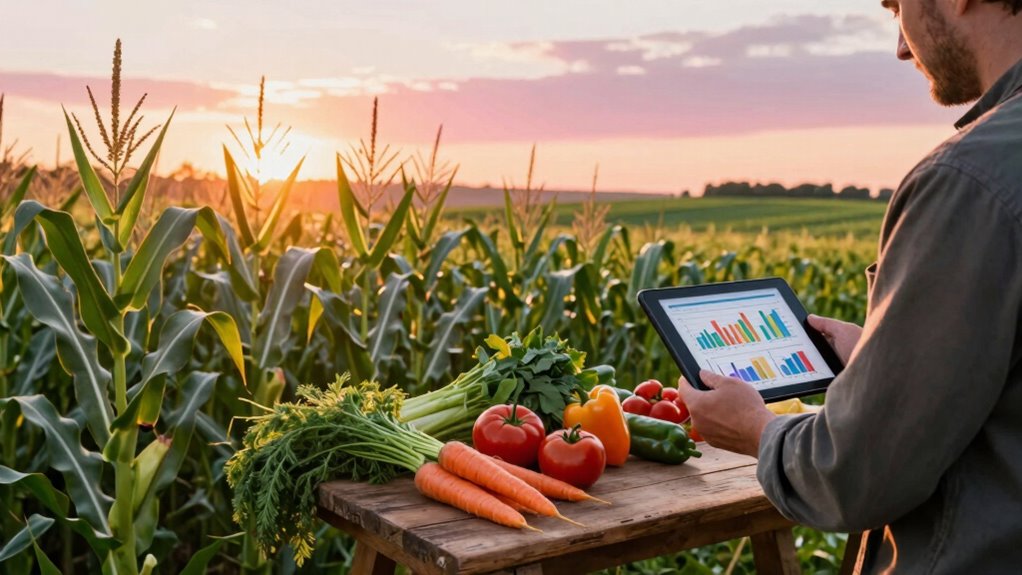

Price forecasting in agriculture helps you anticipate market ups and downs caused by weather, supply, demand, and global economic trends. By monitoring current data, analyzing weather forecasts, and understanding regional behaviors, you can make smarter decisions to maximize profits. Recognizing how droughts or storms impact crop prices lets you plan better for supply shocks. Staying informed and adaptable keeps you ahead of market shifts. Continue exploring to learn more about mastering your market predictions.

Get business pricing on monitors, keyboards and dev gear
- Business-only prices and quantity discounts
- Tax-exempt purchasing
- Multiple users, one account, clear invoices
Key Takeaways
- Monitor historical data, market trends, and economic indicators to identify price patterns and forecast future prices.
- Incorporate weather forecasts and climate data to anticipate supply shocks affecting crop prices.
- Use government reports and analytics tools for real-time market information and predictive modeling.
- Understand regional and cultural market behaviors to optimize selling or storage decisions.
- Focus on reducing uncertainty with data-driven insights to make smarter, timely agricultural trading decisions.
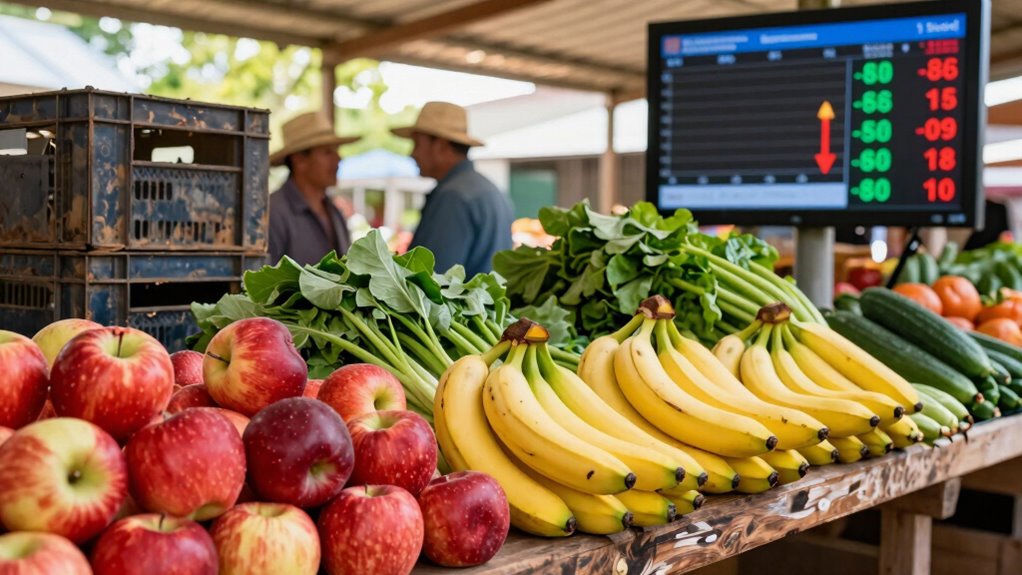
Have you ever wondered how farmers and traders predict future prices of crops and commodities? It’s a complex process that involves analyzing various factors influencing the market. One key aspect they pay close attention to is market fluctuations, which are the ups and downs in prices caused by changing supply and demand dynamics. These fluctuations can happen quickly and unexpectedly, making price forecasting a challenging but essential task. To stay ahead, farmers and traders keep a close eye on current trends and historical data to identify patterns that might suggest where prices are headed. They also consider broader economic indicators, such as inflation rates, currency exchange rates, and global trade policies, all of which can influence market fluctuations. Mastering world clock tools and time zone information can help coordinate international market activities more efficiently. Weather impacts are another critical factor in predicting future prices. Agriculture is heavily dependent on weather conditions; droughts, floods, frosts, and unseasonal rains can significantly affect crop yields. If a weather forecast predicts a drought or a prolonged dry spell, you can expect prices to rise, especially if the crop in question is a staple or has limited substitutes. Conversely, favorable weather conditions that lead to abundant harvests tend to push prices down due to increased supply. Traders and farmers analyze weather patterns and forecasts, often using specialized tools and models, to anticipate potential supply shocks that could influence prices. They also incorporate weather forecasts into their predictive models to improve accuracy. Developing a comprehensive understanding of market dynamics can further enhance forecasting precision, helping stakeholders make more informed decisions. Additionally, understanding cultural symbols associated with strength and resilience can provide deeper insights into regional market behaviors and community responses during times of scarcity or abundance. These insights help them make timely decisions on when to sell or store their crops to maximize profits. Combining an understanding of market fluctuations and weather impacts allows those in agriculture to develop more accurate price forecasts. They use data from government reports, weather services, and market analytics platforms to stay informed. Predictive modeling, which involves using historical data to forecast future trends, plays a significant role here. It helps identify potential price movements before they happen, giving farmers and traders a strategic advantage. Staying aware of climate variability and its influence on weather patterns is crucial for refining forecasts and adapting strategies accordingly. By monitoring these factors regularly, you can better anticipate market shifts and plan your sales or purchases accordingly. In essence, price forecasting in agriculture isn’t about making exact predictions but about reducing uncertainty. By understanding how market fluctuations and weather impacts influence prices, you can make smarter decisions to protect your income and optimize your operations. Staying informed and adaptable is key, as the agricultural market remains dynamic and often unpredictable. With the right knowledge and tools, you’ll be better equipped to navigate these fluctuations and make timely moves that benefit your bottom line.
agriculture weather forecast tools
As an affiliate, we earn on qualifying purchases.
As an affiliate, we earn on qualifying purchases.
Frequently Asked Questions
How Do Weather Patterns Influence Crop Price Predictions?
Weather patterns substantially influence crop price predictions because climate variability affects supply and demand. You’ll notice seasonal trends, like droughts or heavy rainfall, impacting harvest yields. When adverse weather reduces crop size, prices tend to rise due to scarcity. Conversely, favorable weather boosts production, which can lower prices. Monitoring weather trends helps you anticipate these shifts, making your price forecasts more accurate and allowing better planning for market fluctuations.
What Are the Best Tools for Small-Scale Farmers?
Think of tools as your trusted compass in the bustling market. Small-scale farmers thrive with user-friendly options like mobile apps for market analysis, which act as your weather vane, guiding decisions. Crop valuation tools, often simple spreadsheets or affordable software, help you gauge your harvest’s worth. These tools are your steady partners, turning raw data into clear signals, helping you navigate the ever-changing landscape of agricultural pricing with confidence.
How Often Should Price Forecasts Be Updated?
You should update price forecasts regularly, especially during periods of market volatility, to stay ahead of changing conditions. Weekly updates work well if you’re closely monitoring supply chain disruptions and market trends, but in more stable times, bi-weekly or monthly updates might suffice. Staying current helps you adapt to fluctuating supply and demand, ensuring you make informed decisions and avoid losses caused by unforeseen shifts.
Can Machine Learning Improve Forecast Accuracy?
Yes, machine learning can improve forecast accuracy by analyzing complex patterns in agricultural data. You should focus on thorough data preprocessing to clean and prepare your data, ensuring reliable inputs. Additionally, prioritize model interpretability so you understand how predictions are made, which helps refine your models. By combining these practices, machine learning becomes a powerful tool to generate more precise and actionable price forecasts in agriculture.
What Are Common Pitfalls in Agricultural Price Forecasting?
You should watch out for market volatility, which can cause unpredictable price swings, making forecasts less reliable. Data reliability is also essential; if your data is inconsistent or outdated, your predictions can be way off. Avoid relying solely on historical trends without considering real-time market changes. Ensuring high-quality data and accounting for market volatility help improve your forecast accuracy and reduce costly mistakes in agricultural planning.
As an affiliate, we earn on qualifying purchases.
Conclusion
As you navigate the world of agricultural price forecasting, think of it as steering a boat through changing tides—sometimes smooth, sometimes choppy—but always guided by careful observation and prudent adjustments. Embracing these tools helps you steer toward calmer waters, minimizing unexpected storms. With patience and practice, you’ll find yourself better equipped to anticipate market waves, allowing your farming journey to sail more steadily toward your goals, even when the horizon looks uncertain.
agricultural market analysis tools
As an affiliate, we earn on qualifying purchases.
As an affiliate, we earn on qualifying purchases.
As an affiliate, we earn on qualifying purchases.
Fall Picks
fall essentials
As an affiliate, we earn on qualifying purchases.