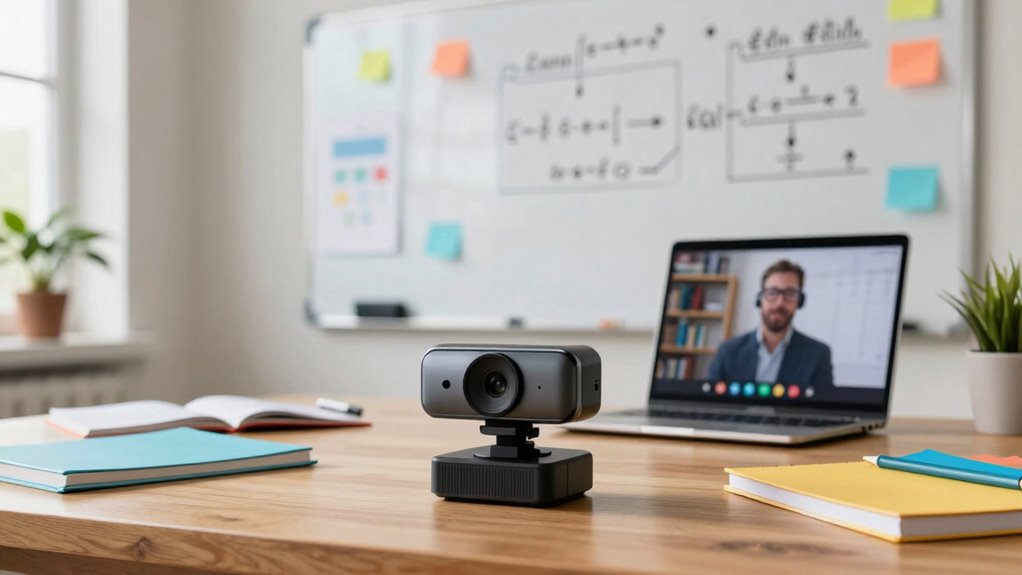

When choosing a webcam for teaching charts and equations, prioritize high-definition quality, aiming for at least 1080p resolution to enhance clarity. Make sure you have good lighting to avoid shadows and highlight your features. Consider an external webcam for flexible positioning and better focus on materials. Don’t underestimate audio quality; a separate microphone can improve sound clarity. By carefully balancing these elements, you’ll create a more engaging learning experience—keep going to explore more tips!
Key Takeaways
- Choose a webcam with at least 1080p resolution for clear visuals of charts and equations.
- Ensure proper lighting, using softbox or ring lights, to enhance video quality and reduce shadows.
- Opt for an external webcam for better positioning and flexibility in showcasing materials during lessons.
- Invest in a separate microphone for superior audio clarity, which is crucial for effective teaching.
- Stay within a budget by comparing mid-range options and researching customer reviews for quality insights.
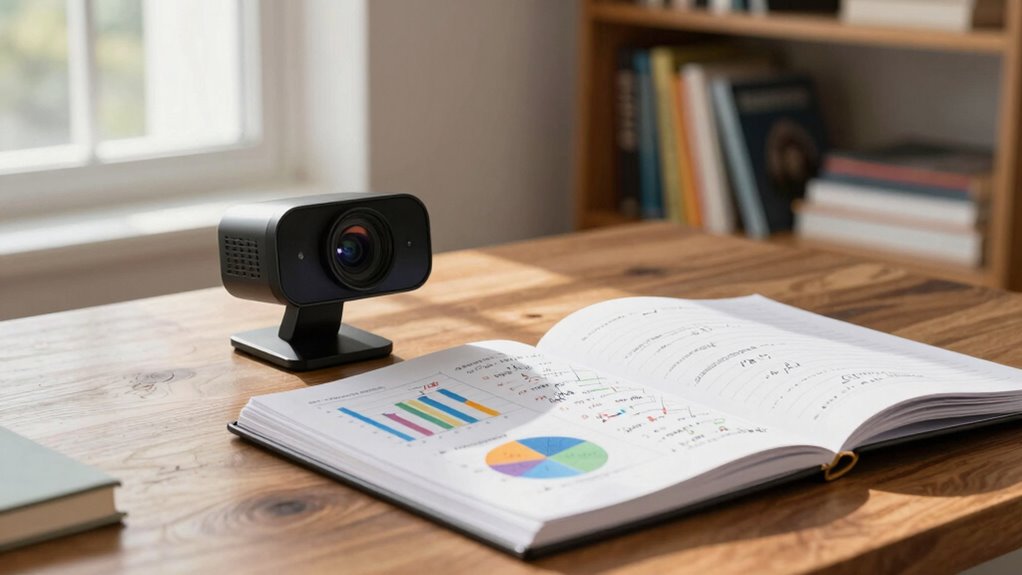
When you’re gearing up to teach online, how do you choose the right webcam? The decision can feel overwhelming with so many options available, but focusing on a few key factors can simplify the process. First, consider the webcam features that matter most for your teaching style. You’ll want a model that offers high-definition video, ideally 1080p resolution. This guarantees your students can see charts and equations clearly, enhancing their learning experience. The resolution importance can’t be understated; a clear image builds credibility and keeps your audience engaged.
When choosing a webcam for online teaching, prioritize high-definition video for clarity and engagement.
Next, think about lighting considerations. Good lighting can make or break your video quality. Natural light is fantastic, but if that’s not an option, invest in softbox lights or ring lights to illuminate your teaching space. Proper lighting reduces shadows and highlights your features, allowing students to focus on what you’re explaining. Remember, it’s not just about the webcam; its performance is heavily influenced by how well-lit your environment is.
Mounting options also play an essential role in your setup. You can choose between built-in webcams, which are convenient but may lack quality, or external webcams that can be positioned strategically for the best angle. A tripod or adjustable mount can give you flexibility, making it easier to switch views, especially when showcasing different materials. This adaptability can enhance your teaching effectiveness, as you’ll be able to highlight specific details on charts or equations without straining your neck or adjusting the camera mid-lesson.
Don’t overlook audio quality either. Clear audio is just as vital as video quality. Some webcams come with built-in microphones, but they often don’t capture sound well, especially in larger rooms. If you want to guarantee your voice is heard clearly, consider investing in a separate microphone. Good audio can make your explanations more effective, keeping students engaged and reducing misunderstandings.
Finally, budget constraints are always a factor. While it’s tempting to splurge on high-end models, plenty of mid-range options deliver excellent quality without breaking the bank. Research customer reviews and compare features to find a webcam that fits your needs without stretching your budget too thin. Understanding the home-care techniques and how to optimize your setup can help you make the most of your equipment investment. By considering these elements—webcam features, lighting, resolution, mounting options, audio quality, and budget—you can select the perfect webcam to elevate your online teaching experience.
1080p HD webcam for online teaching
As an affiliate, we earn on qualifying purchases.
As an affiliate, we earn on qualifying purchases.
Frequently Asked Questions
What Resolution Is Ideal for Teaching Charts and Equations?
For teaching charts and equations, aim for a resolution of at least 1080p. This guarantees you get high definition visuals, making details clear for your students. Higher pixel density means finer details will be visible, which is essential when explaining complex concepts. If you can, consider a 4K webcam for even sharper images, but 1080p is generally sufficient. This way, your students won’t miss any important information during your lessons.
Can I Use a Smartphone as a Webcam?
Yes, you can use a smartphone as a webcam! Many people find it’s a great option due to its high-quality camera. To make it work, you’ll need to check smartphone compatibility with webcam apps like DroidCam or EpocCam. These apps let you connect your phone to your computer easily. Just download the app, follow the setup instructions, and you’re ready to start streaming or teaching with better visuals!
How Do I Improve Lighting for Webcam Teaching?
To improve lighting for your webcam teaching, focus on natural light whenever possible. Position yourself facing a window for ideal brightness, avoiding backlighting that can create shadows. If natural light isn’t available, use soft, diffused artificial lights to enhance visibility. Try to use a ring light or desk lamps with warm bulbs to create a welcoming atmosphere. Remember, good lighting not only enhances clarity but also keeps your students engaged!
What Software Is Best for Integrating a Webcam?
Did you know that 92% of educators find video tools enhance student engagement? For integrating a webcam, consider software like OBS Studio or Zoom. Both offer excellent webcam compatibility and robust software features like screen sharing and virtual backgrounds. OBS allows for advanced customization, while Zoom’s user-friendly interface makes it easy to connect with students. Choose based on your teaching style and the features you need to create an engaging learning environment.
Are There Specific Brands Known for Educational Webcams?
Yes, there are specific brands known for educational webcams. Logitech options are popular for their user-friendly design and educational features, making them great for teaching. If you’re looking for high-quality video, consider Canon alternatives; they offer excellent image clarity. Don’t forget about portability factors—choose a model that’s easy to set up and transport. This way, you can teach effectively, whether you’re in a classroom or working from home.
external webcam with adjustable mount
As an affiliate, we earn on qualifying purchases.
As an affiliate, we earn on qualifying purchases.
Conclusion
In choosing the right webcam, you’re not just picking a tool; you’re lighting a beacon that guides your students through the complex seas of charts and equations. A clear image transforms your lessons into bridges, connecting minds and ideas. So, whether it’s HD clarity or versatile angles you seek, remember: your choice symbolizes your commitment to illuminating knowledge. Embrace technology as your lantern, and watch as you illuminate the path to understanding for your learners.
As an affiliate, we earn on qualifying purchases.
As an affiliate, we earn on qualifying purchases.