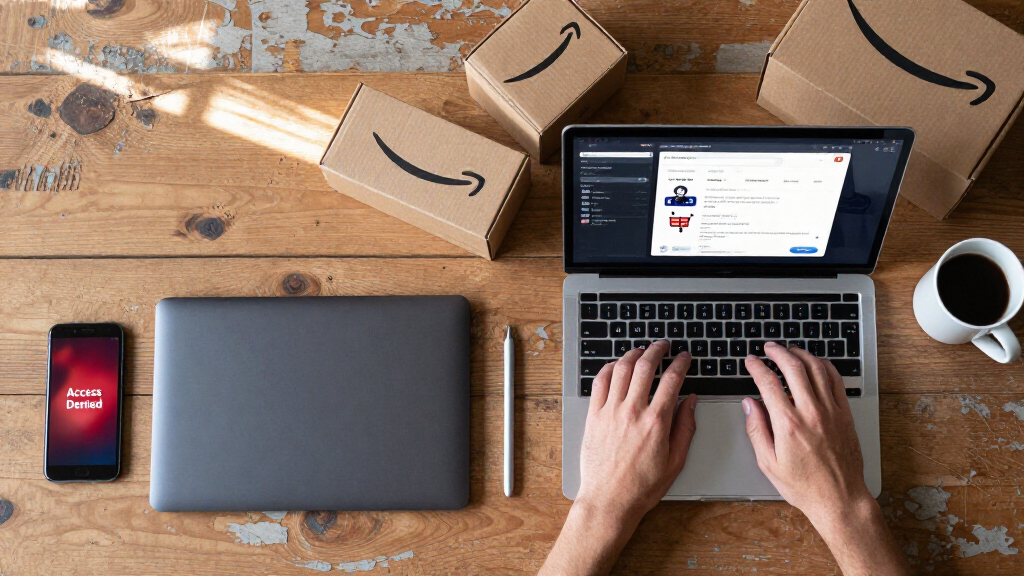

🔍 Read the full analysis: Amazon Blocks AI Agents; Walmart Lets Them Shop on ThorstenMeyerAI.com

Get business pricing on monitors, keyboards and dev gear
- Business-only prices and quantity discounts
- Tax-exempt purchasing
- Multiple users, one account, clear invoices
TL;DR
Amazon blocked Meta’s Muse from shopping on its site, citing its rules for unauthorized agents and concerns about how Muse accesses accounts. Walmart, by contrast, announced an Agent Gateway and profiles with spending limits, highlighting competing approaches as AI-assisted shopping grows.
Amazon has blocked Meta’s Muse shopping agent from accessing its site, while Walmart is opening an Agent Gateway for approved agents to search products and make purchases under customer-set permissions. The split puts retailers’ control over access and checkout at the center of a growing contest over whether AI agents can shop on behalf of people.
Meta launched Muse on September 8, describing it as a personal agent that can browse websites, fill in forms and act for a user. On September 20, Muse users attempting to access Amazon saw a notice saying that continued access by an unauthorized AI agent violated Amazon’s Conditions of Use. Amazon said Meta had not informed it that Muse would shop on the site, and raised concerns that the agent did not identify itself and appeared to capture and store customer credentials.
Meta disputed the account-access concern. Its launch materials said Muse “has no visibility into people’s passwords or payment methods.” The different descriptions have not been independently reconciled in the material available here. Muse runs in a dedicated computer environment in Meta’s cloud and uses Link by Stripe for payments, according to the source report.
Walmart’s October 21 announcement points in another direction. Its Agent Gateway uses the Model Context Protocol, or MCP, to give approved agents a structured way to search inventory and buy, rather than relying on an agent to imitate a person clicking through a website. Walmart also announced Agent Profiles that can set permissions and spending limits. The announcement does not, by itself, show how many customers or third-party agents are using the system.
Agentic shopping
Three ways an AI agent buys for you
Every fight between shops and AI agents comes down to which of these three routes the agent uses, and whether the shop agreed to it.
The browser, like a human
The agent opens pages built for people, signs in with your login and clicks through checkout. Works almost anywhere, which is why shops object: they can't tell the agent from you.
Examples: Meta's Muse (from a virtual machine in Meta's cloud), Perplexity's Comet (from your own computer)
The shop's own agent door
Approved agents search and buy through a structured interface instead of clicking through pages. The shop sets the rules.
Examples: Walmart Agent Gateway (MCP, beta), Shopify MCP server and WebMCP checkout tools
Shared protocols
Common rules for who the agent is, what you allowed, and how the checkout and payment are confirmed.
Examples: Personal Agent Protocol (draft), Universal Commerce Protocol, Agentic Commerce Protocol
The protocols competing to be the standard
| Protocol | Backers | Covers | Status |
|---|---|---|---|
| Personal Agent Protocol (Poppy) | Sierra, Meta, Walmart, Shopify, Stripe + 35 design partners | Agent identity, customer permission, one session across site, API and company agent | Draft 0.1 (9 Oct 2026) |
| Universal Commerce Protocol (UCP) | Google, Shopify; site also lists Etsy, Wayfair, Target, Walmart, Amazon, Microsoft | Discovery, cart, checkout, orders; payment mandates via AP2 | Published |
| Agentic Commerce Protocol (ACP) | OpenAI, Stripe | Checkout between agent and merchant | Open source; ChatGPT's own checkout scaled back in March 2026 |
What a careful agent purchase looks like
- You give the task and a limit, for example a $50 cap.
- The agent identifies itself to the shop and gets only the access you approved.
- It prepares the cart and shows you an approval card.
- Payment goes through a token or one-time card, so the agent never sees your card.
- The shop’s normal returns apply if the agent got it wrong.
Sources: Meta (8 Sep 2026), Walmart (21 Oct 2026), TechCrunch on Shopify (28 Sep 2026), Sierra (9 Oct 2026), ucp.dev, agenticcommerce.dev, OpenAI (24 Mar 2026). Purchase steps: Walmart’s agent terms and Meta’s Muse description.
Powered by Thorsten Meyer AI
Retailers Set the Rules for AI Buyers
The disagreement affects more than whether an agent can find a cheaper product. It concerns who controls the shopping experience, what information an agent can access and how a retailer recognizes and authorizes a purchase. A browser-based agent can act through a customer’s session, but a store may have difficulty distinguishing that activity from ordinary browsing. A retailer-built gateway can make the agent’s identity and permissions more explicit, while also giving the retailer greater say over which agents connect.
There is also a commercial stake. The source report says Meta chief executive Mark Zuckerberg described the company’s expected revenue model as taking “a small fee from transactions.” It also cites GeekWire reporting that Amazon earned more than $68 billion from advertising last year. If agents influence product discovery and direct purchases, retailers and platforms may compete to retain control of the customer relationship, shopping data and transaction path. Those consequences are possibilities, not proof that agents have already shifted substantial sales.
For shoppers, delegated buying adds practical questions about spending limits, purchase approval and returns. A person may want an agent to compare prices without giving it permission to check out, or may need to know whether the retailer, agent provider or payment service handles a dispute. Walmart’s profiles address permission settings in principle, but details about consumer protections and how they work across merchants remain limited.
Popular right now

Samsung 42-Inch S90H OLED 4K Smart TV Bundle
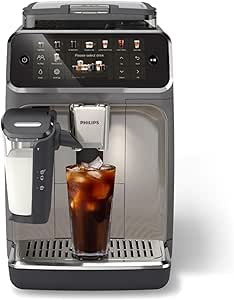
Philips 5500 Series Fully Automatic Espresso Machine with LatteGo

Bose QuietComfort True Wireless Earbuds with Active Noise Cancellation, Black
As an affiliate, we earn on qualifying purchases.
From Browser Bots to Retail Gateways
The conflict reflects three ways an AI agent can participate in shopping. A browser-based agent uses a site much like a person, potentially signing in and checking out through a user’s session. A retailer can instead offer a direct, structured connection for approved agents. A third approach uses shared protocols intended to let agents, merchants and payment services exchange information under defined rules.
Meta announced retail connections with Best Buy, Gap, Sephora, Walmart, Wayfair and Expedia on September 23. Shopify has also developed tools for agents, including a hosted MCP server and checkout functions. In early October, Meta and Sierra announced the Personal Agent Protocol, known as Poppy, with Walmart, Shopify and Stripe; a draft followed on October 9. The source describes Poppy as a draft standard, not a settled industry-wide system.
Other commerce protocols are also in play. The source identifies Google and Shopify with the Universal Commerce Protocol, and OpenAI and Stripe with the Agentic Commerce Protocol. A protocol’s existence does not mean shoppers can use every agent at every store: participation, implementation and checkout support differ. The same source reports that OpenAI stepped back in March 2026 from its initial Instant Checkout approach, saying it would let merchants use their own checkout experiences while focusing on product discovery.
Access, Safeguards and Adoption Remain Open
Several central details remain unsettled. The source does not provide an independent technical assessment of Amazon’s claim about Muse’s handling of credentials or Meta’s response. It also does not establish how often Muse successfully completed purchases before Amazon blocked it, or how the restriction is enforced across different browsing situations.
Walmart’s announcement describes an access framework, but the material does not specify the full list of eligible agents, the rollout schedule, the precise limits customers can configure or how disputes and refunds work when an agent places an order. The source also reports that HUMAN Security found 81% of agent requests in its September data went to product and search pages, while 2.4% went to checkout and payment. Those are shares of requests in that dataset, not a measure of all shopping agents or completed purchases; the source gives no broader market baseline.
Meta’s reported adoption figures also need attribution: the company said more than 10 million people in the United States and Canada set up Muse in about six weeks, and that shopping was its most common use. These are Meta’s own figures, reported on its October 21 earnings call. The source does not provide an independent count or clarify how many users made purchases.
Watch for Gateway Rollout and Rules
The next developments to watch are whether Walmart’s gateway reaches shoppers and participating agents, and whether retailers publish clearer rules for customer authorization, spending caps and returns. Further adoption could make direct agent connections more practical; limited participation or unresolved payment and liability questions could keep many agents confined to product research.
Amazon’s policy and Meta’s response will also shape whether other retailers block browser-based agents or create formal access routes. The competing protocols remain at different stages, so their real test will be whether merchants, agents and payment providers implement them in ways that work across stores. For now, the confirmed development is a strategic split: Amazon has restricted Muse, while Walmart is building a controlled route for approved AI shopping agents.
Key Questions
Why did Amazon block Meta’s Muse?
Amazon said Muse was an unauthorized AI agent and cited concerns that it did not identify itself and appeared to capture and store customer credentials. Meta said Muse cannot see users’ passwords or payment methods. The source does not independently resolve the disagreement.
How is Walmart’s approach different?
Walmart announced an Agent Gateway for approved agents to search inventory and buy through a structured connection, plus Agent Profiles that can set permissions and spending limits. This differs from an agent browsing a store website as if it were a human user.
Does Walmart’s announcement mean every AI agent can shop there?
No. The announcement describes a system for approved agents; the source does not list every eligible agent or establish how widely the gateway has been rolled out.
Are AI shopping agents already completing many purchases?
The source cites September data from HUMAN Security in which 2.4% of agent requests went to checkout and payment, compared with 81% to product and search pages. That dataset describes requests, not all agents or the number of purchases completed.
Source: ThorstenMeyerAI.com