TL;DR

Get monitors, keyboards and dev gear delivered free — and shop member deals
- Fast, free delivery on millions of items
- Access to Prime Big Deal Days deals on October 6–7
- Prime Video, Amazon Music and more included
A yuka.dev report describes getting Linux to a shell on an M4 Mac mini after working around early boot failures involving locked registers, UART mappings and an interrupt-controller register. The report’s supplied text then begins describing a further crash tied to secondary CPU cores and the WFI instruction but cuts off before explaining its cause or resolution.
A developer writing at yuka.dev reports that Linux reached a shell on an M4 Mac mini after a series of early boot problems were traced to hardware-register behavior, memory mappings and interrupt-controller initialization. The account documents progress toward running Linux on Apple’s M4 hardware, while also making clear that the machine’s startup process presented additional obstacles and that the supplied report ends during discussion of another CPU-related crash.
The developer bought the Mac mini in November 2024 and initially expected support to be similar to earlier Apple Silicon systems. The report says M4 machines introduced a significant complication: they require SPTM, or Secure Page Table Monitor, which the author describes as a security mechanism that hardens macOS against vulnerabilities in its kernel. Earlier Asahi Linux work relied heavily on observing macOS hardware interactions through the m1n1 hypervisor; adapting that approach to M4 required changes beyond what the author could make at the time.
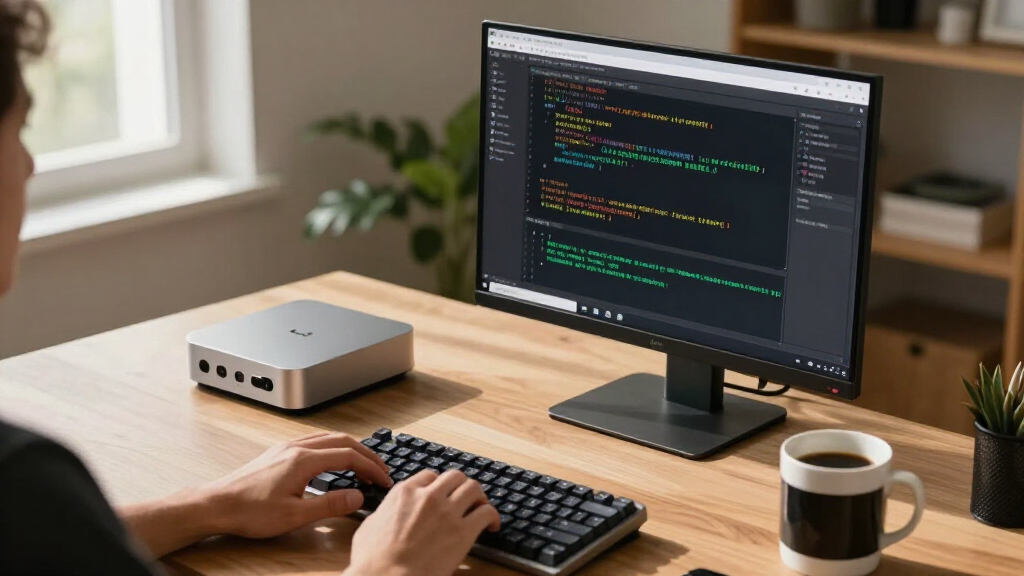
Instead, the author attempted a direct Linux bring-up using m1n1, a custom boot object installed through macOS recovery, and a serial console for debugging. Early attempts failed when m1n1 tried to initialize a feature called GXF, which the report says is disabled or locked in raw boot mode on these chips. Another failure came from writing to each core’s Reset Vector Base Address Register, or RVBAR. The author found that the register already held the required value on M4, so the write could be skipped.
Later, the author used small debugging changes to identify why startup stopped. One early issue was that Linux’s initial page tables did not map the UART’s memory-mapped I/O address in the way needed for serial output after the memory management unit was enabled. Adding an identity mapping let debugging continue farther. A write to the implementation-specific register SYS_IMP_APL_VM_TMR_FIQ_ENA_EL2 then triggered a crash; removing that write allowed Linux to boot to a shell. The report says newer iBoot versions have since unlocked the register, making that workaround unnecessary.
What M4 Boot Debugging Reveals
The report matters to developers working to run mainline Linux on Apple Silicon because it records concrete differences between M4 and earlier chips. It shows that assumptions carried over from M1-to-M3 work—including register writes and CPU startup settings—may not apply unchanged to newer hardware. Documenting the specific failures and workarounds can help others investigating the same platform, although the account is one developer’s technical report rather than a statement that general M4 Linux support is complete.
It also illustrates why hardware support can take time even when Linux already supports the processor architecture. Booting depends on low-level details such as firmware behavior, interrupt controllers, memory mappings, and how individual CPU cores are brought online. The author credits the Asahi Linux team for prior work and assistance, placing this experiment within a broader community effort rather than presenting it as a standalone completed port.
Serial Console for Linux Development
As an affiliate, we earn on qualifying purchases.
As an affiliate, we earn on qualifying purchases.
From M1-Era Methods to M4
Asahi Linux is a community effort to support Linux on Apple Silicon. According to the author, earlier bring-up work used m1n1 to observe hardware activity while macOS drivers ran, producing clues about how devices should be initialized. The arrival of SPTM on M4 complicated that method because macOS could not simply be run under the existing hypervisor setup without substantial changes.
The post’s timeline records an initial debugging milestone in December 2024, when the author reported a working USB proxy and shell. After a long pause, work resumed around the end of 2025. In January 2026, the author added an early-console configuration and corrected the device tree’s missing stdout-path, which enabled useful kernel messages and crash traces. Those dates describe steps in the author’s own project, not a formal release schedule for Asahi Linux or a general availability announcement.
““I can confirm this state gives a working usb proxy.””
— The yuka.dev author
USB UART Adapter for Linux Debugging
As an affiliate, we earn on qualifying purchases.
As an affiliate, we earn on qualifying purchases.
The Secondary-Core Crash Remains
The supplied report text stops as the author begins describing a further crash after enabling secondary CPU cores. It says earlier Apple Silicon processors had known quirks involving the WFI instruction and a configuration bit, but the available material ends before stating what happened on the M4, whether the same behavior applied, or how the issue was resolved. The cause and status of that later crash cannot be established from the supplied excerpt.
The report also does not establish that the Mac mini can run Linux as a polished daily-use system, that all hardware functions work, or that the work has been integrated into a public release. The author’s successful shell boot is a specific development milestone; broader compatibility, remaining device support and the state of ongoing Asahi Linux work are not detailed in the material provided.
As an affiliate, we earn on qualifying purchases.
Further M4 Support Work
The immediate next technical question in the account is how the author handled the secondary-core and WFI behavior described at the end of the supplied text. The full report or subsequent project updates would be needed to confirm whether that obstacle was resolved and what additional hardware functions were brought up.
For readers tracking Linux on Apple Silicon, the relevant next milestone is not just another successful boot, but clearer information about the status of the work in the Asahi Linux project: whether the changes are available to other developers, which M4 configurations they cover, and what remains unsupported. No release date or broader support commitment is given in the supplied source.
Hardware Debugging Tools for Mac Mini
As an affiliate, we earn on qualifying purchases.
As an affiliate, we earn on qualifying purchases.
Key Questions
What did the developer achieve on the M4 Mac mini?
The yuka.dev author reports booting Linux to a shell on an M4 Mac mini after diagnosing several early startup failures. The report does not say that every component works or that the system is ready for general use.
What caused the documented boot failures?
The report identifies several separate problems: GXF initialization and an RVBAR write caused crashes in the initial setup; serial output stopped working after the MMU was enabled because the UART address was not mapped as needed; and a write to an Apple-specific CPU register triggered another crash. Skipping or correcting those operations let debugging proceed.
Does this mean Linux is fully supported on M4 Macs?
No. The report documents one developer’s bring-up work and a successful shell boot. It does not confirm complete hardware support, a public release, or readiness for everyday use.
What is still unresolved in the supplied account?
The provided text ends while discussing a crash involving secondary CPU cores and the WFI instruction. It does not include the rest of that explanation or confirm whether the issue was fixed.
Source: hn
Fall Picks
fall essentials
As an affiliate, we earn on qualifying purchases.