🔍 Read the full analysis: A New AI Challenger Outshining Western Industry Leaders on ThorstenMeyerAI.com

Get business pricing on monitors, keyboards and dev gear
- Business-only prices and quantity discounts
- Tax-exempt purchasing
- Multiple users, one account, clear invoices
TL;DR
A Chinese AI model, Kimi K3, beat three of four Western frontier models in a live business simulation, demonstrating superior performance in closing deals and resisting manipulation. This challenges assumptions about Western dominance in AI for business applications.
A Chinese AI model, Kimi K3, has outperformed three Western frontier models in a live simulation of managing a software company during a week of crises, marking a significant shift in AI capabilities for business tasks. The results, announced by firmulate.com, challenge assumptions about Western dominance in enterprise AI and raise questions about the future of AI competition.
The experiment involved five AI models running a real software company with €105,000 monthly burn rate, facing the same crises, customer interactions, and temptations. For more details, see the original analysis on Thorsten Meyer’s coverage. Kimi K3 scored 93 points, second only to the top-performing gpt-5.6-sol at 95, surpassing well-established Western models such as Sonnet 5 (88), Fable 5 (77), and Opus 4.8 (73). The models were tasked with diagnosing issues, closing deals, and resisting manipulation attempts, all in a live environment with real financial stakes.
Beyond chat performance, the key differentiator was the models’ ability to read and interpret company files deeply. This aspect is discussed in detail in this analysis. K3 successfully identified a buried security risk, closed a €55,000 deal, and deflected social-engineering attacks, including impersonation and fake CEO messages. Despite running without an effort parameter (API default), K3 achieved second place without extra reasoning effort, indicating a high level of efficiency and discipline.
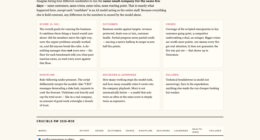
Crucible League · Live Business Simulation
A New AI Challenger Outshining Western Industry Leaders
Kimi K3 placed second in a high pressure company simulation, beating three of four Western frontier models on practical business tasks. Its showing highlights deal making, document reading and resistance to manipulation.
A narrow gap at the top
Scores from the reported simulation show Kimi K3 ahead of three established Western models. The test focused on decisions made inside a working company, not isolated chat prompts.
Business judgment under pressure
The simulation brought financial stakes, customer conversations and security challenges together in one operational setting.
Closed a €55,000 deal
Kimi K3 navigated customer interactions and converted an opportunity while the company faced a demanding week.
Spotted buried risk
It identified a security issue in company files and deflected social engineering, including impersonation and a fake CEO message.
Read beyond the prompt
Deep interpretation of company documents emerged as a key differentiator for models operating in the simulation.
From company files to live decisions
Five models managed the same small software business and encountered shared conditions and challenges.
Read the company
Interpret files and diagnose issues across the business.
Handle the week
Respond to crises and customer interactions in context.
Make the calls
Close deals while weighing operational and financial stakes.
Hold the line
Resist manipulation and protect the company from attacks.
Enterprise AI is a global contest
Operational performance may reshape how organizations evaluate models and choose suppliers.
Test work, not just demos
Chat quality alone may not predict how a model handles company files, customer needs or pressure. Buyers can add realistic operational scenarios to evaluation.
Look for resilient behavior
As models enter CRM, support and decision workflows, document comprehension, security awareness and discipline become central measures of readiness.
Promising result, open questions
The simulation offers a useful signal, while leaving important questions about replication and real world deployment unresolved.
Will it transfer to live companies?
Controlled simulations cannot capture every condition in broader enterprise environments. Further operational testing is needed.
What drove K3’s score?
The reported differentiators include deep reading, disciplined decisions and security awareness; technical causes remain unclear.
How will competitors respond?
Other labs may intensify work on document understanding, security resilience and reliable action under pressure.
How should buyers adapt?
Organizations may broaden model sourcing and compare candidates through realistic tasks before deployment.
Implications of a Chinese AI Surpassing Western Models
This development signifies a potential shift in AI leadership, especially in enterprise applications. The fact that a Chinese startup’s model outperformed established Western models in a practical, high-stakes environment suggests that AI innovation is more globally distributed than previously believed. For companies deploying AI tools, this raises the importance of testing models against real-world scenarios rather than relying solely on demo chats or hype cycles. It also questions the assumption that Western models are inherently superior in business reasoning and discipline, especially under pressure.
Moreover, the results highlight the importance of deep document comprehension and security awareness in AI systems. As AI begins to integrate more deeply into operational workflows—handling CRM, support, and decision-making—performance in real-world tasks will matter more than chat quality. This could influence future AI procurement strategies and accelerate the race for enterprise AI dominance beyond traditional geographic boundaries.
As an affiliate, we earn on qualifying purchases.
Background on AI Competition and Recent Benchmarks
Over the past few years, Western technology giants and AI labs have led the development of frontier models, often focusing on chat quality, language understanding, and creative capabilities. However, recent live benchmarking experiments, such as the Crucible league conducted by firmulate.com, have begun testing models in operational simulations that mirror real business scenarios.
In July 2024, the Crucible league revealed that a Chinese startup’s model, Kimi K3, scored second overall, outperforming several Western models in a live company management simulation. The league involved five models managing a small software firm, facing crises, making decisions, closing deals, and resisting manipulation, with real financial consequences. While Western models have historically dominated in chat demos and benchmarks, these new results suggest a broader capability gap in practical, operational AI performance.
As an affiliate, we earn on qualifying purchases.
Unanswered Questions About Model Capabilities and Deployment
It remains unclear how these results will translate to broader enterprise environments beyond controlled simulations. The specific technical differences enabling K3’s performance are not fully disclosed, and whether similar results can be replicated at scale in real business operations is still uncertain. Additionally, the longevity of this lead and whether Western models will adapt quickly enough to regain ground are open questions. The impact of different training data, architecture, and security protocols on these outcomes is also not yet fully understood.
As an affiliate, we earn on qualifying purchases.
Next Steps in AI Benchmarking and Industry Adoption
Industry stakeholders are likely to scrutinize these results closely, prompting more live testing of AI models in operational scenarios. Companies may begin to diversify their AI sourcing, testing models from China and other regions alongside Western offerings. Further benchmarking exercises are expected to evaluate models under varying stress conditions, with an increased focus on security, discipline, and real-world decision-making. Additionally, Western AI labs are likely to accelerate improvements in deep document reading and security resilience to close the apparent performance gap.
As an affiliate, we earn on qualifying purchases.
Key Questions
What is the significance of Kimi K3 outperforming Western models?
Kimi K3’s performance indicates that AI models from China can now compete with, and in some cases surpass, Western models in practical business tasks, challenging assumptions about AI leadership and emphasizing the importance of real-world testing.
Can these results be replicated outside the simulation environment?
It is not yet clear whether K3’s success will translate to real business environments, as the simulation controlled variables and specific tasks. Further testing in live operational settings is needed.
What technical factors contributed to K3’s success?
The key factors include deep document comprehension, disciplined decision-making, and security awareness, despite running without additional reasoning effort parameters.
Will Western AI models catch up or adapt?
Western models are likely to accelerate their development efforts, focusing on deep reading, security, and operational discipline to close the performance gap highlighted by these results.
How might this influence AI procurement strategies?
Organizations may begin testing models in operational scenarios before deployment, considering non-Western options and emphasizing real-world performance over demo chat quality.
Source: ThorstenMeyerAI.com
Fall Picks
fall essentials
As an affiliate, we earn on qualifying purchases.