📊 Full opportunity report: Maintaining MSK Health In Remote Workforces With Strength Tests on IdeaNavigator AI — validation score, market gap, and execution plan.

Get business pricing on monitors, keyboards and dev gear
- Business-only prices and quantity discounts
- Tax-exempt purchasing
- Multiple users, one account, clear invoices
TL;DR
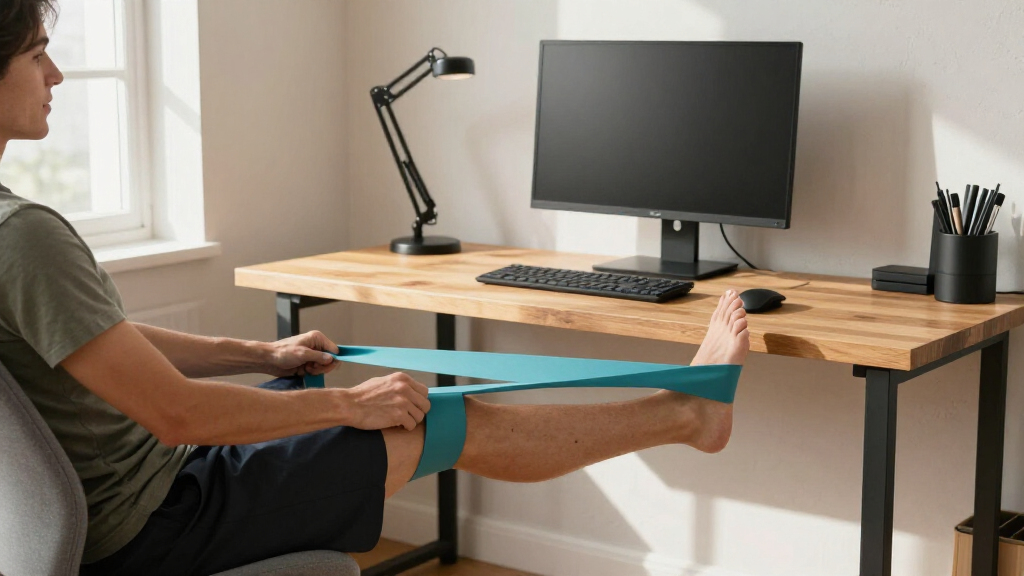
A pilot program for remote employee strength and mobility assessments is launching, using phone cameras to identify early musculoskeletal risks. This approach aims to reduce costly MSK claims and improve worker health.
Employers and benefits providers are preparing to pilot a new at-home assessment tool that uses smartphone cameras to evaluate employee strength, mobility, and posture, aiming to identify early musculoskeletal risks among remote workers. This initiative addresses the rising incidence of MSK problems linked to remote work, which has led to increased medical claims and lost productivity, and offers an early detection approach before costly clinical episodes occur.
The proposed solution involves a web or mobile app guiding employees through a 10-minute series of strength, mobility, and posture tests, such as sit-to-stand repetitions, shoulder and hip range-of-motion assessments, plank and wall-sit holds, and seated posture photos. The phone’s camera, combined with pose estimation technology, scores movement quality and generates a personalized MSK risk score.
Employers will access a privacy-safe dashboard displaying team-level MSK risk trends and engagement metrics, with the ability to refer high-risk employees to clinical MSK or physical therapy providers. The program is set to launch initially with one or two pilot employers, aiming to validate scoring accuracy, engagement levels, and willingness of HR and benefits teams to adopt the tool for ongoing use.
Potential Impact on Employee Health and Employer Costs
This new assessment method could transform how companies prevent MSK issues in remote workforces, shifting from reactive treatment to proactive prevention. Early detection may reduce medical claims, decrease absenteeism, and improve overall employee well-being, particularly as remote work becomes more permanent.
By integrating a scalable, privacy-preserving screening tool, organizations can identify at-risk employees early and facilitate timely interventions, potentially lowering long-term healthcare costs associated with MSK conditions, which are already a leading driver of employer medical expenses.
As an affiliate, we earn on qualifying purchases.
Rising MSK Problems in Remote Work Settings
Since the shift to remote and hybrid work models, incidental movement and ergonomic office setups have declined, leading to a surge in neck, back, and posture-related MSK complaints. Employers report increased medical claims and absenteeism tied to these issues, but lack lightweight, scalable screening tools for early intervention.
Existing programs tend to be reactive, focusing on treatment after pain manifests, rather than prevention. Advances in smartphone camera technology and pose estimation algorithms have matured enough to enable self-assessment solutions that do not require sensors or clinician oversight, creating new opportunities for early MSK risk detection in distributed workforces.
smartphone camera mobility test kit
As an affiliate, we earn on qualifying purchases.
As an affiliate, we earn on qualifying purchases.
Uncertainties Around Validation and Adoption
It is not yet clear how accurately the camera-based assessments will correlate with clinical MSK evaluations or self-report questionnaires. Validation studies are planned but have not yet been completed, and employer willingness to adopt and integrate the tool into existing benefits programs remains to be seen.
Additionally, questions remain about privacy safeguards, employee engagement, and the scalability of the solution across diverse workforce demographics.
As an affiliate, we earn on qualifying purchases.
Next Steps for Pilot Deployment and Validation
The pilot program is expected to begin within the next three to six months, involving 2-3 employers or large teams. Key milestones include measuring assessment completion rates, retention over multiple rounds, correlation with validated MSK questionnaires, and employer interest in continuing or expanding the program based on initial results.
Further development will focus on refining scoring algorithms, enhancing user experience, and establishing clinical referral pathways. Success in early pilots could lead to broader adoption across industries with remote workforces.
physical therapy assessment device
As an affiliate, we earn on qualifying purchases.
As an affiliate, we earn on qualifying purchases.
Key Questions
How does the remote strength test work?
The test uses a smartphone camera to record employees performing simple strength, mobility, and posture exercises. Pose estimation algorithms analyze the movements to produce a risk score and personalized recommendations.
Will employee privacy be protected?
Yes, the platform is designed to be privacy-safe, with secure data handling and anonymized aggregate reporting for employer dashboards. Individual videos are not stored or shared without explicit consent.
What are the benefits for employers?
Employers can proactively identify employees at risk of MSK problems, reduce long-term healthcare costs, improve workforce productivity, and support employee well-being through early intervention.
When will this tool be widely available?
The initial pilot phase is expected to start within 3-6 months. Broader availability depends on pilot outcomes, validation results, and industry adoption rates.
Can this assessment replace clinical MSK evaluations?
No, it is designed as a screening tool to flag potential risks early. Employees identified as high risk should be referred to clinical professionals for comprehensive assessment and treatment.
Source: IdeaNavigator AI
Evergreen bestsellers Picks
bestsellers
As an affiliate, we earn on qualifying purchases.