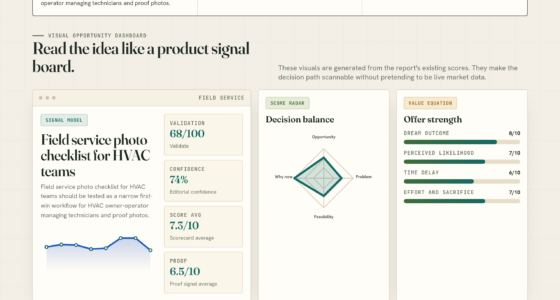

📊 Full opportunity report: The Future Of Telemedicine: AI-Driven Clinical Video Consultations By AMIE on ThorstenMeyerAI.com — validation score, market gap, and execution plan.

Get business pricing on monitors, keyboards and dev gear
- Business-only prices and quantity discounts
- Tax-exempt purchasing
- Multiple users, one account, clear invoices
TL;DR
Google Research and DeepMind have demonstrated their AI system, AMIE, conducting real-time video medical consultations with simulated patients. While evaluators rated the system favorably, it is still in the research stage and not ready for clinical deployment.
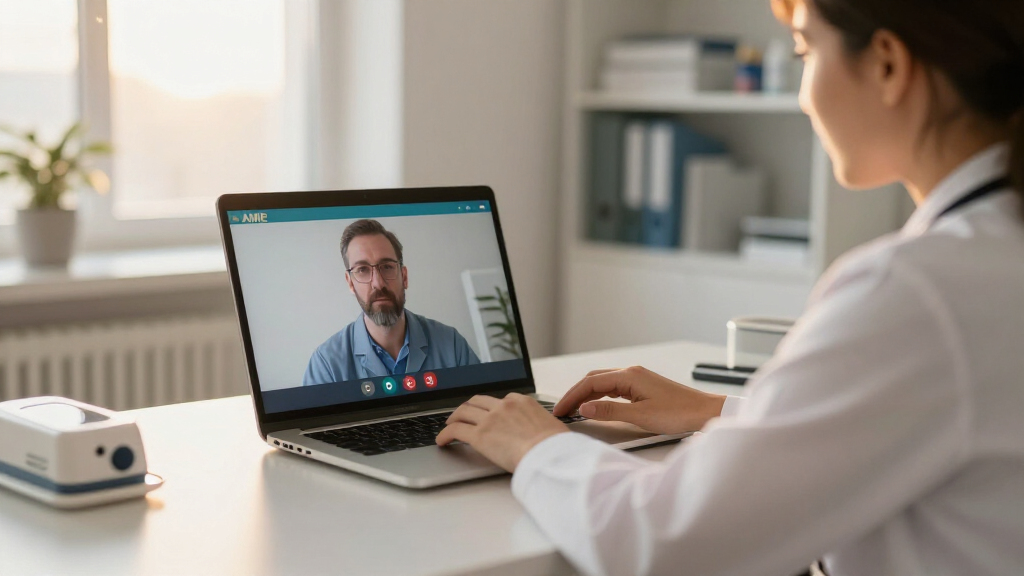
Google Research and DeepMind announced that their experimental AI system, AMIE, can now conduct real-time clinical video consultations with simulated patients. This development extends AI capabilities beyond text chat, demonstrating potential for multimodal, audiovisual medical interactions. However, the system remains in the research phase and has not been approved for clinical use.
According to Google, AMIE was evaluated in a controlled study involving patient actors and primary care physicians. The evaluators rated the system favorably across key clinical competencies such as history-taking, diagnostic reasoning, and communication quality. The study did not disclose detailed results, sample sizes, or error rates, and involved simulated consultations rather than real patient interactions.
The system uses a multi-agent architecture, integrating visual and auditory processing to interpret patient cues like movement, appearance, and speech. Google highlighted that moving from text-based to video consultations allows AMIE to access clinical signals typically missed in typed exchanges, such as visible discomfort or physical symptoms. The demonstration was described as a first-of-its-kind, expert-level AI capability in real-time clinical video interactions, but Google emphasized that further validation is needed before any clinical deployment.
Implications for Future Telemedicine Applications
This development signals a potential expansion in the scope of AI-assisted telemedicine, especially in remote consultations where visual and auditory cues are critical. If validated in broader studies, systems like AMIE could enhance diagnostic accuracy, improve patient engagement, and support clinicians in virtual care settings. However, the current research status means it cannot replace human clinicians yet, and regulatory approval remains pending.
telemedicine video consultation equipment
As an affiliate, we earn on qualifying purchases.
As an affiliate, we earn on qualifying purchases.
Background on AI in Telemedicine Development
Previous AI efforts in telemedicine have focused on text-based chatbots and decision support tools. Google’s earlier work centered on conversational models that could gather patient histories and suggest management options without visual input. The recent demonstration of AMIE moving into multimodal, video-based interactions represents a significant technological advancement, building on ongoing research into AI’s capacity for real-time clinical reasoning. Despite these innovations, widespread adoption requires extensive validation, safety assessments, and regulatory clearance.
“This is a pioneering demonstration of AI capabilities in a clinical setting that involves live audiovisual interpretation and reasoning.”
— an anonymous researcher
AI-powered medical consultation devices
As an affiliate, we earn on qualifying purchases.
As an affiliate, we earn on qualifying purchases.
Unanswered Questions About System Performance and Safety
It remains unclear how AMIE performs across diverse patient populations, medical conditions, or in less controlled environments. Details about the system’s error rates, handling of ambiguous symptoms, privacy safeguards, and potential biases have not been disclosed. The evaluation involved actors in simulated scenarios, not real patients, limiting conclusions about clinical outcomes or safety. Independent peer review and regulatory assessment are still pending.
As an affiliate, we earn on qualifying purchases.
Next Steps for Validation and Potential Deployment
Google plans to conduct additional research with broader datasets, including real patient interactions, to evaluate AMIE’s safety, accuracy, and reliability. Future work will involve publishing detailed methodologies, conducting independent peer reviews, and exploring regulatory pathways. No timeline has been announced for public trials or commercial deployment, and the system remains experimental.
As an affiliate, we earn on qualifying purchases.
Key Questions
What is AMIE?
AMIE is a Google research AI system designed to conduct clinical video consultations, interpret visual and auditory cues, and reason about diagnoses. It is currently in the experimental stage.
Can AMIE replace doctors now?
No. AMIE is a research prototype and has not been approved for clinical use. Further validation and safety testing are required before any deployment.
What are the limitations of the current demonstration?
The demonstration involved simulated patients and did not include detailed performance metrics, error rates, or real-world conditions. Its safety, accuracy, and effectiveness in diverse settings remain unproven.
When might systems like AMIE be used in real healthcare?
If future studies validate its safety and effectiveness, and regulatory approval is obtained, such systems could support remote consultations in specific clinical contexts. However, no timeline has been set.
What challenges must be addressed before deployment?
Key challenges include ensuring safety, managing privacy and bias, establishing regulatory frameworks, and demonstrating consistent performance across diverse patient populations and conditions.
Source: ThorstenMeyerAI.com
Fall Picks
fall essentials
As an affiliate, we earn on qualifying purchases.


![[Invitation] Galaxy Unpacked July 2026: A New Shape Unfolds](https://domystats.com/wp-content/uploads/2026/07/invitation-galaxy-unpacked-july-2026-a-new-shape-unfolds-featured-560x300.jpg)