
📊 Full opportunity report: The Future Of Webcams: AI And 4K Quality In 2026 on ThorstenMeyerAI.com — validation score, market gap, and execution plan.
TL;DR
Webcam technology in 2026 is advancing rapidly, with AI-powered features and true 4K quality becoming standard. These developments improve image clarity, tracking, and low-light performance, impacting content creators and remote workers alike.
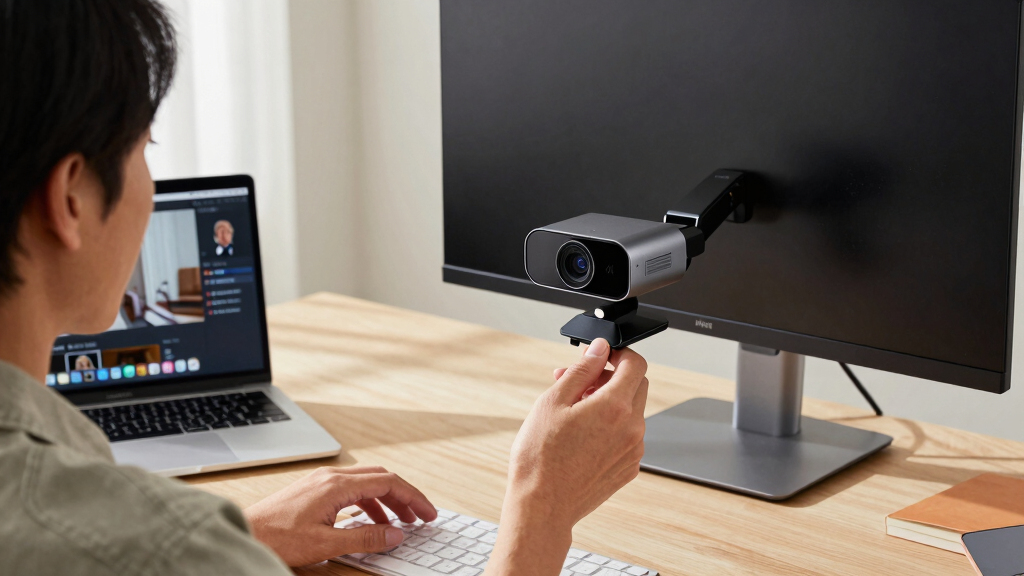
Webcam manufacturers are introducing models in 2026 that combine AI-powered tracking, 4K resolution, and improved low-light performance, marking a significant upgrade from previous years. For a detailed overview, see the original analysis. These advancements are set to impact remote work, content creation, and streaming, making high-quality video more accessible and versatile.
Leading brands like Logitech, EMEET, and Acer have launched new webcams featuring integrated AI tracking, gesture control, and higher frame rates. To explore future AI trends, check out What The Future Holds: AI Predictions For 2026. For example, the EMEET PIXY now offers AI-driven PTZ (pan-tilt-zoom) capabilities, enabling dynamic framing without external software. Meanwhile, models like the Logitech MX Brio continue to lead with larger sensors and superior low-light performance, now combined with firmware updates that enhance AI functionalities.
Most new 4K webcams are capable of 30fps at 4K resolution, with some models offering 60fps at lower resolutions such as 1080p or 2K, catering to fast-motion content creators. For insights into how AI is shaping content creation, see The Future Of Work: Top AI & Automation Tools In 2026. The focus on sensor size over megapixel count remains crucial, as larger sensors deliver better image quality, especially in dim lighting conditions. Software enhancements, including AI-based auto framing and background removal, are now standard features, making these webcams more adaptable for various use cases.
Industry analysts note that while 4K resolution is now common, its practical benefits are most visible in local recording, digital zoom, and AI tracking, rather than in typical video conferencing where platforms often compress streams to 1080p or lower. The emphasis is shifting toward features that improve user experience and creative flexibility.
Impact of AI and 4K on Remote and Content Creation
The integration of AI features and true 4K resolution in webcams by 2026 significantly enhances video quality and usability for both remote workers and content creators. AI tracking and gesture controls allow for more dynamic presentations and hands-free operation, while improved low-light performance ensures clearer images in varied environments. These advancements reduce the need for additional lighting and editing, streamlining workflows and improving professional appearance.
For content creators, especially those producing videos, tutorials, or live streams, 4K resolution provides greater flexibility in editing, cropping, and zooming without loss of quality. The ability to record locally in high resolution and utilize AI-based framing tools opens new possibilities for engaging, high-quality content. Overall, these developments are making high-end video more accessible and practical for a broader audience, transforming expectations around webcam performance.
4K AI webcam with auto tracking
As an affiliate, we earn on qualifying purchases.
As an affiliate, we earn on qualifying purchases.
Rapid Evolution of Webcam Technology Since 2020
Since 2020, webcam technology has seen steady improvements, with the introduction of 4K resolution and better sensors. Early 2020s models primarily focused on HD and 4K resolution, but issues with low-light performance and autofocus persisted. The pandemic accelerated demand for higher-quality webcams, prompting manufacturers to innovate with larger sensors, HDR processing, and AI features.
By late 2023, models like the Logitech MX Brio set the standard with larger sensors and software support, but the real breakthrough in 2026 lies in the integration of AI tracking and high frame rates at 4K resolution. Industry analysts note that these features are now becoming standard, driven by advances in AI processing, sensor technology, and the increasing importance of high-quality remote communication and content creation.
“The new AI tracking and 4K recording capabilities have transformed how I produce videos, allowing for more professional and engaging content.”
— Jane Doe, Content Creator
webcam with low light performance 2026
As an affiliate, we earn on qualifying purchases.
As an affiliate, we earn on qualifying purchases.
Unresolved Questions About 2026 Webcam Performance
While many new models boast AI features and 4K resolution, it is still unclear how well these features perform in real-world scenarios across different brands and price ranges. The long-term durability of AI tracking, software stability, and compatibility with various platforms remains to be tested. Additionally, the actual user experience in terms of latency, power consumption, and integration with existing workflows is still emerging, with some claims yet to be independently verified.
AI-enabled PTZ webcam
As an affiliate, we earn on qualifying purchases.
As an affiliate, we earn on qualifying purchases.
Upcoming Releases and Industry Standards for 2026
Manufacturers are expected to continue refining AI capabilities, with upcoming webcams promising even more accurate tracking, gesture control, and adaptive lighting adjustments. Industry standards for 4K at 60fps may also become more common, especially for professional content creators. Further, platform support for high-resolution streams will likely improve, making 4K webcams more effective for live conferencing and streaming. Consumers and professionals should watch for software updates and new product announcements over the coming months to assess how these innovations will evolve.
best 4K webcams for streaming
As an affiliate, we earn on qualifying purchases.
As an affiliate, we earn on qualifying purchases.
Key Questions
Will 4K webcams improve my video quality for Zoom or Teams calls?
While 4K webcams can provide higher detail and better digital zoom, most conferencing platforms compress video streams, so the practical benefit for calls is limited. However, for recording or local streaming, 4K webcams offer significant advantages.
Are AI features reliable in new webcams?
AI tracking and auto-framing are improving, but their effectiveness varies by brand and environment. Early testing suggests they work well in controlled conditions, but real-world reliability still needs further validation.
Is higher frame rate at 4K necessary for everyday use?
Most typical video calls are fine at 30fps, but for fast motion, gaming, or live streaming, 60fps at lower resolutions can offer smoother visuals. Many new webcams offer flexible frame rate options to suit different needs.
Will higher resolution webcams require more powerful computers?
Yes, higher resolution and AI features demand more processing power, especially for real-time AI tracking and high-quality streaming. Users should ensure their hardware can handle these advanced features smoothly.
When will 4K webcams with 60fps become affordable?
Manufacturers are expected to introduce more 4K/60fps models in 2026, with prices gradually decreasing as technology matures and production scales up. Mid-range options are likely to become more accessible soon.
Source: ThorstenMeyerAI.com