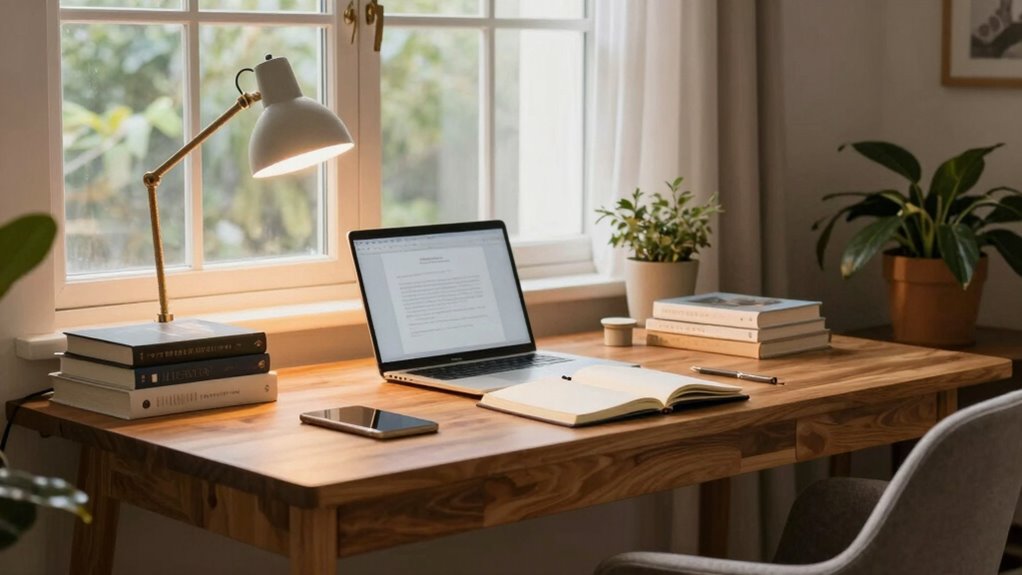

To light your home tutoring setup effectively, combine natural and artificial light for an inviting atmosphere. Position your desk near a window to maximize daylight, which reduces eye strain and keeps you alert. Use adjustable lamps with bright LED bulbs to create the right mood and enhance focus during sessions. Layer your lighting with overhead, desk, and floor lamps to eliminate harsh shadows. Want tips on the best products and techniques? Keep exploring for more insights!
Key Takeaways
- Position your desk near windows to maximize natural light, enhancing focus and creating an uplifting atmosphere.
- Use adjustable lamps with brightness settings for customized lighting during different tasks and sessions.
- Choose LED bulbs that mimic sunlight to promote alertness and avoid overly warm bulbs that can induce drowsiness.
- Combine overhead lights with desk and floor lamps to create a balanced lighting scheme that eliminates harsh shadows.
- Consider sheer curtains to diffuse natural light and reduce glare, minimizing distractions during tutoring sessions.
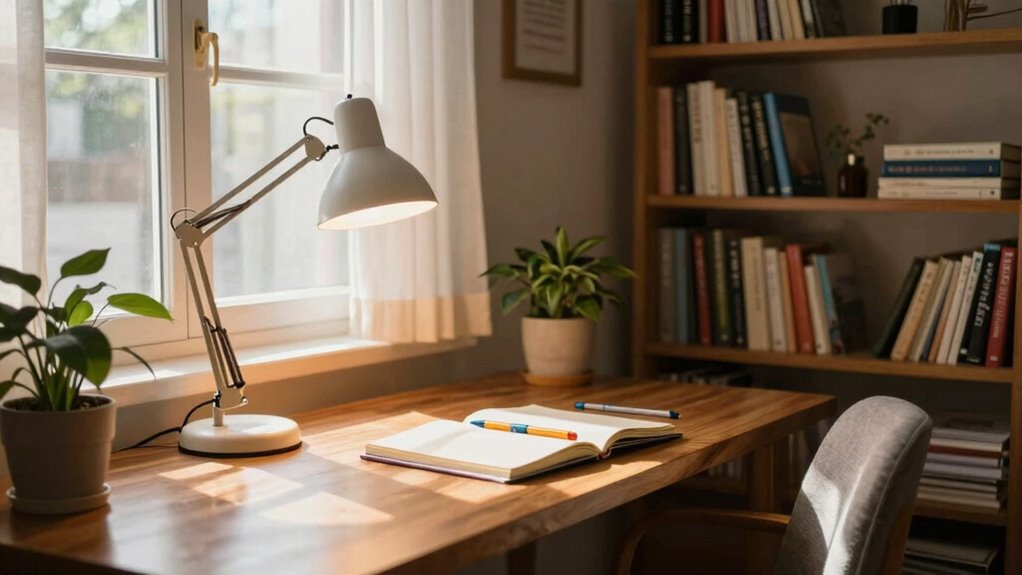
When you’re setting up your tutoring space, proper lighting can make all the difference in creating an engaging environment. It’s not just about brightness; the right lighting can enhance focus, reduce eye strain, and set the mood for productive sessions. You’ll want to take into account both natural lighting and artificial options to find the perfect balance.
Start by evaluating your space for natural lighting. If you have a window, position your desk nearby to take advantage of that daylight. Natural light can uplift the atmosphere, making it feel more open and inviting. It’s also easier on the eyes compared to harsh artificial light. Just be mindful of glare on your screen or papers, which can distract both you and your student. You might want to invest in sheer curtains; they’ll diffuse the light while still allowing that energy to flow in.
Evaluate your space for natural light; it creates an inviting atmosphere and reduces eye strain during tutoring sessions.
However, relying solely on natural lighting isn’t always practical, especially during cloudy days or in the evening. That’s where adjustable lamps come into play. These lamps give you the flexibility to direct light exactly where you need it, whether you’re working on a whiteboard or reviewing materials on a desk. Look for lamps with adjustable brightness settings, so you can tailor the light intensity to suit different tasks. This feature helps create a comfortable environment, allowing you to switch between more focused work and broader discussions as needed.
Choosing the right bulb is equally important. Opt for LED bulbs that mimic sunlight; they offer a clean, bright light that promotes alertness. Avoid overly warm bulbs, as they can create a cozy atmosphere that may induce drowsiness. You want your tutoring setup to be energizing while still comfortable.
Don’t forget about layering your lighting. Combine overhead lights with desk lamps and even a floor lamp if your space allows. This approach provides a well-rounded lighting scheme that eliminates harsh shadows and uneven light distribution. You’ll find that a well-lit space encourages better engagement, making your sessions more productive.
As an affiliate, we earn on qualifying purchases.
Frequently Asked Questions
What Color Temperature Is Best for a Tutoring Setup?
For a tutoring setup, cool light is often best. It mimics daylight, helping you stay alert and focused. Aim for a color temperature around 5000K to 6500K, as this range promotes productivity. While warm light can create a cozy atmosphere, it might make you feel more relaxed and less engaged. So, stick with cool light to enhance concentration and keep your energy levels up during those study sessions!
How Can I Reduce Glare on My Tutoring Materials?
To reduce glare on your tutoring materials, start by adjusting your light sources. Position your materials at an angle that minimizes reflections. You might not realize it, but even small shifts can make a huge difference! Consider using anti-glare screens or matte finishes for your materials. Don’t forget to control ambient light, too; curtains can help. With these simple tweaks, you’ll create a glare-free environment that makes studying a breeze.
Are Natural Light Sources Effective for Tutoring?
Yes, natural light sources can be very effective for tutoring. Sunlight benefits your focus and mood, making sessions more productive. Position your tutoring setup near a window to maximize this natural light. However, be mindful of glare; it can distract you and your students. If sunlight isn’t available, consider artificial alternatives that mimic daylight, ensuring the space remains bright without causing strain. Balance both options for the best environment.
Should I Use Floor Lamps or Desk Lamps?
You should use both floor lamps and desk lamps for ideal lighting. Floor lamps provide ambient light, making the entire space feel inviting, while desk lamps focus on your workspace, reducing eye strain. Consider lamp styles that complement your decor and guarantee proper lighting placement; position the desk lamp to eliminate shadows on your materials. This combination creates a balanced environment, enhancing your tutoring experience and helping you stay focused.
How Can I Improve Lighting for Online Tutoring Sessions?
About 90% of communication is non-verbal, so good lighting’s essential. To improve lighting for your online tutoring sessions, focus on lighting angles and bulb brightness. Position your light source in front of you, at a 45-degree angle, to minimize shadows. Use bright, natural-light bulbs to create a warm, inviting atmosphere. Experiment with different setups until you find what makes you look and feel your best during those important interactions.
As an affiliate, we earn on qualifying purchases.
Conclusion
To create an ideal tutoring environment, you’ve got to focus on the light. Use natural light to brighten your space, use warm light to create a cozy atmosphere, and use adjustable lighting to meet your needs. By balancing these elements, you’ll enhance focus, boost engagement, and foster a lively learning experience. So, embrace the light, enjoy the glow, and watch your tutoring setup transform into a welcoming haven for knowledge and growth.
As an affiliate, we earn on qualifying purchases.
As an affiliate, we earn on qualifying purchases.