
The right software testing automation tools resource can shave months off your learning curve — but the market splits sharply between tool-specific manuals, AI-driven testing guides, and broad QA career books. Ultimate Selenium WebDriver for Test Automation earns my best overall spot because it pairs framework-building skills with real industry scenarios across e-commerce, healthcare, and banking, the closest thing to a complete automation toolkit in one place. Two standouts challenge it: Web Automation Testing Using Playwright for teams modernizing away from Selenium, and Spec-Driven Software Testing with AI for anyone betting on AI-generated test suites. The main tradeoff you’ll face is depth versus breadth: narrowly focused tool books teach faster but age quicker, while wide-ranging guides stay relevant longer but cover less code. Read on for the full ranked breakdown, including who each pick suits and who should skip it.

Get business pricing on monitors, keyboards and dev gear
- Business-only prices and quantity discounts
- Tax-exempt purchasing
- Multiple users, one account, clear invoices
Key Takeaways
- Selenium-based guides still dominate for enterprise careers, but the two Playwright books are the most future-proof picks for greenfield web projects in 2026.
- AI-focused testing titles split into two camps: tool-agnostic strategy guides (Software Testing with Generative AI) and hands-on practitioner books (AI-Assisted QA with Claude Code) — pick based on whether you want philosophy or workflows.
- Beginner-oriented titles like Software Testing Unlocked cost the least but skip framework design entirely, so they only make sense as a first step, not a destination.
- DevOps-flavored entries such as Continuous Delivery and Python for DevOps teach automation as a pipeline discipline rather than a scripting skill, which matters if your goal is release reliability over test coverage.
- Only three picks in this lineup bundle CI/CD integration with test automation — if pipeline skills are part of your role, that narrows the field considerably.
| Ultimate Selenium WebDriver for Test Automation | 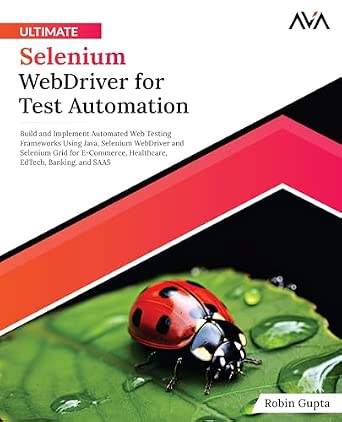 | Best for Framework Builders | Format: Print book | Primary Tools: Selenium WebDriver, Selenium Grid | Language: Java | VIEW LATEST PRICE | See Our Full Breakdown |
| Continuous Delivery: Reliable Software Releases through Build, Test, and Deployment Automation |  | Best for Pipeline Strategy | Format: Print book | Topic: Continuous delivery and release automation | Coverage: Build automation, test automation strategy, deployment automation | VIEW LATEST PRICE | See Our Full Breakdown |
| AI for Quality Assurance and Software Testing: The Practitioner’s Complete Guide to AI-Powered Testing, Tools, and Transformation |  | Best for AI Transformation | Format: Book (digital/print) | Topic: AI-powered quality assurance and testing | Coverage: AI testing tools, techniques, process transformation | VIEW LATEST PRICE | See Our Full Breakdown |
| AI-Assisted QA and Software Testing with Claude Code |  | Best Hands-On AI Pick | Format: Book/digital guide | Tool Focus: Claude Code (Anthropic agentic assistant) | Test Types Covered: Unit, integration, end-to-end | VIEW LATEST PRICE | See Our Full Breakdown |
| All You Need to Know About Software Testing: From Beginner to Job-Ready QA Engineer |  | Best Career Starter | Format: Book (digital/print) | Topics: Manual testing, Selenium, Playwright, API testing, CI/CD, AI-assisted QA | Goal: Beginner to job-ready QA engineer | VIEW LATEST PRICE | See Our Full Breakdown |
| Spec-Driven Software Testing with AI |  | Best for Advanced AI-Driven Workflows | Format: Kindle / Digital | Topic Focus: AI, Spec-Driven Testing, TDD, API Testing, CI/CD | Audience Level: Intermediate to Advanced | VIEW LATEST PRICE | See Our Full Breakdown |
| Full Stack Testing: A Practical Guide for Delivering High Quality Software |  | Best Overall Breadth | Format: Print / Paperback | Topic Focus: Full-stack software testing methodologies | Audience Level: Beginner to Intermediate professionals | VIEW LATEST PRICE | See Our Full Breakdown |
| Software Testing with Generative AI | 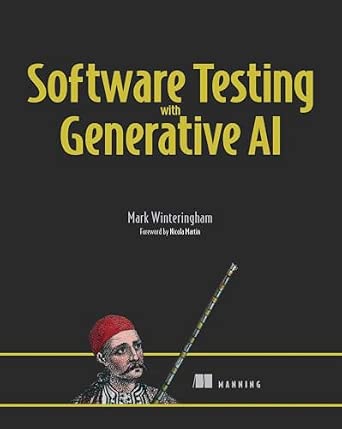 | Best for AI-Curious QA Teams | Format: Print | Topic Focus: Generative AI applied to software testing | Audience Level: Intermediate | VIEW LATEST PRICE | See Our Full Breakdown |
| Software Testing Explained: A Comprehensive Guide for IT and Non-IT Professionals |  | Best for Non-Technical Stakeholders | Format: Digital | Topic Focus: Software testing principles and business value | Audience Level: Beginner / Non-technical | VIEW LATEST PRICE | See Our Full Breakdown |
| Python for DevOps: Master Automation, CI/CD Pipelines, and Containerization with Python |  | Best for Pipeline and Infrastructure Automation | Format: Print | Topic Focus: DevOps automation with Python | Audience Level: Intermediate | VIEW LATEST PRICE | See Our Full Breakdown |
| Web Automation Testing Using Playwright: End-to-end, API, accessibility, and Visual Testing (English Edition) |  | Best for Multi-Discipline Playwright Coverage | Format: Print / digital book (English Edition) | Primary Tool: Microsoft Playwright | Testing Types Covered: End-to-end, API, accessibility, visual | VIEW LATEST PRICE | See Our Full Breakdown |
| Hands-On Automated Testing with Playwright: Create fast, reliable, and scalable tests for modern web apps with Microsoft’s automation framework |  | Best Advanced Playwright Guide | Format: Print / ebook (Packt) | Primary Tool: Microsoft Playwright | Focus: Fast, reliable, scalable automated tests | VIEW LATEST PRICE | See Our Full Breakdown |
| Software Testing Unlocked – A Beginner’s Guide to QA & Automation |  | Best for Absolute Beginners Entering QA | Format: Paperback / Kindle | Structure: 20-step learning journey | Topics Covered: QA fundamentals and automation basics | VIEW LATEST PRICE | See Our Full Breakdown |
| software testing automation tool | Format | Audience Level |
|---|---|---|
| Ultimate Selenium WebDriver fo | Print book | — |
| Continuous Delivery: Reliable | Print book | — |
| AI for Quality Assurance and S | Book (digital/print) | — |
| AI-Assisted QA and Software Te | Book/digital guide | — |
| All You Need to Know About Sof | Book (digital/print) | — |
| Spec-Driven Software Testing w | Kindle / Digital | Intermediate to Advanced |
| Full Stack Testing: A Practica | Print / Paperback | Beginner to Intermediate professionals |
| Software Testing with Generati | Intermediate | |
| Software Testing Explained: A | Digital | Beginner / Non-technical |
| Python for DevOps: Master Auto | Intermediate | |
| Web Automation Testing Using P | Print / digital book (English Edition) | Developers and testers with some prior testing knowledge |
| Hands-On Automated Testing wit | Print / ebook (Packt) | Intermediate to advanced |
| Software Testing Unlocked | Paperback / Kindle | Absolute beginners |
More Details on Our Top Picks
Ultimate Selenium WebDriver for Test Automation
This option stands out as the deepest Selenium-specific resource in the lineup, going well beyond tool introductions into full framework architecture with Java, Selenium WebDriver, and Selenium Grid. Compared with All You Need to Know About Software Testing, which touches Selenium as one topic among many, this pick treats WebDriver as the entire curriculum — including cross-browser grid distribution and domain-specific examples for banking, healthcare, and SaaS. The industry scenarios translate abstract API knowledge into patterns readers can reuse at work. The tradeoff is narrowness: readers wanting AI-assisted QA or CI/CD pipeline strategy will need a second book, and the Java-centric approach excludes Python and JavaScript teams entirely.
Pros:- Framework-level coverage rather than isolated scripting tutorials
- Selenium Grid instruction for parallel and distributed test execution
- Domain-specific examples across e-commerce, banking, healthcare, and SaaS
- Suits both testers and developers working on shared automation codebases
Cons:- Java-exclusive — no Python or JavaScript alternatives shown
- No edition or Selenium version details, so coverage of the current WebDriver API is unverifiable before purchase
- No customer ratings to gauge real-world reception
Best for: Java developers and QA engineers who need to design and maintain production-grade Selenium WebDriver frameworks rather than just record scripts
Not ideal for: Python or JavaScript automation teams — the Java-only examples won’t map to their stacks, and it skips broader QA career topics
- Format:Print book
- Primary Tools:Selenium WebDriver, Selenium Grid
- Language:Java
- Focus:Web test automation framework design
- Industry Examples:E-commerce, healthcare, EdTech, banking, SaaS
- Audience:Testers and developers with programming background
Our verdict“Buy this if Selenium with Java is your daily reality and you need to build frameworks, not just scripts; skip it if your stack runs on another language.”
Continuous Delivery: Reliable Software Releases through Build, Test, and Deployment Automation
Where most entries in this roundup teach a specific tool, this one teaches the pipeline philosophy that tools serve. It explains how build, test, and deployment automation fit together so releases stop being risky events — the conceptual backbone that Python for DevOps implements in code and Ultimate Selenium WebDriver for Test Automation plugs into at the test stage. This pick makes the most sense for leads and architects deciding how automation should be organized across a team, not which API to call. The tradeoff: it’s strategy-heavy and abstract. Readers hunting for step-by-step Selenium or Playwright recipes will find no code walkthroughs here, and the material predates modern AI-assisted testing entirely.
Pros:- Established, widely referenced treatment of continuous delivery principles
- Connects test automation to build and deployment for full release reliability
- Team-oriented guidance that scales beyond individual testers
- Tool-agnostic concepts that outlast any specific framework’s lifecycle
Cons:- Little to no hands-on code, making it impractical as a sole learning resource
- Predates AI-powered testing, so modern tooling coverage is absent
Best for: Engineering leads, DevOps managers, and QA architects who design release pipelines and need to justify automation investment at the process level
Not ideal for: Hands-on scripters who want immediate code examples — this is conceptual, not a tutorial
- Format:Print book
- Topic:Continuous delivery and release automation
- Coverage:Build automation, test automation strategy, deployment automation
- Approach:Conceptual and process-oriented
- Audience:Development teams, leads, DevOps professionals
- Tool Binding:Tool-agnostic
Our verdict“This is the pick for readers who need to architect reliable release pipelines rather than write their first test script.”
AI for Quality Assurance and Software Testing: The Practitioner’s Complete Guide to AI-Powered Testing, Tools, and Transformation
This entry takes the broadest view of AI in QA of any AI-focused book here, positioning itself as a complete practitioner’s guide rather than a single-tool manual. Compared with AI-Assisted QA and Software Testing with Claude Code, which centers on one assistant, this pick surveys the wider landscape of AI-powered testing tools and process transformation — useful for teams still deciding which AI approach fits their workflow. Its strength is breadth: test generation, maintenance, and organizational change all get airtime. That same breadth is the drawback. Practitioners wanting deep, copy-ready workflows with a specific tool may finish informed but not equipped, and the material assumes enough testing fluency that newcomers will struggle.
Pros:- Wide survey of AI testing tools rather than a single-vendor viewpoint
- Covers process transformation, not just tool mechanics
- Practical techniques suited to working practitioners modernizing legacy QA
- Timely coverage of a fast-moving area most classic testing books ignore
Cons:- Breadth comes at the cost of depth on any single tool
- No customer reviews available to validate practical usefulness
- AI tooling evolves quickly, so specific tool sections risk dating fast
Best for: Experienced QA leads and managers evaluating how to integrate AI across an entire testing organization, not just one workflow
Not ideal for: Complete beginners — the practitioner framing assumes existing testing knowledge and offers little on-the-ramp support
- Format:Book (digital/print)
- Topic:AI-powered quality assurance and testing
- Coverage:AI testing tools, techniques, process transformation
- Audience:Practicing QA professionals
- Experience Level:Intermediate to advanced
- Approach:Broad survey with practical guidance
Our verdict“Choose this to build an org-wide AI testing strategy; choose a tool-specific book if you already know which assistant you’re adopting.”
AI-Assisted QA and Software Testing with Claude Code
For teams that have already committed to an agentic AI workflow, this is the most immediately actionable entry. Instead of surveying the AI landscape like AI for Quality Assurance and Software Testing, it drills into automating unit, integration, and end-to-end tests with a single assistant, promising concrete workflows rather than strategy discussion. That focus is its edge: readers can go from purchase to working pipelines faster than with any survey-style alternative. The flip side is lock-in and uncertainty. Skills built around one assistant may not transfer if the team changes tooling, published details on compatibility and integration are thin, and new users face a real learning curve with agentic workflows before the automation pays off.
Pros:- Covers the full test pyramid: unit, integration, and end-to-end automation
- Workflow-level instruction you can apply immediately, unlike survey-style AI books
- AI-driven approach can reduce repetitive test authoring and maintenance
- Directly streamlines QA inside the coding workflow
Cons:- Tied to one AI assistant, creating skill and process lock-in
- Sparse documentation of compatibility and integration requirements
- Real learning curve for users new to agentic coding tools
Best for: Developers on teams already using Claude Code who want to automate their full test pyramid — unit through end-to-end — with concrete workflows
Not ideal for: Teams standardized on other AI tools or strict tool-approval processes — the single-assistant focus limits transferability
- Format:Book/digital guide
- Tool Focus:Claude Code (Anthropic agentic assistant)
- Test Types Covered:Unit, integration, end-to-end
- Approach:Hands-on workflow automation
- Audience:Developers and QA engineers using AI coding assistants
- Experience Level:Intermediate
Our verdict“If Claude Code is already in your stack, this is the fastest route to AI-automated testing; if not, the single-tool focus is a liability.”
All You Need to Know About Software Testing: From Beginner to Job-Ready QA Engineer
This pick plays a different game than everything else here: instead of mastering one tool, it aims to make a career-changing beginner employable. Manual testing, Selenium, Playwright, APIs, CI/CD, and AI-assisted QA all appear in one arc — a map of the whole field where Ultimate Selenium WebDriver for Test Automation is a deep dive and Continuous Delivery is pure strategy. The step-by-step, job-ready framing is the differentiator, including interview-relevant skills rather than isolated techniques. The cost of covering everything is depth: a reader who lands a job automating with Playwright will still need the dedicated Playwright titles in this roundup, and the sheer scope can feel dense for someone starting from absolute zero.
Pros:- Full career arc: manual testing through automation, APIs, CI/CD, and AI-assisted QA
- Step-by-step structure with practical examples rather than theory-only chapters
- Job-readiness focus including current tools like Playwright and AI workflows
- Single-volume alternative to buying separate beginner books per topic
Cons:- Breadth limits depth on every individual tool
- Dense for complete beginners with no prior exposure to software development
- No customer ratings available to confirm how well the job-ready promise holds up
Best for: Career switchers and new graduates who want one structured path from testing fundamentals to job-ready automation and AI-assisted QA skills
Not ideal for: Working QA engineers — the broad beginner framing will skim past the deep framework detail they already need
- Format:Book (digital/print)
- Topics:Manual testing, Selenium, Playwright, API testing, CI/CD, AI-assisted QA
- Goal:Beginner to job-ready QA engineer
- Approach:Step-by-step practical guide
- Audience:Beginners and career changers
- Experience Level:Entry level
Our verdict“If your goal is a QA job rather than mastery of one tool, this is the single best starting point in the roundup.”
Spec-Driven Software Testing with AI
Spec-Driven Software Testing with AI carves out a niche the other titles here don’t touch: treating specifications as the single source of truth and letting AI generate test suites from them. Where Software Testing with Generative AI surveys AI’s role in quality assurance broadly, this book commits to a spec-first, TDD-anchored pipeline that plugs into API testing and CI/CD. That commitment is its strength and its barrier — readers who already understand automated pipelines will get a repeatable methodology; readers who don’t will struggle before chapter three. Compared with Python for DevOps, which covers CI/CD from an infrastructure angle, this one stays locked on test reliability. The tradeoff is depth over accessibility: this is a practitioner’s manual, not an entry point, and it assumes you can read code comfortably.
Pros:- Covers AI, TDD, API testing, and CI/CD in one integrated methodology
- Spec-driven approach produces test suites that stay aligned with requirements
- Gives concrete strategies for embedding AI testing into real development workflows
- Goes deeper on pipeline integration than most AI-testing books
Cons:- Assumes working knowledge of CI/CD and test automation — steep for beginners
- AI tooling evolves fast, so specific techniques may age quickly
Best for: Senior QA engineers and test architects who already run CI/CD pipelines and want a structured way to bring AI-generated tests into spec-driven development
Not ideal for: Junior testers or career changers — the TDD and CI/CD prerequisites make it a frustrating first book; the beginner titles in this roundup serve that reader better
- Format:Kindle / Digital
- Topic Focus:AI, Spec-Driven Testing, TDD, API Testing, CI/CD
- Audience Level:Intermediate to Advanced
- Primary Use:Building reliable automated test suites
- Covers:Test automation, TDD, API testing, CI/CD integration
- Prerequisites:Coding experience and CI/CD familiarity recommended
Our verdict“If you already own a pipeline and want AI to build disciplined test suites from specs, this is the most focused book in the lineup.”
Full Stack Testing: A Practical Guide for Delivering High Quality Software
Full Stack Testing earns the widest role in this roundup because it treats quality as something that spans the whole application — UI, API, data, infrastructure — rather than one layer of it. Compared with Spec-Driven Software Testing with AI, which drills into one methodology, this book gives a practical map of the entire testing landscape, which is exactly what most working developers and testers actually need. Its strength is breadth paired with actionable guidance; its weakness is that no single chapter goes as deep as a specialist title. Where Python for DevOps approaches pipelines from the ops side, this one shows how testing strategy shapes what goes into those pipelines. For teams that need a shared vocabulary across roles, this is the pick that gets everyone aligned without requiring AI hype or a single-tool loyalty.
Pros:- Covers the full application stack rather than isolating UI or API testing
- Written for both developers and testers, making it useful for cross-functional teams
- Practical, delivery-oriented framing tied to shipping high-quality software
- Serves as a durable reference as tools change
Cons:- Breadth comes at the cost of depth in any single area
- No hands-on framework exercises, so it won’t replace a tool-specific guide
Best for: Developers and QA engineers on product teams who need end-to-end testing competence across the stack, not just one tool or layer
Not ideal for: Readers wanting tool-specific tutorials — there are no step-by-step framework walkthroughs like the Selenium and Playwright titles in this guide
- Format:Print / Paperback
- Topic Focus:Full-stack software testing methodologies
- Audience Level:Beginner to Intermediate professionals
- Primary Use:Delivering high-quality software across the stack
- Covers:Testing methodologies, tools, best practices
- Intended Readers:Developers and testers
Our verdict“The most balanced choice for professionals who need to understand testing across the whole stack before specializing.”
Software Testing with Generative AI
Software Testing with Generative AI sits in the middle ground between the practitioner-heavy AI for Quality Assurance and Software Testing guide and the spec-driven deep cut earlier in this list. Its angle is generative AI specifically — how large models can produce test cases, data, and scenarios — explained at a level a whole QA team can digest. This option stands out for making an intimidating topic approachable without drowning the reader in pipeline configuration, which is exactly where Spec-Driven Software Testing with AI loses newer readers. The flip side: it stays higher-level than most engineers will want. If you need exact prompts, tool walkthroughs, and reproducible workflows, you’ll finish this book informed but not equipped. Compared with Full Stack Testing, it trades breadth across the stack for depth on one emerging capability — a reasonable trade only if AI adoption is genuinely on your roadmap.
Pros:- Focused specifically on generative AI rather than testing generally
- Includes practical application examples, not just theory
- Accessible enough for mixed-skill QA teams to read together
- Frames AI testing in terms of real quality-assurance workflows
Cons:- Light on specific tools and step-by-step techniques
- Sparse reader feedback makes quality harder to verify before buying
Best for: QA leads and managers evaluating how generative AI fits their team’s testing strategy before committing to specific tooling
Not ideal for: Hands-on automation engineers who need concrete tool configurations — the conceptual coverage won’t translate directly into working test suites
- Format:Print
- Topic Focus:Generative AI applied to software testing
- Audience Level:Intermediate
- Primary Use:Understanding AI-driven testing methods
- Covers:AI testing concepts and practical applications
- Intended Readers:QA professionals and quality leads
Our verdict“A solid orientation for teams exploring generative AI in testing, but engineers will need a follow-up resource for implementation.”
Software Testing Explained: A Comprehensive Guide for IT and Non-IT Professionals
Software Testing Explained is the only title in this batch written deliberately for people who don’t write code — project managers, business analysts, executives — while still serving IT readers new to QA. Compared with Full Stack Testing, which assumes you live in the codebase, this book frames testing as a business-value and cost-savings discipline, which is the lens non-technical buyers actually care about. Its practical bent toward large organizations sets it apart from the beginner job-prep titles elsewhere in the roundup; it’s less about landing a QA role and more about improving how an organization tests. The tradeoff is depth: technical readers will outgrow it quickly, and anyone wanting automation specifics should look at the Playwright or Selenium picks instead. Thin publication details also make it harder to gauge how current the material is — worth sampling before committing.
Pros:- Accessible to both IT and non-IT professionals without dumbing down core concepts
- Connects testing decisions to business value, efficiency, and cost savings
- Broad conceptual coverage makes it a good organizational shared reference
- Useful for large-enterprise contexts specifically
Cons:- No technical depth on automation tools or frameworks
- Limited author and publication information makes credibility harder to verify
Best for: Business analysts, project managers, and non-technical leaders at large organizations who need to understand testing’s value and vocabulary
Not ideal for: Automation engineers and hands-on testers — there’s no code, tooling, or framework content here to build skills from
- Format:Digital
- Topic Focus:Software testing principles and business value
- Audience Level:Beginner / Non-technical
- Primary Use:Understanding testing to drive business outcomes
- Covers:Testing principles, practices, organizational efficiency
- Intended Readers:IT and non-IT professionals
Our verdict“The right pick when the reader needs to understand and fund testing rather than perform it.”
Python for DevOps: Master Automation, CI/CD Pipelines, and Containerization with Python
Python for DevOps earns its slot as the infrastructure counterpart to the testing-specific titles here. Every automated test suite eventually needs a pipeline to run in, and this book teaches you to build that pipeline yourself — automation scripts, CI/CD, and containerization in one place. Compared with Spec-Driven Software Testing with AI, which assumes pipelines exist and focuses on what runs inside them, this pick makes you the person who can stand up the whole delivery system. The Python angle is smart: it’s the glue language most QA and ops teams already use, so the skills transfer directly. The honest tradeoff is that this is a DevOps book, not a testing book — there’s little on test design, coverage, or quality strategy. Pair it with Full Stack Testing and you have both halves of the equation. Some chapters also lean advanced, so true Python newcomers should expect a climb.
Pros:- Teaches automation, CI/CD pipelines, and containerization as one coherent skill set
- Python-based examples transfer directly to most real QA and DevOps environments
- Practical, hands-on approach suited to building actual pipelines
- Serves a range of developer skill levels with graduated examples
Cons:- Minimal coverage of testing strategy or test design itself
- Advanced containerization chapters may overwhelm Python beginners
Best for: QA automation engineers and developers who want to own the CI/CD and container infrastructure their tests run on
Not ideal for: Readers focused purely on test design and quality strategy — the DevOps content may feel like a detour from core testing skills
- Format:Print
- Topic Focus:DevOps automation with Python
- Audience Level:Intermediate
- Primary Use:Building automation, CI/CD pipelines, and containerized workflows
- Covers:Python automation, CI/CD, containerization
- Intended Readers:Developers and engineers strengthening DevOps skills
- Language Used:Python
Our verdict“The natural second purchase for testers who want to control the pipelines their automation lives in, not just the tests inside them.”
Web Automation Testing Using Playwright: End-to-end, API, accessibility, and Visual Testing (English Edition)
Among the Playwright titles in this roundup, this one stands out for breadth of testing disciplines. Where Hands-On Automated Testing with Playwright stays focused on building fast, reliable end-to-end suites, this book stretches across API testing, accessibility checks, and visual regression — a combination that mirrors how modern QA teams actually work. That range makes this pick the better fit for testers who own quality end to end rather than just UI flows.
The tradeoff is depth versus spread. Compared with the Selenium-focused Ultimate Selenium WebDriver for Test Automation, which drills into framework architecture, this title sacrifices some architectural depth to cover more testing types. It is also a newer release with little reader feedback available, so buyers are taking something of a chance on pacing and code quality.
Pros:- Covers four testing disciplines in one resource: end-to-end, API, accessibility, and visual
- Playwright skills transfer directly to in-demand modern web testing roles
- Practical, guidance-oriented structure suited to applied learning
- Serves both developers and dedicated testers
Cons:- Very limited reader reviews, so quality and accuracy are harder to verify before buying
- Breadth across four testing types means less depth on any single one
Best for: QA engineers and developers who want a single Playwright resource covering UI, API, accessibility, and visual testing together
Not ideal for: Readers who want a battle-tested, widely reviewed guide — the lack of ratings means less community validation than established titles
- Format:Print / digital book (English Edition)
- Primary Tool:Microsoft Playwright
- Testing Types Covered:End-to-end, API, accessibility, visual
- Audience Level:Developers and testers with some prior testing knowledge
- Approach:Practical, hands-on guidance
- Language:English
Our verdict“Choose this if you want the widest Playwright coverage in one book; pick the Hands-On Playwright title instead if end-to-end depth matters more than breadth.”
Hands-On Automated Testing with Playwright: Create fast, reliable, and scalable tests for modern web apps with Microsoft’s automation framework
This is the deeper, more engineering-driven of the two Playwright books here. Rather than surveying testing types the way Web Automation Testing Using Playwright does, it concentrates on what teams struggle with after their first test suite exists: making tests fast, reliable, and scalable. That framing makes it a natural step up for readers who already automate and now fight flaky tests, slow pipelines, and brittle selectors.
Compared with Continuous Delivery, which treats testing as one part of a release pipeline, this book keeps Playwright front and center with hands-on examples. The catch: the publisher assumes prior development experience, and beginners may find early chapters rough going — the Software Testing Unlocked beginner guide is a friendlier on-ramp before tackling this one.
Pros:- Focused on the hard problems: test reliability, speed, and scalability at suite scale
- Playwright-first coverage matches a tool widely adopted for modern web apps
- Hands-on format walks through building real automated tests
- Published by a established technical publisher with structured editing
Cons:- Prerequisites are not clearly spelled out, which can catch less experienced readers off guard
- Content leans advanced; the early ramp-up is steep for newcomers
Best for: Developers and automation engineers who already know basics and want to build production-grade, maintainable Playwright suites
Not ideal for: Complete beginners to coding or testing — the material assumes comfort with development concepts and moves quickly
- Format:Print / ebook (Packt)
- Primary Tool:Microsoft Playwright
- Focus:Fast, reliable, scalable automated tests
- Target Platform:Modern web applications
- Audience Level:Intermediate to advanced
- Approach:Hands-on, project-driven
Our verdict“This pick makes the most sense for engineers who already write tests and want a Playwright book that goes deep on reliability and scale rather than fundamentals.”
Software Testing Unlocked – A Beginner’s Guide to QA & Automation
While most books in this roundup assume you already work in software, this one starts at zero. Its 20-step journey from novice to job-ready QA candidate is a structure none of the other titles attempt — even All You Need to Know About Software Testing, the other career-oriented entry, is less explicitly sequenced. That step-by-step framing is what makes this the easiest on-ramp in the lineup for career changers.
The compromise is technical depth. There are no deep code walkthroughs here, and the automation coverage stays introductory. Readers who finish it and want real scripting skill will still need Hands-On Automated Testing with Playwright or the Selenium title afterward. Think of this as the first rung on the ladder, not the whole climb — practical for landing that first role, thin for anyone already in one.
Pros:- Structured 20-step roadmap gives anxious beginners a clear sense of progress
- Combines QA fundamentals with an introduction to automation in one book
- Job-readiness focus, including preparation for landing a first QA role
- Accessible writing that assumes no prior IT background
Cons:- Lacks detailed technical examples, so scripting skills won’t develop from this book alone
- Experienced testers will outgrow it quickly and need a follow-up title
Best for: Career changers and students with no testing background who want a guided path toward a first QA job
Not ideal for: Working testers or developers seeking automation depth — the examples are light and the material will feel basic
- Format:Paperback / Kindle
- Structure:20-step learning journey
- Topics Covered:QA fundamentals and automation basics
- Audience Level:Absolute beginners
- Career Focus:Preparing for a first QA job
- Technical Depth:Introductory, concept-first
Our verdict“If you are brand new to QA and want a confidence-building path to your first job, start here — then graduate to a Playwright or Selenium book for hands-on automation skill.”

How We Picked
I evaluated each title through one lens: how quickly it turns a reader into someone who can build and maintain automated test suites in a real work environment. That meant weighing hands-on code coverage, whether the material maps to current tooling like Selenium 4, Playwright, and AI-assisted workflows, and how well the author connects test automation to CI/CD and release pipelines rather than treating tests as isolated scripts. I also factored in longevity — a book anchored to one vendor’s UI ages fast, while framework-design principles hold value for years.
Ranking followed practical value per reader type. Picks that combine breadth with working examples placed highest, specialist titles earned spots for doing one thing better than anyone else, and beginner books ranked lower not because they are weak but because they serve a narrower window of a reader’s growth. Price-to-depth ratio separated the value picks from the premium ones, and I penalized titles whose scope promises more than a single book can credibly deliver.
| software testing automation tool | Audience Level |
|---|---|
| Ultimate Selenium WebDriver fo | — |
| Continuous Delivery: Reliable | — |
| AI for Quality Assurance and S | — |
| AI-Assisted QA and Software Te | — |
| All You Need to Know About Sof | — |
| Spec-Driven Software Testing w | Intermediate to Advanced |
| Full Stack Testing: A Practica | Beginner to Intermediate professionals |
| Software Testing with Generati | Intermediate |
| Software Testing Explained: A | Beginner / Non-technical |
| Python for DevOps: Master Auto | Intermediate |
| Web Automation Testing Using P | Developers and testers with some prior testing knowledge |
| Hands-On Automated Testing wit | Intermediate to advanced |
| Software Testing Unlocked | Absolute beginners |
Factors to Consider When Choosing Software Testing Automation Tools
Before choosing a testing automation resource, it helps to understand what actually separates a useful purchase from a shelf decoration. These are the factors that shaped my rankings and the ones I’d weigh before spending money.Tool Choice: Selenium, Playwright, or AI-First?
The single biggest decision is which ecosystem to invest in, because skills do not transfer as easily as vendors claim. Selenium remains the enterprise default — job postings still ask for it constantly, and Selenium Grid knowledge matters at scale. Playwright is the better technical tool for new web projects, with faster execution and built-in auto-waiting, but fewer legacy teams have adopted it. AI-first approaches are the wildcard: they can generate test cases quickly, but without a grounding in spec-driven methodology the output tends to be brittle. A common mistake is chasing the newest tool when your target employers run the old one — check actual job listings in your market before committing.
Framework Skills Beat Scripting Skills
Many books teach you to write tests; far fewer teach you to design a test automation framework that survives feature changes and team growth. The difference matters at salary-review time. Framework design — page object patterns, reusable utilities, parallel execution, reporting — is what separates a QA automator from someone who records scripts that break every sprint. When comparing titles, look for chapters on architecture and maintainability, not just syntax tutorials. If a book’s table of contents is mostly element-locating exercises, expect to outgrow it within months. The premium picks in this roundup cost more precisely because they front-load this architectural thinking.
CI/CD Integration Is Not Optional
Tests that only run on a developer’s laptop are demos, not automation. Any serious resource should show you how tests plug into build pipelines and continuous delivery workflows, because that is where automation delivers its actual return. This is where the DevOps-leaning titles earn their keep — they treat testing as one stage in a release system alongside deployment and monitoring. Buyers often discover too late that a tool-specific book ends at ‘run the suite locally’ and leaves pipeline wiring as an exercise. If your role involves any release responsibility, prioritize picks that cover pipeline integration even if it means accepting less depth elsewhere. It is cheaper to buy one integrated resource than two partial ones.
Your Experience Level Should Dictate Your Spend
Beginners routinely over-invest in advanced titles and abandon them by chapter three, while experienced engineers under-invest and buy three shallow books instead of one deep one. If you cannot yet explain the difference between functional and non-functional testing, start with a foundational guide and budget for a second, tool-specific book later. Mid-career readers get the best value from practitioner guides with realistic project scenarios — the healthcare and e-commerce examples in the top picks exist precisely because contrived tutorials do not prepare you for messy production codebases. A useful rule: if a book’s first project would fit in a lunch break, it is a beginner book regardless of what the cover claims. Match the purchase to where you are now, not where you hope to be in two years.
AI Content: Strategy or Workflow?
AI testing books fall into two distinct categories, and buying the wrong one is the most common regret in this space. Strategy guides explain where AI fits in a test strategy, how to measure its value, and how to manage the organizational shift — useful for leads and managers. Workflow books show prompt patterns, tool configurations, and hands-on generation of test suites — useful for individual contributors. Neither substitutes for the other, and neither substitutes for knowing how to test manually first. AI-generated tests inherit the quality of the specification behind them, which is why spec-driven methodology titles pair so well with AI tooling. Decide whether you need to direct AI testing or do it yourself before choosing between these formats.
Frequently Asked Questions
Should I learn Selenium or Playwright in 2026?
If your goal is employability at large enterprises, Selenium still wins on sheer job-market volume, and its ecosystem of Grid, bindings, and community answers is unmatched. If you are building new web projects or joining a modern stack team, Playwright is the stronger technical choice — faster, more reliable auto-waiting, and better debugging. The pragmatic answer for career-focused learners is Selenium first, Playwright second, since the concepts transfer and having both on a resume signals range. Someone with limited time should pick based on the actual job postings in their target market rather than online tool debates, which skew toward early adopters.
Can AI testing tools replace learning to write tests myself?
Not yet, and books claiming otherwise should raise a flag. AI-generated tests are only as good as the specification or prompt behind them, which is why spec-driven testing titles have surged — they teach you to feed AI structured requirements instead of vague requests. What AI genuinely changes is coverage speed and boilerplate generation, freeing you to focus on edge cases and test strategy. If you cannot evaluate whether an AI-generated suite is any good, you cannot safely use one. The strongest position in 2026 is a practitioner who understands traditional automation well enough to supervise AI output, not one who outsources judgment entirely.
Are the beginner-level books worth it if I already code?
If you can already write code, most beginner QA books will feel slow, and you will likely skip half the content on testing fundamentals and terminology. The exception is if you have never worked in a QA context — concepts like test pyramids, defect lifecycles, and traceability are not coding skills, and jumping straight to automation frameworks without them produces engineers who automate the wrong things. A reasonable shortcut for experienced developers is a beginner book read quickly for vocabulary and process, then an immediate move to a framework-focused title. Skipping the foundation entirely works until your first stakeholder asks why your suite missed an obvious regression. Budget a week, not a month, for the introductory stage.
How much should I expect to spend on a good automation testing resource?
Most quality titles in this space run between twenty and fifty dollars, with the practitioner-grade and AI-focused guides at the higher end and beginner introductions at the lower end. The mistake to avoid is treating price as the deciding factor — a cheap book that misses CI/CD integration will cost you more in time than the price gap to a better one. If budget is tight, one broad, well-reviewed title plus free official documentation for your chosen tool beats three mediocre books. Bundles and ebook editions often cut costs by a third, and technical books go on promotion frequently enough that patience pays. Think of the purchase as a one-week salary investment in a skill with multi-year payoff.
Do I need a DevOps book if I only want to do test automation?
Strictly speaking no, but in practice the boundary between test automation and release automation keeps blurring, and hiring managers increasingly expect both. You do not need to master Kubernetes or infrastructure-as-code, but understanding how tests trigger in a pipeline, what a build stage does, and why flaky tests get quarantined changes how you design your suites. Titles like Continuous Delivery or a Python DevOps guide complement rather than replace a dedicated testing book. A good rule is a 70/30 split: most of your learning budget on testing itself, a slice on the pipeline context around it. Testers who understand delivery consistently out-earn those who do not.
Conclusion
After comparing all thirteen, the decision comes down to what kind of automator you intend to become. For best overall, Ultimate Selenium WebDriver for Test Automation delivers the widest practical payoff — framework design, Grid, and industry-specific scenarios that mirror real work. The best value pick is Software Testing Unlocked at the entry level, while Hands-On Automated Testing with Playwright offers the best value for readers who already test manually and want maximum career movement per dollar. On the premium end, Spec-Driven Software Testing with AI and the AI for Quality Assurance practitioner’s guide justify their cost for leads and engineers building AI-era test strategy. Beginners should start with All You Need to Know About Software Testing or the Explained guide before touching any framework book. For specific needs: choose Continuous Delivery for release reliability, Python for DevOps for pipeline-heavy roles, and Web Automation Testing Using Playwright if accessibility and visual testing are part of your mandate. Pick the one that matches your next twelve months, not your someday list — you can always add a second title when you outgrow the first.
Fall Picks
fall essentials
As an affiliate, we earn on qualifying purchases.