
TL;DR

Get business pricing on monitors, keyboards and dev gear
- Business-only prices and quantity discounts
- Tax-exempt purchasing
- Multiple users, one account, clear invoices
Apple announced a Mac Studio capable of holding 512GB of unified memory, allowing it to load large AI models locally. While capacity is impressive, actual inference speed varies and may not match datacenter performance. This development impacts AI experimentation and privacy-focused applications.
Apple has announced a new Mac Studio equipped with up to 512GB of unified memory, making it the first desktop capable of loading frontier-scale AI models locally without cloud reliance. This marks a notable shift for AI researchers, developers, and privacy-conscious users seeking to run large models on personal hardware. However, while the capacity is a breakthrough, the actual inference speed and scalability are subject to significant limitations, which are crucial for understanding its practical usefulness.
The new Mac Studio, announced on August 25, 2026, in two configurations, includes the M5 Ultra chip, built from two interconnected M5 Max chips via Apple’s UltraFusion interconnect, providing a 36-core CPU, an 80-core GPU, and up to 512GB of unified memory. The machine’s memory bandwidth reaches 1.2 terabytes per second, a high figure for a desktop device, enabling it to load large AI models directly into memory. This configuration is priced starting at approximately $10,800, reflecting Apple’s charge of roughly $25 per additional gigabyte of memory. Learn more about best Mac Studio models for 3D rendering.
Apple claims the M5 Ultra offers up to 4.3x faster AI performance than the M3 Ultra and nearly 10 times the performance of the M1 Ultra in specific benchmarks. However, these figures are based on Apple’s internal tests conducted in July, and real-world performance depends heavily on workload specifics. Crucially, the capacity to load large models does not automatically translate into high inference throughput or speed, which are governed by bandwidth and compute capabilities.
Impact of Large Memory on Local AI Capabilities
The key significance of the new Mac Studio lies in its ability to load large, frontier-scale AI models directly into local memory, a feat previously limited to specialized datacenter hardware. This capacity enables researchers, developers, and privacy-focused users to experiment with models containing hundreds of billions of parameters without relying on cloud services, which is a major step toward local AI sovereignty. However, the practical inference speed remains constrained by bandwidth and compute power, meaning the machine is best suited for experimentation rather than high-throughput deployment.
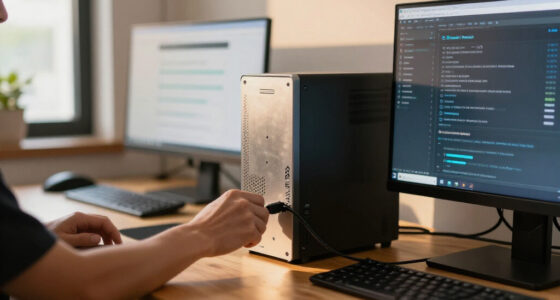
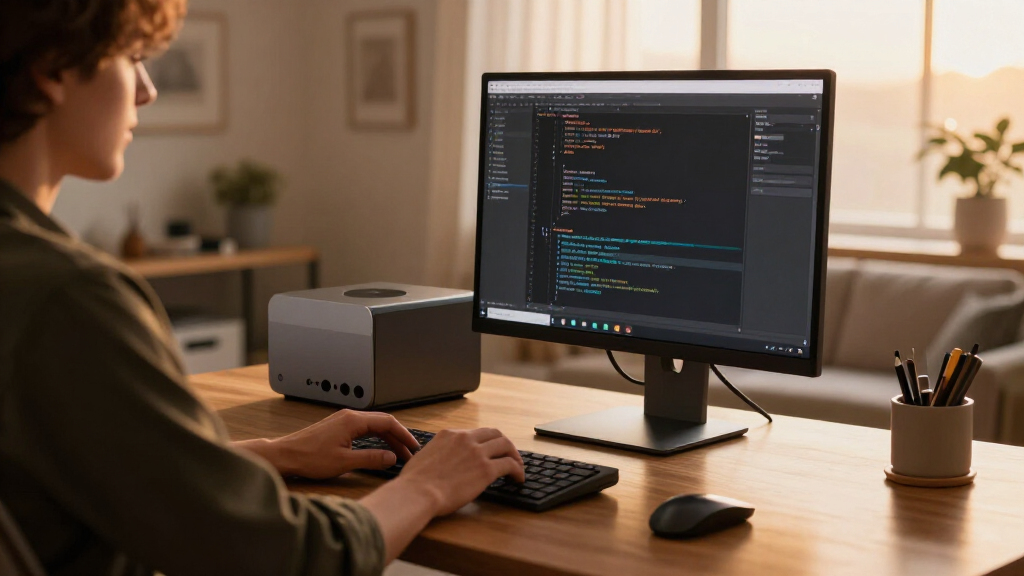
Mac Studio with 512GB unified memory
As an affiliate, we earn on qualifying purchases.
As an affiliate, we earn on qualifying purchases.
Advances in Apple Silicon and AI Hardware
Apple’s recent silicon developments, including the M5 Ultra, are built through a multi-chip architecture that combines multiple dies into a single processor via UltraFusion technology. The integration of neural accelerators into every GPU core enhances AI processing capabilities, with Apple claiming significant improvements over previous generations. The announcement aligns with a broader industry trend toward enabling large model inference on personal devices, though such capabilities have historically been limited by memory and bandwidth constraints. Prior to this, running large models locally was largely confined to specialized hardware or cloud-based solutions.
“The M5 Ultra delivers unprecedented desktop AI capabilities, empowering users to run large models locally with high memory bandwidth and integrated neural accelerators.”
— Apple spokesperson (official statement)
As an affiliate, we earn on qualifying purchases.
Performance and Practical Use Limitations
While loading frontier-scale models locally is now feasible on the Mac Studio, the actual inference speed and throughput for real-world workloads remain uncertain. Independent benchmarks on local inference workloads are awaited, and the current performance figures are based on Apple’s internal tests. Additionally, the maturity of AI tooling on Apple silicon and compatibility with various frameworks continue to evolve, potentially affecting workflow efficiency and usability.
As an affiliate, we earn on qualifying purchases.
Upcoming Benchmarks and Software Maturity
Next steps include independent testing of inference speeds on real workloads to verify Apple’s performance claims. Software ecosystem improvements and updates to AI frameworks optimized for Apple silicon are expected to enhance usability. The late October release of the 512GB model will provide more practical insights into its capabilities for research, development, and privacy-sensitive applications. Users and developers should monitor these developments to assess whether the hardware meets their specific needs.
Apple Silicon AI development tools
As an affiliate, we earn on qualifying purchases.
As an affiliate, we earn on qualifying purchases.
Key Questions
Can the Mac Studio replace a GPU cluster for AI inference?
While the Mac Studio with 512GB memory can load large models locally, its inference speed and throughput are limited compared to dedicated GPU clusters. It is best suited for experimentation and small-scale deployment rather than high-volume production.
How does the performance compare to datacenter hardware?
Apple claims significant performance improvements over previous chips, but real-world inference speeds are likely lower than datacenter accelerators due to bandwidth and compute limitations. Benchmarks on actual workloads are awaited.
Will all AI frameworks run efficiently on this Mac Studio?
AI tooling on Apple silicon has improved but is still maturing. Compatibility and performance depend on the specific framework and workload, with some workflows possibly requiring porting or alternative solutions.
Is this hardware suitable for production deployment?
For small-scale, privacy-sensitive, or experimental use, it can be suitable. However, for large-scale deployment or serving many users, dedicated datacenter hardware remains more appropriate due to throughput limitations.
What are the main limitations of this Mac Studio for AI work?
The primary limitations are inference speed and scalability. While capacity allows large models to be loaded, bandwidth and compute power constrain real-time performance and throughput for multiple simultaneous users.
Source: ThorstenMeyerAI.com
Fall Picks
fall essentials
As an affiliate, we earn on qualifying purchases.