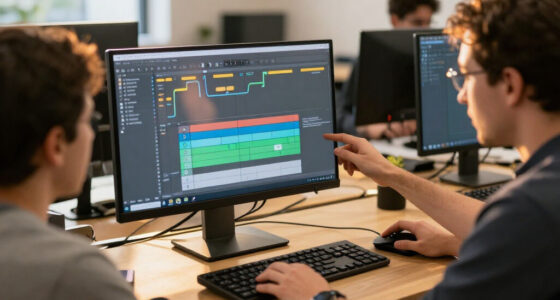
🔍 Read the full analysis: Need A Graphics Card For Work And Play? 10 Picks For 2027 on ThorstenMeyerAI.com

Get business pricing on monitors, keyboards and dev gear
- Business-only prices and quantity discounts
- Tax-exempt purchasing
- Multiple users, one account, clear invoices
TL;DR
ThorstenMeyerAI.com compares 10 graphics cards for gaming, creative workloads and basic display use, spanning newer RTX 50-series and Radeon RX 9000-series models to older budget cards. Its recommendations are use-case dependent; performance, compatibility and driver-support claims are not independently verified in the supplied material.
ThorstenMeyerAI.com has published a 10-card graphics-card guide for buyers balancing gaming, creative work and basic display needs in 2027, ranking newer options such as the ASUS ROG Astral GeForce RTX 5080 alongside midrange, AMD and older budget cards. The guide’s central point is that the right choice depends on workload, available budget and system compatibility—not performance alone. For more detail, see the original graphics-card analysis.
In its buying guide, ThorstenMeyerAI.com names the ASUS ROG Astral RTX 5080 as its overall premium pick, citing ray-tracing performance, cooling and overclocking headroom. The guide presents the ASUS Dual GeForce RTX 5060 Ti series as a midrange option and says the 16GB version uses GDDR7 memory. It also identifies the AMD Radeon RX 9070 XT as an alternative for rasterization-heavy gaming.
For lower-cost and display-focused uses, ThorstenMeyerAI.com describes the Radeon RX 550 and GeForce GT 730 as suited to display output and light tasks rather than current games. The guide includes the VisionTek Radeon RX 580 for workstation setups that need multiple mini-DisplayPort connections, while warning that older hardware can lack support for newer games. The source provides no benchmark results or prices for the listed cards.
ThorstenMeyerAI.com says it assessed architecture, memory bandwidth and thermal efficiency, as well as cooling, connectivity and form factor. The guide favors newer architectures and cards with at least 8GB of VRAM for gaming, and advises buyers to check case clearance, power-supply capacity and the software support required by their creative applications. These are the guide’s stated criteria and recommendations; the supplied material includes no supporting test data. Buyers comparing options can also consult graphics-card picks for AI and gaming.
The 10 picks
- 1
 ASUS ROG Astral GeForce RTX 5080 OC Edition 16GB GDDR7 Graphics CardView on Amazon →
- 2
 PNY NVIDIA GeForce RTX 5080 OC Triple-Fan Graphics CardView on Amazon →
- 3
 ASUS Prime Radeon RX 9070 XT 16GB GDDR6 OC Edition Gaming Graphics CardView on Amazon →
- 4
 ASUS Prime Radeon RX 9070 EVO 16GB GDDR6 OC Gaming Graphics CardView on Amazon →
- 5
 ASUS Dual GeForce RTX 5060 Ti 16GB GDDR7 White OC Edition Graphics CardView on Amazon →
- 6
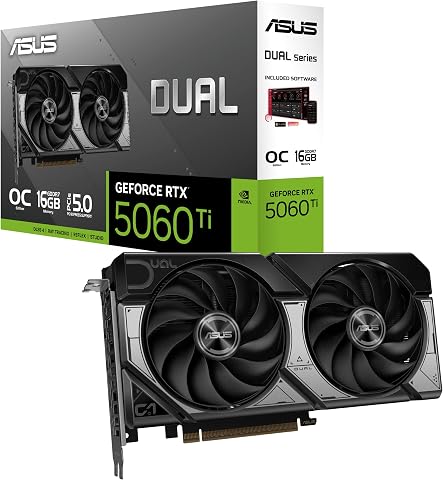 ASUS Dual GeForce RTX 5060 Ti 16GB GDDR7 OC Edition Gaming Graphics CardView on Amazon →
- 7
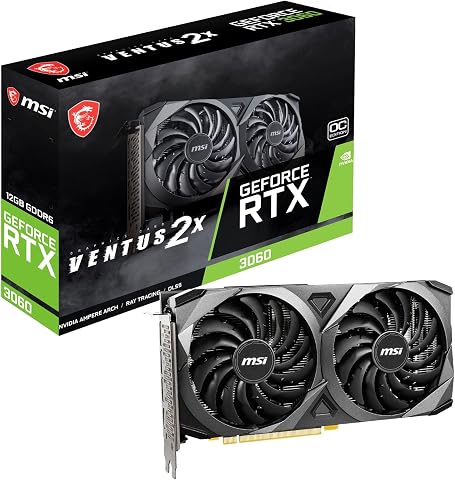 MSI GeForce RTX 3060 Ventus 2X 12G OC V1 Graphics CardView on Amazon →
- 8
 VisionTek AMD Radeon RX 580 8GB Graphics Card with 6 Mini DisplayPort OutputsView on Amazon →
- 9
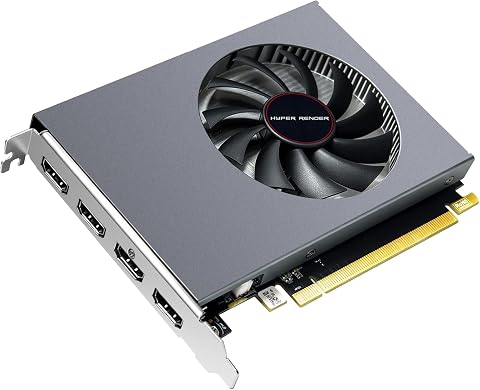 RX 550 4GB GDDR5 Graphics Card 4 HDMI GPU Tarjeta Gráfica 4 Port Video cardView on Amazon →
- 10
 Vandossy GeForce GT 730 4GB GDDR5 Graphics Card with 4 HDMI PortsView on Amazon →
Matching GPUs to Real Workloads
ThorstenMeyerAI.com’s list highlights that a graphics card can serve different purposes: powering high-resolution games, accelerating video or 3D applications, or connecting several monitors. The guide says a high-end model may suit demanding gaming and production work, while older, less expensive cards are not substitutes for modern gaming performance.
The guide’s practical advice is to check the whole system before buying. GPU dimensions, power requirements and application support can determine whether an upgrade works as intended. As the guide’s discussion implies, headline performance or memory capacity alone does not establish a card’s value for a particular workload.
Popular right now

Bose QuietComfort Wireless Noise-Cancelling Headphones, Sandstone

Roborock F25 GT Gen 2 Cordless Wet-Dry Vacuum Mop

De'Longhi Classic Signature Espresso Machine with Adjustable Milk Frother
As an affiliate, we earn on qualifying purchases.
How the Guide Ranks Its Picks
ThorstenMeyerAI.com compares cards from different generations, including NVIDIA’s RTX 50-series, AMD’s RX 9000-series and older models such as the RX 580 and GT 730. The guide argues that newer hardware can support features—including ray tracing and AI-based upscaling—that older cards cannot gain through software updates alone. The source supplies no independent testing to quantify those differences.
The guide also distinguishes between gaming and creator needs. It says NVIDIA’s CUDA and NVENC tools can be relevant to production workflows, while AMD’s Adrenalin software and FSR features are part of its gaming offering. ThorstenMeyerAI.com advises readers to check the specific applications they use, noting that performance and acceleration can vary by software.
Evidence Behind the Rankings
The supplied ThorstenMeyerAI.com article is a buying guide, not a reported lab test. It gives no prices, benchmark data, test methods, publication date or independent verification for its performance and value judgments. Its claims about cooling, overclocking, memory configurations and driver support should be checked against the exact card model and current manufacturer information before purchase.
The title promises 10 picks, but the supplied material does not provide a complete, clearly enumerated list of all 10 distinct models. It names several cards and product families, including RTX 5080 models, but does not establish every selection or distinguish all variants. The guide’s recommendations also do not determine which card is best for a reader’s particular software, games, budget or computer.
Check Models Before Buying
Because ThorstenMeyerAI.com’s guide provides no prices or benchmark results, readers should confirm the exact GPU variant, current price and independent performance results before making a purchase. They should also compare the card’s dimensions and recommended power supply with their PC, and check whether their editing, rendering or AI software supports the vendor’s features.
The supplied source gives no follow-up testing or update schedule. Until more detail is available, its rankings are best treated as a starting point for comparing use cases rather than a verified performance league table.
Key Questions
Which card does the guide recommend for high-end gaming and creative work?
ThorstenMeyerAI.com names the ASUS ROG Astral GeForce RTX 5080 as its premium overall choice, citing ray tracing and cooling. The supplied source does not include benchmark results to independently confirm that ranking.
Is a 16GB graphics card necessary for gaming?
ThorstenMeyerAI.com describes 16GB of VRAM as increasingly useful for high-detail 1440p and 4K gaming, and points to an RTX 5060 Ti version with that capacity. Actual requirements vary by game, resolution and settings; the source does not provide comparative tests.
Are the RX 550 and GT 730 suitable for modern games?
ThorstenMeyerAI.com says these older, budget-oriented cards are better suited to display output and light tasks than modern gaming. Buyers should check the requirements of the specific games and software they plan to use.
What should I check before upgrading my graphics card?
ThorstenMeyerAI.com recommends checking case clearance, power supply capacity and connectors, then verifying support for the applications and games that matter to you. The guide also recommends considering VRAM, cooling and the card’s physical size.
Source: ThorstenMeyerAI.com