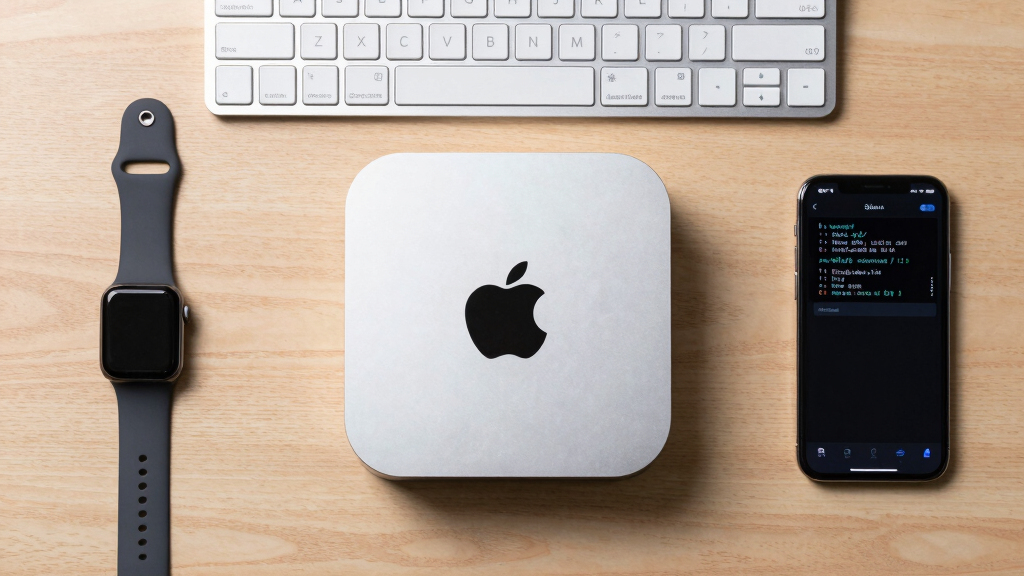

TL;DR
An Apple Silicon executive revealed that demand for AI capabilities in the Mac Mini is increasing, driven by on-device processing needs. The company plans to enhance on-device AI in future Macs, emphasizing privacy and performance.
An Apple Silicon executive confirmed that demand for AI features in the Mac Mini has surged, driven by user interest in on-device processing capabilities. The executive also outlined the company’s plans to expand on-device AI functionalities across future Macs, emphasizing privacy and performance benefits.

Get business pricing on monitors, keyboards and dev gear
- Business-only prices and quantity discounts
- Tax-exempt purchasing
- Multiple users, one account, clear invoices
During a recent interview, an Apple Silicon executive stated that the Mac Mini’s AI demand has increased significantly, mainly due to the adoption of AI-powered applications and the desire for local processing that preserves user privacy. The executive highlighted that Apple is investing in advanced neural processing units (NPUs) integrated into their chips to support this trend.
The executive further explained that Apple’s future Mac designs will prioritize on-device AI capabilities, reducing reliance on cloud services and enhancing security. This aligns with Apple’s broader strategy to embed AI features directly into hardware, ensuring faster performance and better privacy controls for users.
Implications of AI-Driven Hardware Development
This development underscores Apple’s shift toward more powerful on-device AI, which could lead to improved privacy, faster processing, and new functionalities in future Macs. It also indicates a response to increasing consumer demand for AI features that do not compromise security or require constant internet connectivity. For users, this could mean more capable, privacy-focused devices with enhanced AI-driven features.
Popular right now

Bose QuietComfort Wireless Noise-Cancelling Headphones, Twilight Blue

De'Longhi La Specialista Arte Evo Espresso Machine with Grinder

Samsung S85H 48-Inch 4K OLED Smart TV (2026)
As an affiliate, we earn on qualifying purchases.
Apple’s AI Strategy and Silicon Advancements
Over the past few years, Apple has integrated increasingly sophisticated AI capabilities into its Silicon chips, starting with the M1 series and continuing with M2. These chips include dedicated neural engines designed to accelerate AI tasks locally. The demand for AI in the Mac Mini, a compact desktop, reflects broader industry trends toward on-device intelligence.
Previously, Apple has emphasized privacy and security as core values, which now extend to AI processing. The company’s focus on developing custom neural engines aims to support a wide range of AI applications, from voice recognition to image processing, directly on the device.
“The demand for AI features in the Mac Mini has grown rapidly, driven by user interest in local processing that respects privacy. We are committed to enhancing on-device AI capabilities in our future products.”
— Apple Silicon Executive
Unconfirmed Details on Specific AI Features
While the executive confirmed increased AI demand and future plans, specific details about upcoming Mac models, exact hardware specifications, and new AI features remain undisclosed. It is unclear how quickly these enhancements will roll out or which models will be prioritized.
Next Steps in Apple’s AI and Silicon Development
Apple is expected to continue investing in neural engine advancements and integrate new AI features into upcoming Mac releases. Industry analysts anticipate announcements or product updates at upcoming Apple events or press releases, with a focus on privacy-centric AI capabilities.
Key Questions
What is driving the increased AI demand in the Mac Mini?
The rise in AI-powered applications and user interest in local processing that preserves privacy are primary drivers, according to Apple Silicon executives.
Will future Macs have more on-device AI features?
Yes, Apple plans to enhance on-device AI capabilities across future Mac models, emphasizing neural processing units and local AI functionalities.
Are specific AI features or hardware details known?
No, detailed specifications or features for upcoming AI enhancements have not been publicly disclosed and remain under development.
How does this impact user privacy?
By increasing on-device AI processing, Apple aims to reduce reliance on cloud services, thereby enhancing user privacy and data security.
When can we expect new AI features in Macs?
While no official timeline has been announced, industry speculation suggests potential updates at upcoming Apple product events or via press releases in the near future.
Source: hn