
Peer teaching helps you learn statistics by actively explaining concepts to others, which strengthens your understanding and builds confidence. Teaching encourages you to break down complex ideas into simple, relatable terms, making lessons more engaging. It also offers a safe space to ask questions and learn from mistakes. This collaborative approach boosts motivation and enhances retention. Keep exploring, and you’ll discover more ways to make learning statistics both effective and enjoyable.
Key Takeaways
- Teaching others reinforces your understanding and helps identify knowledge gaps in statistical concepts.
- Peer tutoring encourages active learning through discussion, questioning, and real-world applications.
- Preparing to teach enhances organization, critical thinking, and retention of statistical ideas.
- Creating a supportive environment fosters confidence, motivation, and enjoyment in learning statistics.
- Both tutors and learners benefit from improved communication skills and a deeper mastery of statistical topics.
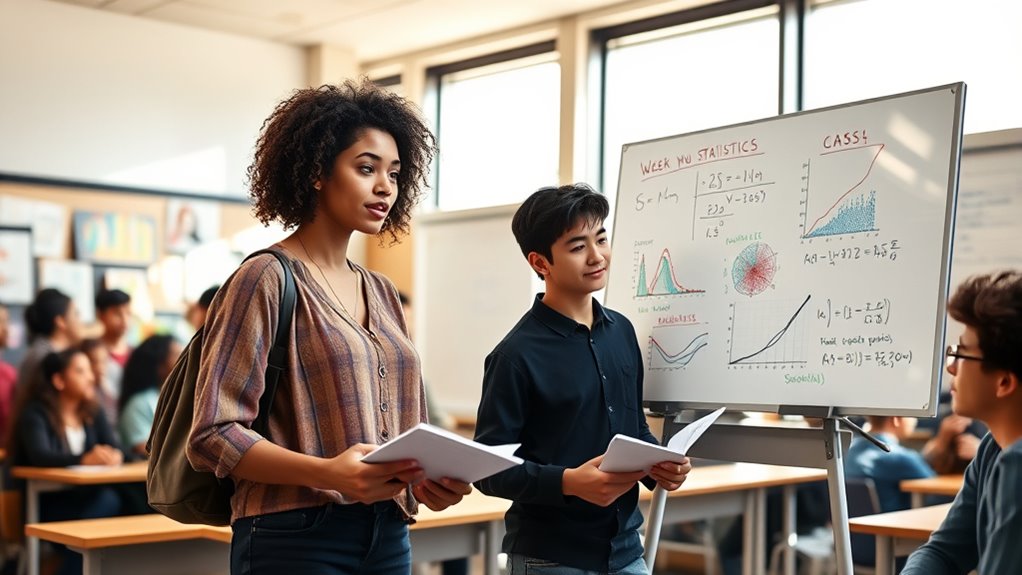
Have you ever wondered how students can learn better by teaching their peers? The answer often lies in the power of collaborative learning, a teaching strategy where students actively engage with each other to deepen their understanding of complex subjects like statistics. When you teach someone else, you’re not just repeating information—you’re processing it more thoroughly, which helps solidify your knowledge. Collaborative learning encourages you to work together, exchange ideas, and clarify misconceptions, making the learning experience more interactive and meaningful. As you prepare to teach, you’re likely to identify gaps in your own understanding and address them, which boosts your confidence and mastery of the material.
Teaching peers reinforces your understanding and makes learning statistics more interactive and effective.
Using effective teaching strategies in peer teaching sessions enhances this process even further. For example, breaking down difficult statistical concepts into simple, relatable examples allows both you and your peer to grasp the ideas more easily. When you encourage discussion, ask questions, and provide real-world applications, you’re not only helping your peer learn but also reinforcing your own comprehension. These strategies foster active participation, transforming passive memorization into active problem-solving. They also promote critical thinking, as you analyze how best to explain concepts like probability, hypothesis testing, or regression analysis in ways that resonate with your peer’s learning style.
Collaborative learning through peer teaching also cultivates a supportive environment where mistakes are viewed as opportunities to learn rather than failures. When you and your peer work together to solve statistical problems, you create a safe space for asking questions and exploring alternative approaches. This shared effort boosts motivation and engagement, making the learning process more enjoyable and less intimidating. It also helps develop essential skills like communication, teamwork, and adaptability—traits that benefit you beyond the classroom.
Furthermore, teaching others enhances your ability to organize information clearly and logically. When you prepare to explain statistical concepts, you’re forced to structure your knowledge coherently, which reinforces your understanding. This process transforms you from a passive recipient of information into an active participant in your education. It’s a dynamic way to learn, where you’re constantly reflecting on what you know and how best to convey it. Whether you’re tutoring classmates or working through problems together, peer teaching makes learning statistics more engaging, effective, and memorable. Ultimately, by embracing collaborative learning and employing thoughtful teaching strategies, you turn the challenge of mastering statistics into an empowering experience that benefits both you and your peers. Self-understanding gained through such activities can further enhance your overall learning experience and personal growth.
Frequently Asked Questions
How Can Peer Teaching Improve My Own Understanding of Statistics?
Peer teaching boosts your understanding of statistics by forcing you to explain concepts clearly, which improves concept retention. As you teach others, you identify gaps in your knowledge and clarify your thinking. This process also builds your confidence, making you more comfortable with challenging topics. Teaching reinforces your learning and helps you see different perspectives, ultimately strengthening your grasp of statistical concepts and enhancing your overall skills.
What Skills Are Necessary to Become an Effective Peer Tutor?
Did you know that 85% of effective tutors possess strong communication skills? To be an effective peer tutor, you need clear communication skills, patience, and empathy. These qualities help you explain complex concepts simply, support struggling students, and foster a positive learning environment. Your ability to listen actively and adapt your teaching style makes a significant difference, ensuring your peers understand and retain statistical concepts more effectively.
How Does Peer Teaching Compare to Traditional Classroom Learning?
Peer teaching fosters collaborative learning and boosts student engagement more effectively than traditional classroom learning. When you tutor others, you actively participate in explaining concepts, which deepens your understanding and encourages you to think critically. This shared, interactive environment makes learning more relatable and motivating, helping both you and your peers grasp material better. Overall, peer teaching creates a dynamic, engaging experience that enhances comprehension through collaboration.
Are There Specific Topics in Statistics Better Suited for Peer Tutoring?
Think of data visualization and probability concepts as puzzles you can solve more easily when you teach others. You’ll find these topics are well-suited for peer tutoring because explaining complex charts or probability scenarios helps clarify your understanding. I once helped a classmate grasp a confusing probability problem through visualization, and it clicked instantly. These topics benefit from peer teaching, as explaining them makes the concepts stick for both of you.
What Challenges Might I Face When Tutoring Peers in Statistics?
When tutoring peers in statistics, you might face challenges like group dynamics, where differing skill levels or personalities disrupt the flow of learning. Motivation challenges can also arise if students feel overwhelmed or uninterested. To overcome these, foster an inclusive environment, tailor your explanations to individual needs, and encourage active participation. Staying patient and adaptable helps guarantee everyone stays engaged and benefits from the tutoring experience.
Conclusion
By teaching others, you unleash a superpower that transforms your understanding of statistics from ordinary to extraordinary. Peer teaching turns complex concepts into clear, memorable insights and makes learning feel like an adventure. As you guide your peers, you’ll discover that helping others isn’t just rewarding—it’s a game-changer that can revolutionize your own knowledge. Embrace the challenge, and watch your confidence and skills skyrocket faster than you ever imagined.