When choosing between a standing desk and a sitting desk, consider your comfort and productivity. Standing desks can boost your energy and focus, while sitting desks offer necessary lumbar support for long hours. Balancing both setups and incorporating movement can enhance your overall well-being. Personal preference plays a big role, so experimenting with different configurations is key. Want to find the perfect fit for your work style? There’s more to explore on how to optimize your workspace!

Get business pricing on monitors, keyboards and dev gear
- Business-only prices and quantity discounts
- Tax-exempt purchasing
- Multiple users, one account, clear invoices
Key Takeaways
- Standing desks can enhance energy and focus, potentially boosting productivity for some individuals.
- Personal preference significantly influences productivity; some may perform better while sitting.
- Adjustable desks allow users to find their optimal balance between sitting and standing.
- Regular movement and stretching improve overall well-being, enhancing productivity regardless of desk type.
- Ergonomic setups are crucial for comfort and can prevent strain during prolonged work sessions.

Have you ever wondered which is better for your health: a standing desk or a sitting desk? You’re not alone in this debate, and the choice you make can greatly affect your overall well-being and productivity. Both options have their merits, but understanding the ergonomic benefits and health impacts can help you decide what suits you best.
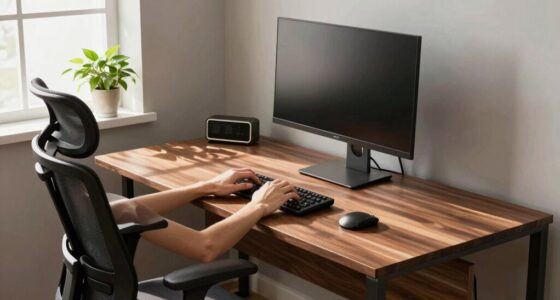
Standing desks offer a variety of ergonomic benefits. By allowing you to maintain a more natural posture, they can help reduce the risks of back pain and improve your posture. When you stand, you engage your core muscles, which can lead to better alignment and reduced strain on your spine. On the other hand, sitting desks can also be comfortable, especially if you have a chair designed with proper lumbar support. The key is to find a setup that keeps your body aligned and minimizes discomfort.
Standing desks promote natural posture and core engagement, reducing back pain while well-designed sitting desks offer comfort and support.
When it comes to health impacts, standing desks have gained popularity due to their potential to decrease the risks associated with prolonged sitting. Research suggests that standing more often can lower your chances of developing serious health conditions like obesity, diabetes, and cardiovascular disease. However, standing for long periods can also lead to fatigue and discomfort in your legs and feet. Balancing your time between sitting and standing can maximize the benefits while minimizing any drawbacks. Incorporating movement and stretching into your routine can further improve your overall well-being when using either type of desk. Additionally, being aware of ergonomic fundamentals can help you create a setup that supports your health and comfort effectively. Understanding muscle engagement and how it impacts your posture is essential for preventing strain and ensuring a comfortable working experience. Paying attention to ergonomic principles can make a significant difference in preventing strain and discomfort during prolonged work sessions.
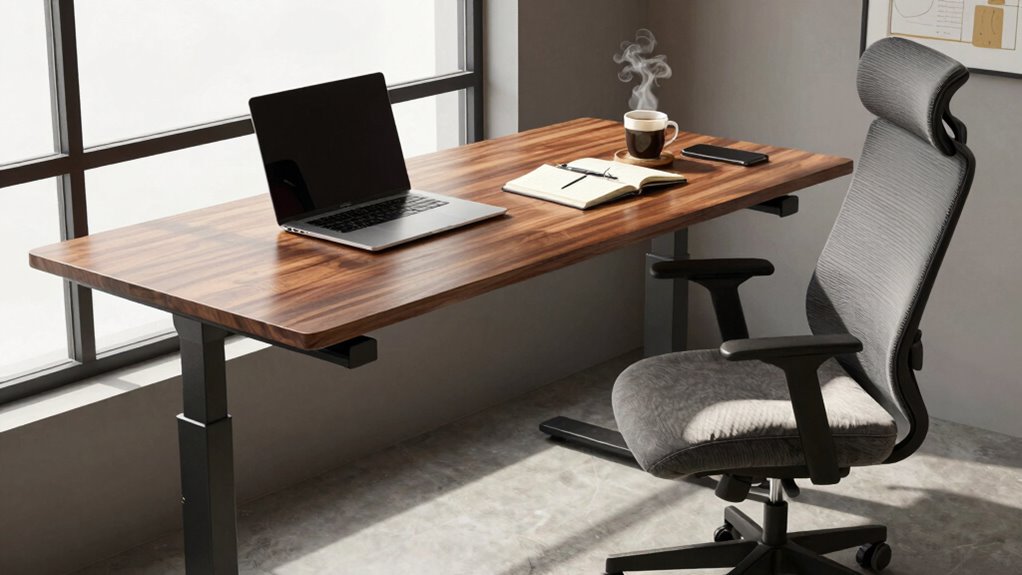
You might also be curious about how these desks affect your productivity. Many people report a productivity boost when using standing desks, citing increased energy levels and improved focus. When you’re standing, you might feel more engaged and less likely to drift into daydreaming. Conversely, some individuals find that sitting allows them to concentrate better, especially during more mentally taxing tasks. It ultimately comes down to your personal preference and working style. Trying out an adjustable desk setup can help you discover what best supports your work habits and comfort.
As an affiliate, we earn on qualifying purchases.
Frequently Asked Questions
Can Standing Desks Cause Any Health Issues Over Time?
Yes, standing desks can cause health issues over time. If you don’t pay attention to your posture, you might face discomfort or strain in your back and neck. Additionally, standing for long periods can lead to fatigue factors like leg pain and swelling. It’s essential to alternate between sitting and standing to maintain a healthy posture and avoid these potential problems. Listen to your body and adjust your setup as needed.
How Do I Choose the Right Height for My Standing Desk?
To choose the right height for your standing desk, adjust it so your elbows are at a 90-degree angle when typing. Your wrists should remain straight, and your monitor should be at eye level to avoid strain. Prioritize desk ergonomics and personal comfort—everyone’s ideal height varies. Experiment with different settings until you find what feels best for you, allowing for comfortable posture and reducing fatigue throughout your workday.
Are There Any Specific Exercises for Desk Workers?
Think of your body as a well-tuned instrument; desk stretches and posture tips are the notes that keep it harmonious. Incorporate gentle neck rolls and shoulder shrugs throughout your day to ease tension. Stand tall, engage your core, and remember to align your ears over your shoulders. A quick set of wrist stretches can also keep your fingers dancing across the keyboard, ensuring you play the productivity symphony perfectly!
What Accessories Enhance Productivity at a Standing Desk?
To enhance your productivity at a standing desk, invest in monitor arms for ideal screen positioning, and use anti-fatigue mats to reduce discomfort. Cable management keeps your workspace tidy, while ergonomic footwear supports your feet during long hours. Don’t overlook task lighting, which improves visibility and focus, and consider a footrest for added comfort. These accessories can greatly boost your efficiency and make your standing desk experience more enjoyable.
How Can I Transition to a Standing Desk Gradually?
Shifting to a standing desk is like climbing a mountain; you don’t rush to the summit. Start by making ergonomic adjustments to your desk height, ensuring comfort. Stand for short intervals, maybe 15 minutes, then gradually increase as you build endurance. Listen to your body—rest when needed. Just as a tree grows strong over time, your productivity will flourish with this gradual approach, allowing you to thrive in your new workspace.
ergonomic office chair with lumbar support
As an affiliate, we earn on qualifying purchases.
As an affiliate, we earn on qualifying purchases.
Conclusion
In the end, whether you choose a standing desk or a sitting desk, remember it’s about finding your balance. Think of your workspace as a dance floor—sometimes you need to sway while standing, and other times, it’s time to sit back and enjoy the rhythm. Listen to your body and let it guide you. Whichever desk you pick, it’s the harmony between movement and stillness that truly fuels your productivity.
desk converter for sitting and standing
As an affiliate, we earn on qualifying purchases.
As an affiliate, we earn on qualifying purchases.
As an affiliate, we earn on qualifying purchases.
Columbus Day / Indigenous Peoples' Day Picks
long weekend sales
As an affiliate, we earn on qualifying purchases.