
TL;DR

Get business pricing on monitors, keyboards and dev gear
- Business-only prices and quantity discounts
- Tax-exempt purchasing
- Multiple users, one account, clear invoices
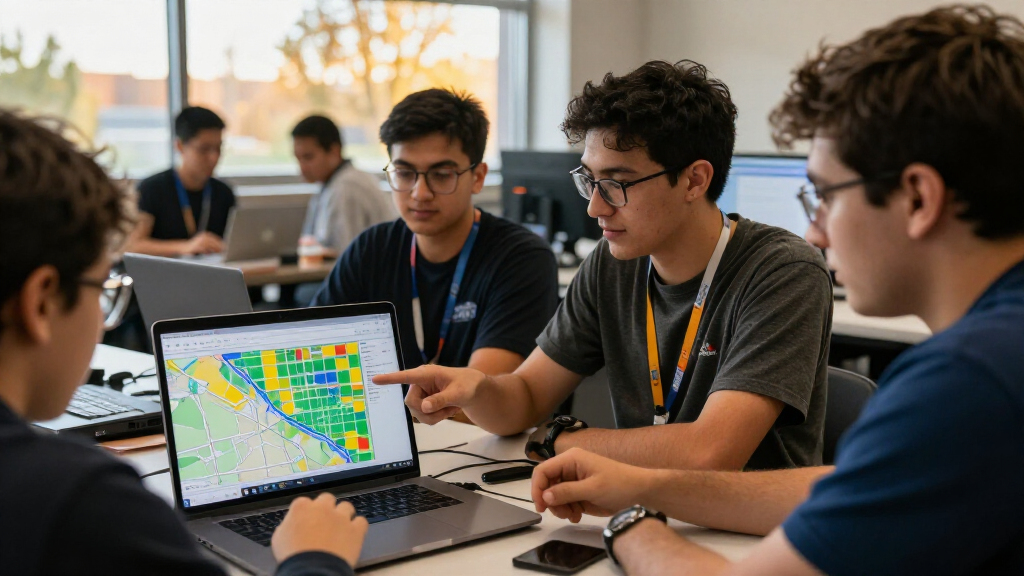
Google hosted its second annual Colorado Impact Hackathon at its Boulder offices with CU Boulder and the Colorado Energy Office. Student teams presented concepts for helping homeowners plan solar installations, managing batteries during wildfire-related shutoffs and predicting where the grid may need hardening.
Students joined Google’s second annual Colorado Impact Hackathon at the company’s Boulder offices to develop ideas for a cleaner, more secure and resilient electric grid. The event, held with CU Boulder and the Colorado Energy Office, named projects focused on home solar planning, battery storage during wildfire-related shutoffs and targeted grid hardening.
Google Senior Staff Data Scientist John Tribbia reported the event on October 29, 2026. Participants were asked how Colorado could create a clean, secure and resilient electric grid. Google’s account identifies three winning projects but does not describe the judging criteria, the number of participants or whether the concepts will receive funding or be developed beyond the hackathon.
SolarSnap took first place. Google described it as an AI app that uses a homeowner’s phone camera to help identify an ideal solar-panel setup. The report does not provide details on how the app estimates a suitable installation, what information it uses or whether the team has built a working product.
Grid Watch, the second-place project, was described as an AI-managed battery network intended to keep power on during wildfire shutoffs while reducing electricity costs. Third-place Grid Guard would provide predictive capabilities for targeted grid hardening. Google did not publish technical specifications, performance results or plans for pilots involving any of the three ideas.
Student Ideas for Grid Resilience
The projects address different points in Colorado’s energy system: household adoption of solar, backup power during wildfire-related shutoffs and decisions about where to strengthen grid infrastructure. Those are practical concerns for residents and energy planners, particularly where power systems must respond to wildfire risks while supporting a cleaner electricity supply.
The event brought together students, public-sector leaders and technology professionals, creating a venue to propose solutions and discuss state energy needs. But the projects remain hackathon concepts in the information Google released. Their selection does not establish that they are ready for deployment or that they will change utility operations, household costs or outage outcomes.
Popular right now

Bose QuietComfort Wireless Bluetooth Headphones with Active Noise Cancellation, Mic, USB‑C Charging, Deep Bass, 24‑Hour Battery – White Smok

Dyson Car+Boat Cordless Handheld Vacuum

Samsung 42-Inch S90H OLED 4K Smart TV Bundle
As an affiliate, we earn on qualifying purchases.
A Second Colorado Impact Hackathon
Google said this was the second annual Colorado Impact Hackathon and that it partnered with CU Boulder and the Colorado Energy Office. Its stated challenge centered on a clean, secure and resilient grid in Colorado, linking student work to energy and reliability issues in the state.
At the event, Colorado Attorney General Phil Weiser and CU Boulder Vice Chancellor for Sustainability Andrew Mayock highlighted the importance of innovation to Colorado’s clean-energy future, according to Google. The company also connected the work to wildfire-risk mitigation and energy backlogs, but did not provide figures or further explanation about those issues in its report.
“How can we create a clean, secure, and resilient electric grid in Colorado?”
— Google, in its October 29, 2026 report
From Winning Concepts to Deployment
Google’s report does not say whether any winning team will continue developing its project, receive investment or work with utilities or state agencies. It also provides no evidence that SolarSnap, Grid Watch or Grid Guard has been tested under real-world conditions.
For Grid Watch, details such as battery locations, ownership, coordination and how the system would operate during a shutoff are not specified. The report likewise does not explain how Grid Guard would identify hardening priorities or how SolarSnap would assess a home’s solar suitability. Costs, timelines, technical feasibility and expected benefits remain unreported.
Whether Teams Continue Development
The next developments to watch are whether the student teams or event partners announce further work, including prototypes, utility or government partnerships, funding or pilot programs. Google’s published account names the winners but does not set out a follow-up schedule or promise further support.
Until additional details are released, the confirmed outcome is the hackathon and its project awards—not implementation on Colorado’s electric grid. Any claims about future reliability, savings or emissions benefits would need to be assessed against project plans and results that have not yet been shared.
Key Questions
What was the Colorado Impact Hackathon?
It was Google’s second annual hackathon at its Boulder offices, organized with CU Boulder and the Colorado Energy Office. Students worked on ideas addressing Colorado’s electric-grid challenges.Which projects won?
SolarSnap placed first, Grid Watch second and Grid Guard third, according to Google.What does each project propose?
Google described SolarSnap as an AI app to help homeowners plan solar panels using a phone camera; Grid Watch as an AI-managed battery network for wildfire-related shutoffs and electricity costs; and Grid Guard as a tool for predictive, targeted grid hardening.Will the winning projects be deployed?
Google’s report does not say whether the projects will be developed further, tested or deployed. Their selection at the hackathon is not confirmation of implementation.Source: blog.google