📊 Full opportunity report: How Restaurant Groups Can Review Supplier Invoices on IdeaNavigator AI — validation score, market gap, and execution plan.

Get business pricing on monitors, keyboards and dev gear
- Business-only prices and quantity discounts
- Tax-exempt purchasing
- Multiple users, one account, clear invoices
TL;DR
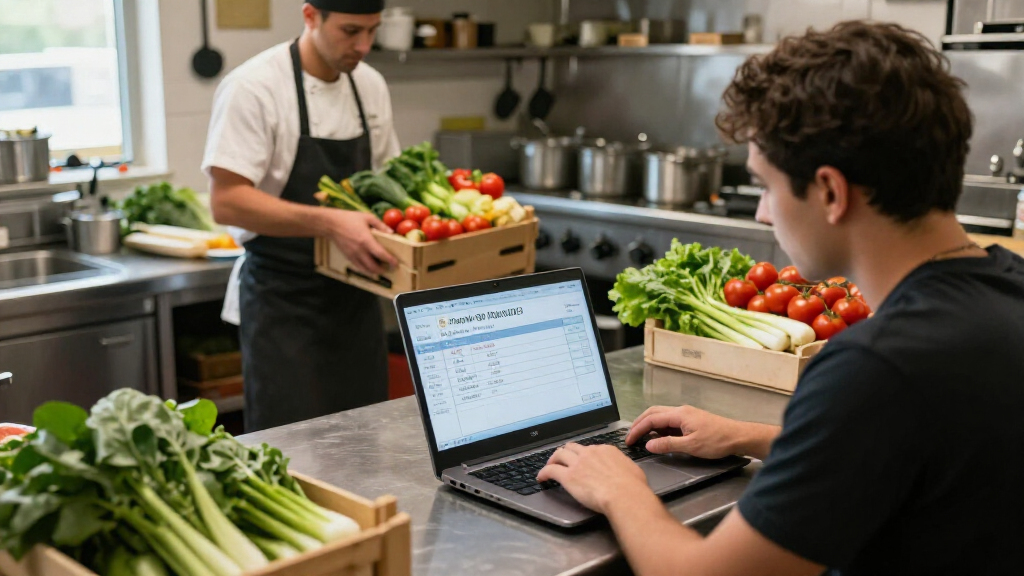
A proposed supplier invoice auditor would help restaurant groups compare what they ordered, received and were billed against contract or quoted prices. The idea is to test it with a 90-day review of paid invoices at three groups; no product launch, pilot results or recovered-credit figures are provided.
IdeaNavigator AI has proposed an invoice-auditing workflow for independent restaurant groups with multiple locations, designed to compare supplier bills with orders, deliveries and agreed prices. The proposal calls for a 90-day review of paid invoices at three groups before deciding whether documented discrepancies support a paid service; no pilot results or product launch are reported.
The proposed tool is aimed at a director of purchasing or controller managing broadline and specialty food and beverage suppliers. It would take in invoices through electronic data interchange where available, or through PDF and photo processing, then match invoice lines with a restaurant group’s order guide, contracts or quote sheets. The comparison would look across what was ordered, received, billed and agreed in price.
The system is intended to flag several kinds of mismatch: an agreed price that did not appear on the invoice, a full charge for a short-shipped case, a substitution billed at a higher price, or a line price that rose between orders. The proposal also includes drafting supplier credit requests and tracking them until a credit appears on a later invoice. Those are planned functions, not verified capabilities of an existing service.
The suggested business model combines a monthly fee per location with an optional contingency fee tied to recovered credits. To test demand, the proposal recommends reviewing 90 days of paid invoices and contracts or quote sheets for three restaurant groups, totaling discrepancies and comparing documented credits per location with a potential subscription price. No fee, customer commitment or recovery rate is specified.
The Cost of Invoice Errors
For a restaurant group processing hundreds of supplier invoices a week, small line-level errors can be difficult to spot individually and may affect food costs across multiple locations. A missed contract price, a case billed despite a short delivery, or an unapproved price increase can reduce margin if the group pays the invoice without reconciling it.
The proposal’s business case depends on whether the audit finds enough recoverable value to outweigh its subscription cost and the work required to resolve exceptions. A flagged discrepancy is not automatically a confirmed overcharge: staff may need to check delivery records, substitution approvals and the applicable contract before requesting a credit. The 90-day test is intended to measure documented discrepancies, rather than assume that every flagged amount will be recovered.
That distinction matters to controllers and purchasing teams evaluating whether to adopt another system. Useful evidence would include the amount confirmed as due, the credits actually issued, the time required to pursue them and how consistently the process works across suppliers and locations. The proposal provides a test framework, but no evidence yet that the approach produces a positive return.
Popular right now

LG 85-Inch QNED73B Mini LED 4K Smart TV (2026)

Apple AirPods Pro 3 Wireless Earbuds with Active Noise Cancellation
Dreame G10 Pro Wet and Dry Vacuum Mop
As an affiliate, we earn on qualifying purchases.
Food-Cost Pressures Behind the Proposal
The proposal cites the USDA Economic Research Service’s September 25, 2026 Food Price Outlook, which forecast retail beef and veal prices to rise 9.4% and wholesale beef prices to rise 8.5% in 2026. It also cited a 3.5% forecast increase in food-away-from-home prices. These are forecasts for the stated period, not measurements of what every restaurant group paid or of the size of any invoice error.
The comparison helps explain the proposal’s timing: if supplier costs rise faster than restaurants can raise menu prices, purchasing errors may put additional pressure on margins. The proposed response is an administrative check on bills, not a claim that invoice review can offset broader food-price increases. The figures also do not establish that the suggested tool has been built, tested or endorsed by the USDA.
Pilot Results Have Not Been Reported
No completed audit, participating restaurant groups, product release or recovered-credit totals are identified. It is also unclear how the proposed tool would handle inconsistent product descriptions, missing delivery records, supplier-specific billing formats or disputes over substitutions and price changes.
The proposal does not specify the service’s price, how much human review would be needed, or how it would verify that a flagged discrepancy is valid before a credit request is sent. The cited USDA figures are forecasts and do not establish the likely savings for any particular operator. Until a test reports confirmed credits and costs, the financial case remains unproven.
A Three-Group Review Would Test Value
The next step set out in the proposal is a 90-day lookback across three restaurant groups, using paid invoices alongside contracts or quote sheets. The review would total charges above agreed prices, cases billed in full despite being short-shipped, and price increases between orders. The proposal says to proceed if documented credits per location clearly exceed the planned subscription fee, though it does not set that fee or a precise threshold.
A useful follow-up would report both flagged amounts and credits actually issued, along with the time spent checking and resolving cases. Until those results are available, restaurant groups can treat the workflow as a proposed procurement-control idea rather than a demonstrated savings product.
Source: IdeaNavigator AI
Key Questions
What would the proposed restaurant invoice auditor check?
It would compare supplier invoices with orders, delivery records and agreed prices, flagging possible price mismatches, short-ships billed in full, higher-priced substitutions and price increases between orders.
Is the invoice-auditing tool already available?
The information provided describes a proposed workflow. It does not confirm that a product has launched or that a pilot has been completed.
How would restaurant groups test whether it is worthwhile?
The proposed test is a 90-day review of paid invoices and contracts or quote sheets at three restaurant groups. It would compare documented discrepancies and credits per location with a planned subscription fee.
Would every flagged invoice discrepancy lead to a credit?
No such result is established. A flag would need to be checked against records such as delivery receipts, approved substitutions and applicable prices; the proposal reports no credit totals or recovery rate.
Source: IdeaNavigator AI