📊 Full opportunity report: The license. Why the AI content market pays the brand-name corpus and strands the long tail. on ThorstenMeyerAI.com — validation score, market gap, and execution plan.

TL;DR

Large publishers secure licensing deals worth hundreds of millions, while small publishers are excluded, revealing a structural asymmetry. Collective licensing may be the only way to address this imbalance.

Large publishers have secured exclusive licensing agreements with AI companies worth hundreds of millions of dollars, while small publishers remain largely excluded from this market, confirming a structural imbalance in the AI content licensing landscape.

Recent disclosures reveal that major publishers such as News Corp, the Associated Press, and leading newspapers have negotiated multi-year licensing deals with AI firms like OpenAI and Meta, often exceeding $50 million annually. These agreements give large publishers a significant financial advantage and leverage, rooted in their brand-name, high-trust archives.

Meanwhile, small publishers and niche content creators have not secured comparable deals. Their content, abundant and less distinctive, is viewed as interchangeable training data, which AI companies can access without direct licensing. This asymmetry reinforces a winner-take-all dynamic, where the value flows to the large, recognizable content repositories, and the long tail of smaller publishers receives little to no compensation.

Experts argue that this pattern replicates existing market inequalities, with licensing reinforcing the dominance of large brands and marginalizing smaller players. While collective licensing proposals are gaining traction, they remain unproven at scale and face opposition from platforms and legal hurdles, leaving the small publishers vulnerable to continued marginalization.

The License — Thorsten Meyer AI
LICENSE
● DISPATCH / MAY 2026
THORSTEN MEYER AI · POST-WIRE · § 04
POST-WIRE · 04
PUBLISHER / LICENSE
Essay · Publisher-Side Licensing Forensic · 2026-05-30

The license.
Why the AI content market
pays the brand-name corpus
and strands the long tail.

When AI severed the referral, licensing looked like the escape. It is — for the publishers who needed it least, and closed to the ones who needed it most.
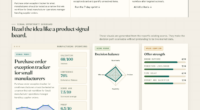
The disclosed deals are large and exclusively large publishers’ deals: News Corp $250M+/5yr (OpenAI) and ~$50M/yr (Meta), Reddit $60-70M/yr, academic $10-23M — and no deal under $10M has been publicly disclosed. The pattern inverts the harm: the referral collapse hit the small publisher hardest (−60% vs −22%); the licensing escape is open almost exclusively to the large publisher. Underneath is a leverage asymmetry — a brand-name archive is scarce and worth licensing; a niche site’s content is one interchangeable drop in a training set the AI company can assemble without it. The structural argument: the licensing market that emerged as the answer to the referral collapse reproduces the same asymmetry it was meant to solve — value flows to the corpus with leverage, the long tail provides the training and grounding data for free, and receives a citation that does not pay. The only correction is collective or statutory licensing — real, advancing, and not within the small publisher’s power to build.
$10M
The floor — no disclosed
licensing deal below it
$250M
News Corp / OpenAI over 5 years ·
the large-publisher reality
~200x
OpenAI’s Nvidia commitment vs its
largest licensing deal · a rounding error
50%
ProRata revenue-share — the long
tail’s most direct shot, via aggregation
THE LICENSE· CONTENT FOR PAYMENT REPLACING CONTENT FOR TRAFFIC· NEWS CORP $250M+/5YR · REDDIT $60-70M/YR· NO DISCLOSED DEAL UNDER $10 MILLION· A WINNER-TAKE-ALL MARKET WITH A HARD FLOOR· SCARCE BRANDED CORPUS HAS LEVERAGE· INTERCHANGEABLE CONTENT HAS NONE· THE SAME BRAND THAT SURVIVED THE REFERRAL COLLAPSE· SMALL PUBLISHER = THE FREE GROUNDING LAYER· TRAINED ON + RAG-SCRAPED · PAID FOR NEITHER· A CITATION THAT DOES NOT PAY· ANTHROPIC $1.5B SETTLEMENT = THE LEVERAGE PRECEDENT· PRORATA 50% REVENUE-SHARE · MICROSOFT MARKETPLACE· EU / WIPO STATUTORY LICENSING · THE BRUSSELS EFFECT· AGGREGATION IS THE ONLY ROUTE TO LONG-TAIL LEVERAGE· THE MARKET WORKS CORRECTLY · AND NEVER PAYS THE TAIL· THE LICENSE· CONTENT FOR PAYMENT REPLACING CONTENT FOR TRAFFIC· NEWS CORP $250M+/5YR · REDDIT $60-70M/YR· NO DISCLOSED DEAL UNDER $10 MILLION· A WINNER-TAKE-ALL MARKET WITH A HARD FLOOR· SCARCE BRANDED CORPUS HAS LEVERAGE· INTERCHANGEABLE CONTENT HAS NONE· THE SAME BRAND THAT SURVIVED THE REFERRAL COLLAPSE· SMALL PUBLISHER = THE FREE GROUNDING LAYER· TRAINED ON + RAG-SCRAPED · PAID FOR NEITHER· A CITATION THAT DOES NOT PAY· ANTHROPIC $1.5B SETTLEMENT = THE LEVERAGE PRECEDENT· PRORATA 50% REVENUE-SHARE · MICROSOFT MARKETPLACE· EU / WIPO STATUTORY LICENSING · THE BRUSSELS EFFECT· AGGREGATION IS THE ONLY ROUTE TO LONG-TAIL LEVERAGE· THE MARKET WORKS CORRECTLY · AND NEVER PAYS THE TAIL·
FIG. 01 — THE ESCAPE ROUTE · WHO CAN WALK THROUGH IT
Licensing is a sound answer to the referral collapse — and the roster is a directory of the largest media companies on earth
Content for payment, replacing content for traffic — for the publishers who can command a fee
$250M+
News Corp · OpenAI
Over 5 years (cash + credits); WSJ, NY Post, Times of London, The Australian
~$50M/yr
News Corp · Meta
Plus Reach–Amazon, AP–Google, AFP–Mistral, Guardian/FT/Vox–OpenAI…
$60-70M/yr
Reddit
The branded-corpus premium — a distinct, high-volume training source
$10-23M
Academic publishers
Still firmly inside the eight-figure band the disclosed market lives in
OpenAI alone has 18+ publisher deals; every major platform (OpenAI, Google, Microsoft, Meta, Amazon, Perplexity, Mistral) has signed partners. The structure is typically a fixed fee for archive/training access plus performance payments tied to surfacing, with attribution and tech access in exchange. The escape route is real. The roster answers who can take it — the publishers with brand-name archives and negotiating teams, which is to say, not the long tail the referral collapse hit hardest.
FIG. 02 — THE LEVERAGE ASYMMETRY · WHY A MARKET PAYS THE BRAND, NOT THE TAIL
Not bias or oversight — the structure of leverage
A market pays for scarcity and leverage; the small publisher has neither
The large publisher
A scarce branded corpus
There is one Wall Street Journal, one AP. The AI company cannot reconstruct it from other sources — so it pays. And a citation of a trusted brand is worth paying for.
vs
scarcity

leverage

a fee
The small publisher
An interchangeable corpus
One of millions of similar pages. The AI company can answer without any single niche site — abundance destroys leverage, so it pays nothing.
This is the market functioning correctly, not a fixable flaw: the scarce, branded, trusted archive commands a fee; the abundant, interchangeable, unbranded page does not. And because brand recognition is exactly what survived the referral collapse, the licensing market pays precisely the publishers who were already insulated — and ignores precisely the ones who were not. The asymmetry compounds.
FIG. 03 — THE WINNER-TAKE-ALL DATA · A MARKET WITH A HARD FLOOR
The disclosed market begins at $10 million and concentrates at the top of the publisher distribution
Disclosed annual / multi-year licensing values by publisher tier
News Corp / OpenAIover 5 years
$250M+
Redditannual
$65M
News Corp / Metaannual
$50M
Academic publishersper deal
$10-23M
No content-licensing deal under $10 million has been publicly disclosed. A deal sized for a small publisher would fall below the threshold at which deals are even announced. Even the biggest are rounding errors to the labs — OpenAI’s ~$100B Nvidia commitment is ~200x its largest licensing deal; Anthropic’s $1.5B settlement was 44% of the entire 2025 training-data market.
FIG. 04 — THE FREE GROUNDING LAYER · WHAT THE SMALL PUBLISHER PROVIDES
The long tail is not outside the AI economy — it is the unpaid substrate of it
Content valuable enough to use, abundant enough not to pay for — the definition of a commodity input
The large publisher provides
A scarce corpus → a license
A branded archive the AI company pays to train on and be seen citing. A license + a citation.
The small publisher provides
The free grounding layer → a citation
Trained on (the basis of the lawsuits) and RAG-scraped in real time to ground the answer — paid for neither. Only a citation, which pays nothing.
The content does double duty — training the model and grounding the answer that replaces the visit — and is paid for neither. The AI companies pay the large publishers for the scarce branded corpora and take the abundant interchangeable long tail for free as the grounding substrate. The small publisher grounds the answers the large publishers get paid to be cited in — exactly the commodity-input position the first Post-Wire dispatch warned the identical paragraph was heading toward.
FIG. 05 — THE ONLY REAL ALTERNATIVE · COLLECTIVE & STATUTORY LICENSING
The only mechanism that could price the long tail in — real, advancing, and not within the small publisher’s power to build
Aggregate un-negotiable small claims into one negotiable collective claim — or pay by right instead of leverage
Collective marketplace
ProRata · 50% rev-share
News/Media Alliance members license into Gist.ai on a 50% revenue share. Aggregation lowers the per-publisher transaction cost below the prohibitive floor.
Brokered marketplace
Microsoft’s platform
Publishers post content + terms; developers license; Microsoft takes a cut. Lowers the fixed deal cost that excluded the small publisher — in principle, below $10M.
Statutory licensing
EU · WIPO · LatAm
Pay publishers automatically for content used, priced by regime — like music royalties. The only mechanism that pays the tail by right, not by leverage.
All real, all advancing — but none proven at scale. The platforms fought and weakened earlier bargaining-code laws (Australia) all over the world; statutory regimes depend on new law or favorable verdicts; there is still no standardized model for pricing content. Europe’s collecting-society tradition makes statutory licensing most achievable there — and the Brussels Effect could propagate it to exactly the kind of European niche-publisher operation the individual-deal market ignores. The small publisher’s escape depends on a correction it cannot itself build.
The license that saved the Wall Street Journal does not reach the niche site, and the only thing that could is a market the small publisher cannot build alone. The escape route is real. For most of the publishers who needed it, it leads to a door they cannot open.
Thorsten Meyer · The License · Post-Wire 04

Why Licensing Reinforces Market Inequality

The current licensing market favors large publishers with scarce, high-value archives that hold bargaining leverage, enabling them to command lucrative deals. Small publishers, whose content is plentiful and lacks distinctive leverage, are effectively excluded from fair compensation. This dynamic perpetuates the concentration of value within a few dominant players and risks further marginalizing independent and niche publishers, threatening diversity and sustainability in the information ecosystem.

The Business of Media Distribution (American Film Market Presents)

The Business of Media Distribution (American Film Market Presents)

As an affiliate, we earn on qualifying purchases.

As an affiliate, we earn on qualifying purchases.

Background of Content Licensing in AI Development

As AI models increasingly rely on vast datasets for training, publishers have faced the challenge of monetizing their content without referral traffic. The collapse of search referrals, driven by AI search engines, left publishers seeking new revenue streams. Large publishers responded by negotiating licensing deals directly with AI firms, leveraging their high-value archives. Small publishers, however, lack the same bargaining power and are often viewed as interchangeable data points.

Previous discussions have centered on the death of content uniqueness and the decline of referral traffic, leading to calls for collective licensing solutions akin to music royalties. Despite these efforts, no comprehensive, scalable legal framework has yet been implemented to ensure fair compensation for all content providers.

“The licensing deals reflect an asymmetry: large publishers have the leverage of scarce, brand-name archives, while small publishers are left with content that AI companies can train on freely.”

— Thorsten Meyer

Songs from the Public Domain: Containing Folk Songs, Part Songs, and Hymns Most of Which have long been in the Public Domain And None of Which are under Protection of Copyright

As an affiliate, we earn on qualifying purchases.

As an affiliate, we earn on qualifying purchases.

Uncertain Prospects for Collective Licensing

While proposals for collective or statutory licensing are gaining momentum, their practical implementation at scale remains unproven. Legal challenges, platform opposition, and legislative hurdles could delay or prevent the establishment of a system that fairly compensates small publishers, leaving the current asymmetry largely intact.

Understanding Open Source and Free Software Licensing

Understanding Open Source and Free Software Licensing

Used Book in Good Condition

As an affiliate, we earn on qualifying purchases.

As an affiliate, we earn on qualifying purchases.

Next Steps for Addressing Licensing Imbalances

Efforts are underway to develop and implement collective licensing frameworks, including proposals by the UK coalition, EU initiatives, and WIPO discussions. The success of these initiatives depends on legal rulings, platform acceptance, and legislative action. Monitoring developments in these areas will determine whether the licensing market can evolve toward a more equitable system that benefits small publishers.

Amazon

collective licensing for publishers

As an affiliate, we earn on qualifying purchases.

As an affiliate, we earn on qualifying purchases.

Key Questions

Why are large publishers able to secure bigger licensing deals?

Large publishers possess high-value, brand-name archives that provide scarcity and leverage, making them more attractive to AI companies willing to pay for access.

What prevents small publishers from getting fair licensing deals?

Small publishers lack the bargaining leverage and scarcity value that large publishers have; their content is viewed as interchangeable and easy to access without direct licensing.

Could collective licensing solve the imbalance?

Yes, collective or statutory licensing could provide a framework to pay all content creators fairly, but such systems are not yet operational at scale and face legal and political hurdles.

What is the main risk for small publishers if the current system persists?

Small publishers risk continued marginalization, loss of revenue, and potential disappearance from the digital landscape as their content remains uncompensated and undervalued.

Source: ThorstenMeyerAI.com

You May Also Like

Singapore: Engineer the Transition

Singapore employs a multi-faceted, well-funded strategy to reskill workers and integrate AI, relying on state capacity rather than single policies.

The cleaner cap table. Why Anthropic’s public-benefit structure dodges OpenAI’s charitable-trust problem — and trades it for a governance question of its own.

Analysis of how Anthropic’s mission-focused, trust-based structure offers a different governance approach compared to OpenAI’s conversion history, affecting public market perceptions.

Inclusive Language in Data Reporting: Why It Matters

Providing inclusive language in data reporting is crucial for fostering respect and understanding—discover why it truly matters.

Apple Greift Nach China-Speicher. Europa Hat Nicht Einmal Diese Option.

Apple plant, Speicherchips von China zu beziehen, während Europa keine vergleichbaren Optionen hat. Das zeigt Europas Abhängigkeit in der Halbleiterindustrie.