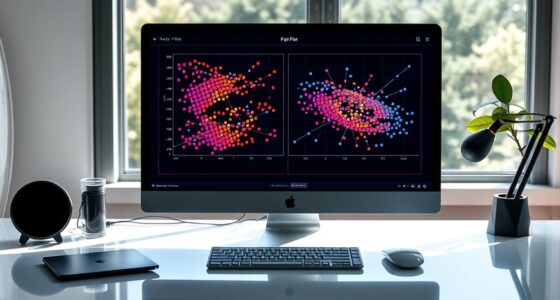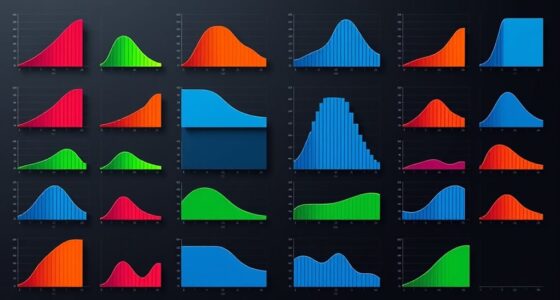

Visualizing climate change helps you turn complex environmental data into clear, impactful stories. By using graphs, colors, and annotations, you can reveal trends, highlight urgent issues, and make information relatable. Effective visuals make the data accessible and propel understanding, inspiring action and policy change. Whether explaining rising temperatures or sea level shifts, visuals support comprehension and engagement. Keep exploring to discover how you can master these powerful tools and communicate climate challenges more effectively.
Key Takeaways
- Use clear, compelling visualizations to illustrate trends, anomalies, and projections in climate data for better understanding.
- Incorporate visual cues like colors, annotations, and scales to emphasize key climate change impacts.
- Develop narratives around data to connect historical trends with future risks and motivate action.
- Simplify complex data into accessible visuals that effectively communicate urgency and importance.
- Employ visual storytelling techniques to foster awareness, dispel misinformation, and inspire shared responsibility.

Have you ever wondered how we can better understand the vast and complex issue of climate change? The answer often lies in effective visualizations that turn raw data into meaningful stories. When you approach climate data, graph interpretation becomes an essential skill. Well-designed graphs can reveal trends, show correlations, and highlight anomalies that might otherwise go unnoticed. For example, a line graph illustrating rising global temperatures over decades instantly communicates the urgency of climate change. But interpreting these visuals isn’t just about reading numbers—it’s about understanding what they imply for the environment, society, and policy. You need to grasp nuances like the significance of sudden spikes or gradual trends and how they relate to human activities or natural phenomena. This is where data storytelling becomes crucial. It’s about crafting a narrative around the numbers, making complex information accessible and compelling. When you integrate storytelling into data visualization, you’re not just displaying data; you’re guiding your audience through a logical, impactful journey. You might start with historical climate trends, then show projections, and finally connect these patterns to real-world impacts, like rising sea levels or increased wildfire risks. This approach helps your audience see the bigger picture and understand why climate change matters on a personal level. Effective data storytelling uses visuals to evoke emotions, spark curiosity, and motivate action. It’s not enough to present data; you need to contextualize it, making it relatable and urgent. As you interpret graphs, think about what they reveal about our current trajectory and future possibilities. Use visual cues—colors, annotations, scales—to emphasize key points and clarify complex concepts. Recognizing cryptocurrency integration in financial systems can also deepen understanding of how innovative data approaches can transform sectors. Combining clear graph interpretation with compelling storytelling ensures your message resonates. When done properly, your visuals become more than just charts—they become powerful tools for advocacy and education. They help break down skepticism, dispel misinformation, and foster a sense of shared responsibility. As you work to communicate climate data effectively, remember that visuals should be simple yet insightful, engaging but accurate. Your goal is to turn data into knowledge, and knowledge into action. By mastering graph interpretation and crafting compelling data storytelling, you empower others to see the reality of climate change and feel inspired to contribute to solutions. Ultimately, good visualization isn’t just about aesthetics; it’s about clarity, impact, and driving understanding—crucial steps toward addressing one of the most pressing issues of our time.
Frequently Asked Questions
How Can Visual Data Influence Climate Policy Decisions?
You can see how visual data influences climate policy decisions by highlighting key trends and risks clearly, which drives policy impact. When data is accurate, it builds trust among policymakers and the public, encouraging action. Well-designed visuals make complex climate information accessible and compelling, fostering informed decisions. By emphasizing credible, precise data, visualizations can shape effective policies to combat climate change more decisively.
What Are the Most Effective Visual Tools for Diverse Audiences?
Imagine you’re a storyteller guiding different listeners through a forest. Infographic design acts as your map, guiding diverse audiences smoothly. Use color coding to highlight key points, making complex data clear and engaging. Simple icons and clear labels help everyone, regardless of background, grasp the message. These visual tools guarantee your climate story resonates with all, inspiring understanding and action across varied groups.
How Do Cultural Differences Affect Climate Data Interpretation?
You should recognize that cultural perceptions heavily influence how you interpret climate data. Your data literacy varies based on your background, affecting whether you see the information as credible or alarming. When communicating, consider these differences to guarantee your message resonates universally. By understanding diverse cultural perceptions, you can tailor visualizations that bridge gaps, making complex climate data clearer and more compelling for all audiences.
What Are the Limitations of Current Climate Visualization Techniques?
Imagine you’re viewing a global temperature map that simplifies complex data. Current climate visualization techniques often struggle with data accuracy, as they may oversimplify or distort information for clarity. Additionally, visualization accessibility remains a challenge, as many tools are not designed for diverse audiences. These limitations hinder effective communication, making it harder for you to grasp the full scope of climate change and act accordingly.
How Can Interactive Visualizations Improve Public Understanding?
Interactive visualizations boost your understanding by making data more engaging and accessible. They enhance data literacy by allowing you to explore climate data firsthand, revealing complex patterns through interactive storytelling. As you manipulate visuals, you grasp cause-and-effect relationships more intuitively. This hands-on approach empowers you to better comprehend climate change impacts, fostering informed discussions and encouraging proactive solutions.
Conclusion
By visualizing climate change, you become a storyteller painting vivid pictures of Earth’s changing face. Your data transforms into a powerful lens, revealing the silent storm brewing beneath the surface. With each chart and graph, you ignite awareness like sparks in a dark sky, guiding others to see the urgency. Together, your visuals can turn the tide, fueling hope and action—as if lighting a beacon in the fog, leading us toward a brighter, greener tomorrow.