📊 Full opportunity report: Using Pro Standards To Evaluate Young Athletes’ Technique on IdeaNavigator AI — validation score, market gap, and execution plan.

Get business pricing on monitors, keyboards and dev gear
- Business-only prices and quantity discounts
- Tax-exempt purchasing
- Multiple users, one account, clear invoices
TL;DR
IdeaNavigator AI has outlined a product concept for an app that compares young athletes’ filmed movements with pro-derived reference mechanics and suggests one drill per session. It proposes testing the idea first with baseball hitting and having certified coaches review grades for 100 children; no pilot results or validated accuracy figures are provided.
IdeaNavigator AI has proposed a phone-based app that would compare young athletes’ movements with pro-derived reference mechanics, grade selected technique checkpoints and prescribe a drill. The proposal is aimed at parents whose children practice without private coaching, but it describes a product opportunity and validation plan—not a released app or demonstrated result.
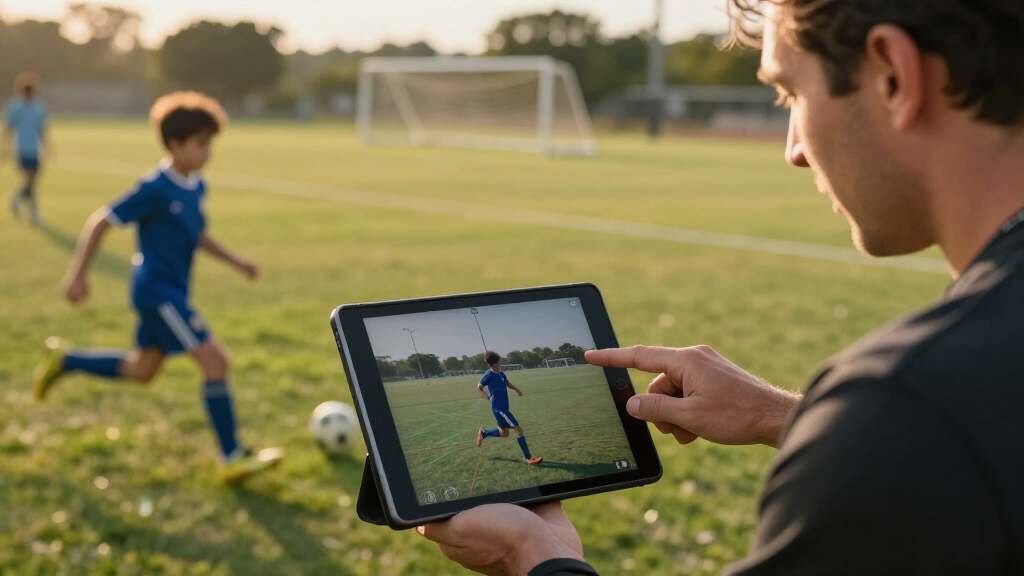
The suggested workflow starts by filming a repetition, such as a baseball swing. The app would use pose-estimation models running on phones to compare the athlete’s movement with reference profiles, then assess checkpoints such as hip rotation, release angle or stride. It would identify the largest gap and recommend one drill per session, rather than trying to deliver a full coaching program.
The proposal identifies the first intended buyer as a parent of a young athlete practicing without a private coach. It says children may repeat swings, throws and strides without feedback, while private sessions can cost $75 to $150 each. Those figures are part of the opportunity case; the proposal does not supply a survey, pricing study or evidence quantifying how often technique flaws go unnoticed.
For validation, IdeaNavigator AI recommends starting with baseball hitting and asking certified coaches to compare the app’s grades with their own assessments across 100 children. The proposed business model is a family subscription for each sport, with a separate coach tier for team use. No subscription price, development schedule, participating coaches or pilot results are specified.
Testing Automated Feedback Against Coaches
The proposal addresses a practical gap between repeated practice and individual instruction. If an automated tool could give families useful, timely feedback, it might make some form of technique review available to athletes who do not have regular access to a private coach. The intended benefit is lower-cost guidance between coaching sessions, not proof that an app can replace a qualified coach.
Whether that promise holds depends on more than detecting a body’s position in a video. A system would need to assess the relevant mechanics consistently across children, camera angles, body sizes and skill levels, and its feedback would need to be understandable and appropriate. The suggested comparison with coaches is therefore central: a 100-child pilot could provide an initial check on agreement, but it would not by itself establish long-term effects on performance or injury risk.
For families and youth sports organizations, the distinction matters. A confident-looking score may be mistaken for a reliable diagnosis unless the app explains its limits. The concept’s narrow first test—one sport, one skill and a defined group—could make evaluation more manageable, while leaving broader claims about other sports for later research.
As an affiliate, we earn on qualifying purchases.
From Phone Video to a Narrow Pilot
The concept rests on the availability of phone-based pose estimation, a method that identifies body positions from video. IdeaNavigator AI says such models now run on phones with accuracy sufficient to compare a child’s mechanics with reference motion profiles. The proposal does not cite a particular model, benchmark, study or independent evaluation supporting that assessment, so it should be treated as a premise to test rather than an established performance result for this product.
The recommended first version is deliberately limited: record a rep, show a comparison, grade a few checkpoints and give one targeted drill. Baseball hitting is proposed as the starting skill, with coach audits across 100 children as the initial validation method. The plan does not report that this trial has begun. It also does not identify a company building the app or say that a product is available to families.
As an affiliate, we earn on qualifying purchases.
Accuracy, Safety and Pilot Status
No measured accuracy results are provided for the proposed app, and the suggested 100-child review remains a validation plan. It is unclear how coaches would score technique, how much agreement would count as acceptable, or whether the pilot would include varied ages, experience levels and recording conditions.
The proposal also does not explain how reference mechanics would be selected or adapted for differences in athletes’ bodies and abilities. It gives no evidence that the suggested drills reduce injury risk or improve performance. Although injury risk is part of the stated problem, the concept does not describe a medical assessment tool, and there is no indication that a clinician would review its recommendations.
Further details are missing on privacy and consent for video of children, data storage, subscription costs, product availability and plans to test sports beyond baseball. Until those points and the coach comparison are addressed, claims about affordability, reliability or training impact remain unverified.
As an affiliate, we earn on qualifying purchases.
Coach Review Would Be the First Test
The next step set out in the proposal is to build or test a baseball-hitting version and compare its grades with assessments from certified coaches for 100 children. Results would need to show how often the app and coaches agree, where they differ, and whether the feedback remains useful under ordinary filming conditions. No pilot date or outcome has been announced, and the proposal does not name a developer or launch schedule.
If that initial evaluation supports further development, the suggested business model would offer sport-specific family subscriptions and a coach tier for teams. Expanding to other sports, setting prices and making the tool available to parents would require additional decisions and evidence. For now, the development is a product concept with a proposed validation route, not a confirmed service.
Source: IdeaNavigator AI
As an affiliate, we earn on qualifying purchases.
Key Questions
Is the youth technique-grading app available now?
No availability is reported. IdeaNavigator AI describes a proposed product and a way to test it, but gives no launch date or confirmation that an app has been built.
How would the proposed app evaluate a young athlete?
The concept would use a phone video to compare movement with pro-derived reference mechanics, grade selected checkpoints and suggest one drill aimed at the biggest identified gap.
What sport would be tested first?
The proposed pilot focuses on baseball hitting. Other sports are not included in the initial validation plan described.
Would coaches test whether the grades are reliable?
That is the proposed approach: certified coaches would compare their assessments with the app’s grades across 100 children. No results from such a review have been reported.
Does the proposal show that the app prevents injuries?
No. Injury risk is cited as part of the problem the concept aims to address, but the proposal provides no evidence that the app or its drills prevent injuries.
Source: IdeaNavigator AI
Evergreen bestsellers Picks
bestsellers
As an affiliate, we earn on qualifying purchases.