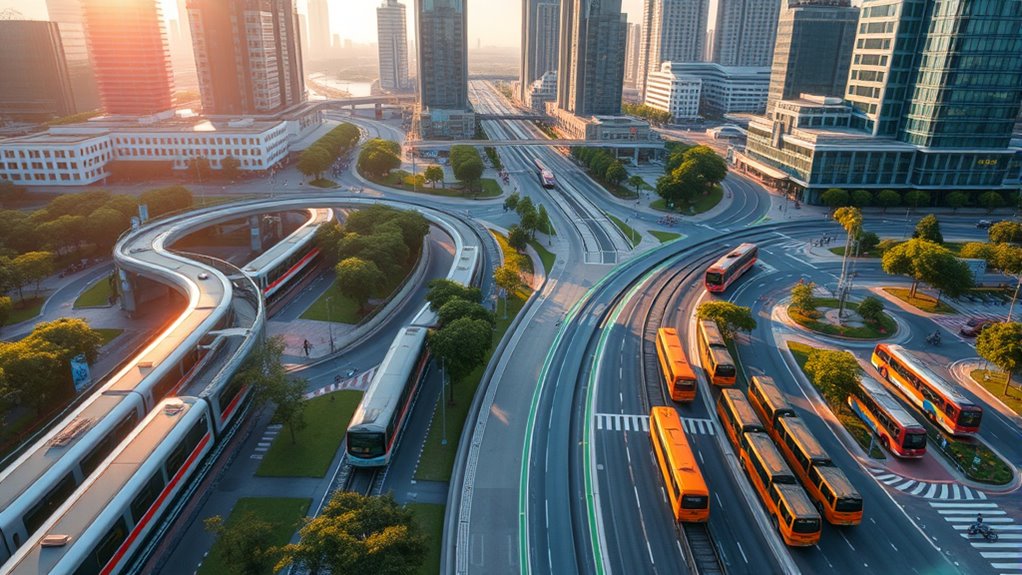

Transportation planning uses innovative technologies like smart mobility, data analytics, and multimodal networks to create efficient, sustainable urban systems. You’ll learn how it integrates public transit, biking, walking, and ridesharing for seamless travel. Infrastructure investments improve safety and reliability while reducing congestion and emissions. As cities grow, smart planning becomes essential for managing demand and supporting quality of life. Keep exploring to discover how these strategies shape the future of urban transportation systems.
Key Takeaways
- Understand the principles and goals of transportation planning, including efficiency, sustainability, and user experience.
- Analyze current transportation systems and demand to identify gaps and future needs.
- Incorporate smart mobility concepts like real-time data, connected infrastructure, and multimodal integration.
- Prioritize infrastructure investments such as adaptive traffic signals, dedicated lanes, and transit hubs.
- Develop strategies to manage urban growth, reduce congestion, and promote sustainable transportation options.
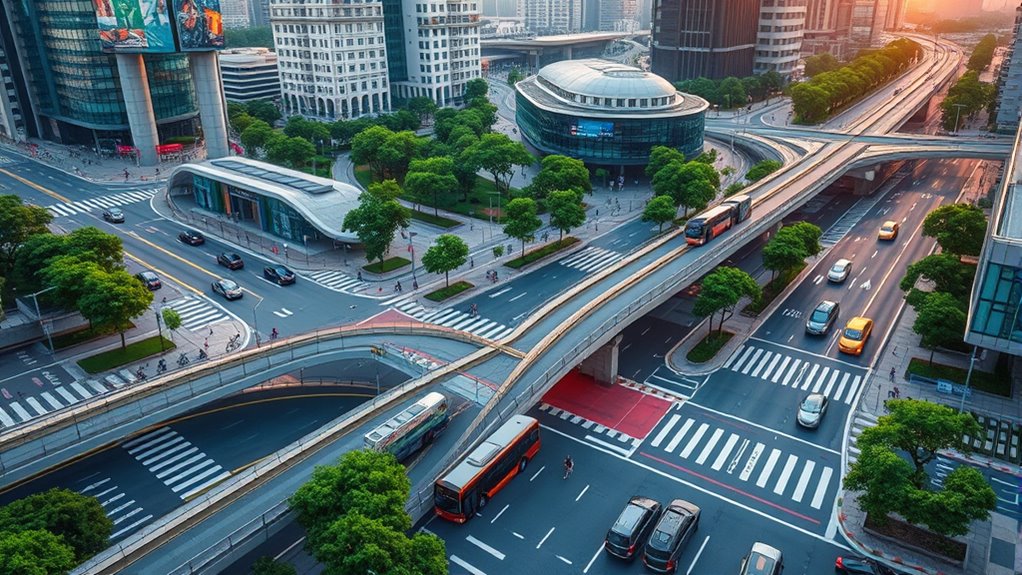
Have you ever wondered how cities manage to keep traffic flowing smoothly and public transit running efficiently? The answer lies in effective transportation planning, which integrates innovative concepts like smart mobility to create seamless urban movement. Smart mobility involves using technology and data to optimize transportation systems, making them more responsive, sustainable, and user-friendly. Public transit plays a central role in this approach, offering an affordable and eco-friendly alternative to private vehicles. When transportation planners prioritize smart mobility, they focus on designing systems that leverage real-time information, connected infrastructure, and advanced scheduling to improve transit reliability and reduce congestion.
In practice, this means deploying smart transit networks that rely on sensors, GPS, and data analytics to monitor traffic patterns and vehicle performance constantly. This data allows transit agencies to adjust routes, schedules, and service frequencies dynamically, ensuring that buses, trains, and other modes of public transit meet demand efficiently. As a result, passengers experience shorter wait times, fewer delays, and more predictable travel times. Additionally, integrating smart mobility solutions encourages more people to choose public transit over driving, easing road congestion and lowering emissions.
Transportation planning also involves creating a detailed network that links different modes of travel—biking, walking, ridesharing, and public transit—so that users can switch seamlessly from one to another. This multimodal approach ensures that each transportation option complements the others, making the entire system more flexible and accessible. For example, smart mobility apps can help you find the fastest combination of bike shares, buses, and trains for your daily commute, giving you real-time updates and alternative routes if disruptions occur. This level of connectivity not only enhances convenience but also boosts user confidence in public transit options.
Furthermore, transportation planning emphasizes the importance of infrastructure investments that support smart mobility. This includes installing intelligent traffic signals that adapt to current traffic conditions, creating dedicated lanes for buses and bikes, and building transit hubs that facilitate easy transfers. These upgrades improve efficiency and safety while encouraging more sustainable travel choices. As cities continue to grow, smart mobility becomes even more essential, helping to manage increasing transportation demands without sacrificing environmental quality or quality of life.
As an affiliate, we earn on qualifying purchases.
Frequently Asked Questions
How Do Emerging Technologies Impact Transportation Planning Strategies?
Emerging technologies like autonomous vehicles and smart infrastructure substantially impact your transportation planning strategies. Autonomous vehicles can reduce traffic congestion and improve safety, while smart infrastructure enables real-time data collection and communication. These innovations allow you to design more efficient, sustainable systems, adapting to changing mobility needs. By integrating these technologies, you can create smarter, more responsive transportation networks that enhance safety, reduce costs, and promote environmental sustainability.
What Are the Environmental Considerations in Transportation Planning?
You need to consider environmental factors in transportation planning, like air quality and green spaces. You can reduce pollution by promoting eco-friendly transit options and optimizing routes to lower emissions. Incorporating green spaces into urban designs helps improve air quality and supports biodiversity. By prioritizing these considerations, you create sustainable transportation systems that benefit communities, protect the environment, and enhance overall quality of life.
How Does Transportation Planning Address Rural Versus Urban Areas?
You might think transportation planning treats rural and urban areas the same, but it’s not true. Planning enhances rural connectivity by expanding roads and public transit, making travel easier. In cities, planners target urban congestion by developing efficient transit systems and traffic management. This tailored approach ensures both areas get the infrastructure they need, helping reduce disparities and boost overall mobility. You can see how strategies adapt to each area’s unique challenges.
What Role Do Public Stakeholders Play in Transportation Decision-Making?
You play a vital role in transportation decision-making through public input and stakeholder engagement. Your feedback helps shape policies, routes, and infrastructure projects that meet community needs. By participating in public meetings, surveys, or discussions, you guarantee that diverse perspectives are considered. Your involvement fosters transparency and accountability, ultimately leading to transportation systems that better serve everyone. Your voice truly influences how transportation evolves in your area.
How Can Transportation Planning Adapt to Future Population Growth?
To adapt to future population growth, you should focus on integrating autonomous vehicles and smart infrastructure into your transportation plans. Embrace new technologies that optimize traffic flow and reduce congestion, ensuring your systems are flexible and scalable. Invest in smart infrastructure that gathers real-time data, enabling you to make informed decisions. This proactive approach helps you create efficient, sustainable transportation networks that can accommodate growing populations effectively.
As an affiliate, we earn on qualifying purchases.
Conclusion
By understanding transportation planning, you can create efficient, sustainable systems that truly serve communities. While some might think it’s too complex or costly, thoughtful planning saves money in the long run and improves quality of life. With careful analysis and proactive strategies, you can overcome challenges and develop solutions that stand the test of time. Ultimately, investing in transportation planning empowers you to build resilient, connected cities that meet future demands seamlessly.
As an affiliate, we earn on qualifying purchases.
adaptive traffic signal controller
As an affiliate, we earn on qualifying purchases.
As an affiliate, we earn on qualifying purchases.