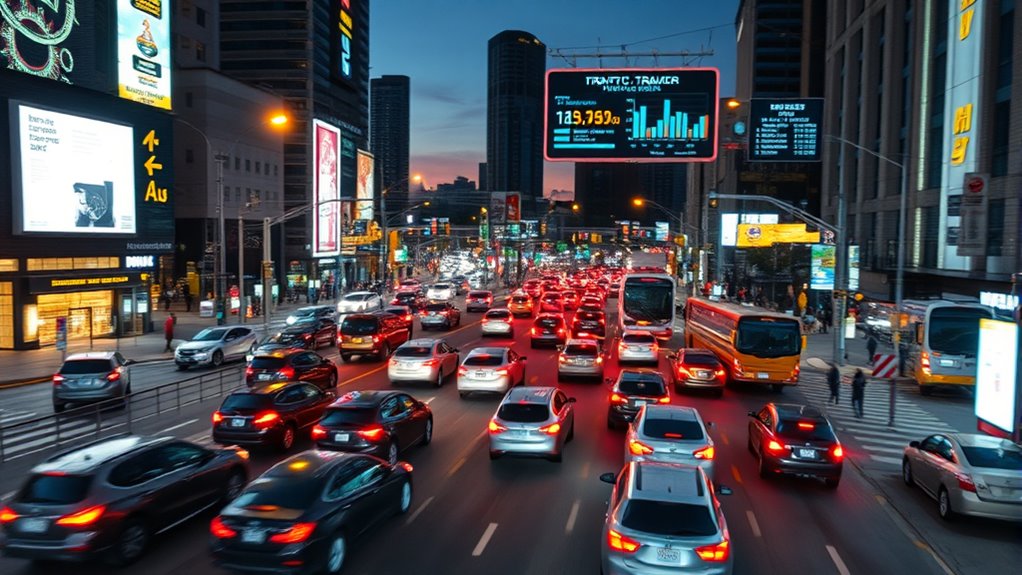

Traffic and transit analytics use real-time data from sensors, GPS, and cameras to identify congestion patterns and adjust services accordingly. You can benefit from optimized schedules, routes, and dynamic traffic management that reduce delays and overcrowding. Cities also implement congestion pricing to influence travel behavior during peak times. By leveraging these insights, transportation systems become more efficient and less congested. Keep exploring to see how data-driven strategies shape smarter urban mobility.
Open a free Amazon Business account
Business pricing, bulk buying and tax-exempt orders.
As an affiliate, we earn on qualifying purchases.
Key Takeaways
- Real-time traffic data enables dynamic adjustments to signals, routes, and transit schedules to reduce congestion.
- Analytics identify high-demand areas and peak times, informing targeted transit capacity and route optimizations.
- Congestion pricing uses data to implement variable tolls, discouraging unnecessary trips during busy hours.
- Data-driven insights guide long-term infrastructure planning and new transit development to improve overall flow.
- Navigation apps leverage traffic analytics to suggest faster routes, easing daily commutes and reducing congestion.
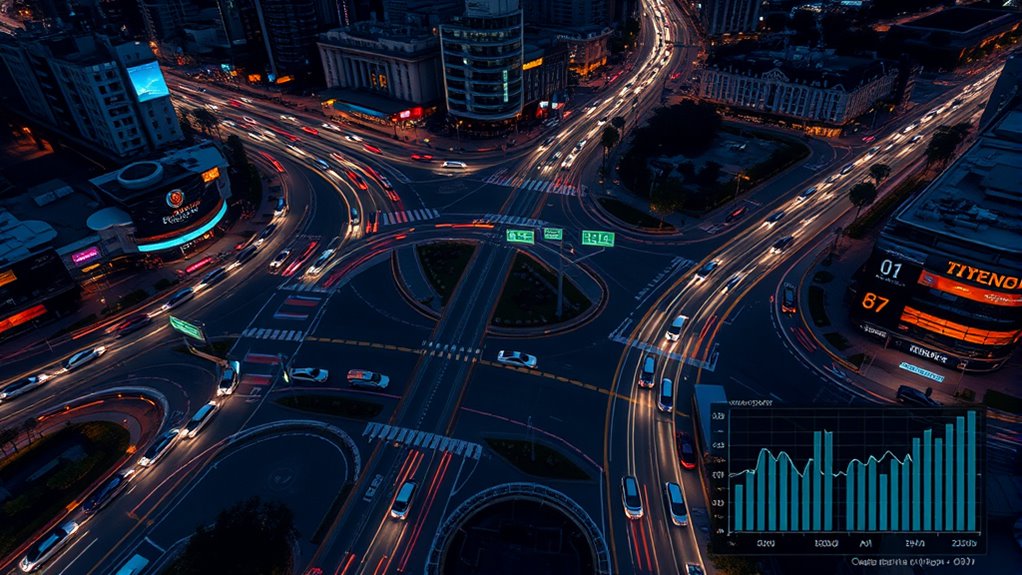
Have you ever wondered how cities manage to keep traffic flowing smoothly or improve public transit? Behind the scenes, traffic and transit analytics play a vital role. By collecting and analyzing vast amounts of data, city planners and transportation agencies can make smarter decisions that reduce congestion and enhance rider experience. One key approach is public transit optimization, which involves adjusting schedules, routes, and capacity based on real-time usage patterns. When data reveals where and when people travel most, transit services can be tailored to meet demand, reducing wait times and overcrowding. This not only speeds up transit but encourages more people to choose buses and trains over driving, easing overall road congestion.
Smart data analysis helps cities optimize transit, reduce wait times, and ease congestion for a smoother daily commute.
Congestion pricing strategies are another powerful tool supported by traffic analytics. By implementing variable tolls based on real-time traffic conditions, cities can influence driver behavior during peak hours. When analytics show that certain roads suffer from heavy congestion, authorities can increase tolls temporarily to discourage unnecessary trips or shift travel to less crowded routes. Conversely, lower tolls during off-peak times incentivize drivers to travel at less busy hours, evenly distributing traffic throughout the day. These pricing strategies are more than just revenue sources; they act as behavioral nudges, supported by detailed data, that help manage demand effectively.
You’re likely to see how this data-driven approach directly impacts your daily commute. For instance, navigation apps leverage real-time traffic analytics to suggest faster routes, helping you avoid jams and save time. Similarly, transit agencies use data to deploy additional buses or trains during busy periods, ensuring you get a seat and reducing delays. Traffic sensors, cameras, and GPS data feed into centralized systems that monitor congestion levels across the city. These systems process the information instantly, giving planners the insights needed to implement dynamic measures such as changing traffic signal timings or adjusting toll rates on the fly. Additionally, advancements in AI in Education are leading to smarter data analysis tools that enhance urban planning capabilities.
Moreover, traffic and transit analytics support long-term planning. Cities can identify recurring bottlenecks and project future growth to build better infrastructure. Data helps prioritize where to add new transit lines, expand existing ones, or redesign road networks for maximum flow. With this approach, transportation becomes more efficient, sustainable, and responsive to citizens’ needs.
In essence, by harnessing data, cities transform raw traffic and transit information into actionable strategies. Public transit optimization and congestion pricing strategies are prime examples of how analytics are shaping smarter, more livable urban environments. The next time you navigate through city streets or hop on a bus, remember that behind the scenes, data-driven decisions are working to make your journey smoother.
As an affiliate, we earn on qualifying purchases.
Frequently Asked Questions
How Do Privacy Concerns Impact Transit Data Collection?
Privacy concerns substantially impact transit data collection by highlighting privacy challenges that require careful handling. You need to guarantee data anonymization to protect individual identities while gathering useful insights. When you prioritize privacy, you build trust with the public and encourage more participation. Balancing data utility with privacy safeguards helps you collect valuable transit data without compromising personal privacy, ultimately making congestion management more effective and respectful of user rights.
What Are the Costs of Implementing Traffic Analytics Systems?
Implementing traffic analytics systems is like planting a garden—your initial investment is the seed, and the ongoing maintenance is the watering. You face costs for technology, data infrastructure, and skilled staff, but these come with a cost-benefit promise: smoother traffic flow and less congestion. Funding challenges can feel like droughts, but with strategic planning and support, the long-term benefits bloom, making the upfront costs worthwhile.
How Accurate Are Predictive Congestion Models?
You can expect predictive congestion models to be quite accurate when they incorporate real-time sensors and data integration. These models analyze current traffic patterns and predict future congestion with a high degree of precision, especially in well-monitored areas. However, accuracy may vary based on data quality and coverage. Regular updates and diverse data sources help improve prediction reliability, so your traffic management stays effective and responsive.
Can Analytics Suggest Individual Route Improvements?
Yes, analytics can suggest individual route improvements through personalized routing, which tailors suggestions based on your travel habits and current traffic data. By leveraging behavioral incentives, such as rewards for choosing less congested routes, you’re encouraged to adapt your commute. This approach not only improves your travel experience but also helps ease overall congestion, making traffic flow smoother for everyone.
How Do Weather Events Influence Traffic Data Accuracy?
Weather volatility can considerably impact traffic data accuracy, as sudden weather changes like storms or snow can cause unpredictable traffic patterns. These events often reduce data reliability because sensors and cameras might be obstructed or produce inconsistent readings. When analyzing traffic data, you need to account for weather volatility to guarantee your insights are precise. Incorporating weather data helps improve the accuracy of your traffic models and supports better congestion management.
traffic analytics software for cities
As an affiliate, we earn on qualifying purchases.
As an affiliate, we earn on qualifying purchases.
Conclusion
By leveraging traffic and transit analytics, you can markedly reduce congestion and improve your daily commute. Did you know that cities using data-driven strategies have seen up to a 20% decrease in traffic jams? Imagine saving time and lowering stress just by smarter planning. So, embrace these analytics—they’re transforming transportation and making your journeys smoother and more predictable. The future of transit is data-powered, and you’re part of this exciting change.
dynamic traffic signal controller
As an affiliate, we earn on qualifying purchases.
As an affiliate, we earn on qualifying purchases.
As an affiliate, we earn on qualifying purchases.
NFL season / tailgating Picks
team gear
As an affiliate, we earn on qualifying purchases.