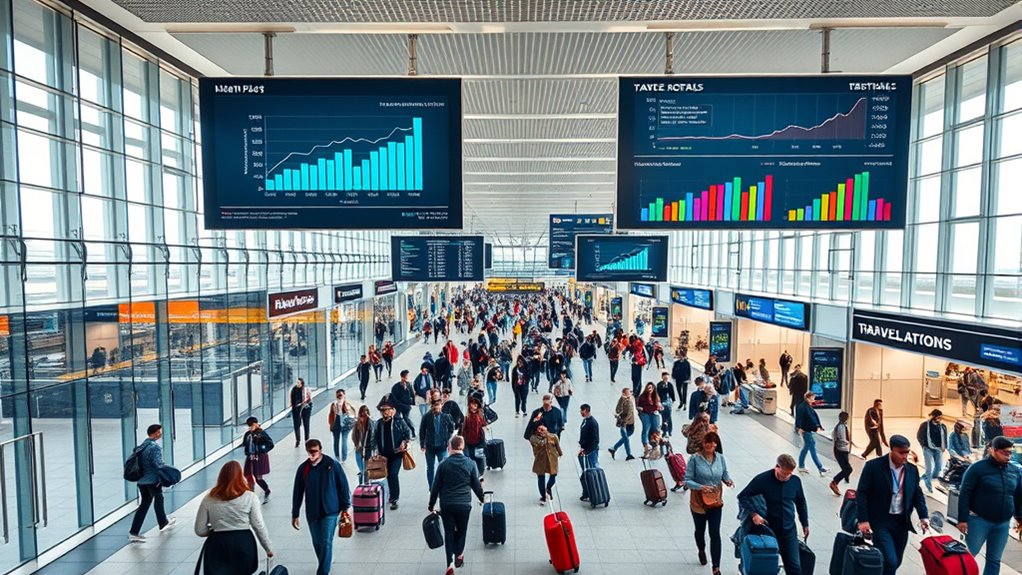

Tourism statistics help you understand current travel trends, offering insights into who is visiting, where, and why. By analyzing visitor demographics, spending, and seasonal patterns, you can better predict future travel behaviors. Tracking emerging markets and shifting preferences enables you to adapt your offerings proactively. Leveraging this data supports sustainable growth and improved visitor experiences. Keep exploring to discover how these insights can shape your strategic decisions and keep you ahead in the evolving tourism landscape.
Key Takeaways
- Analyze historical visitor data to identify emerging travel trends and seasonal variations.
- Use demographic and behavioral data to forecast future traveler preferences and patterns.
- Monitor global and regional tourism statistics to anticipate shifts in popular destinations.
- Apply predictive analytics to evaluate the impact of economic or geopolitical changes on travel behaviors.
- Leverage data-driven insights to develop targeted marketing strategies and optimize resource allocation.

Tourism statistics provide essential insights into global travel trends, helping governments and businesses make informed decisions. When you analyze these numbers, you gain a clearer understanding of how tourism influences a region’s economy and who is visiting. The economic impact of tourism is substantial, often contributing significantly to local employment, infrastructure development, and overall economic growth. By tracking visitor numbers, spending patterns, and length of stay, you can identify which areas benefit most from tourism and where investments might be needed to support sustainable growth. Understanding visitor demographics is equally important because it reveals who is traveling—whether it’s age groups, nationalities, or income levels. This information enables you to tailor marketing strategies, develop targeted services, and improve visitor experiences to meet diverse needs.
You’ll notice that tourism statistics often highlight shifts in visitor demographics over time. For example, if data shows an increase in younger travelers or particular nationalities, you can adjust your outreach efforts accordingly. This might mean creating more budget-friendly packages for students or promoting cultural events that appeal to specific groups. Recognizing these trends allows you to anticipate future travel patterns and adapt your offerings proactively. Additionally, understanding demographic changes can help you address challenges such as seasonality or over-tourism, ensuring that tourism development remains sustainable and beneficial for local communities. Incorporating a focus on visitor behavior further enhances the ability to develop effective strategies in response to evolving trends.
Furthermore, tracking economic impact through tourism statistics provides you with tangible measures of success and areas needing improvement. If visitor spending is rising, it signals a healthy tourism sector, but if numbers stagnate or decline, it might prompt you to reevaluate marketing strategies or enhance attractions. You can also use this data to advocate for investment in infrastructure, safety, and amenities that will boost visitor satisfaction and loyalty. The insights gained from analyzing visitor demographics and economic impact help you craft policies that balance growth with preservation, ensuring that tourism remains a positive force for your region.
In essence, by paying close attention to tourism statistics, you position yourself to predict future travel patterns more accurately. You can identify emerging markets, understand changing preferences, and develop initiatives that align with current trends. Whether you’re managing a destination or running a tourism-related business, these insights empower you to make smarter decisions, optimize resource allocation, and foster sustainable tourism that benefits everyone involved. Recognizing the importance of economic impact and visitor demographics in these statistics gives you a strategic advantage in steering the evolving landscape of global travel.
Frequently Asked Questions
How Do Seasonal Changes Impact Travel Predictions?
Seasonal changes substantially impact your travel predictions because climate variations influence when people prefer to travel. During holiday periods, you’ll see increased travel activity as families and individuals plan trips around festivities. Conversely, off-peak seasons see fewer travelers due to less favorable weather conditions. By understanding these patterns, you can better anticipate travel demand, optimize marketing efforts, and improve resource allocation throughout the year.
What Role Do Social Media Trends Play in Tourism Forecasts?
You should pay attention to social media trends because social media analytics reveal popular destinations and travel interests. Influencer impact can considerably boost travel forecasts, as influencers showcase destinations to their followers, creating buzz and driving interest. By monitoring these trends, you can better predict upcoming travel patterns, tailor marketing strategies, and stay ahead in the competitive tourism industry. Social media truly shapes travelers’ choices and expectations.
How Accurate Are Current Tourism Prediction Models?
Think of tourism prediction models as weather vanes—useful but not perfect. They offer a decent forecast based on historical accuracy, helping you plan ahead. However, model limitations mean unexpected factors like pandemics or political shifts can throw off predictions. While they give a good general idea, always stay flexible, as models can’t predict every twist and turn in travel trends.
What Are the Challenges in Collecting Reliable Tourism Data?
You face challenges in collecting reliable tourism data because survey accuracy can vary, leading to inconsistent results. Additionally, data privacy concerns make it difficult to gather detailed information without compromising travelers’ confidentiality. You need to balance obtaining thorough data with respecting privacy laws, which often limits the depth of insights you can gain. Overcoming these hurdles requires careful survey design and strict privacy measures to ensure trustworthy and ethical data collection.
How Do Global Events Influence Travel Pattern Predictions?
Global events act like unpredictable storms on a calm sea, causing sudden shifts in travel patterns. You’ll find economic shifts and political stability are the compass points that guide travelers’ decisions. When economies wobble or political tensions rise, travelers often change course, seeking safety or affordability. These fluctuations make predicting future travel patterns akin to steering through a maze—challenging but essential for understanding and adapting to the ever-changing tourism landscape.
Conclusion
As you analyze these tourism trends, you can almost feel the world shifting beneath your feet. The numbers hint at a future where travel habits will surprise us all, revealing secrets yet to be uncovered. Will the next wave of travelers seek untouched destinations or rediscover familiar ones in new ways? Keep watching the data—soon, the patterns will unfold, and you’ll witness the next chapter in global exploration, waiting just beyond the horizon.