
📊 Full opportunity report: DDR5 Now, DDR6 Soon: A Buyer’s Field Guide on ThorstenMeyerAI.com — validation score, market gap, and execution plan.

Get monitors, keyboards and dev gear delivered free — and shop member deals
- Fast, free delivery on millions of items
- Access to Prime Big Deal Days deals on October 6–7
- Prime Video, Amazon Music and more included
TL;DR
DDR5 memory remains the best choice for 2026 builds, with DDR6 not arriving until 2027 and at a high premium. Waiting for DDR6 is generally unwise for most users now.
Consumers and builders should prioritize purchasing DDR5 memory now, as DDR6 is not expected to reach mainstream platforms until 2027 and will come at a significant cost. This advice counters the typical pattern of waiting for newer memory standards, as current market conditions make DDR5 the most practical choice for most users in 2026.
Recent forecasts indicate that DDR5-6000 with CL30 timings remains the optimal balance of performance and price for mainstream builds through 2028. Higher-speed kits, such as DDR5-8000, offer minimal real-world benefits and are not cost-effective.
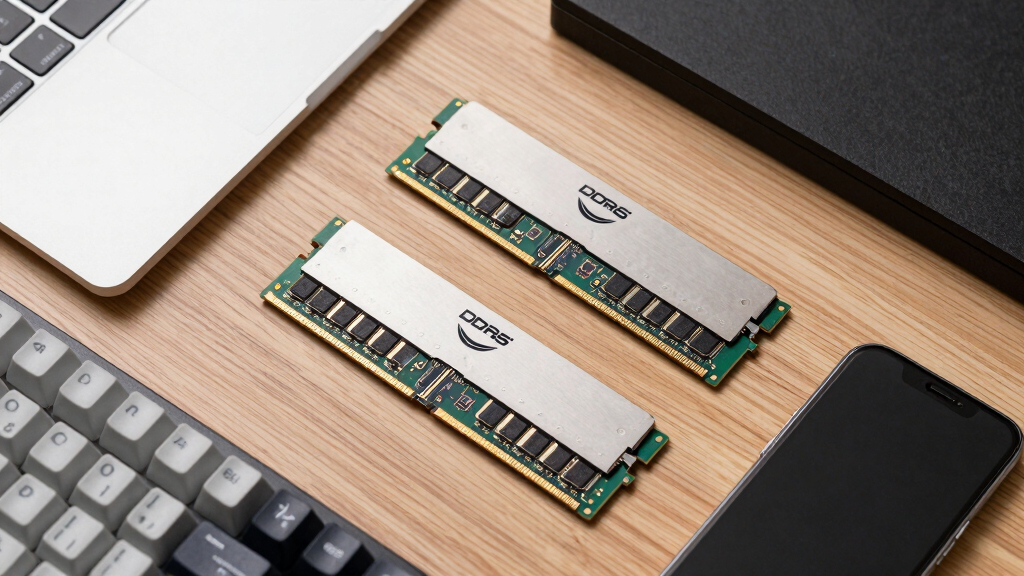
Despite rumors, DDR6 will not be available for consumer desktops until around 2027, with initial modules designed for enterprise and AI servers in 2026–27. DDR6’s architecture introduces a major leap in bandwidth, but it also requires a new CPU, chipset, and motherboard, making it incompatible with current platforms.
Market conditions have also rendered DDR4 obsolete for new builds: DDR4 prices are comparable or higher than DDR5, and DDR4 is nearing end-of-life, making it a poor investment for future-proofing a new system.
DDR5 now, DDR6 soon
A buyer’s field guide. The 20-year instinct — wait for prices to drop, or wait for the next generation — is broken this cycle. Buy the DDR5 you actually need now; don’t wait for DDR6. Here’s the reasoning.
Driven to end-of-life, production slashed. Same money, dead-end socket. Leave a working DDR4 box alone — but never start a new build on DDR4 to “save.”
A framework, not a gamble. Buy the DDR5 you need now, at the sweet spot, in the capacity you’ll actually use — don’t buy DDR4, don’t wait for DDR6. The two costliest mistakes in this market are the ones that feel prudent: waiting for a price drop that isn’t coming, and waiting for a next-gen part that launches dearer than what’s on the shelf. Next: The SSD Squeeze.
Why Buying DDR5 Now Is the Smarter Choice
For most consumers, purchasing DDR5 now avoids the premium and delays associated with DDR6, which is still in development and will not be widely available until 2027. This approach ensures better value, compatibility, and performance for current needs, and prevents over-investing in a new platform that will be outdated shortly after release.
As an affiliate, we earn on qualifying purchases.
Market Trends and Future Memory Developments
The 2026 memory market is characterized by high prices and limited supply, driven by the ongoing chip shortage and manufacturing constraints. Historically, new memory standards like DDR6 follow a slow adoption curve, with initial enterprise and server deployments before reaching mainstream desktops around 2027. DDR5 has become the de facto standard for new systems, with manufacturers and OEMs focusing on it exclusively.
Previous cycles show that waiting for the next generation often results in paying more for a less mature product, while current DDR5 modules offer sufficient performance for most tasks at a reasonable price.
“DDR6 support won’t be available on mainstream platforms until 2027, and early modules will carry a significant premium.”
— Major motherboard manufacturer spokesperson
As an affiliate, we earn on qualifying purchases.
Uncertainties About DDR6 Adoption and Pricing
While DDR6 is planned for launch in 2027, details about pricing, capacity options, and real-world performance are still emerging. The initial modules are expected to be expensive, and widespread compatibility may take additional years to develop, making early adoption risky for most users.
It remains unclear how quickly DDR6 will mature and become cost-effective, or how its performance benefits will translate outside specialized workloads.
As an affiliate, we earn on qualifying purchases.
Next Steps for Buyers and Industry Watchers
Consumers should focus on building or upgrading with DDR5-6000 CL30 modules now, as this remains the best value. Industry sources will monitor the JEDEC standardization process for DDR6, along with motherboard and CPU compatibility lists, to gauge when mainstream adoption is feasible. Expect to see early DDR6 modules in enterprise and high-end platforms in 2026–27, with broader availability and price reductions likely around 2028 or later.
As an affiliate, we earn on qualifying purchases.
Key Questions
Should I wait for DDR6 to save money?
No. DDR6 will be significantly more expensive when it arrives and won’t offer enough performance gains for most users in 2027. Buying DDR5 now is the more practical choice.
Is DDR4 still a viable option in 2026?
It’s not recommended for new builds. DDR4 is nearing end-of-life, and DDR5 offers better future-proofing and performance at comparable prices.
When will DDR6 be affordable and widely available?
Based on current timelines, DDR6 is expected to become more affordable and mainstream around 2028 or later, after initial enterprise deployments.
Will DDR6 provide a significant performance boost for gaming?
For gaming, DDR6’s higher bandwidth is unlikely to translate into meaningful frame rate improvements compared to DDR5-6000. Its main benefits are in bandwidth-intensive workloads like AI and scientific computing.
What should I look for in DDR5 modules today?
Focus on DDR5-6000 CL30 modules, which offer the best balance of price and performance for most users through 2028.
Source: ThorstenMeyerAI.com
Evergreen bestsellers Picks
bestsellers
As an affiliate, we earn on qualifying purchases.