

Demography and census statistics help you understand how populations change over time. Governments collect this data through surveys, censuses, and official records to plan for resources like schools, healthcare, and infrastructure. Modern technology makes data collection faster and more accurate, while analysis reveals patterns such as migration or urban growth. Knowing how these tools work is key to grasping population trends—stay engaged, and you’ll uncover more about how they shape our societies.
Key Takeaways
- Demography studies population characteristics, while census statistics provide comprehensive data essential for policy-making and resource planning.
- Data collection methods include decennial censuses, surveys, and administrative records, each serving specific demographic insights.
- Modern technology enhances accuracy, speed, and reliability of population data through digital tools and online data gathering.
- Analyzing population data reveals trends like urbanization and migration, supporting effective long-term planning.
- Accurate demographic and census data enable governments to make informed decisions for societal development and resilience.
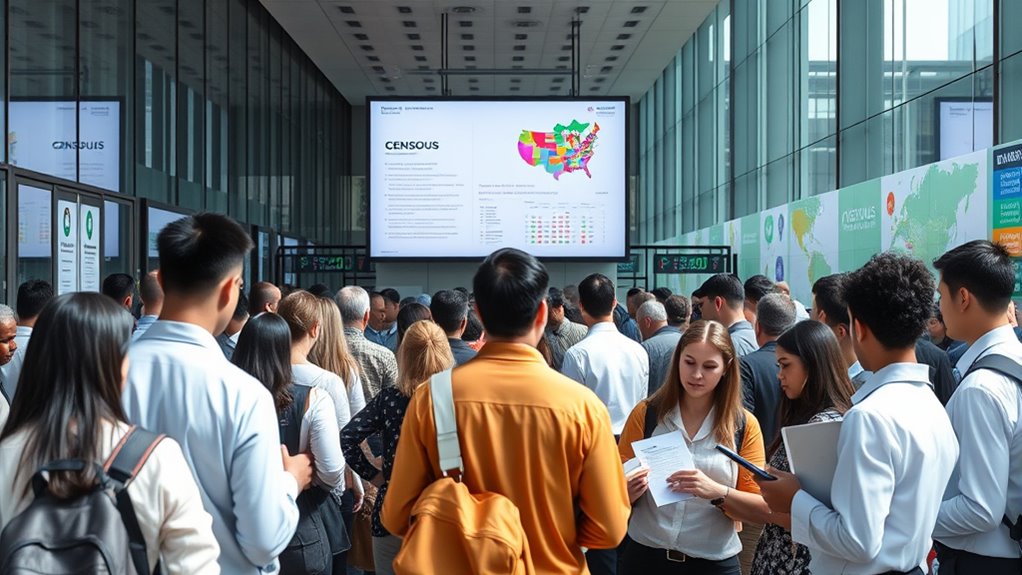
Have you ever wondered how governments understand their populations? It’s a fascinating process that involves tracking population growth and employing various data collection methods to gather accurate information. To make informed decisions about resources, infrastructure, and social programs, authorities need a clear picture of who their people are, where they live, and how these numbers change over time. That’s where demography and census statistics come into play, providing the essential data that shapes policies and planning.
Population growth is a key focus for governments because it directly impacts everything from schools and hospitals to transportation systems. By monitoring how populations increase or decline, officials can anticipate future needs and allocate resources efficiently. But understanding population trends isn’t as simple as counting heads; it requires reliable data collection methods that guarantee accuracy and timeliness. Governments typically gather this data through censuses, surveys, and administrative records, each serving a specific purpose. A census, for example, involves a thorough attempt to count every individual in a country or region, often conducted every ten years. It covers demographic details like age, gender, and household composition, providing a snapshot of the population at a specific moment. Surveys, on the other hand, sample smaller groups to gather detailed information about lifestyles, employment, and health, which complements census data. Administrative records, such as birth and death registrations, help track natural population changes over time, offering a continuous stream of data.
Governments analyze censuses, surveys, and records to track population changes and plan for future needs.
These data collection methods are carefully designed to address challenges like undercounting or misreporting, which can skew results. Modern technology plays a crucial role here, with digital tools and online questionnaires making data collection faster and more accurate. When governments analyze this data, they can identify patterns—such as urbanization trends or migration flows—that influence economic development and social services. They also use statistical techniques to project future population growth, helping them prepare for demographic shifts decades ahead. Additionally, advances in digital data collection improve the accuracy and timeliness of demographic information.
In essence, understanding population growth through effective data collection methods enables governments to craft smarter policies and build resilient communities. It’s a meticulous process that combines technology, statistical analysis, and on-the-ground effort to paint a clear picture of a nation’s demographic landscape. By doing so, governments ensure they’re not just reacting to current needs but proactively planning for the future, making informed decisions that benefit everyone.
Frequently Asked Questions
How Do Census Methods Vary Across Countries?
Census methods vary across countries mainly through different sampling techniques and data collection methods. You’ll find some nations rely on face-to-face interviews, while others use online surveys or mailed questionnaires. These differences help tailor the census to local needs and resources. You might notice countries with limited infrastructure prefer simpler data collection methods, whereas others implement more extensive approaches, ensuring accurate population data tailored to each country’s unique context.
What Challenges Affect the Accuracy of Demographic Data?
You face challenges like sampling errors, which can skew results if your sample isn’t representative. Data validation issues also affect accuracy, as errors or inconsistencies in data entry can lead to flawed demographic insights. To improve accuracy, you need rigorous sampling techniques and thorough validation processes. Recognizing these challenges helps you interpret demographic data more critically and guarantees better-informed decisions based on reliable statistics.
How Is Census Data Used in Policy Making?
You use census data in policy making to inform population projections and guarantee resources are allocated effectively. Accurate data helps you identify demographic trends, plan public services like healthcare and education, and target areas needing development. By relying on census insights, you make informed decisions that improve community well-being, optimize infrastructure investments, and shape policies that reflect the actual needs of your population.
What Are the Privacy Concerns With Census Data?
Think of census data as a treasure chest filled with personal details, but privacy concerns loom like pirates. You worry about your info falling into the wrong hands, so anonymization techniques and data security are essential. These methods scramble your data, keeping identities hidden while still helping policymakers. Stay confident that your information is protected, ensuring your privacy remains intact while society benefits from accurate, secure census insights.
How Often Should a Country Conduct a Census?
You should conduct a census every 10 years to guarantee accurate data collection intervals and maintain up-to-date demographic information. Regular census frequency helps governments plan public services, allocate resources, and track population changes effectively. While some countries opt for shorter intervals, a decennial approach balances the need for current data with the costs and logistics involved. Staying consistent with census frequency ensures reliable, useful insights for policymaking.
Conclusion
Now that you’ve unraveled the tapestry of demography and census stats, you hold the brush to paint the bigger picture. Think of these numbers as the heartbeat of a nation, revealing stories hidden beneath the surface. With this knowledge, you’re equipped to see the world through a clearer lens, understanding the rhythm of populations like a seasoned conductor. Embrace these insights—they’re your map to steering the intricate dance of society’s ever-changing face.