🔍 Read the full analysis: The Nvidia H200 Rental That Put A US-Blacklisted University In Focus on ThorstenMeyerAI.com

Get business pricing on monitors, keyboards and dev gear
- Business-only prices and quantity discounts
- Tax-exempt purchasing
- Multiple users, one account, clear invoices
TL;DR
Archived procurement notices show Northwestern Polytechnical University, which is on the U.S. Commerce Department’s Entity List, awarded two contracts in January 2026 to rent servers equipped with eight Nvidia H200 GPUs each. The records do not establish where the servers were located, how the chips reached China, or whether a U.S. export license applied.
Northwestern Polytechnical University, a Chinese university on the U.S. Commerce Department’s Entity List, awarded two contracts in January 2026 to rent servers equipped with eight Nvidia H200 GPUs each, according to copies of procurement notices preserved by the Internet Archive. The records document access to H200-equipped computing, but do not establish where the servers were located or whether a U.S. export license applied.
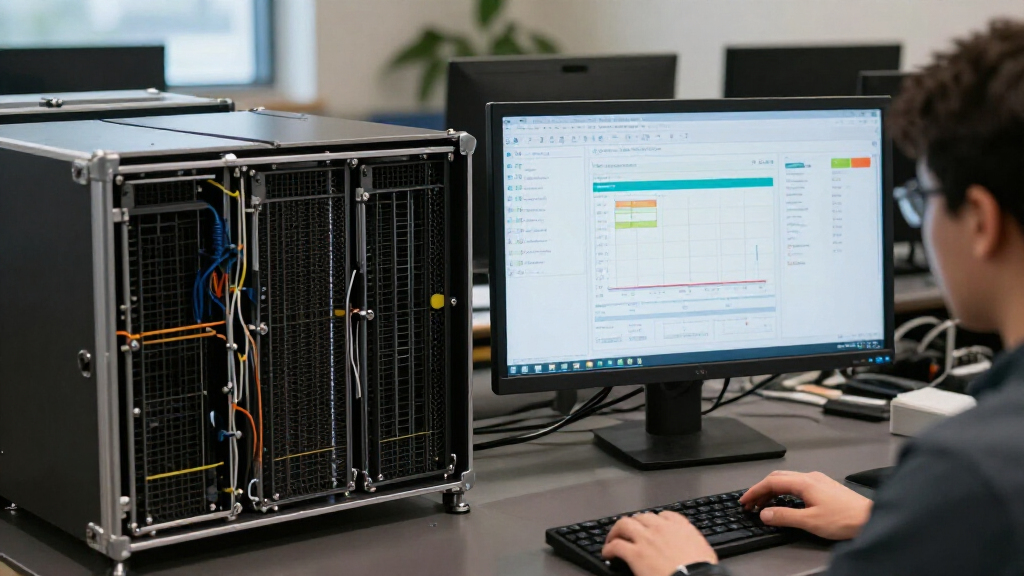
The notices were issued by the university’s School of Cyberspace Security and dated January 28, 2026. One describes a server-rental service for large-model reinforcement-learning fine-tuning, priced at 441,000 yuan, with service scheduled from February 16 to September 16. The other covers large-model multitask fine-tuning, priced at 441,700 yuan, for seven months beginning February 1. Both identify an Nvidia HGX H200 system with eight GPUs; one specifies 141 gigabytes of memory per card.
The notices say the system could provide 24-hour access and continuous operation. They name Shenzhen-based suppliers, but the records do not identify the servers’ physical location or establish who owned the chips. The notices are no longer available on the school’s website; the account is based on copies saved by the Wayback Machine on March 15, 2026. The supplier names and contact details are omitted here.
Reuters reported on November 11 that the university had also rented servers using Nvidia A100 and A800 chips, and that other notices described outright H200 purchases. AFP separately reported a September notice concerning two H200 chips. Those purchase notices were unavailable to the source author, who found no archived copies and could not independently verify them. The rented-server contracts are supported by the archived records; the reported purchases remain attributed to the news agencies.
Export controls · buying vs. renting
Shipping the chips is controlled. Renting time on them is the open question.
How a university on the US Entity List can use Nvidia H200 chips without owning them, step by step.
Schematic
export of chipsunknown or reportedremote access
What the records and rules show
- 1Buying: exporting chips to a listed buyer needs a US license. For this university the policy is a presumption of denial.
- 2Reported, not verified: Reuters and AFP describe H200 purchase notices that were removed. We found no archived copy.
- 3Renting: the chips sit in a supplier’s server. How they got there is not in the records.
- 4Remote access: two notices dated January 28, 2026 award server rentals with eight H200 chips per server, for 441,000 and 441,700 yuan.
- 5The January 2026 H200 rule bars Entity List parties from remote access, but only as a condition on licensed exports.
Sources: eCFR, 15 CFR 744.11 and Part 744 Supplement No. 4 (as of November 10, 2026); Federal Register, 91 FR 1684 (January 15, 2026); NWPU School of Cyberspace Security award notices of January 28, 2026 (Wayback Machine copies); Reuters, November 11, 2026; AFP, November 12, 2026. Schematic, not a map of real locations. Not legal advice.
Graphic: Powered by Thorsten Meyer AI
Why H200 Server Access Matters
The records bring a distinction in export-control enforcement into focus: renting computing capacity is not the same transaction as buying a chip, but access to a server can still provide substantial computing resources. The notices describe H200-equipped systems used for large-model fine-tuning, a category of work that requires access to high-performance computing. They do not show what models were trained, what results were achieved, or whether the university ultimately used the contracted capacity.
Northwestern Polytechnical University’s Entity List status makes the question of the hardware’s path particularly relevant. The university’s entry calls for a license for all items subject to the Export Administration Regulations and sets a “Presumption of denial” review policy. That raises compliance questions for any covered export, reexport or in-country transfer involving the university. But the notices alone do not prove that a controlled item was transferred in violation of U.S. rules, or that the contracts themselves breached them.
The episode also highlights the difficulty of determining how export controls apply to remotely accessed computing. A customer may rent use of a server without taking ownership of its GPUs. The available records do not identify the hardware’s location, ownership, supply chain or licensing history, so they cannot resolve whether the transactions involved items or transfers covered by the relevant rules.
Popular right now

Bose QuietComfort Ultra Headphones (2nd Gen), Wireless Noise-Cancelling Over-Ear Headphones with Spatial Audio, Driftwood Sand

Ninja AF181 Air Fryer XL, 6.5 Qt, 6-in-1, Dark Grey

Vitamix 5200 Blender with 64 oz Container, Black
As an affiliate, we earn on qualifying purchases.
Entity List and H200 Rules
The university has appeared on the U.S. Commerce Department’s Entity List since 2001. The entry, as described in the source material, covers all items subject to the EAR and specifies a “Presumption of denial” for license applications. Section 744.11 of the regulations says a license is required to the extent specified in an Entity List entry for exports, reexports or in-country transfers of covered items when a listed entity is a party to the transaction. It also addresses companies at least 50% owned by listed entities.
On January 15, 2026, the Commerce Department’s Bureau of Industry and Security changed its license-review policy for certain semiconductor exports to China and Macau, including H200 chips, according to the source material. The revised rules included conditions concerning remote access and cloud infrastructure-as-a-service users for licensed shipments. The provided account does not include the full text or all conditions of that rule, so its precise application to these contracts cannot be determined here.
The two contract notices are competitive-selection result announcements, not shipping or customs records. They show that suppliers won rental contracts and specify the equipment and service periods; they do not document delivery, the server’s location, or the export-control decisions behind any hardware movement.
“The system can guarantee 24-hour access and continuous operation.”
— Northwestern Polytechnical University School of Cyberspace Security procurement notice, translated from Chinese
Server Location and Licensing Unknown
The archived notices do not say where the H200 servers were located, who owned the GPUs, how they reached China, or whether a U.S. license covered any relevant export, reexport or transfer. They also do not establish whether the university’s access involved a transaction regulated under the cited provisions. Without those details, the records do not demonstrate an export-control violation.
Other reported H200 purchases remain less firmly documented in the material available to the source author. Reuters and AFP described purchase notices, but those records had been removed from the university’s site and no archived copies were found. The reason for their removal is not established. The source material also provides no response from the university, the suppliers, Nvidia or U.S. authorities addressing the rental contracts.
Further Records Could Clarify the Route
The next useful evidence would include shipping or customs documentation, information identifying the servers’ physical location and ownership, and any relevant export-license records. Responses from the university, the suppliers, Nvidia or the U.S. Commerce Department could clarify whether the rentals involved controlled items and how the January 2026 rules applied.
Until such evidence or official findings emerge, the archived contracts establish that the university awarded two rentals for H200-equipped servers—not how the hardware was sourced or whether the arrangements complied with U.S. export controls. The separate purchase reports should remain attributed to Reuters and AFP unless the underlying notices become available for independent review.
Key Questions
What do the archived notices confirm?
They show that the university’s School of Cyberspace Security awarded two server-rental contracts in January 2026. Each specified an Nvidia HGX H200 system with eight GPUs, for service periods of about seven months.
Was the university on the U.S. Entity List?
Yes. The source material says Northwestern Polytechnical University has been on the Commerce Department’s Entity List since 2001. Its entry covers all items subject to the EAR and specifies a “Presumption of denial” license-review policy.
Do the contracts prove an export-control violation?
No. The notices do not identify the servers’ location, ownership, route into China or licensing history. They establish the rental awards, but not whether a covered export or transfer occurred unlawfully.
Did the university also buy H200 chips outright?
Reuters and AFP reported separate H200 purchase notices. The source author could not find archived copies or verify those purchases independently, so they remain attributed reports, not findings confirmed by the two archived rental notices.
Source: ThorstenMeyerAI.com