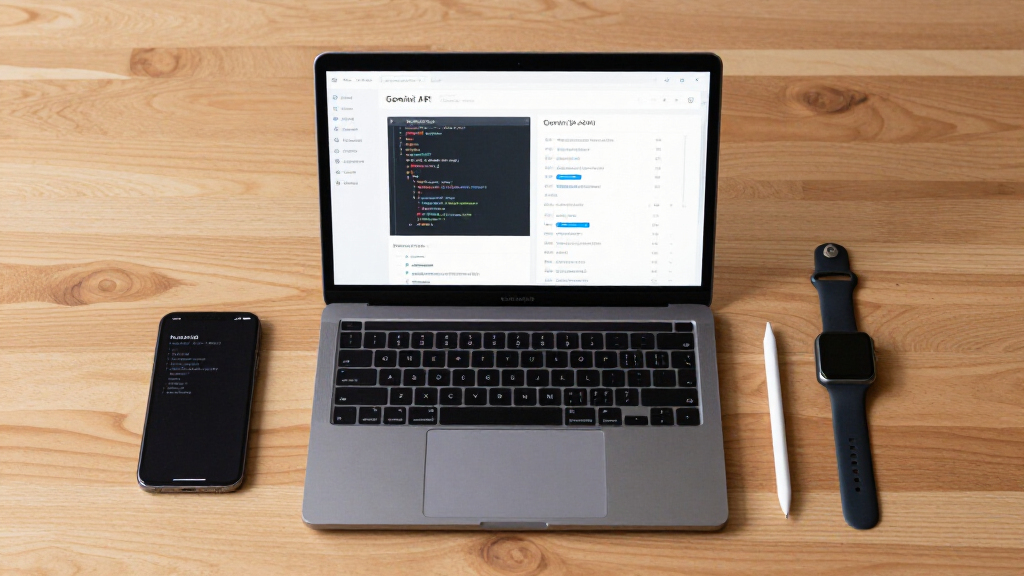

📊 Full opportunity report: Gemini API Managed Agents: 3.6 Flash, Hooks, And More on ThorstenMeyerAI.com — validation score, market gap, and execution plan.
TL;DR
Google DeepMind has updated its Gemini API managed agents to run Gemini 3.6 Flash by default, introducing environment hooks, token caps, scheduled triggers, and free tier access. These features enhance governance, cost management, and automation for developers.
Google DeepMind announced on July 28, 2026, that managed agents in the Gemini API now run Gemini 3.6 Flash by default, with no code changes required for existing integrations. For a detailed overview, see the original analysis. The update introduces environment hooks, token budget caps, scheduled triggers, and free tier access, significantly enhancing the platform’s governance and automation capabilities.
The update applies to the antigravity-preview-05-2026 agent in the Gemini Interactions API. Developers can now leverage a new default model, gemini-3.6-flash, which Google describes as optimized for reasoning, coding, and tool use. Existing integrations automatically pick up this change, with no need for code modifications.
One of the key features is environment hooks, allowing developers to register custom scripts via a .agents/hooks.json file. These hooks can run before or after tool executions, with support for regular expressions to target specific actions. Learn more about environment hooks in this detailed guide. Google explained that pre-execution hooks can deny tool calls with structured responses, and hooks can also POST to external endpoints, enabling advanced sandbox governance.
The update also introduces cost controls through a new max_total_tokens parameter, which caps total token consumption per interaction. When the limit is reached, execution pauses safely, preserving the environment state, and can resume later. Additionally, managed agents are now available on the free tier, allowing developers to experiment without active billing, lowering the barrier to entry for testing.
Finally, scheduled triggers automate recurring tasks within the agent environment, further expanding automation options for complex workflows. Insights into how these features work can be found in the original article. Google highlighted that these features are already being used by production teams, such as OffDeal, to build validation pipelines inside the sandbox environment.
Implications for Developer Control and Cost Management
This update enhances governance and safety for autonomous agents by allowing custom validation and control within the sandbox environment. The environment hooks enable real-time decision-making and security checks, reducing risks associated with runaway loops or unapproved tool use. The addition of token caps addresses a common failure mode—excessive token consumption—by making overruns recoverable and manageable.
Moreover, free tier access democratizes experimentation, enabling individual developers and smaller teams to explore advanced capabilities without immediate billing. These changes position Google’s Gemini API as a more flexible, secure, and accessible platform for building sophisticated AI workflows, which could accelerate adoption and innovation in enterprise and independent developer communities.
AI development tools with environment hooks
As an affiliate, we earn on qualifying purchases.
As an affiliate, we earn on qualifying purchases.
Background of Managed Agents and Recent Updates
Google DeepMind introduced managed agents in the Gemini API as part of its broader AI platform, allowing complex reasoning, code execution, and web retrieval within isolated cloud sandboxes. The platform previously added background tasks and remote server integration, aiming to streamline multi-turn autonomous workflows.
The July 28, 2026 update builds on these features by adding environment control, cost management, and automation tools, reflecting ongoing efforts to improve governance, safety, and developer flexibility. The platform remains in preview, with no official announcement yet regarding general availability or detailed pricing beyond the free tier.
While Google has provided SDKs and documentation, some specifics—such as scheduled trigger syntax and failure semantics—are still forthcoming, and broader adoption details remain unconfirmed.
“Managed agents in the Gemini API are getting environment hooks, model selection, and free tier access.”
— Philipp Schmid, Google DeepMind
As an affiliate, we earn on qualifying purchases.
Details Still Unclear on Release Timing and Usage Limits
Google has not specified when the antigravity-preview-05-2026 agent will reach general availability. Pricing, rate limits, and detailed configuration options for scheduled triggers remain undisclosed. Additionally, failure handling semantics, such as timeout behaviors for hooks, are not yet documented, leaving some operational aspects uncertain.
As an affiliate, we earn on qualifying purchases.
Next Steps for Developers and Platform Expansion
Google is expected to provide further documentation on trigger configurations, failure handling, and pricing details soon. Broader adoption will likely depend on the rollout of general availability and clearer usage policies. Developers should monitor official channels for updates and consider testing the current preview features, especially environment hooks and token caps, in their workflows.
As an affiliate, we earn on qualifying purchases.
Key Questions
When will the Gemini API managed agents become generally available?
Google has not announced a specific date for general availability. The platform remains in preview as of July 28, 2026, with further updates expected in the coming months.
Are there any costs associated with using the new features?
The update introduces free tier access, allowing developers to experiment without active billing. Details on paid plans or rate limits beyond the free tier have not yet been disclosed.
How do environment hooks improve agent governance?
Hooks allow custom scripts to run inside the agent’s sandbox before or after tool calls, enabling validation, denial, or external notifications, thereby enhancing control and security.
Can I override the default Gemini 3.6 Flash model?
Yes, developers can specify a different model, such as gemini-3.5-flash, when creating an interaction, providing flexibility for different workloads.
What is the purpose of token caps in managed agents?
Token caps limit total input, output, and reasoning tokens per interaction, preventing runaway loops and making long-running processes recoverable.
Source: ThorstenMeyerAI.com