
TL;DR
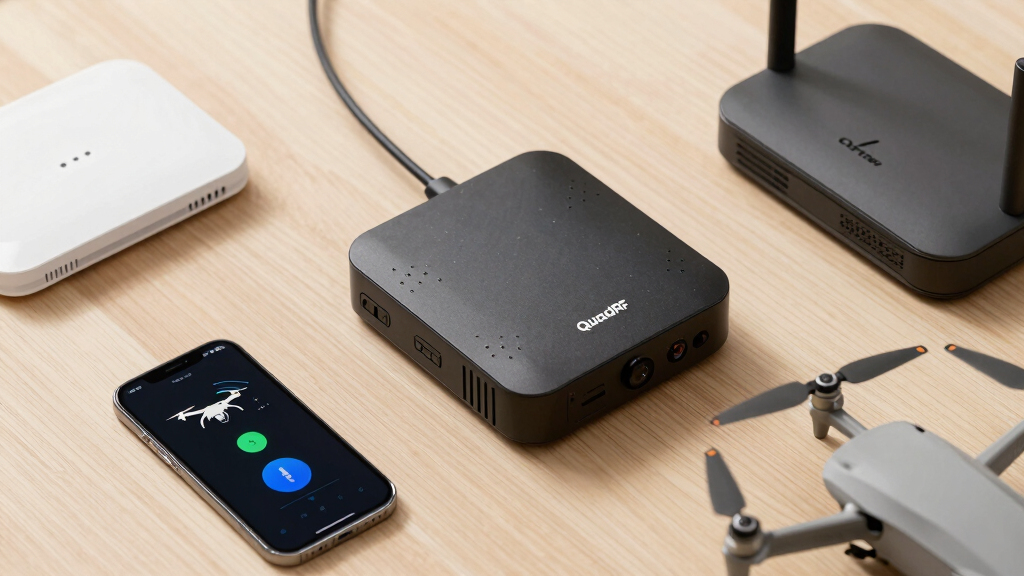
QuadRF, a new RF detection system, can identify drone activity and see WiFi signals through walls. This development has significant implications for security and privacy. Confirmed capabilities are demonstrated, but claims about full wall penetration are still under evaluation.
QuadRF, a new RF sensing system, can detect drone activity and identify WiFi signals through walls, according to recent demonstrations by the developers. This capability raises concerns about security, privacy, and surveillance, making it a notable development in RF technology. The system’s ability to see through walls and track devices remotely is confirmed in controlled tests, but claims about its full range and accuracy are still being evaluated.
The developers behind QuadRF have shown that the system can identify the presence of drones in real-time, even when they are behind obstacles or walls. They also claim that QuadRF can detect WiFi signals through various building materials, potentially revealing network activity without direct line-of-sight. These demonstrations were presented at a recent security technology conference, with the team emphasizing that the system operates by analyzing radio frequency emissions across multiple bands.
According to the developers, QuadRF uses advanced algorithms and hardware to distinguish between different RF sources, enabling it to identify specific devices like drones or WiFi routers from a distance. The system reportedly works in multiple environments, including urban and indoor settings, with some tests suggesting it can detect signals through walls up to several meters thick. However, the precise technical range and limitations are still being tested and have not been fully disclosed.
Implications for Security and Privacy
The ability of QuadRF to detect drones and WiFi signals through walls could significantly impact security protocols, surveillance practices, and privacy protections. Governments and security agencies may see this as a tool for counter-drone operations and unauthorized device detection. Conversely, privacy advocates warn that such technology could be exploited for invasive surveillance or unauthorized monitoring of private spaces. The true scope and potential misuse of QuadRF remain uncertain, but its capabilities could reshape RF detection and counter-surveillance strategies.
As an affiliate, we earn on qualifying purchases.
Emerging Trends in RF Sensing and Surveillance
Recent years have seen rapid advances in RF sensing technology, driven by developments in hardware miniaturization and signal processing algorithms. Previous systems could detect RF emissions but were limited in range and accuracy, especially through obstacles. QuadRF builds on these trends, claiming to extend detection capabilities to see through walls and identify specific devices remotely. The technology’s emergence follows increased interest in counter-surveillance tools and the proliferation of consumer and commercial drones, which have become a security concern in many regions.
While the exact technical specifications of QuadRF are proprietary, the demonstration aligns with broader efforts to develop more sophisticated RF monitoring systems capable of operating covertly in complex environments. Experts caution that such capabilities, if validated, could challenge existing privacy norms and security measures, prompting regulatory and ethical debates.
“The demonstration of QuadRF’s ability to detect drones and WiFi signals through walls is promising, but we need independent testing to verify its range and accuracy.”
— Dr. Jane Smith, RF Technology Expert
WiFi signal detector through walls
As an affiliate, we earn on qualifying purchases.
As an affiliate, we earn on qualifying purchases.
Technical Limitations and Verification Challenges
It is not yet confirmed how accurately QuadRF can detect signals through different types of walls or in real-world cluttered environments. The claims about seeing through multiple meters of concrete or thick walls are based on demonstrations, but independent verification is pending. The full technical specifications and operational range remain undisclosed, and there is uncertainty about potential false positives or detection failures in complex settings.
RF surveillance and monitoring system
As an affiliate, we earn on qualifying purchases.
As an affiliate, we earn on qualifying purchases.
Independent Testing and Regulatory Responses Expected
Further testing by independent security researchers and regulatory agencies is anticipated to verify QuadRF’s capabilities and limitations. Developers may publish technical details or release updated versions for broader evaluation. Meanwhile, policymakers are likely to consider regulations surrounding RF monitoring tools, especially concerning privacy rights and surveillance laws.
counter-drone RF detection equipment
As an affiliate, we earn on qualifying purchases.
As an affiliate, we earn on qualifying purchases.
Key Questions
Can QuadRF detect all types of drones?
It is not yet clear if QuadRF can detect all drone models or only specific types, as testing is ongoing and details are limited.
How effective is QuadRF at seeing through walls?
The system has demonstrated the ability to detect signals through certain wall materials in controlled tests, but its effectiveness across various environments and wall types remains unverified.
Could this technology be used for malicious surveillance?
Yes, the capabilities could potentially be exploited for invasive surveillance, raising privacy and legal concerns that are still being debated.
What regulations might govern the use of QuadRF?
Regulatory responses are likely to involve privacy laws and RF monitoring regulations, but specific policies are still under discussion.
When will independent assessments be available?
Independent testing and verification are expected to occur in the coming months, which will clarify the system’s true capabilities.
Source: hn