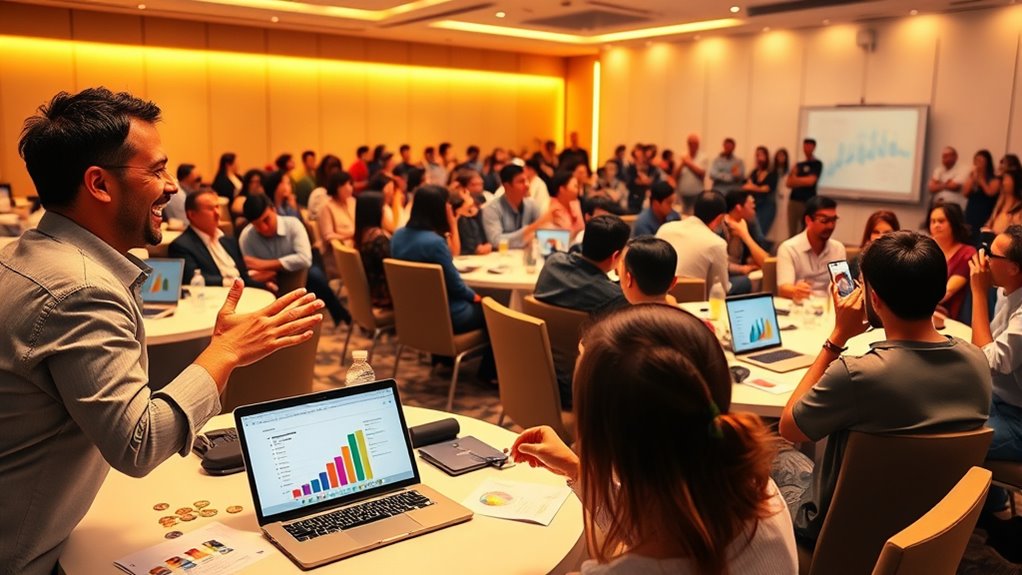

Incentivizing participants is all about aligning rewards and motivations with what truly matters to your audience. Use tangible rewards like prizes or recognition and tap into psychological drivers such as competition, curiosity, or community. Incorporate social incentives like peer recognition and foster a sense of belonging. If you understand what motivates your audience and tailor incentives accordingly, you’ll turn short-term engagement into lasting involvement—discover more ways to keep participants motivated and committed.

Get monitors, keyboards and dev gear delivered free — and shop member deals
- Fast, free delivery on millions of items
- Access to Prime Big Deal Days deals on October 6–7
- Prime Video, Amazon Music and more included
Key Takeaways
- Tailor rewards to align with participant values and preferences for higher engagement.
- Combine tangible incentives like prizes with intangible recognition to sustain motivation.
- Use gamification and social incentives to foster community, competition, and shared achievement.
- Clearly define goals and provide regular feedback to reinforce progress and motivation.
- Personalize strategies to create meaningful experiences that encourage long-term participation.

Have you ever wondered why some projects attract more engagement than others? The key often lies in how you incentivize participants. Effective incentive strategies rely heavily on reward mechanisms and motivation strategies that resonate with your audience. When you understand what drives people, you can craft approaches that inspire active involvement and sustained interest.
Reward mechanisms are fundamental because they provide tangible or intangible acknowledgment of effort and achievement. These can range from monetary prizes, gift cards, or exclusive access to new features, to recognition in public forums or badges of honor. The trick is to tailor these rewards to what your participants value most. For instance, some might be motivated by financial incentives, while others seek social recognition or personal growth. When designing reward mechanisms, consider balancing immediate gratification with long-term motivation. Offering instant rewards can spark initial participation, but meaningful recognition or progress markers help maintain engagement over time.
Reward mechanisms recognize effort through rewards tailored to what participants value most, balancing instant gratification with long-term motivation.
Motivation strategies complement reward mechanisms by tapping into deeper psychological drivers. These strategies involve understanding what motivates your specific audience—whether it’s competition, altruism, curiosity, or the desire for mastery. You can implement gamification elements, such as leaderboards or achievement levels, to stimulate a sense of challenge and accomplishment. Additionally, providing clear goals and regular feedback helps participants see their progress, reinforcing their motivation to stay involved. Personalization also plays a vital role; when participants feel their contributions are meaningful and aligned with their interests or values, they’re more likely to remain committed.
Creating a sense of community can amplify motivation strategies. When participants see themselves as part of a larger purpose or group, their engagement tends to increase. Incorporate social incentives like collaboration opportunities, peer recognition, or shared milestones. These foster a feeling of belonging that motivates continued participation. Furthermore, transparency about how rewards are distributed and how contributions impact the project builds trust and enthusiasm. If people understand the purpose behind incentives and see they’re awarded fairly, they’ll be more inclined to contribute their best.
Additionally, understanding how decluttering can lead to increased mental clarity and motivation can help tailor incentive strategies that promote ongoing engagement and organization. Ultimately, the success of incentivizing participants hinges on your ability to connect reward mechanisms and motivation strategies with your audience’s values and desires. When these elements align, you create a compelling environment where participation feels rewarding and meaningful. It’s not just about offering prizes; it’s about cultivating a culture where effort is recognized, progress is celebrated, and everyone feels motivated to contribute. This approach transforms engagement from a fleeting moment into sustained involvement that benefits your project and your participants alike.
As an affiliate, we earn on qualifying purchases.
Frequently Asked Questions
How Do Cultural Differences Influence Incentive Preferences?
You should consider how cultural nuances shape incentive preferences, as different cultures value rewards differently. In some regions, social recognition or group rewards matter more than monetary incentives, prompting you to adapt your approach accordingly. Incentive adaptation requires understanding these cultural differences so you can design effective strategies that resonate locally. By aligning incentives with cultural expectations, you improve engagement and motivation, ensuring your efforts are meaningful across diverse participant groups.
What Ethical Considerations Are Involved in Incentivization?
When you consider the ethical considerations of incentivization, you must weigh the use of monetary rewards against potential ethical dilemmas. These rewards can motivate participation, but they might also influence decisions unethically or create undue influence. You should guarantee transparency and fairness, avoiding coercion or manipulation. By doing so, you respect participants’ autonomy and maintain integrity, fostering trust while ethically leveraging incentives in your approach.
How Do Incentives Impact Long-Term Participant Engagement?
You might wonder how incentives impact long-term participant engagement. Behavioral motivation plays a key role, as well-designed rewards can boost initial interest. However, poor reward design may lead to reliance on extrinsic motivation, risking disengagement once incentives stop. To sustain engagement, you should balance reward structures that foster intrinsic motivation, ensuring participants stay committed over time without feeling solely driven by external rewards.
Are There Legal Restrictions on Certain Types of Incentives?
When considering if there are legal restrictions on incentives, you need to focus on legal compliance and incentive legality. Different jurisdictions may have rules about offering certain rewards, especially if they could be seen as bribes or influence your participants’ decisions. Always check local laws and regulations to guarantee your incentives are lawful. Staying informed helps you avoid legal issues and maintain ethical standards in your participant engagement strategies.
How Can Technology Enhance the Effectiveness of Incentives?
Imagine thinking a simple reward will do, but technology proves otherwise. Digital personalization tailors incentives to each participant, making rewards feel uniquely relevant. Gamification strategies turn participation into a game, boosting engagement and motivation. You can leverage these tools to enhance incentive effectiveness, transforming mundane rewards into exciting, personalized experiences. With technology, your incentives become more compelling, motivating participants naturally without relying on generic or one-size-fits-all approaches.
gamification badges and leaderboards
As an affiliate, we earn on qualifying purchases.
As an affiliate, we earn on qualifying purchases.
Conclusion
Remember, offering incentives isn’t just about quick gains; it’s about building trust and motivation. Some might say incentives skew genuine engagement, but when done right, they foster authentic participation and loyalty. By aligning rewards with your audience’s values and needs, you create a lasting connection that benefits everyone. So, don’t overlook the power of thoughtful incentives—they can transform casual participants into dedicated advocates, proving that motivation, when genuine, drives meaningful engagement.
As an affiliate, we earn on qualifying purchases.
As an affiliate, we earn on qualifying purchases.
Fall Picks
fall essentials
As an affiliate, we earn on qualifying purchases.