
📊 Full opportunity report: The Death of the Identical Paragraph on ThorstenMeyerAI.com — validation score, market gap, and execution plan.

Get business pricing on monitors, keyboards and dev gear
- Business-only prices and quantity discounts
- Tax-exempt purchasing
- Multiple users, one account, clear invoices
TL;DR
The historic news wire system, which pooled costs for identical reporting, is breaking down due to AI-driven content rewriting. This shift impacts how news is produced, distributed, and paid for, raising questions about attribution and sustainability.
The longstanding economic model of the news wire is collapsing as AI technology enables cost-effective, customized news content, eroding the traditional pooling system that has underpinned global reporting since the 19th century.
Historically, agencies like AP and Reuters pooled costs to produce and distribute identical news paragraphs across multiple outlets, a system that kept reporting affordable for many publishers. This model relied on the fact that rewriting or customizing content was costly and thus, sharing was economically justified. However, recent advances in AI, particularly large language models, have drastically lowered the cost of rewriting news stories for different audiences and formats. This has made it economically feasible for individual outlets to produce their own tailored content without relying on wire services, effectively dissolving the traditional distribution and pooling of reporting costs.
In 2024, the decline is evident: AP’s revenue from US newspapers has fallen from about 30% in 2007 to around 10% in 2024, as print advertising and circulation decline. Major publishers like Gannett have ended century-old partnerships with AP, opting instead for direct licensing deals with competitors such as Reuters and AI firms like OpenAI. The cost of rewriting stories with AI now approaches a few cents per site, making syndication of identical paragraphs less attractive and economically unnecessary. This shift challenges the core logic of the wire, which was built on shared costs for shared content, and raises questions about future funding, attribution, and the role of traditional news agencies.
The Death of the
Identical Paragraph
(1846) to economic inversion
newspapers, 2007 → 2024
five-year licensing deal
traffic collapse (TollBit)
results AI-generated, Sept 2025
reaching Google results
March 2024 Helpful Content Update
AI search vs. classic search (TollBit)
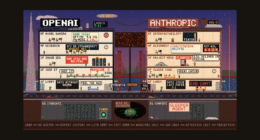
Five New York papers founded the AP cooperative in 1846 because no single one of them could afford a correspondent in the field — but five sharing the telegraph bill could. That arithmetic is what has changed.Thorsten Meyer · The Death of the Identical Paragraph
Implications for News Distribution and Funding
This development signifies a fundamental shift in how news content is created and distributed. As AI-driven rewriting becomes cheaper than syndicating identical wire copy, traditional news agencies face declining revenue and relevance. The pooling model, which once enabled widespread access to international and domestic reporting at low cost, is being replaced by a fragmented, customized content landscape. This could lead to a more diverse but less centralized news ecosystem, with potential impacts on attribution, trust, and the economics of journalism.
As an affiliate, we earn on qualifying purchases.
Historical Role of the News Wire and Economic Shifts
The news wire originated in the 19th century as a cooperative effort to share costs for international and national reporting, enabling newspapers to access foreign bureaus and correspondents at a fraction of the cost. Agencies like AP and Reuters established this model, which relied on the fact that rewriting content was costly and unnecessary for most outlets. Over decades, this system supported a global flow of news, with the wire acting as a central distributor of identical paragraphs to thousands of outlets. However, the rise of digital media, declining print revenues, and now AI technology have begun to dismantle this model. Recent partnerships with AI firms and the decline in revenue from traditional newspapers highlight the shifting economic landscape, where the cost advantage of shared wire copy is eroding.
“Ending our partnership with AP was driven by the changing economics—our outlets can now produce tailored stories at a fraction of what it used to cost to syndicate wire copy.”
— A senior executive at Gannett
As an affiliate, we earn on qualifying purchases.
Uncertain Future of Attribution and Revenue Models
It remains unclear how attribution, licensing, and revenue sharing will adapt as the traditional wire model dissolves. Questions persist about whether new economic arrangements will emerge and how trust in news sources will be maintained in a landscape dominated by AI-generated, customized content. The long-term sustainability of news agencies and their role as trusted information providers is still being determined.
AI-powered news aggregation device
As an affiliate, we earn on qualifying purchases.
As an affiliate, we earn on qualifying purchases.
Next Steps in News Content Economics
Expect further diversification in news production, with outlets increasingly relying on AI for content rewriting and customization. Major news agencies may seek new licensing models or partnerships to remain relevant. Regulatory and industry discussions around attribution, copyright, and trust are likely to intensify as the traditional pooling system continues to decline. Monitoring how publishers and AI firms negotiate these changes will be key to understanding the future of journalism.
As an affiliate, we earn on qualifying purchases.
Key Questions
Will traditional news agencies survive this shift?
It is uncertain. Some may adapt by offering AI-powered services or new licensing arrangements, but their economic model is fundamentally changing.
How will attribution and licensing work in the future?
New models are likely to emerge, but details remain unclear. Industry stakeholders are exploring options to ensure proper attribution and fair compensation.
Does this mean the end of international news coverage?
Not necessarily. Agencies still produce essential international reporting, but the way it is distributed and paid for is evolving rapidly.
Could AI rewriting lead to more accurate or biased news?
Both are possible. AI can improve customization but also risks introducing bias or inaccuracies if not carefully managed.
Source: ThorstenMeyerAI.com
Fall Picks
fall essentials
As an affiliate, we earn on qualifying purchases.